
Translated material
A smart veto will go around
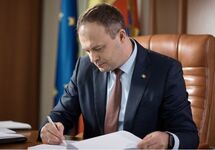
The Chairman of the Moldova Parliament Andrian Candy approved a law limiting the broadcast of Russian information-analytical, political and military television and radio programs. This was reported in the press service of the legislative body.
"The new provisions are included in the radio broadcast Code to ensure the protection of individuals, society and the state from possible attempts to disinfect or manipulate information from abroad and prevent propaganda directed against the Republic of Moldova. They also provide for the free transfer of information, military and political television and radio programs created in the member states of the European Union, US They ratified the European Convention on cross -border television, ”the press release says.
On December 7, 2017, the Law on the ban on Russian propaganda made by the Dab. For violation of the law, committed for the first time, a fine of 40 to 70 thousand lei (about 2300-4100 dollars) is provided, and for repeated violations - from 70 to 100 thousand lei (up to about $ 5850).
On December 20, the pro -Russian President Igor Dodon returned the law to parliament. However, two days later the deputies overcame the veto of the president and re-adopted the law without any changes. Despite this, Dodon again refused to sign the document, referring to the "higher interests of the people", and appealed to the Constitutional Court with a request to verify its compliance with the basic law.
On January 5, the Constitutional Court of Moldova temporarily limited Dodon’s powers, depriving him of the right to introduce the accepted bills into force . As the chairman of the Constitutional Court of Tudor Pantsyra indicated, the president of the country has the right to return the adopted law for a review to parliament only once, presenting his comments. If the parliament adopts the law again, the head of state is obliged to introduce the document into action, "despite doubts about its constitutionality," noted Pantsyra. “The president’s refusal to fulfill constitutional duties is a violation of the 93rd article of the Constitution and the oath of the president,” the chairman of the Constitutional Court concluded.
The right to approve the laws was temporarily transferred to the speaker of the parliament.
Prior to this, the Constitutional Court, due to Dodon’s refusal to approve the candidates of government members proposed by parliament, limited his authority twice.