
Translated material
The double life of Veronica
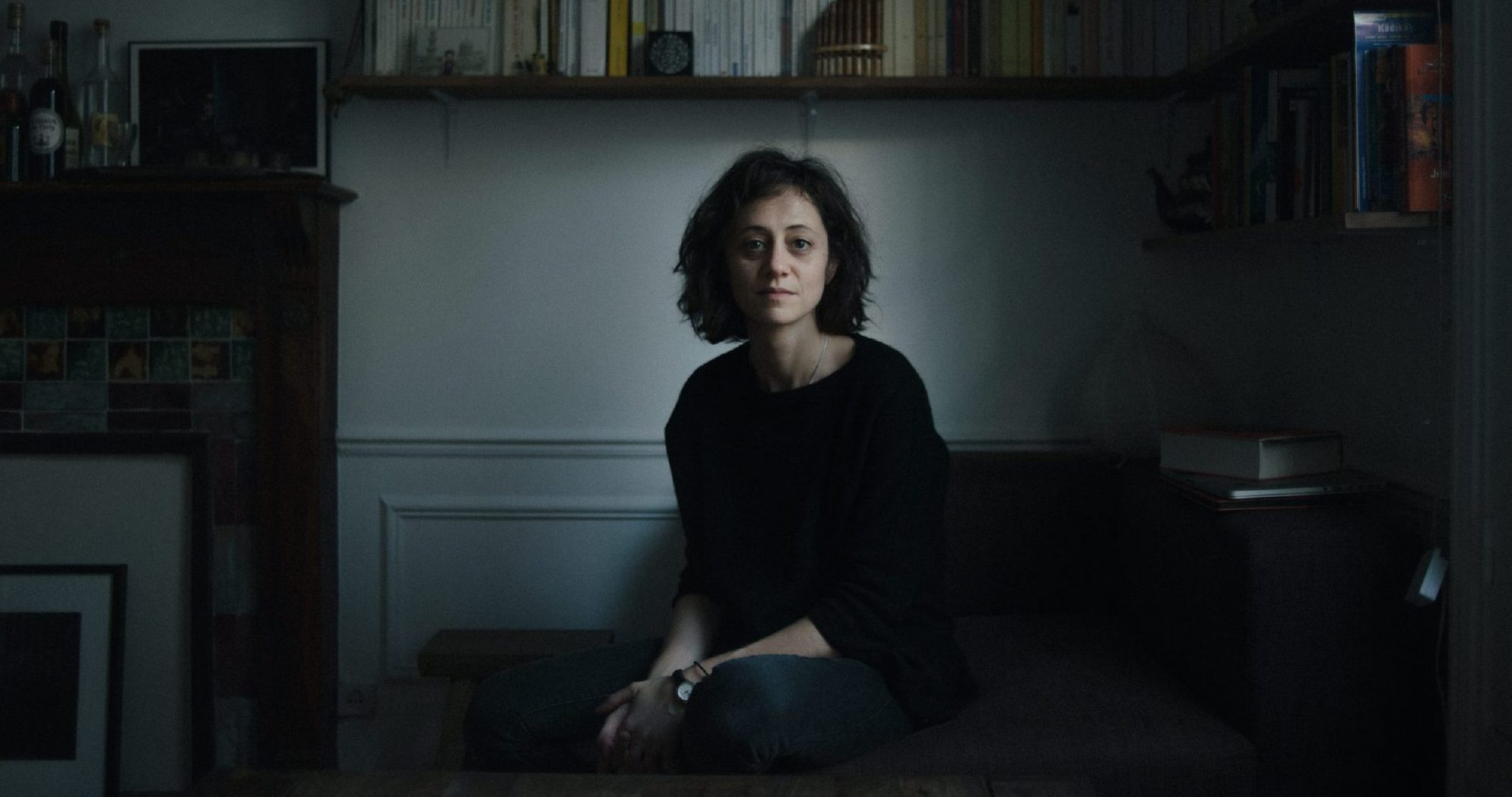
French journalist Veronika Dorman wrote the book “Russian Amnesia, 1917-2017” (Amnésie Russe, 1917-2017, ed. Editions du Cerf). She managed to combine the personal story of the daughter of Soviet emigrants from New York, who grew up in Paris and tried to find herself in Moscow, and a story about modern Russia through the history of Solovki
In the late autumn of 2015, the Moscow correspondent of the French newspaper Libération Veronika Dorman was in the office of the editor -in -chief of the Parisian publishing house Cerf. The 33-year-old journalist gathered her strength for a long time and finally decided to inform the publisher that, despite the contract signed a year ago, she would not write a book about Solovki. Publisher, Dominic monk Renaud Escande, asked why. Veronica set off into explanations. She had the feeling that she was exhausted, that after six years of life in Moscow, she had nothing more to say about Russia. And she was angry. I was angry with power and opposition, on small -town quarrels, the lack of ideas, on unpreparedness for routine everyday efforts with readiness for personal exploits. She was tired of talking about the "forbidden". And most importantly - in the summer Veronika again went to Solovki and finally upset. In a fight with the museum and the local administration, the church won. A small flawed exposition remained from the elephant museum. “This is your book,” Renault’s brother answered, after hearing the arguments of the journalist. - All that you told me now, you will interwoven with the history of Solovki, and it will be a brilliant book. Compare your personal memory with collective Russian memory. Continue to be angry, but pour your anger on the paper. ” Veronica tried to object that she could not write in the first person. “It just seems to you so,” the publisher smiled.
Jersey City. In the language of Pushkin
Veronika Dorman was born in New York in 1982 and spent the first six years of life in Jersey City, on the other side of the Hudson. More than anything, her family was afraid to be in the “Soviet ghetto on Brighton Beach”, but her parents quickly managed to buy a house in Jersey City-then “it cost nothing”.
Grandparents left the USSR in the USA in the winter of 1972. Like almost all Soviet emigrants of that time - by a Jewish visa. Grandmother, Veronika Turkina, in whose honor Veronica was named, was the cousin of the first wife of Alexander Solzhenitsyn (Natalia Reshetovskaya). They were very close with the author of the Gulag Archipelago. Grandpa and grandfather belonged to the circle of Moscow dissidents, they came to read samizdat to them home, mostly Solzhenitsyna. The KGB watched them diligently. Grandfather, Yuri Stein, worked in the cinema, and the company usually gathered creative: "Alexander Galich played the guitar, Oleg Efremov recited poetry, dissident Vladimir Maximov opposed censorship." Solzhenitsyn himself in those years lived in Ryazan, but "when he came to Moscow, he often stopped with them."
In America, Veronica and her younger brother Andrei were raised as if they grew up in MoscowAt home, in America, Veronica and her younger brother Andrei spoke only in Russian, read Russian fairy tales, listened to Okudzhava songs and watched “Well, wait a minute!” Grandma knew all Russian poetry by heart. Mom, a Russian teacher, a 12-year-old girl who left Moscow, brought with her a puffy notebook of Soviet jokes to America and "poisoned jokes about Lenin." Dad, a mathematician and a programmer, played the Vysotsky guitar. Mosfilm appeared in the children's life of Veronica before Hollywood, and Tom Sawyer was first read in Russian. At the age of five, the girl was surprised to find that in addition to Russian there are other languages, and the most terrible - not everyone around understands Pushkin’s language.
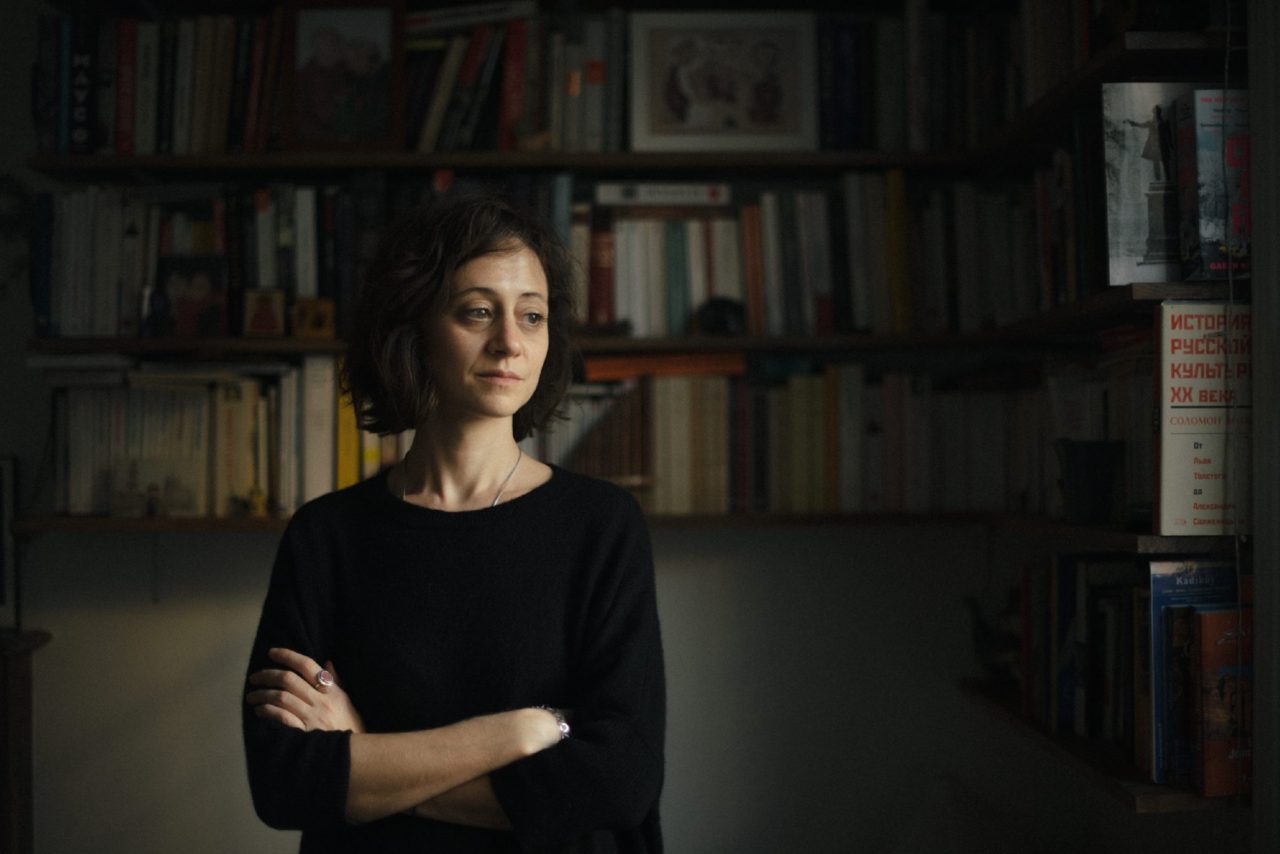 Veronica Dorman Photo: Dmitry Kostyukov for TD
Every summer, until she was eighteen years old, Veronica spent at a Russian school at the University of Norvich in Vermont. There, her mother and grandmother taught, and also, for example, Sasha Sokolov, Naum Korzhavin and Lev Losev. The school was organized in a military campus. Around, Veronica recalls, "the American military went and did not understand why the Reds were hanging out here." And the American students ran along the campus. Calls were crammed, performances staged and Cossack songs sang - the Americans came to Norwich to learn Russian according to the full immersion program, Full Immersion. Veronica herself still regrets that, as a “full idiot”, she did not study anything, despite the brilliant teaching staff, but participated only in performances and Cossack choir. In adolescence, it admits in the book, "toasts near the fire were more interested in it than the beautiful lines of the" requiem "Akhmatova." But it was in Norwich, the “summer kingdom of her childhood,” Veronica began to dream of Russia, unknown, unfamiliar and very close.
Moscow. Complete dive
When Veronica was six years old, in 1988, they, together with their mother and brother, moved to Paris to Franzuza's stepfather, a prominent teacher of theology, professor of the Holy Sergius Orthodox Institute, Jean-France Kolozimo.
Three years later, in 1991, Veronica was first in Moscow. In a country that used to exist for a nine -year -old girl only in words, images and sounds, they went by train. In those years, it was cheaper and also made it possible to take 35 diverse bags to Russia-all friends and acquaintances intended to convey something. The first picture of another world was Poland or Belarus. A dark snowy platform, a man with a dog and a knock on the wheels. At the station in Moscow, they were met 50 people - all relatives, friends and people who came to take the programs.
Moscow turned out to be beautiful and not like anything“We were wondering that the stores are empty, it was interesting to stand in line for sugar for two hours, run around an empty store and climb on empty shelves,” recalls Veronica. From their mother, the children received a strict order to eat everything they would offer them, and not to make faces: “Mom said that people here are very difficult with food, and if there is a lot of food on the table, this does not mean that they are rich, and most likely, they put everything they accumulated to accept us. But for us, she took with her soluble milk and Cornflex, because we did not eat anything else in the morning. ”
After this, first trip to Moscow in Veronica’s life, three countries connected. From life in Paris with studying in a bourgeois Catholic school, a Russian church on Sundays, icon painting and annual holidays in Russia and America, a happy balance has developed. The holiday, which has always been to her, became winter Moscow and Summer Norwich.
“In Moscow, we went to a Russian school,” says Veronica. -Mom had to put us somewhere, she did not take the nanny, threw us to a Pirogov school, the director of which was one of her best friends. We sat in the lessons and did not understand anything: there was a crazy algebra and physicist, who were not taught in France. I really liked it. And we were a curiosity there. We came with a package of conflicts Malabar, and we were torn to pieces. Everyone took my address from me, and all my childhood I corresponded with a huge number of people. ”
Solovki. Acquaintance with yourself
Veronica had the feeling that she was not just on vacation. She felt how she understood Russia well and what was happening in it. I was proud that I could "touch the real one." I was proud that she was going to a “real Russian school”.
“We came and immediately poured into the seething local life. This subsequently played a big role. When I was a teenager, I was obsessed with Russia. I had an idea that I should go there. I said that I love Russia, that this is mine, but I never said that I was Russian. ”
In childhood, to the question of who she was, Veronica answered: "American." It seemed to her that it was cool. In addition, she had no other passport except American. And then she began to say that she was a Frenchwoman. In Russia, Veronica remained a foreigner, an American living in Paris, and at the same time felt at home: the condition that she would call in the book "insurmountable bifurcation."
In Russia, Veronica remained an American living in Paris, and at the same time felt at homeSolovki appeared in the life of Veronica along with the search for themselves. The older she became, the more boring and cramped Paris seemed. I wanted drive, scope and adventures, which, as it seemed, could only be found in Moscow, where in the late 1990s and early 2000s everyone was “crazy, marginals and non-conformers with long hair”. In Paris, there was serious study in prestigious preparatory literary classes Prépa, in Moscow - endless night walks, beer in the crossing, cheap cigarettes and the first romantic story. After graduating from Prépa, Veronika entered the Sorbonne for the Russian language department and almost immediately left to study on the exchange at the Russian State Humanitarian University: "In her lousy hostel with a burned linoleum and an old woman."
And a few months before moving to Moscow, she first ended up on Solovki, on an expedition organized by Evgeny Markelov, teacher of history and founder of the Moscow Intellectual School-boarding school. Every summer, Markelov drove a large company from former and real students and their friends to the archipelago. The campaign seemed to Veronica exciting. “Enamelled mugs, a backpack, a sleeping bag, a day on the train” - all this happened to her for the first time. They arrived in the Solovetsky monastery as workers. They lived in one of the destroyed monastery corps, in two rooms, lined with rows of endless Nar: "In one room are boys, in the other girl." They prepared in the Russian stove “some kind of balland from stew” and every day they received new working tasks from the monks.
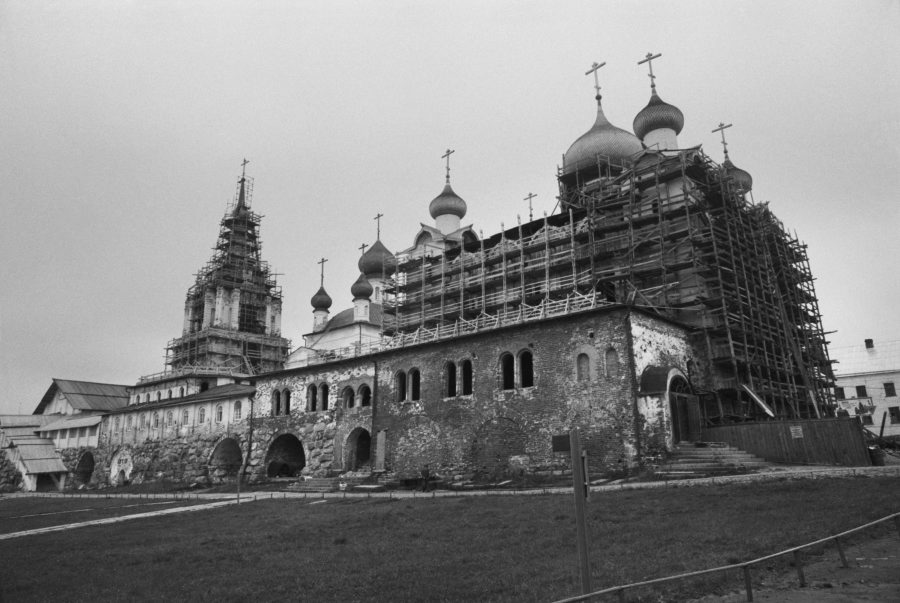 1988. Solovetsky Monastery. Temple during the reconstruction photo: Valery Matytsin/TASS
On Solovki, Veronica met the future husband - they met on the first day in an impenetrable, stuffy train Moscow - Kem. Dima once studied with Markelov, was the most pretty guy in the company and made his way through the bit of a stuffed reserved seat with a cake in his hands. It was his birthday. And besides, he, the only one in the car, found a lighter. They immediately made friends, although they began to meet several years later, when Veronica arrived in Moscow for the second time, as a journalist.
In the same place, on Solovki, her conscious meeting with God and the deep understanding of the children's faith occurred. Veronica’s girl went to church every Sunday, on vacation went to look at Christian shrines in Syria, Jordan and Greece, her parents were friends with Orthodox Egyptians and Lebanese, and Orthodoxy was primarily a symbol of freedom, joy and cosmopolitanism. But it was there, in the northern Russian monastery on the edge of the land, where Markelov drove them to the church, and the confession was considered mandatory, she “consciously, really came to faith”: “This happened contrary. More than going to the church, I was affected by the fact that you are working not for money, but for the sake of a good thing, that you are restoring the monastery. "
Later in the book Veronica will write: “The opposites are faced on Solovki. Two poles: paradise and land. Two religious feelings: Christianity and paganism. Two ideologies: order and revolution. Two past: monastery and camp. Two forces: the state and the church. Two discourse: Faith and mind. And all this for a forked people, a believer and an unbeliever, who must choose a single future for himself, looking back at the bifurcating memory, at two memory, at the same time excellent from each other and mixed: the memory of executioners and victims. "
In those years, the church has not yet begun the privatization of the memory of camps. The monastery coexisted with the museum-reserve, the first in the USSR Museum of the Gulag. From the Soviet age, enthusiasts, historians and archaeologists who went to the archipelago worked in it. The Gulag department will be disbanded in 2016 by the governor of the monastery by Archimandrite Porfiry (Shutov), who in April 2010 will also become the director of the museum. The head of the department of the historian Olga Bochkarev, who worked on Solovki since 1988, will be removed. And the memory of the elephant (the Solovetsky camp of special purpose) will be reduced to the exposition about the new martyrs.
“There, on the archipelago of perfect northern beauty, where nights without dawn alternate with days without sunsets, in this space from mineral islands, which water from hundreds of lakes substitutes a bottomless mirror, at the foot of the monument of medieval architecture with magnificent couples, surrounded by ruined village buildings, among tens and hundreds I realized the curious, who came from all over Russia from all over the corners of Russia, that the Russians, part of which I dreamed of becoming so, suffer from the same as me. From impossible memory, ”Veronica will write in the book.
Between the homelands. Memory work
Having lived in Moscow for two years, Veronica went to Rome to study as a restorer. She painted perfectly, and art became for her a kind of protest against the excessive intellectuality of the environment of her parents. But, having spent a year in Rome, she abandoned this venture. She returned to Paris and graduated from the Paris Institute of Political Research Sciences-PO, writing a thesis about Solovki.
And then Veronica was offered an annual contract in the culture department of Le Figaro magazine. Having worked it, in 2009, she left for Moscow for the second time. And she became a Libération correspondent, passing the combat reporter baptism of the forest fires of the summer of 2010.
On this visit to Moscow, where her grandparents had no longer tried to become Russian in the early 2000s in the early 2000s. Having postponed the search for identity for an indefinite period, she settled in the festive city of her childhood by a third -party observer, a French journalist, "rejoicing critical thinking" and "led by common sense."
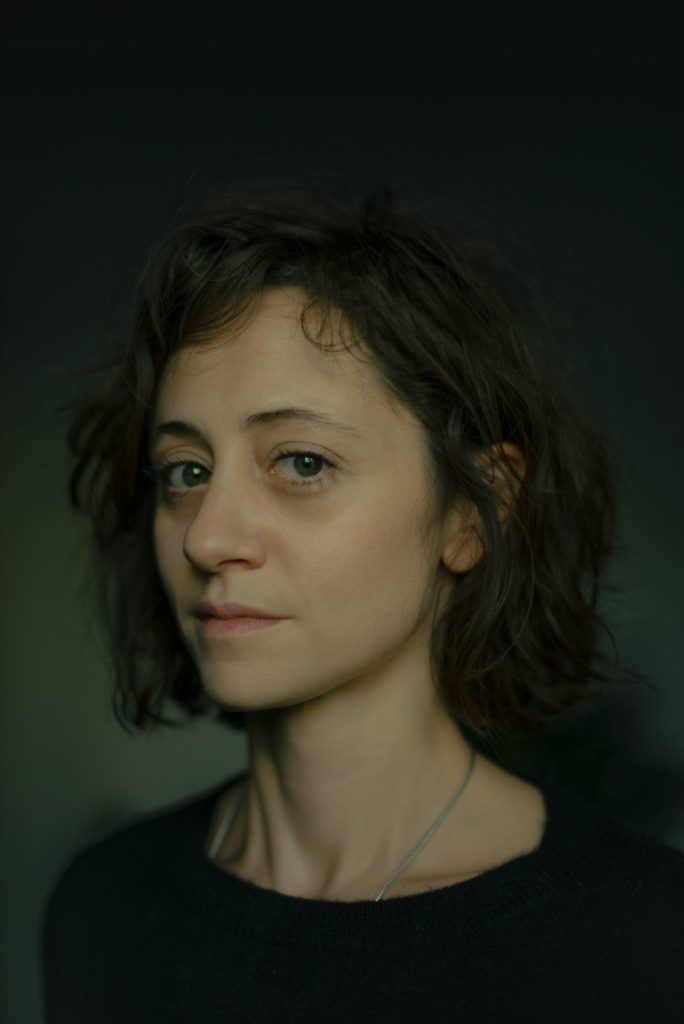 Veronica Dorman Photo: Dmitry Kostyukov for TD
But it was not possible to dissociate. Small rallies of Strategies-31, and then unexpectedly large marches of winter 2011-2012, the third term of Vladimir Putin, the adoption of the “Law of Dima Yakovlev”, hunting for NGOs-“foreign agents”, Maidan, the murder of Boris Nemtsov, the Syrian crisis, the Olympic Games in Sochi, Crimea. Every year to work in Moscow became harder. The decadent sentiments in a small but united circle of Western journalists in Moscow first arose in 2012, then the first departures of friends began.
Veronica sat down to write a book. Work on the text helped her to plunge again that she was so closely connecting her with Russia: “I wanted to explain that Russia is much more complicated than the French imagined it. That the problem of memory of repressions is not the problem of evil Putin, who intended to rewrite the story and erase all the terrible moments from it, and the general trouble for which society is also responsible. What to revise the past in which the Russian people exterminated themselves was almost impossible. I tried to talk about what prevents the work of memory in today's Russia, and give an idea of the scale of these difficulties. ”
Over the years in Russia, Veronica only a few times really felt that she had returned home. On October 29, 2014, she came to the “Return of Names” campaign to the Solovetsky stone on Lubyanka. She stood in line and, having received a sheet with several names of victims of large terror, felt like a part of this freezing in anticipation of the crowd. She, like most of those standing in line, was also repressed in the family, and there was the name of the cousin shot at the Butovo training ground, which she was going to read in the microphone. On this day and in this place, private and common memory came together. And Veronica was part of this memory, from which she could not get away.
Do you want us to send the best texts of “such cases” to you by e -mail? Subscribe to our weekly newsletter!
Historical memory psychology Russia