
Translated material
Pension as a benefit
In Russia, cases of state refusal from pension payments have become more frequent
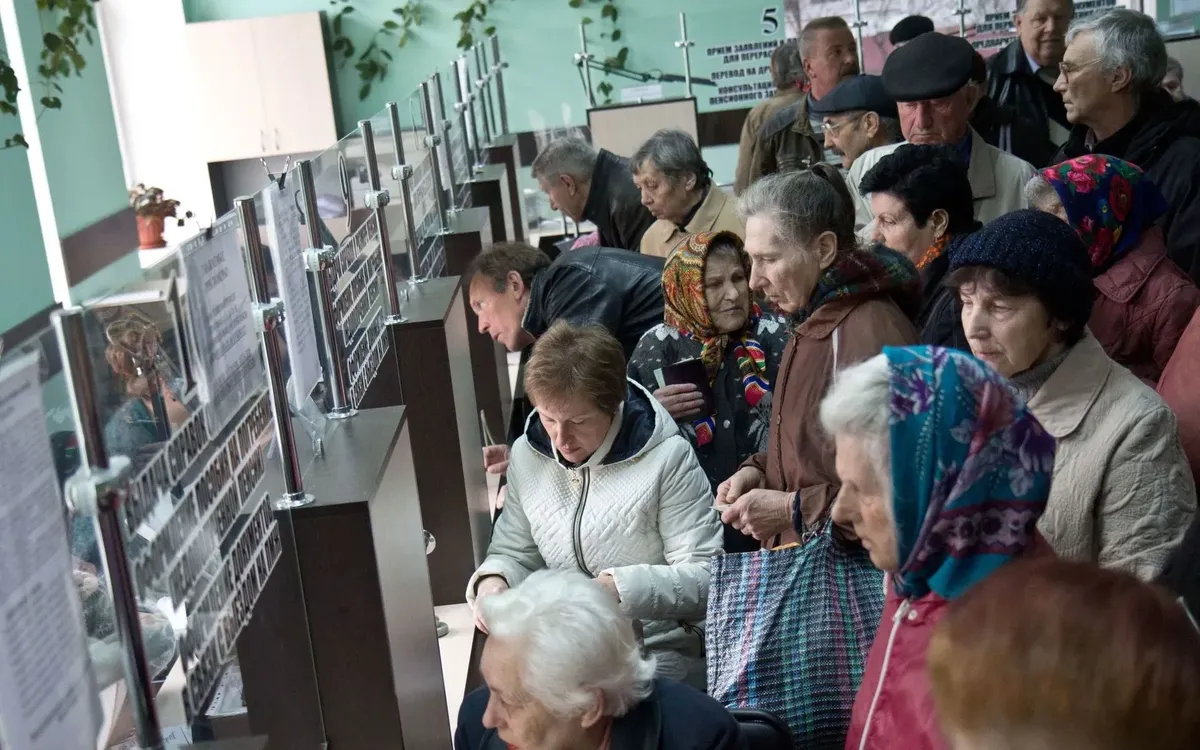
In 2017, in some cases, the Pension Fund of Russia refused citizens to pay old -age insurance pension, Maxim Topilin, Minister of Labor and Social Protection, told Tuesday. The reasons for the refusal were an insufficient individual pension coefficient (score) or too small work experience. The state was able to guarantee only the minimum social pension under the joint system, which is 1.5 times less insurance and begins to be paid 5 years later. Last year, according to Gazeta.ru, 8.3 thousand such cases were recorded, and this figure will continue to grow - the criteria for obtaining an insurance pension are tightened every year from the date of pension reform in 2015.
The insurance pension, with the exception of special preferential allowances, is related to human labor: the more “white” earnings at working age, the higher the payment from the state in old age. In 2017, to receive an insurance pension (on average in the country - 14 thousand rubles), it was necessary to have 8 years of official length of service and accumulate 11.4 pension points. The points are charged in proportion to the amount of insurance premiums paid to the pension system and depend on the salary level. Say, with a minimum wage, one year of work will bring about one pension point. Additional points can be obtained for each year of service in the army or parental leave. But if at the end of 55 years for women and 60 years for men, at least one of the criteria is not carried out, then a person can only claim to receive a social pension (8–9 thousand rubles) after 5 years, during which you can continue to earn points and experience for the insurance part.
PFR standards against pensioners are increasing every year. In 2015, the only requirement for receiving an insurance pension, in addition to the age of 5 years of work experience, and by 2024, for the sake of payments, you will have to work at least 15 years and earn 30 pension points. A person with a minimum salary, for example, will be able to apply for an insurance pension only after 30 years of official employment.
Such a system forms several vulnerable categories of the population, whose chances of approaching old age close to poverty are sharply increased. This is primarily “self -employed” in the broad sense of the word, from housewives to farmers and individual entrepreneurs, as well as any person who receives a significant part of the salary in the envelope. In the 1990s, as now, consent to gray schemes was often the only opportunity for employment, but the state believes that the employees themselves are to blame for this situation.
Due to this logic, by the completion of the next presidential term, millions or even tens of millions of people may lose their rights to retire.
Engaged in the enlightenment of Russians about the dangers of shadow employment, the FIU and Minister Maxim Topilin involuntarily touched on a much more acute topic: a large -scale crisis in which in recent years there is a Russian pension system. “Pensioners, as you know, we have no poor. From the point of view of formal signs, ”said Topilin in December.
Now it turned out that Russian pensions not only do not provide the population with a real cost of living (if you do not take seriously “formal signs”), but also not quite guaranteed. In general, this alignment could be foreseen back in 2014, when the state first violated its obligations to pensioners, freezing pension savings in order to balance the federal budget. Then, in 2016, pensions were indexed below the inflation level, and for 14 million working pensioners were not indexed at all. Finally, after a month ago, a moratorium on the funded part was extended until 2020, there were doubts about the safety of insurance pensions. Discredit was alternately subjected to all elements of the existing pension system.
Of course, the vast majority of Russians entering the retirement age in the coming years can still count on the payments assigned to them. Another thing is that after the presidential election, a window of opportunities will open for the next pension reform, the concept of which will be subsequently transferring social obligations from the state to the shoulders of citizens, including by raising the retirement age. To avoid unpleasant surprises in the future, it is better to start preparing for this scenario now.