
Translated material
Little faith
Disputes about what to do on the day of voting is becoming more fiercely. But in fact, the main thing is to resist hardening
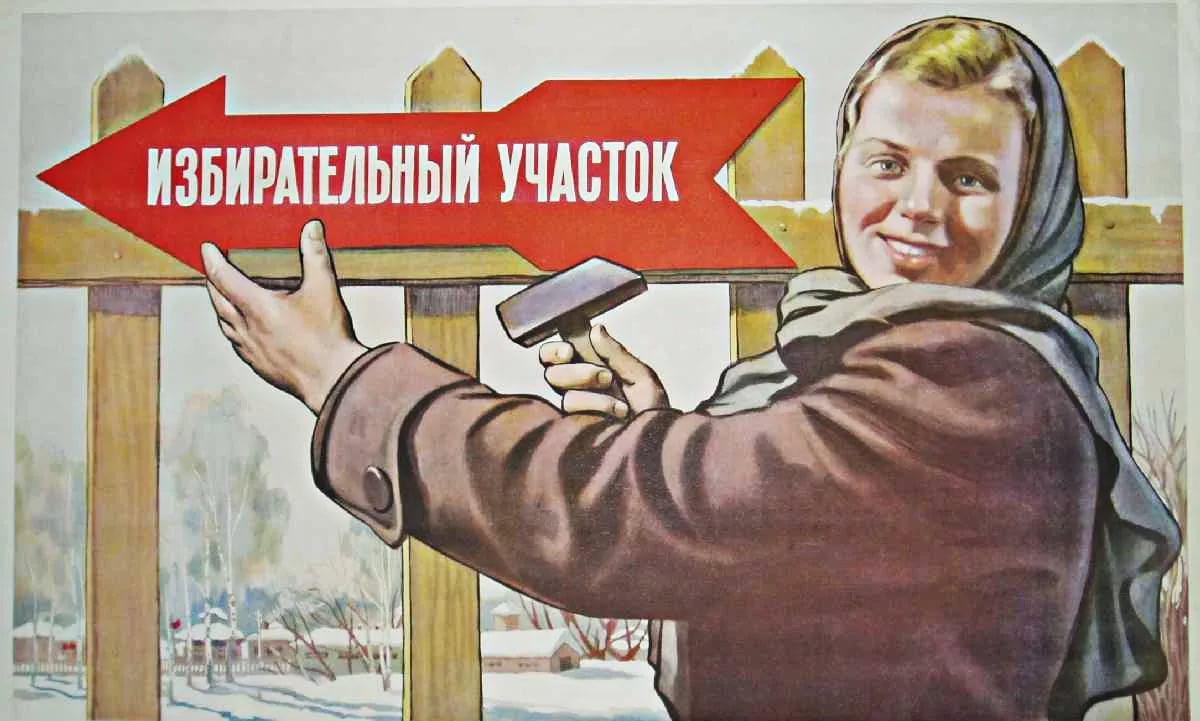
The election campaign is gaining momentum, and the Russian liberal oriented voter has a long -known problem: how to make the right bet in a deliberately losing game. The closer the voting day, the deaf voice of the pessimists, who predicted in advance that the elections do not make sense; On the contrary, disputes about the only correct strategy flare up more and more. Join the announced Navalny Boycot of the elections (also known as a strike)? Give a voice to the candidate "against all"? To remain true to the leader of the "apple", who has remained true to himself since 1991? To support the candidate from the Communists, if only because it is a fresh and seemingly promising person? Disputes are carried out with more fiercely, by the day of voting, they, as usual, will reach the intensity of religious wars. Where does such a passion come from, and what is it, in fact, for religiosity?
Anthropologists more or less converge in how religious beliefs arise at the dawn of human history. People feel helpless before the blind forces of nature, and in order to somehow tame them, endow them with the qualities of living creatures and create a system of rites, which, as it were, allows you to agree with these creatures. It turns out quite quickly that a person invests in this system of rituals and ideas about the world so much himself that this system begins to seem to him with something supervisory, such that it is not scary to give his life (or to kill neighbors who do not share this system of performances). The final definition and clarification of this superspipable becomes the most important thing of life on which people are ready to spend any forces and means. And the fact that behind the Vera system is only fear of a tree or storm that can fall (or erupt) at any time, people quickly forget.
Elections in Russia in 2018 are the same tree or storm. Even the most passionate admirer of Putin and the political system built by him subconsciously feels that something is happening in these elections that he cannot influence, something inexorably and preceded in advance. In order to somehow tame this blind power, to present the matter as if we can control or use it in our interests, people came up with different systems of representations and rites. The simplest of them is to lean against the collective body of the authorities, to feel like “this power by a particle”, to survive the elections as the process of another demonstration of this strength and evidence of how insignificant all its so -called competitors are compared to it. But there are other options.
Elections in Russia in 2018 are the same tree or storm. Even the most passionate fan of Putin and the system he built subconsciously feels that something is happening in these elections that he cannot affect
In essence, it is not so important which of the options the voter chooses - the act of choice itself gives him confidence that everything is not in vain, his actions make sense, and imperfect power is not so omnipotent. You can join the electoral strike; To support the most critical candidate, go to collect signatures, sign up with an observer, paint the ballot with platform insults, or eat it in front of the polling station - in any of these actions, if you wish, you can find meaning and obvious benefits. On one condition: this meaning must be believed, abandoning rational arguments, which all as one prove that you cannot influence the outcome and consequences of these elections. For real faith, this is not a problem, the more it diverges with the arguments of the mind, the better; As the early Christian thinker Tertullian said, "I believe - for absurd." Everyone who committed such a movement of faith, of course, is convinced that it is his system of representations and rites, his irrational choice is the only true, and the rest are vicious and lead directly to hell. The strike reduces the legitimacy and reveals the absurdity of these elections, voting for a critical candidate allows you to express his disagreement with the system, collecting signatures and participation in the campaign-a good social elevator that allows you to learn something; The collection of signatures and participation in the campaign is a voluntary participation in a senseless farce. Each of these points of view excludes others, and the people who have chosen any of them will fight for it in the coming months, like the fathers of the Church - for the correct formula for the dogma of trinity. And until March 18, many of us will seem that the choice of the right strategy is something high, which depends, if not the future of the country, then at least mental peace and confidence in our own rightness. And then the 19th will come.
And until March 18, many of us will seem that the choice of the right strategy is something high, which depends, if not the future of the country, then at least mental peace and confidence in our own rightness. And then the 19th will come
From the history of religions, we know that none of them proved 100% of their truth and that under the banners of each religion, one can achieve unprecedented heights of the spirit - or commit unimaginable villains. We take a chance to assume that in our specific segment of the pre-election-religious experience, the situation is exactly the same. What to do in the elections, knowing their outcome in advance - in general, a matter of taste. Whether you eat the ballot, whether you will burn whether you will put a checkmark in it in the only right place or you will not come to the site at all - the Kingdom of Heaven does not seduce from this and even the winner is unlikely to become less. The only thing that really makes sense is how you behave in the coming months, in the process of defending your innocence. You can show nobility, generosity and firmness, or you can slide down to Petrosyanov jokes and communal seeds. The only winning election strategy for the liberal wing is to behave with dignity, protecting any of the chosen strategies; The future does not depend on the manipulations that you can do with the ballot on March 18, but on how you defend your rightness right today.
* The author is a journalist, a former editor-in-chief of the magazine "Poster" (2003–2008) and the chief editor "Rambler-Afisha" (2011–2014), permanent columnist NT
The author’s opinion may not coincide with the opinion of the editorial office