
Translated material
There was an elephant
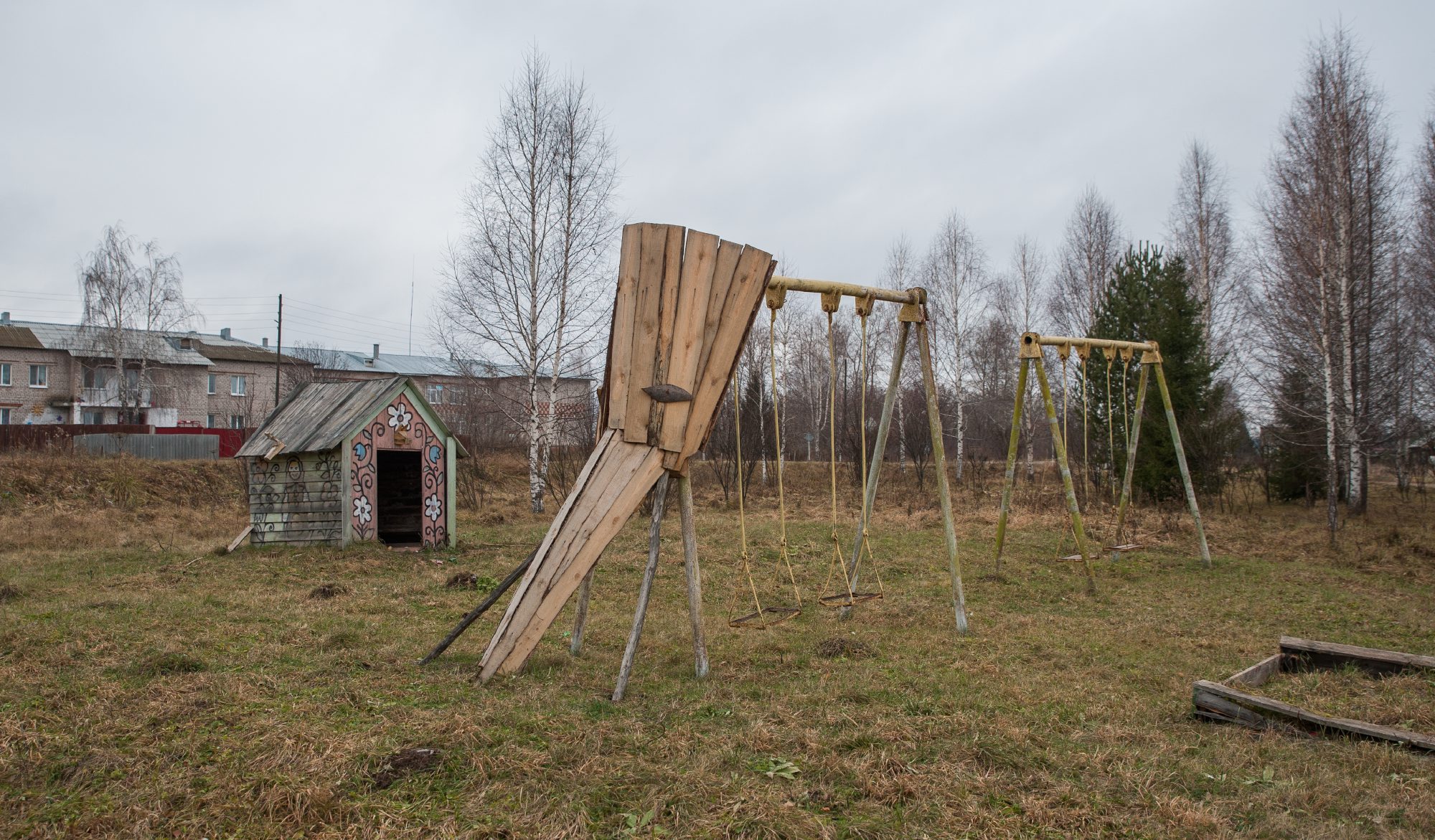
Fossible elephant: as a prehistoric ancestor of the mammoth became a symbol of the village of Kazanka and his brand
It is generally accepted that the main anomalous zone in the Perm Territory is the village of Molebka, in the vicinity of which aliens can supposedly can be found. And in my opinion, the area of the city of Okhansk deserves more this title. In any case, I have been going here the second time in a year to explore unusual social projects with local color. A year ago, the heroine of the text was Irina Ponomareva, who announced the village of Tabors to the birthplace of science about meteorites (in the century before last, the car really fell here) and alone created a full -fledged brand for her native village. The girl Irina is also called to this time, she only does not live in camps, but in the neighboring village of Ostrozhka, and for her the theme of all her life did not fly from space, but appeared from under the ground-at the moment when local fishermen found unique remains of a trigger elephant under the coast.
"He is tired and died"
The trogoneria elephant is an ancient species of a mammoth that lived in the Pleistocene, that is, more than 11 thousand years ago. In Russian museums, only five full skeletons of this creature are stored. In 2010, another skeleton was discovered in the Okhan district, near the village of Kazanka. Local fishermen found tusks on the shore and turned with a find to the Perm Museum of Local Lore. Actually, at first they thought to sell the tusks to the museum and were a little upset when it did not work out. But it is not customary to recall this in Kazan without a smile - during this time, the fishermen became folk heroes who gave the world a significant scientific discovery.
There were problems with the brand: few could remember the word “trogoneria”Since 2013, the skeleton of the elephant is slowly dug. Excavations of this level are very rare for Russia - for example, right now such work is carried out only in the Kemerovo region, where they study dinosaurs from the mesozoic. The Perm Museum of Local Lore, which initiated the excavations of the elephant, made an excellent media story from them - however, there were problems with the brand: the word “trogoneria” could remember the move. Perm Bard Konstantin Zavalin came to the rescue , who, together with his project, “Egoshikhatudei” composed a ski-skid song with a corrosive motive:
Thought all that it was a mammoth,
But the main scientist said that it was
Trogoneria Elephant -
The ancient ancestor of the mammoth .
This elephant was very old
He is tired and died.
Zavalin turns out to be one of the passengers of the ferry on which we go to the Okhansky district. He is here in order to see the surroundings of the excavation site and interestingly to spend the weekend, and I - to meet Irina Cherny, a girl who dared to unite paleontology and contemporary art to revive her native village.
Her father was from a prison, and she often came here in the summer when she was small. When she grew up, she left to study in Moscow, received a higher education and remained in the capital to work in the oil and gas field . And then she was tired and turned into a downshifter.
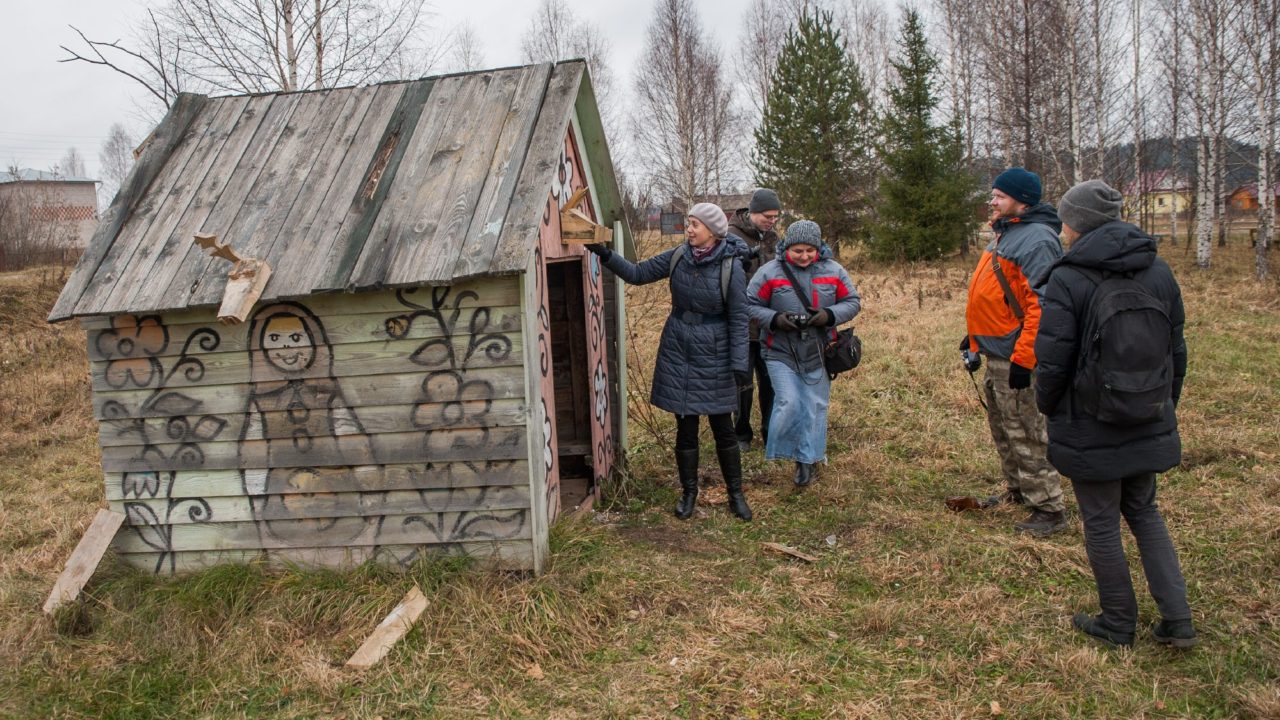 Irina Chernoga (left) shows the guests a playground in Kazan photo: Ivan Kozlov
“I lived in Moscow for eighteen years, but gradually fatigue has accumulated from such a lifestyle. And then I remembered that I had a house from the time of great -grandmother. So I returned to him when I wanted to leave the city to nature. ”
Irina meets me on the pier, and we go through her native little prison in an even smaller Kazan, in the vicinity of which the elephant dug up. It should be explained that Irina lives and works in Ostrozhka, and almost all the activities related to the elephant are developing in Kazan - simply because the Kazan is territorially closer to the excavation site.
And in the prison, Irina was proposed to lead the public museum at the House of Culture. The public museum is such a structure that has neither municipal financing nor strict reporting. It is financed by the settlement, so it can be done in it, in fact, anything. Often this happens as follows: residents simply gather the whole world and carry different old things from home to the museum, and then go to curi residence, which of the neighbors brought. It was something like this in the prison, but Irina wanted more, so she began to travel to various forums, to grow ties and eventually met with Perm artist any Shmykova.
And Lyuba, in order to show Irina an example of a beautiful and minimalist arrangement of exhibitions, advised her to get acquainted with the project of another Perm artist - Peter Stabrovsky. By coincidence, the project of Peter was exhibited at the regional Museum of Perm Antiquities and was dedicated to the trogonerial elephant. Arriving at the museum to get acquainted with the exhibition design, Irina unexpectedly found out for herself that this unique elephant is dug up literally ten kilometers from her house. At this moment, she finally believed in fate, and devoted all her further work exclusively to the elephant.
“I began to read more and more about this, and over time it came to me that this is an important and cool story, which few people know about in the area . And I’m also a geologist by education - there, however, with inanimate nature I had to work, and not with elephants, but still. ”
Irina unexpectedly learned for herself that a unique elephant is dug up literally ten kilometers from her houseIrina began to work closely with the Perm Museum of Local Lore, which initiated excavations. She honestly admits that without a museum, who acted as a mentor and assistant, she would have much succeeded. But still, the tasks of specialists who did their great and important work did not include working with the local population. And Irina wanted an ancient elephant, since he had the imprudence of die in her native land, somehow served by the Okhan residents.
“You see, in Ocra, children about Perm lizards probably know more than about cows ,” Irina sighs, “but in Okhansk, prison and Kazan to the excavations of the elephant are still treated as something incomprehensible and alien.”
Estri's birthday
The outline is a city forty kilometers from a prison. Seventy years ago, a whole cemetery of ancient lizards was discovered in his environs, whose age exceeded 250 million years. Thanks to this unique find, the outline gradually gained its brand: today the city has its own Perm period, and local residents know ancient lizards by names and are proud of them.
In the spring, filmmakers came to the area: the Perm film studio "New Course" with St. Petersburg director Mila Kudryashova. They were going to make a film about the excavations of the elephant, but at the same time captured the story about lizards. In Ochra, by that time they came up with their character-dumplings-he was elected by the prehistoric Estemenozh Estik who lived in these parts-and began to celebrate his birthday. For filming, the district administration organized a mass of three hundred local children, each of whom was given a drawing with a lizard. And then, to Ozkensky streets, they launched a parade with drummers over whom the drone flew, and on the command "Air!" Hundreds of children, led by a Rostovy doll Estik, lifted the drawn dinosaurs.
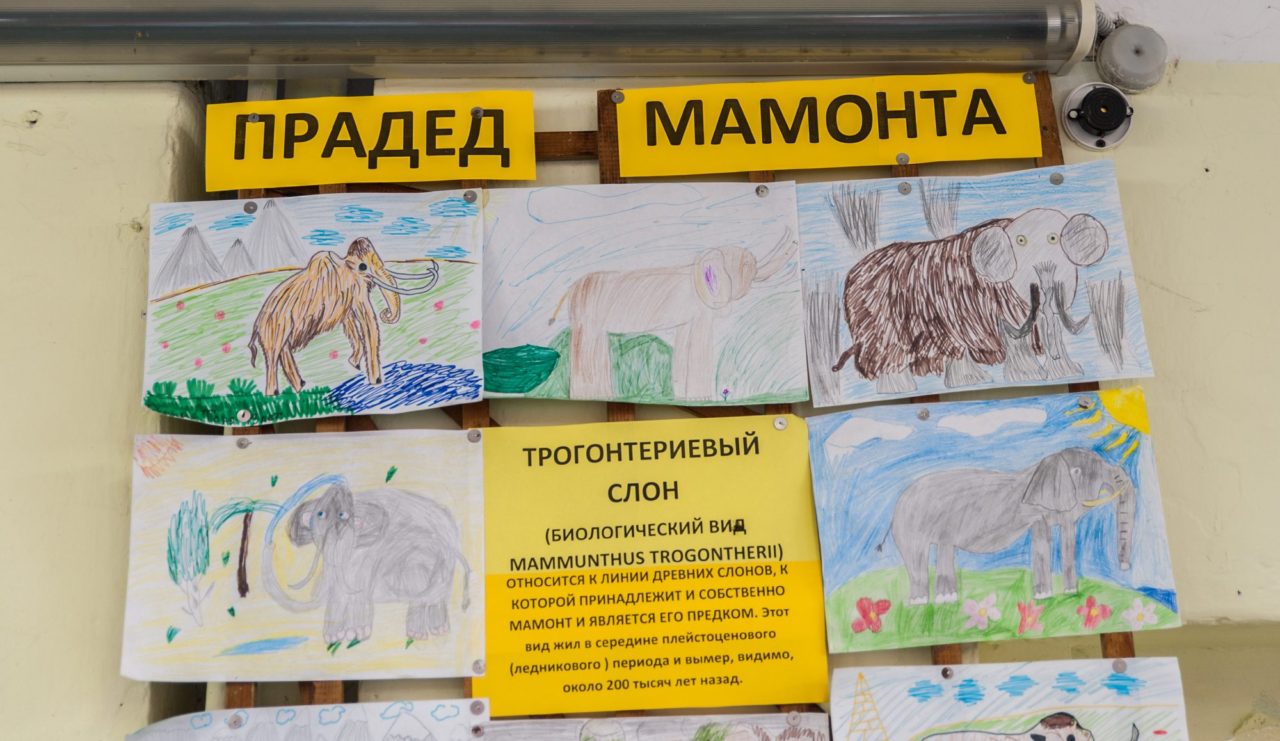 In the museum photo: Ivan Kozlov
Before she herself contacted contemporary art, many other ideas occurred to her. Irina even wanted to arrange paleontological cognitive tours. A similar format really exists-antiquity lovers, for example, can go to some suitable quarry and make shells there. But the idea did not take off: even if the direct place of excavations were open to visits, the participants of the tour would be left without souvenirs: the trogoneria elephant is not a shell, you won’t be pulled out for souvenirs.
And then she remembered her acquaintances artists, who at that time already had a rich experience of creative residences. After joint discussions and brainstorming, Irina sketched an action plan and ultimately received a grant from the Timchenko Foundation under him as part of the program “Cultural Mosaic of Small Cities and Sells ”.
The line gradually gained his brand: local residents know ancient lizards by names and are proud of themOn the day when Bard Zavalin and I moored on a ferry to the Okhan coast, Pyotr Stabrovsky was visiting Irina - they discussed with him and several other artists from the Permm Museum of Contemporary Art, how to draw up an exhibition in the very public museum of prison . The four-with Peter, Irina and her little son Dima-we go to Kazan to see the results of the art residence that young Perm artists arranged in the summer. But first, we look at the museum of local history in Kazan, which, unlike Ostrog, exists and works - the cheerful and cheerful Olga Aleksandrovna Masalkina leads it.
“Since this whole story began with an elephant, we are trying to do something related to it with the children-we try to make the elephant in one way or another in our works,” she says, showing an exhibition of children's drawings “Mammont's great-grandfather”.
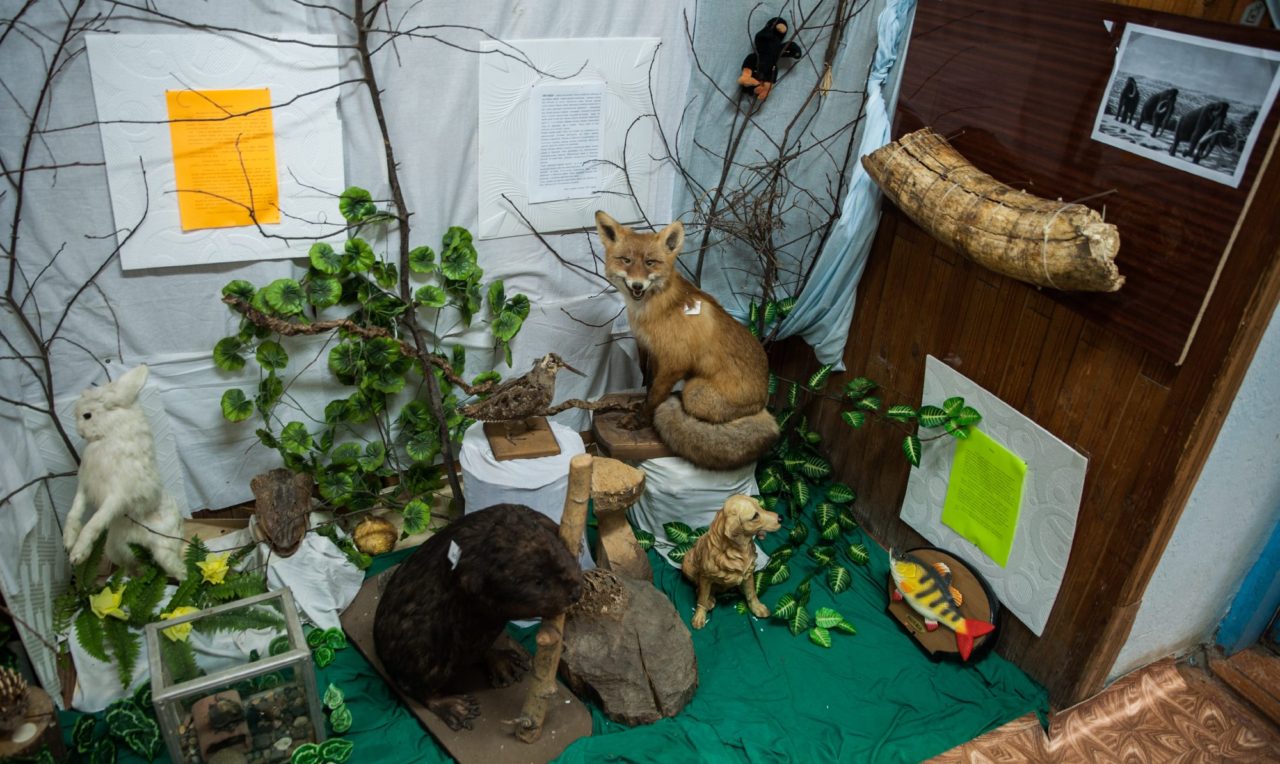 In the museum photo: Ivan Kozlov
In the neighboring hall - an exposition dedicated to the nature of the surrounding forests. It consists of animal stuffed animals mixed with soft toys. It also presents an electric singing fish - a souvenir fish on the board beats its tail and yells heartily when you turn it on. The central exhibit of the exhibition is a large fragment of the very tusk of the elephant from which it all began. He is pressed with plastic ties to a varnished piece of chipboard.
In general, the dramaturgy of the local history exposition in the museum is built in such a way that it is immediately visible: the Kazanka, like many similar places in Russia, have not yet recovered from the destruction of the collective farm. Its final part is crowned by the sign “The last days of the existence of agricultural enterprises”. Having reached her, Olga Alexandrovna immediately switches to the story of the current state of affairs, and it is sad. There is nothing in Kazan, except for the school, the administration and the neuropsychiatric boarding school, in which the most severe patients were brought from all over the region. Employed people can be counted on the fingers. There are a couple of stores and a marginal snack near the bus stop, but it does not work during the day.
Each village has its own blocks
Young Dima was tired of listening to the tour, he wants to go dinner.
“The snack is closed! - Masalkina tells him. “You can, of course, buy baking in the store, only they will not be heated there, because their only microwave burned down.”
Having a pause, she delightfully says: "Speaking!"
With private business in Kazanka is not very good. Here everyone has a hearing of the history of several farmers who unsuccessfully trying to conduct business here. One of them began with the purchase of three hundred thoroughbred sheep, but after six months of sheep there were only fifty. On that business ended. And local residents have no illusions yet about the fact that the vanity around the elephant will quickly bring prosperity to the Kazan.
“Well, they found and found it,” Olga Alexandrovna shrugs. “Maybe they will find something else if the diggers are persistent.” Each village has its own blocks. We had such that the elephant from under the shore was washed. They also say that the treasure is buried on the mountain - the gold of Kolchak. ”
“We were such that the elephant from under the shore was washed. They also say that the treasure is buried on the mountain - the gold of Kolchak "She confirms Irina's sad observations: there is no business to the local to the trigger elephant yet. In the framework of summer artists, artists, along with children, made a wooden elephant based on old swing. The elephant came out the sweetest, but someone nevertheless tore off the wooden tusk. And the most noticeable reaction of local residents to the activity of artists was a grunt that Irina, they say, teaches children to write on the walls. Just at these murals, we go to look by leaving the museum of local lore.
"Here the elephant scratched his back"
While the children, along with the artists, walked around the Kazan, it came to their minds to mark with the inscriptions those places where, perhaps, the trigger elephant visited. So several text graffiti appeared on the walls and pillars of the village. On the back of the museum building, near a large crack in a brickwork, it is written: "The trogoneria elephant rode a bicycle, but did not have time to turn off and crashed into this wall." When the inscription was shown to the head of the district, he first cheered up, and then worried about a crack that he had not paid attention to before. All those present agreed that the public art should work something like this (although nothing has happened to the crack so far).
The bus stop is adorned by the inscription: "Here, the trigger elephant was waiting for the bus for 200 thousand years, but did not leave for it because it did not fit."
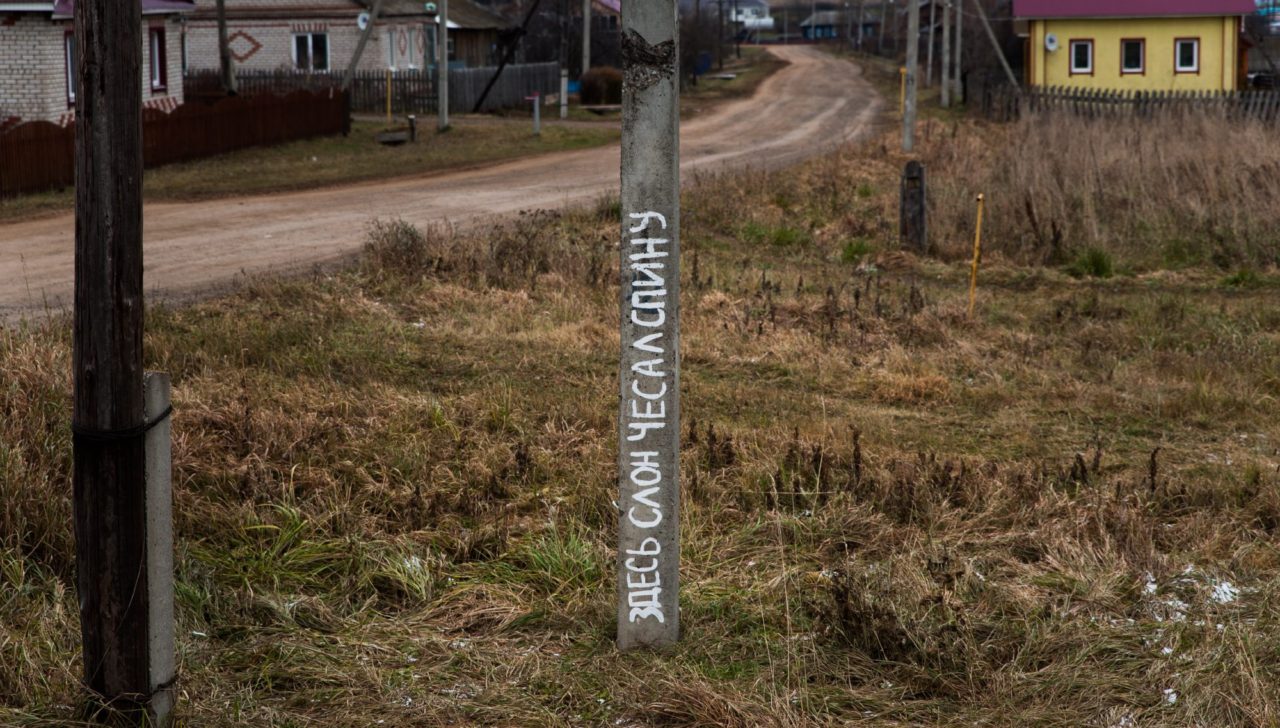 Photo inscriptions : Ivan Kozlov
“We first made all the inscriptions,” says Peter Stabrovsky, “and then looked at them with a fresh look and realized that the trogoneria elephant was trying to dump from here all the time.”
Another half a dozen inscriptions are scattered along the Kazan here and there. On an incomprehensible concrete beam it is written: “Here, the trigger elephant tried to understand what it was”, on a cracked lamppost: “Here the elephant scratched his back” and the like.
In general, while Irina has not been done as part of the Irina project, but its main part is still ahead. She plans to continue educational work in schools and circles, organize mobile exhibitions, and hold a large thematic festival in the summer. Her biggest dream is to make contact with the Nikola-Lenivts art park in the Kaluga region in order to learn from them how to make cool and large-scale projects.
“By the way,“ Nicholas-Lenist ”began with the fact that Nikolai Polis (founder of the art park and the festival of the same name.- Note ) attracted local residents to his projects,” recalls Petya Stabrovsky. “They blinded him there.”
Irina sighs. She really wants to believe that the inhabitants of the Kazan with a prison sooner or later it will turn out to be fascinated by all this.
“If we make a cranberry festival, then everything is clear there,” Irina says on the way back. - Cranberry is collected, cranberries are eaten, fringed from cranberries. And with an elephant everything is much more complicated.
“Elephants are looking, they collect elephants, dress elephants, eat an elephant,” young Dima responds from the rear seat.
- How to imagine an elephant? - Irina continues with a smile. - I myself do not really know yet, for me participation in this project is a call and an experiment.
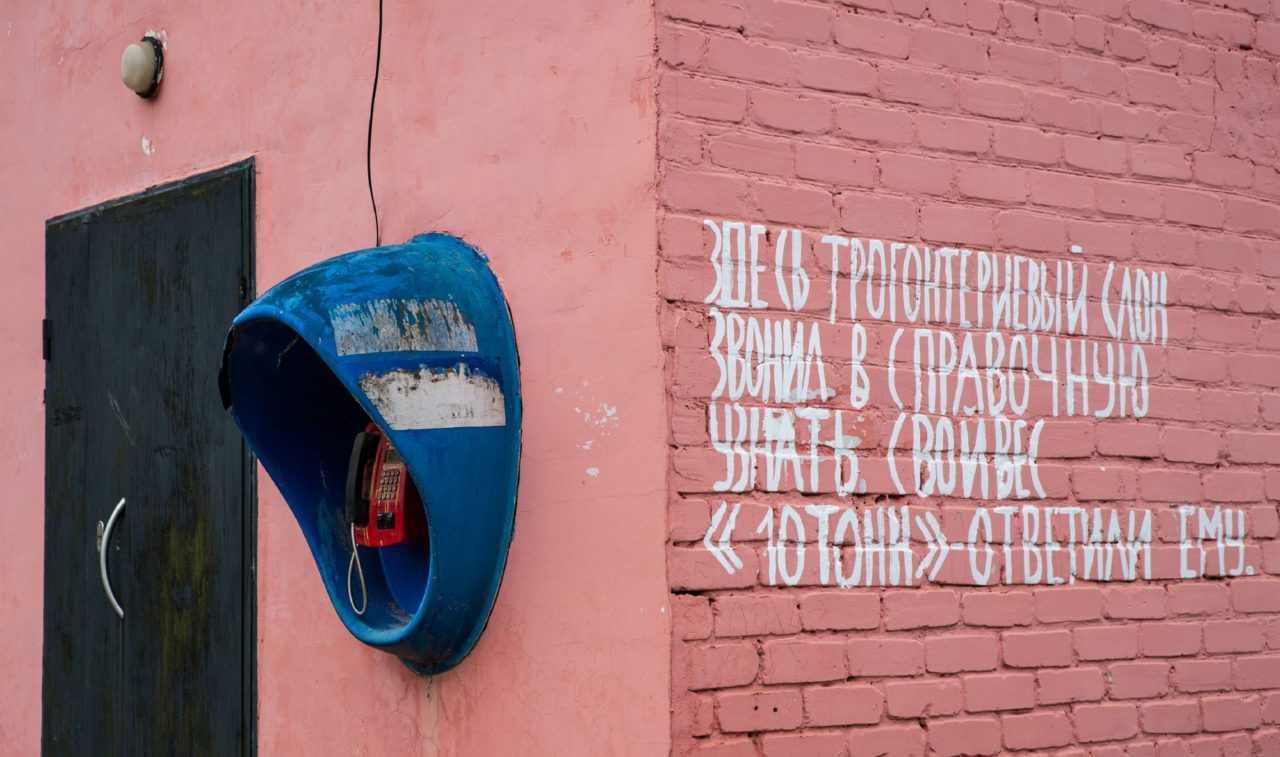 Photo inscriptions : Ivan Kozlov
We spend about an hour to overcome the distance from Kazanka to the nearest bus station in Pavlovsk. While we are going along a monstrous bugrous road brought by snow, Irina tells about himself - it turns out that before moving from Moscow to the family estate, she managed to live in Odessa for a year and a half, from where she left after the tragedy in the house of trade unions. She recalls the Odessa climate and kitchen, and in the meantime the destroyed churches and empty wooden houses are rolled outside. Sometimes we drive turns to different settlements. One of the roads leads to the village of Tabors, where the same brave enthusiast Irina Ponomareva is trying to create a museum of the meteorite that had once fallen here, the other in the village of Sich, where the healer Alexander Ivanovich lives throughout the country. The third road passes through a line in which the birthday of a prehistoric lizard is celebrated in parades. And under the ground, on which we are going, the ancient fossilized elephant and many other, no less strange creatures rest. At some point, I feel like a hero of a story like a Sorokinsky “snowstorm”, but quickly drive this thought: no artistic story can withstand competition with reality.
Do you want us to send the best texts of “such cases” to you by e -mail? Subscribe to our weekly newsletter!
Volunteers Culture Perm Territory Ural