
Translated material
The unrest of Lithuania
Lithuania continues to deal with her past. In early January, the Center for the study of genocide and resistance published the last part of the registration journal of archival affairs of the Lithuanian division of the KGB of the USSR. In the lists of recruited now, the late actor Donatas Banionis and conductor Saulus Sondetkis were the late actor.
The head of the chandelier commission Algimantas Urmonas said that it is time to end the extension process officially: "We have expired all reasonable terms, we will not find anything more valuable."
In Lithuania, according to the 1999 lustration law (and the amendments of 2010) to those who secretly cooperated with the KGB gave the opportunity to admit voluntarily. If they did not do this and their connection with the KGB was subsequently disclosed, then they were forbidden to occupy a number of posts in the government, in law enforcement agencies, in the army and diplomatic corps, work in positions related to access to the state -owneds of Lithuania or foreign states, in banks, as well as leading schools.
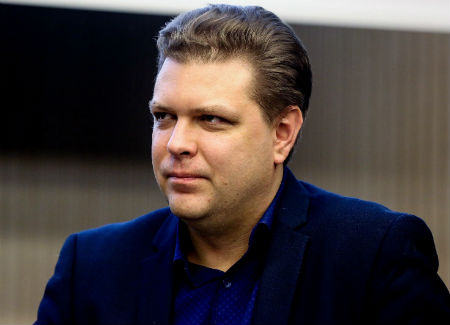
The latest revelations caused a new wave of controversy. The dark spots of the past and relevant threats are reflected by the Saulus of the Block , a literary translator, editor -in -chief of the publishing house of the Lithuanian Writers Union.
- Summing up the results of lustration in Lithuania: was this process successful? What mistakes were made?
- Lithuania in Lithuania from the very beginning did not go smoothly. I think that the whole point is that lustration could be fruit only if the desovetization of society was carried out at first. And this had to be done immediately as soon as Lithuania became independent - in the nineties, ninety -first year. And we immediately decided to launch lustration.
Even then, there was a lot of disputes on how to carry out the upcoming lustration. I believe that the initial concept was true. Its essence is that all people who were in important positions in the state apparatus should either admit themselves in their ties with the security authorities of the Soviet Union, or be lustrated if such connections subsequently reveal.
- And did this concept work at first?
- Yes, if you remember, there was a major scandal when it turned out that Casimir Pruniskene and Virgiliyus Chepaitis worked on the GB (Pruniskens - the first prime minister of independent Lithuania; Chepaitis - translator, public and politician. - Ed.). They acted under the flag of Sayudis and were lustrated when it became clear that they were agents.
Then slipping began to happen. There was a time when everything seemed to freeze for several years. Nothing was heard about lustration. Then there was a period when there were some investigations, but the case did not reach the court.
- Did lustration meet opposition in power structures?
- About that. In our country, the country has achieved independence, and in the Sejm, the supreme legislative body, the same people remained as under the previous government. And now they adopt laws in Lithuania. And those who possessed force, political weight in Lithuania under the Soviet Union, automatically received the same role in society, the same political weight in the new independent Lithuania. They, as it were, automatically legalized in our new society. Naturally, people tend to change, many true patriots there, but one cannot be confident in all. And now it is no longer customary to talk about the past of those in power.
- And at the same time, they disclose data about agents - actor Banionis and conductor of Sondetkis.
- If we talk about the announcement of these two surnames, there are two aspects. Firstly, a lot of time has passed and now there is no political benefit from the fact that they were called agents. Secondly, I think these surnames were announced not without knowledge, but maybe even with the active assistance of those who want to discredit the very idea of lustration, bring it to the absurdity.
- That is, those who have something to hide?
- I think now there are many who occupy important posts in society and who do not have everything purely in a past life and activity. A lot of important investigations have not been conducted. I believe that if everything were honest, more than one loud trial would take place.
And the names of those who, in fact, did not do anything terrible and could not do anything terribly and, besides that, they just can’t just protect themselves. All the sins of the past are hung on them. This is especially convenient with those who are no longer alive. If you take Soncetkis and Banionis, you know, they had to travel on tour and they would never have been able to leave the country if they had not signed some papers, some promises, they were forced to simply sign everything that they were given to open an away visa from the Soviet Union.
But I want to say about another aspect of all these cases with exposure. Now many, not only for me, the impression is that some events taking place in society, as it were, are in the same direction, here you can see the general beginning and, as it were, a guiding hand.
- What do you mean?
- One of the manifestations is the “investigation” of the Ruta Vanagait (author of the sensational book “Our” about the Holocaust in Lithuania ). Look, she, in particular, states that our national hero - partisan Adolfas Ramanauskas -Vanagas is not a hero at all, but a traitor, scoundrel, fascist and killer (Vanagait subsequently apologized for erroneous information about the leader of the “forest brothers.” - Ed.). Again the same discredit. And here, if you reduce everything together, it turns out that all Lithuanians want to discredit all our independence. It turns out that all our famous artists, world -famous musicians, all our bright people beloved by the people, are the KGB agents? Our partisans, heroes of resistance - scum? So what is this state - Lithuania?
This discredit and bringing to absurdity the idea of lustration is very beneficial to those officials whose past is not entirely clean. It is beneficial for them to live in such a muddy water: what to turn over the past, after all, everyone has sins, leave everything, forget ... and the most odious personalities remain in the shadow. Those who actually did a lot of bad ones.
This is lustration without desovetization. On important posts, all the same as with the old government, and they also carry out lustration. And lustration turns into a tool for manipulating society. When necessary, they extract this tool, announce several selected names.
Look, many people of the older generation, people, let’s say, from the creative elite, known in society in the world, were forced to sign some papers. Without this, they would not only not let them abroad, but would not have been allowed to live normally in their country. There are such people in our Union of Lithuania writers. They do not particularly hide that they signed some papers. But they have never made bumbles. And why now make "spy passions" if such people cannot affect the life of society in any way? They do not adopt laws, they do not judge other people, do not govern the country.
What is the result? A discussion rises in society - those who signed the papers about cooperation with GB are bad or good, they must or do not condemn them, the lustration is good or bad ... And those who initiate this are safely remained in the shadows.
- The son of a posthumously exposed actor, director Raimundas Banionis, said that he was ready to collect suitcases and leave the country.
- Artists, creative people are very sensitive. For them, the moral aspect is of great importance. The son of Donatas Banionis probably knew that his dad once signed something. Donatas Banionis for a long time in an interview with one of the Russian publications (though somehow offensive) mentioned the signing of some papers and said that he himself did not really understand whether it was a recruitment or not. And with Sondetkis it was the same, this fact is not the first time already pops up to the surface.
And now the publication of the names of Sondetkis and Banionis and the inflating of this lively discussion around this lively discussion is perceived by their children as a spit, as a desire to denigrate bright talented people. And they understand that this is a spit from those whose past, to put it mildly, is not accurately, those who are now feeling their complete impunity. And you can understand when the children of Banionis and Sonadkis do not want to live in a country where this is possible.
- But it turns out that many of those who collaborated with state security agencies in Soviet times remained unsolved and the modern Russian special services have a strong lever to influence them?
- Absolutely true. An unusual agent is a valid agent. All these people simply have no choice if an order from Moscow will receive. Under the threat of exposure, they will do everything they will tell them. And this is not only in Lithuania. This is more or less fair, I think for all states in the post -Soviet space. And this especially begins to be felt now when the Russian special services are waging a propaganda war with the whole world. There is a desire to sow chaos, shift goals, values, make it doubt everything. I see a direct connection between the propaganda war, the announcement of the names of the "agents" of Banionis and Sonadkis, the book of Ruta Vanagaita. There are also some political games, for example, a recent scandalous statement by the Prime Minister of Felnnyis , that it is necessary to resume communication with Russia. And something tells me that all this is only the beginning and this year it is still worth waiting for several scandals of the same kind ...
- Does Lithuania count on Western help in the confrontation of these threats?
- The European Union considers all these difficulties our internal business, does not intervene in any way. Not only deputies, government are not ready to request help from abroad, but, I think, most of our civil society: "Lithuanians must understand their affairs."
The trouble is that our civil society is now greatly bloodless. Many went abroad. Many intellectuals have passed away in recent years. New ones do not replace them. There is no Yurgi Ivanauskaite with us, Leonidas Donskis, Richardas Gavavalis (Ivanauskaite is an artist and writer; Donskis is a philosopher and a publicist; a Gavalyis writer, a playwright and a journalist. - Ed.). There are no many others, you can list them for a long time ... They could be far from politics. But their word meant a lot for society. Now there are very few such authorities.
Generation should be changed. Now many young people are going abroad to study, work, earn. Some of them are returning. And these are already completely different people. For them, all the values of a healthy society are self -evident, which were new for us after gaining independence. Something can change when there are more such people and when such people will be in power structures. That is, I believe, it should pass for fifteen to twenty years at least. Unless, of course, we have these fifteen to twenty years and if our Lithuanian state still exist.