
Translated material
Self -portrait of old age
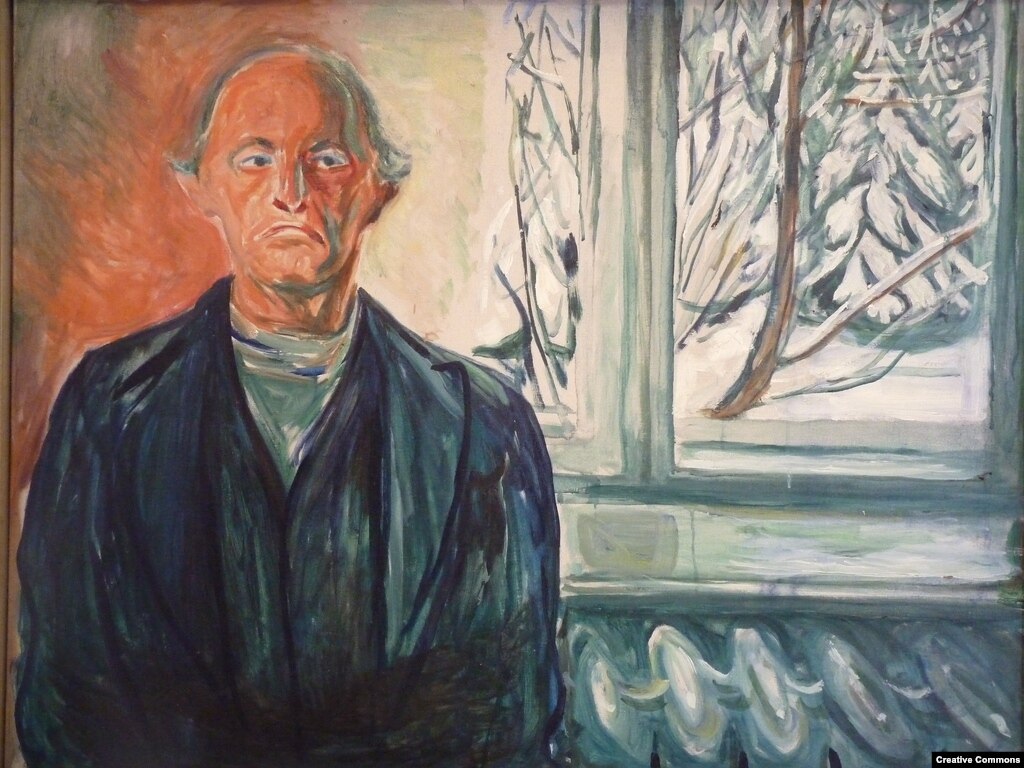
Edward Munk at the Metro Museum
Everyone knows Munk, and that’s why they love him. The "scream" became the icon of our time, for which he paid the circulation of vulgarity. What was for the artist the ultimate expression of causeless despair, like Arzamas horror of Tolstoy, turned out to be a mass souvenir: a ball, a T -shirt, an umbrella.
Trying to go beyond the well-known and annoying, curators of New York museums often arrange Munch retrospectives, placing it in the most different context. One of these exhibitions took place only two years ago. In it, the father of the father of expressionism was compared with his spiritual children, who learned from Munk the first and main commandments of modern art: not to portray, but to express. The trouble is that, having overtaken the master, the Austrian and German expression masters - Kirhner, Kokoshka and, of course, Shile - went on.
Subscribe to us in Telegram
Munk himself in recent years, having closed in the workshop, so as not to see the Nazi occupation, spent alone. Working at night, he wrote himself - an old man in an empty room.
“Fury has disappeared,” I thought, “horror, the anxiety became familiar, and the world fell silent.
- No matter how! -objected the new Munch Exhibition, arranged in the metro recently acquired by the “metro” of the branch, which is called the Met-Broier by the name of the architect.
Munk assured that his painting began only after he was 50
If you see the skill of the curators in, on the advice of the Pound, the old new one, then the exposition composed of 43 works achieved this, turning the idea of the evolution of Munk. It is generally accepted that he created all the best in accurate and reckless youth when immortal images of passion and fear arose, like his "Madonna". But himself Munk assured that his painting began only after he was 50. And now it is clear why.
The exposition puts the work of Munch into his own context. As if an old artist in the declining years of years considers his work through the prism of regret and condescension. Having reassured this point of view - from the bed, we become witnesses to the last inventory. This bitter and honest lesson reminded me of the "Last Krappa tape." In the play by Beckett, the hero listens to the tape recordings of his audio day, constantly returning to those moments when he was in love and happy.
Munk often used early plots, rewriting his work. Especially the most ambitious, like those that made up his "friez of life." So on the canvas of 1925, he again writes the dance of three women symbolizing three hypostases: an innocent girl, an ominous seducer and a mournful widow. And this allegory shines the branded moon Munk, which leaves the path in black water in the form of an exclamation mark.
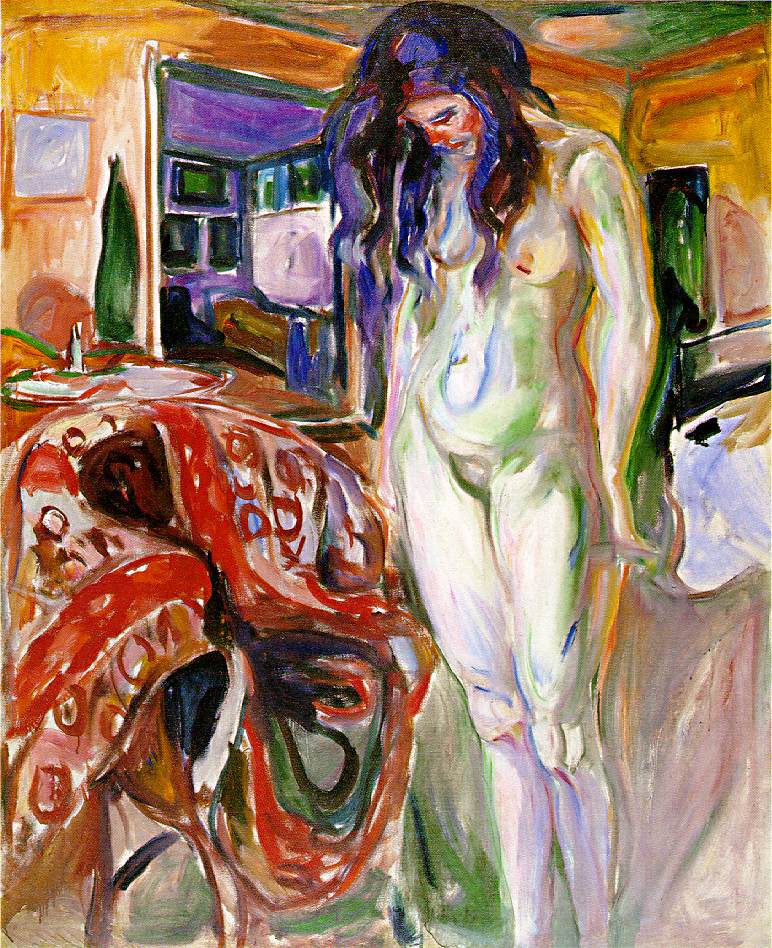
In the same row, other works of the first half of his life. Green model with arbitrarily, like Gella, lengthening limbs. A room with purple walls, where everything swims, as if from a hangover, in which Munk knew a lot, until he quit drinking. Only a “scream” is missing, but he is replaced by a photograph of 1870, taken where his artist, a scream, heard: on a peaceful road along the fjord with a view of Oslo.
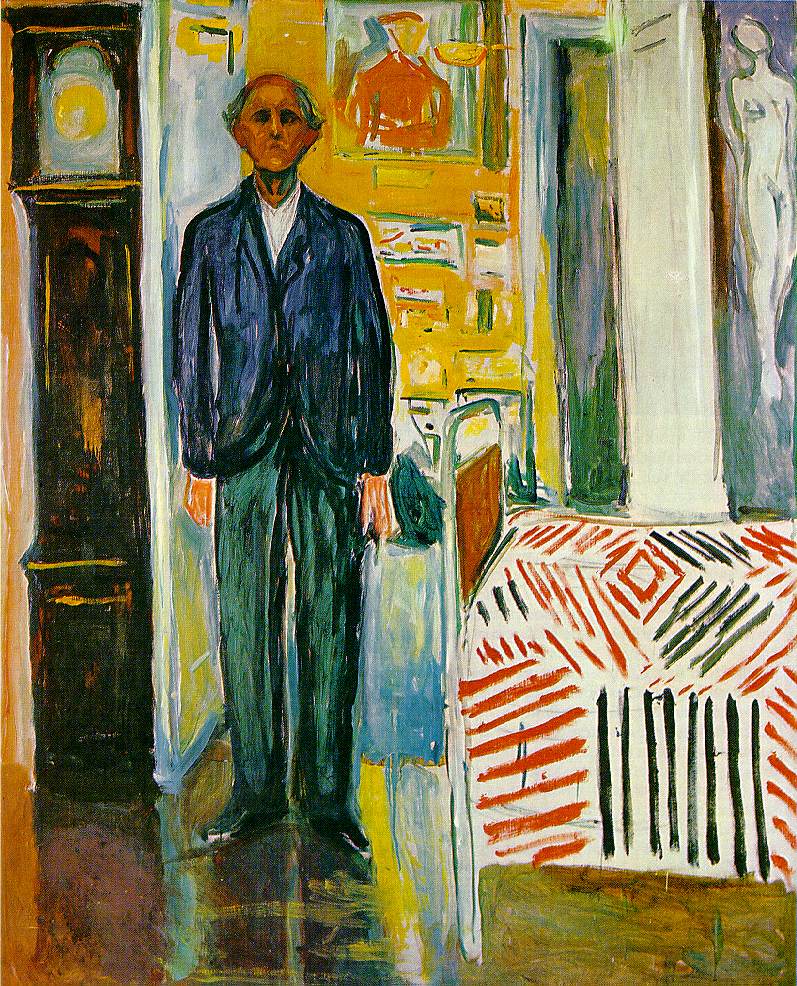
However, the true plot of the exhibition is built by those 16 self -portraits that Munk wrote from 1886 to 1943.
At the very first - at the age of 23 - he resembles young Rembrandt, who also portrayed himself with the dough of skill and outfit. But then everything became worse - and better: the path went from impudence to despair. In mature works, Munk still writes himself with the dignity of an artist who knows his price. He always looks straight ahead - in the mirror that we, the audience, serve him. In addition to himself, he does not see anything, so there are no things in the early self -portraits, only a vague haze of the decorative background.
But closer to old age there is a decisive change, justifying the name of the exhibition - "bed and pendulum". At the last canvas, Munk stands between the covered bed and the large family clock, deprived of the shooters, as in the film of Bergman. Of course, in this you can see a set of previous symbols: sleep, illness, death - and the time locked inside us. But you can look at this picture as a portrait in the interior: the old man is fading with his faithful spectators. Just on these days, Munk wrote a will, leaving all his works to the museum in Oslo.
Already leaving the exhibition, I froze at another self -portrait, written in 1940, when Munk was 77. On it, the artist was incredibly similar to Brodsky, what he would if he had survived to these years. Curls of rare hair, like an embryo of a laurel wreath, the face of mercilessly brick color, gloomy fold of lowered lips and quiet, northern, Protestant stubbornness for years. Outside the window, of course, the winter, which Brodsky called "honest time of the year."