
Translated material
I serve the Fatherland! Expensive
The legalization of private military companies exempts the state from liability for the death of its citizens on a foreign land

On Tuesday January 23, a widely discussed draft law on legalization of private military companies (PMCs) will be sent to the government to obtain an expert opinion. The process can take several weeks. In the case of a positive conclusion from the government in the second half of February, the project may be submitted to the State Duma. Mikhail Emelyanov, Deputy Chairman of the Committee on State Planning and Legislation, spoke about the procedure and the alleged deadlines for the passage of the Law “New”.
Emelyanov confirmed the “new” that the text of the bill was already ready, but did not disclose the basic principles of the document - apparently, fearing the activation of opponents of the law. As already happened at the end of 2014, when the State Duma rejected the draft law “On private military security companies”, introduced through the Duma committee on defense by deputies Gorovtsov, Shein, Nosovko. If it were adopted in early 2015, the Russian PMCs would be legalized, and Russia would not have to pretend that armed units, known as the Wagner PMC, were not participating in the Syrian military campaign.
In 2014, in an explanatory note to the draft law it was emphasized that PMCs work in more than 110 countries of the world, while in the UK, Israel, South Africa and Belgium in 2011-2012 there was a sharp increase in the number of private military companies. The total number of PMCs in the world is several hundred, and the total number of their employees is more than 5 million people.
Despite the fact that in Russia there is still no legal framework governing the activities of military companies, Russian PMCs have been working on the world military security services market since the mid-90s.
The experts surveyed by the “new” experts appreciated the “capacity” of the Russian personnel market, believing that in different years, more than a hundred thousand Russians worked in Russian and foreign PMCs.
“Russia is a good forge of personnel for military companies,” one of our experts said. - Here is a specific example. More than 3.5 thousand of our compatriots who served in the French foreign legion live in Russia alone, and those who received French citizenship and remained in the West are many times more
- Russia can put 100-150 thousand specialists who have undergone excellent training on the world market of military services - such an assessment was given by another interlocutor working on the world military services market from the end of the last century.
But all Russian PMCs providing military security services outside the country remain in Russia in a semi-legal position, and the deacmols of prosecution of criminal liability under Article 359 of the Criminal Code (“Mercenary”) are constantly hanging over the fighters of these structures.
Mercenaries are in Russian
"New" already told how in October 2013 267 Russians at once could receive prison deadlines for mercenaries. Let me remind you that Slavonic Corps Limited registered in Hong Kong and working in Moscow, recruited 267 volunteers under a contract with the Ministry of Oil and Mineral Resources of Syria to protect “Oil production, transportation and processing facilities”. And only having reached Syria, people learned that these objects still had to recapture from the militants.
On October 17, 2013, in the province of Homs "Slavic Corps" was ambushed. The fighters dispersed, took up a circular defense, even managed to bumble and fought off several thousand militants from a furious attack for several hours. After the battle, it turned out that one of the volunteers lost the tablet with documents, and the militants chopped it around the world that Russians were fighting in Syria.
The Slavic Corps was urgently taken to Russia. Two planes that landed in Vnukovo surrounded the fighters of the special forces of the FSB "Alpha", detained all volunteers. So 267 DOU appeared - “affairs of operational accounting” - with copies of personal documents and with explanatory each of the volunteers. 265 people were released, limited to preventive conversations. And for the leaders of the “Slavic Corps” Vadim Gusev and Evgeny Sidorov, “Contact” with the FSB ended with criminal cases, sentences and real terms under Article 359 of the Criminal Code.
But for those who were released home without criminal cases, “contact” with the FSB did not pass without a trace. Perhaps this is an accidental coincidence, but they remembered volunteers in the summer of 2014. And almost all of them ended up in the training center, deployed near the farm of the Molkino Krasnodar Territory. Soon they were transferred to the Donbass. Yes, there were those who wanted to abandon this dubious voyage, but “good people” reminded them of Gusev’s fate with Sidorov and “shows with a guilty”, personally written after the basis from Syria.
When the operation of the Russian Aerospace Forces in Syria began, many “volunteers” were transferred from Donbass to the Middle East, where they became the main backbone of armed groups, which in Russia were called “Wagner PMC”.
How the Minister of Defense was offended by the "cook"
In Syria, several thousand fighters of the Wagner PMC fought. They fought as part of four reconnaissance-nursing brigades, artillery divisions, tank company, sabotage-intelligence, engineering-survey company, communications company, staff and auxiliary units.
The fighters are financed through the Russian Euro Polis LLC, which, as Fontanka wrote back in June 2017, was allegedly affiliated with the famous Petersburg businessman Yevgeny Prigozhin, who is called a “cook” in Zakremlinsky circles.
The military equipment and ammunition “PMC Wagner” is provided by the Ministry of Defense. The military missions were also set by officers and generals of the military department of Russia. They coordinated the interaction of "private traders" with aviation and units of the Syrian army .
After the liberation of Palmyra, where the Wagnerians played a decisive role, the Minister of Defense Sergei Shoigu reported to the Supreme Commander -in -Chief of the President of Russia about success. But it turned out that Sergei Shoigu was ahead of Evgeny Prigozhin - Putin was already aware of the details of the liberation of the ancient city.
On December 9, 2015, the Minister of Defense received another “blow” from the “cook”. On this day, a solemn reception dedicated to the celebration of the heroes of Russia was held in the St. George Hall of the Kremlin. Among the invited was Dmitry Valerievich Utkin - the head of the "PMC Wagner". And with him - at least three of his closest associates. Moreover, as several sources told us at once, the military department did not know about the invitation of the “Wagnerians” to the Kremlin at all.
Perhaps this is an accidental coincidence, but after admission in the Kremlin, the “PMC Wagner” in Syria began serious problems: they took away heavy equipment, interruptions in the supply of weapons and ammunition began. According to information received at once from several sources, only last fall, before the start of the offensive on Deir ez-Zor, the supply was normalized. They returned the equipment.
Who left the FSB without a private army?
As our sources assure, in 2014 the Law on PMCs was not adopted, because the Ministry of Defense lobbyists worked against it. The fact is that the functions of licensing and control over the activities of PMCs were supposed to endow the FSB.
It was the FSB that was supposed to register PMCs and track the work of companies both in Russia and abroad. The draft law of the Chekists entrusted the creation and maintenance of a single information system, which should have reflected the numbers of the licenses issued by the PMC and detailed information about the conduct of the activities of military companies.
The bill did not like the bill not only the General of the Ministry of Defense - he then had many opponents in the presidential administration and the government - everyone who was afraid of the already omnipotent FSB also has also a private army controlled by several thousand well -trained, trained and excellent armed fighters.
In the new bill, which on Tuesday will be sent to the government, it is proposed to transfer the functions of licensing and control over PMCs to the Ministry of Defense. Moreover, the ex-head of the military-space forces, and now the head of the Federation Council Defense Committee, Viktor Bondarev, voiced the idea that is in many offices of the military ministry. Bondarev told RIA Novosti that if PMCs appear in the legal field of Russia, they should be built into the vertical military system and obey the Ministry of Defense - only in this case, PMCs allegedly will be able to become real assistance to regular troops.
The law will only work in Russia
The experts interviewed by us skeptically appreciated the proposal of the head of the Federation Council Committee.
“General Bondarev simply does not understand the essence of the PMC,” said one of our interlocutors. - His idea of PMCs is based on the Syrian experience of attracting “private traders” to participate in the hostilities. And this is fundamentally wrong. The main task of the Law on PMCs, in addition to protecting fighters from criminal prosecution for mercenaries, is the admission of Russian companies to the military security services market, the customer of which is either the state or state corporations. We are talking, first of all, about the armed protection of objects and personnel of Russian companies working abroad.
Already today, state corporations such as Gazprom, Rosatom, Rosneft, Russian Railways, having contracts in the Middle East, Africa and Latin America, are attracted to structures that are inherently private military companies to protect construction, deposits, transportation.
- This is a global practice. In the same China, all PMCs have only one customer - the state. In the United States, a lion's share of PMC orders is received from the State Department, CIA or Ministry of Defense. Both in Russia, both the state and state-owned companies are forced to invent some kind of bypass, without calling a spade of their properlys.
Speaking about the absurdity of the integration of PMCs into the vertical of the military department, another of my interlocutors cited such an example.
- Suppose Rosneft will conclude a contract for the protection of wells with the Russian PMC. And what will mean the emergence of an armed company in Africa, "built into the structure" of the Russian military department? In the language of international law, this will mean military invasion.
“You can’t ignore such a significant factor in the activities of PMCs as the legislation of the Land of stay,” another interlocutor recalled.
- The Russian Law on PMCs, even after adoption, will not have any legal force in the same Middle East or Africa. Any Russian PMC, providing military security services outside Russia, is guided and will be guided by the laws of the country in which it works.
True, here my interlocutor made an amendment: “Unless, of course, we are talking about“ specific ”operations, when in case of success, all well done, but only direct participants will be responsible for failure. And he cited a specific example of a special operation that was prepared, but at the last moment canceled.
"Specific" operation
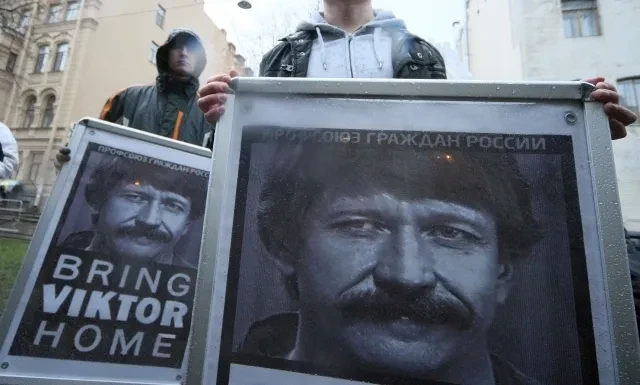
On March 6, 2008, in Bangkok, the Thai police detained Russian Viktor Buta, who was accused of supplying weapons of the Columbian radical organization Farc. For more than two years, Buta’s lawyers tried to get his liberation from Thai prison.
And in the fall of 2010, one of the Russian companies providing military security services received an order for the abduction of Buta.
“Contact” was established with prison employees who were supposed to organize the export of Buta at the hearing on a pre -agreed route. During a trip in one of the regions of Bangkok, local residents had to start a shootout with each other (idle cartridges), and guards who accompanied the Russian (who have already received a reward) - to hide. In the turmoil of the prisoner, they planned to “withdraw” from a car carrier and deliver a suburb, where a private plane was already waiting, which was supposed to be taken out of the country.
But just a few days before the start of the operation, one of the customers decided to warn the employees of the Russian Embassy in Thailand so that they do not go to prison that day. Russian diplomats got naked, perhaps even warned the Thais about the impending escape. Everything had to be canceled, and the participants involved in the preparation of the "event", urgently evacuated from Thailand.
Who is waiting for the PMC Law?
It is obvious that the catalyst for the need to force the adoption of the Law on PMCs was the participation of the “Wagnerians” in the Syrian military company. But the “Wagner PMC” is, according to various estimates, from 7 to 10 thousand people, at the same time, I recall that Russia can potentially put 100-150 thousand specialists on the world market of military services. Even today, the number of Russians already involved in the provision of military security services is comparable to the number of combat participants in Syria.
Russian companies providing military security services, as a rule, work on subcontracts from American and British PMCs. The most famous are “Center-Antterror”, “Tiger Top-Ant Security”, “Redut-Antterror” Russkorp, Fort Defens Group. Most of all, the services of Russian companies are in demand in Iraq and Afghanistan.
Another important activity of domestic security enterprises is to ensure the safety of shipping in the pirate -hazardous areas of the world ocean. In this area there are VST, Muse Group, Moran Security Group.
All these PMCs, ready to legalize in the case of the adoption of the relevant law, can be conditionally divided into two large groups - “office” and “army”.
“Office” - companies organized by immigrants from the FSB that served in the units of Alpha and Vympel. "Army" - created by retired officers of the GRU or Airborne Forces.
(By the way, the majority of Russian Jumps are security enterprises created by retired officers of the Ministry of Internal Affairs, they do not need the Law on PMCs.)
In the conditions of a legal vacuum, almost all of the listed companies - Russian only on basing head offices and “labor groups”, and in legal form - structures registered in offshore jurisdictions. On the other hand, the same legislative vacuum allows PMCs to work for any customer, and not just for the Russian Federation, and avoid any close attention of domestic law enforcement agencies and special services. So, it is likely that part of the Russian military companies will not want to get out of the shadows.