
Translated material
Borderline condition
Since this year, citizens of the EU and the USA will be able to enter Belarus without a visa for 10 days. Next in line is Hong Kong. Russia hastily strengthens the western border and proposes to introduce an allied visa
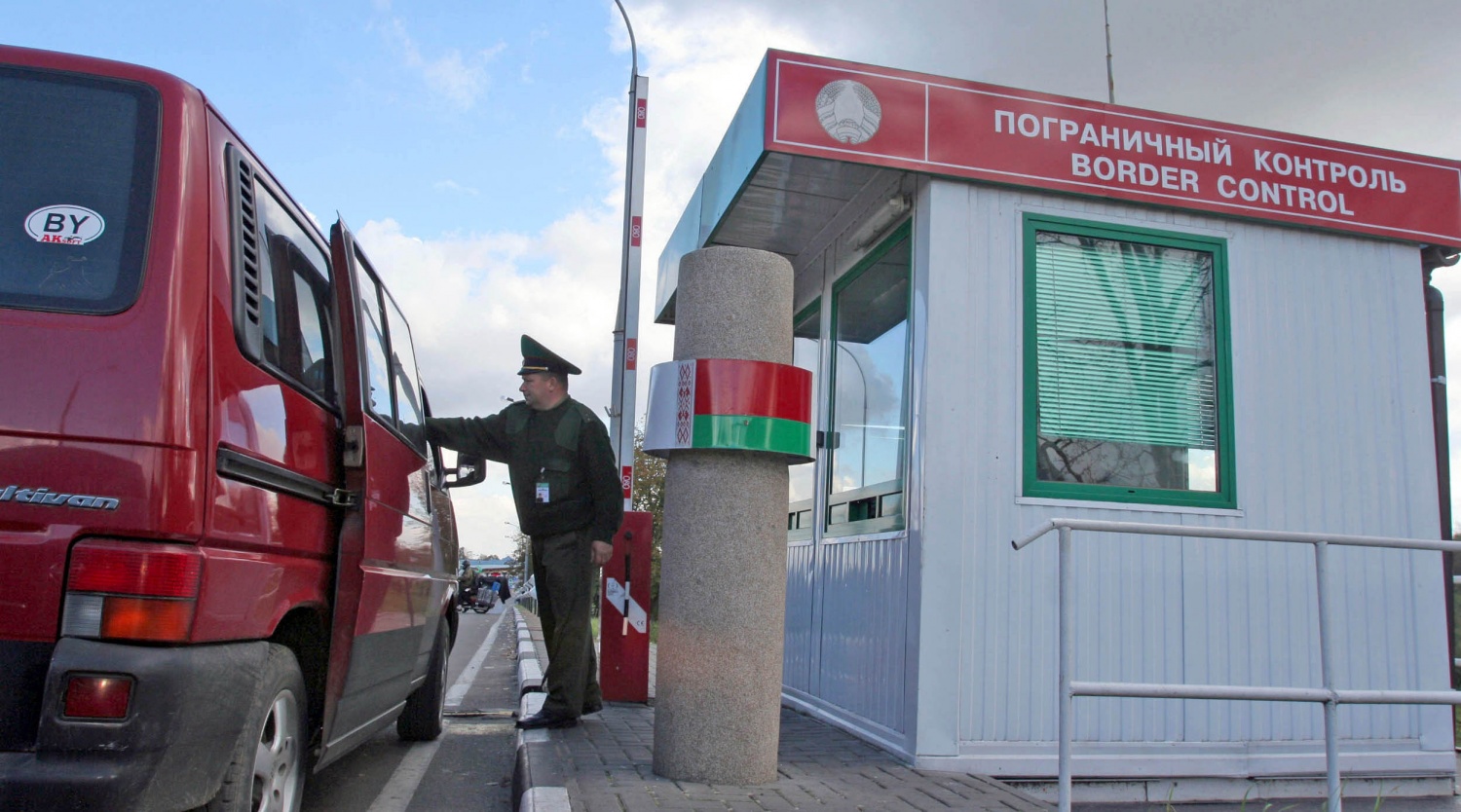
Photo: vladtime.ru
Regime relief
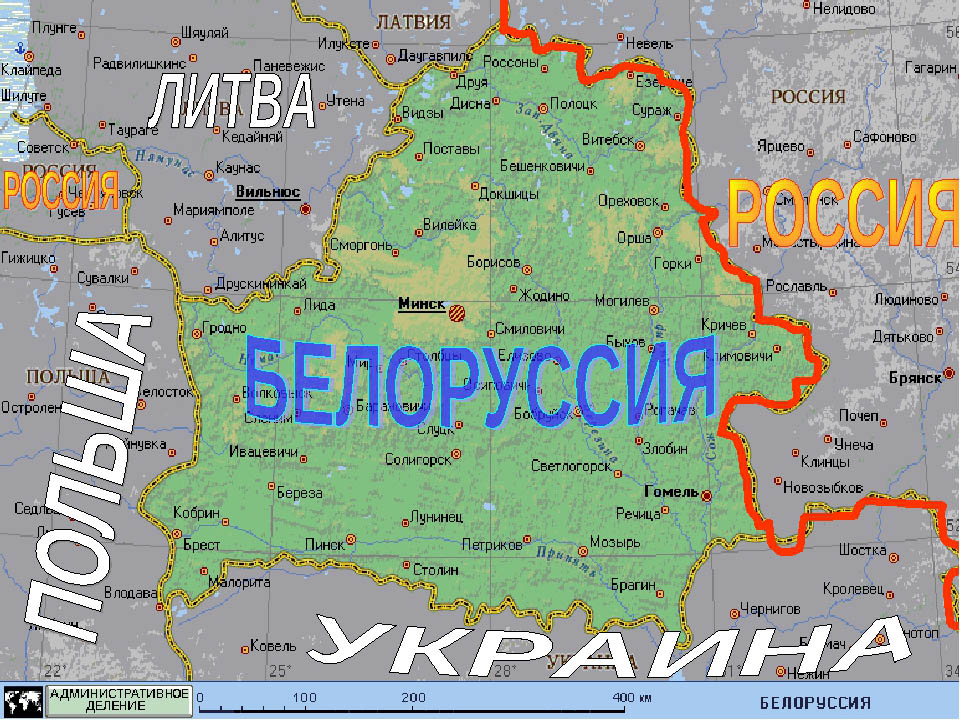
On January 1, 2018, a decree of the President of Belarus Alexander Lukashenko No. 462 “On the establishment of a visa -free order and departure of foreign citizens” entered into force: now citizens of the EU and the USA can be without a visa in Belarus not for five days, as before, but ten. However, already now foreign tourists who want to visit the August Canal tourist and recreational park, which in the Grodno region, not far from the border with Poland and Lithuania, can do this without an entrance visa. From January 1, the tourist-recreational zone "Brest" also received the status of visa-free.
And the next month, an agreement will enter into force on the abolition of visas between Belarus and Hong Kong, the press secretary of the Belarusian Foreign Ministry Dmitry Mironchik said at a briefing in Minsk. Officials promise that the abolition of visas between Belarus and Hong Kong "will significantly intensify the contacts of the two countries at the level of business and tourism."
Meanwhile, the Belarusian Foreign Ministry is preparing to sign with the EU agreements on the liberalization of the visa regime and the reactsia, according to which Schengen visas will become cheaper for Belarusians (€ 30 instead of the current € 60). And it will become much easier to get them, although today Belarus is the leader in the world in terms of the number of Schengen visas issued per capita.
Source: Infourk.ru
All these are episodes of the large -scale campaign of official Minsk under the conditional name "Belarus - an open country." The campaign started a year ago: on February 12, 2017, Lukashenko signed a decree on a visa -free entry into Belarus (for five days, subject to the arrival of 80 states through the National Airport), including the entire European Union and the United States. Lukashenko’s goal is to destroy the image of Belarus as “the last dictatorship of Europe” and prove the opposite: the country is not going to hide behind the “iron curtain” and gradually opens up to the world, and on a unilateral basis. And dictatorships, as you know, do not behave like that.
The Belarusian Foreign Ministry is preparing to sign with the EU agreements on the liberalization of the visa regime and the reactsia, according to which Schengen visas will become cheaper for Belarusians (€ 30 instead of the current € 60). Yes, and getting them will become much easier, although today Belarus is the leader in the world by the number of Schengen visas issued per capita
Moscow is nervous
As soon as Lukashenko granted Europeans and Americans the right of short -term visa -free entry into the country, they got nervous in Moscow. Experts on Russian federal channels started talking about the “black hole on the western border of Russia”, security officials and diplomats about the danger of representatives of international terrorism through Belarus to Russia. This is what, for example, in June last year, Russian ambassador to Minsk Alexander Surikov stated: “... the openness of our border between Russia and Belarus can be used, among other things, ISIS members - I mean the visa -free regime at the Minsk National Airport. His direct chef, the Russian Foreign Minister Sergei Lavrov, went even further - according to him, the “Belarusian visa -free” puses a threat to Russia, not to mention Lukashenko made it “without warning”.
As a result, in early May 2017, Russia introduced the full control of passengers on the border with Belarus.
Russian ambassador to Minsk Alexander Surikov: “... the openness of our border between Russia and Belarus can be used, among other things, ISIS members*”
However, on December 2016, that is, before Lukashenko first “opened” the country, director of the FSB of Russia, Alexander Bortnikov, signed an order to establish border zones with a special regime to part of the Russian territory bordering Belarus. Obviously, in Moscow they were aware of Lukashenko’s desire to conduct visa liberalization and took proactive steps. True, another version was in use: the FSB hastened to block the last more or less reliable channel, through which representatives of the Russian opposition pursued by Russian law enforcement unhindered went west.
Two months later, in February 2017, Bortnikov ordered to establish border zones in the Bryansk, Smolensk and Pskov regions along the border with Belarus. The era of the boundless confidence of the two countries to each other (in 1995, Lukashenko with the then Russian Prime Minister Viktor Chernomyrdin, as a sign that both countries headed for the “union construction”, dug a border pillar on the Russian-Belarusian border) finally remained behind.
In response, Lukashenko stated that the measures taken by Moscow were a “purely political attack”, simultaneously recognizing that a new problem appeared in the relations of the two countries. According to him, “the Belarusian-Russian border has acquired an unspoken status, as it is often called on the Internet and everywhere, the strangest border in Europe, since the Russian side, without official notice, began to carry out full passport control in relation to all persons following road transport, and then by air and railway.”
According to the expert of the analytical project Belrus Security Blog, Viktor Evmenenko, the nervous reaction of the Russian authorities to the Belarusian innovations in the field of visa policy confirms that Moscow does not consider Belarus as an independent player in the international arena, who may have a position that is different from the Russian. “The logic of Moscow is as follows: the domestic policy of Lukashenko, in principle, can be any, but when it comes to the external one, please, there are no sudden movements,” said NT expert. According to Evmenenko, for Lukashenko the main thing is the economic benefit, and it is she who determines his foreign policy steps. “In the UN, for example, Minsk, on many issues of international relations, supports Moscow, but when it comes to countries with which he has strong economic ties, such as, for example, with Ukraine or with the EU countries, Lukashenko conducts an independent game here,” the expert summarizes.
“The more intense in Moscow, the relationship with Kiev and the West, the more the Kremlin is annoying the demonstrative independence of Minsk in foreign policy,” says Belarusian political scientist Svetlana Grechulina. “Visa liberalization in Belarus has become for Russia only a formal occasion to strengthen control at the border.”
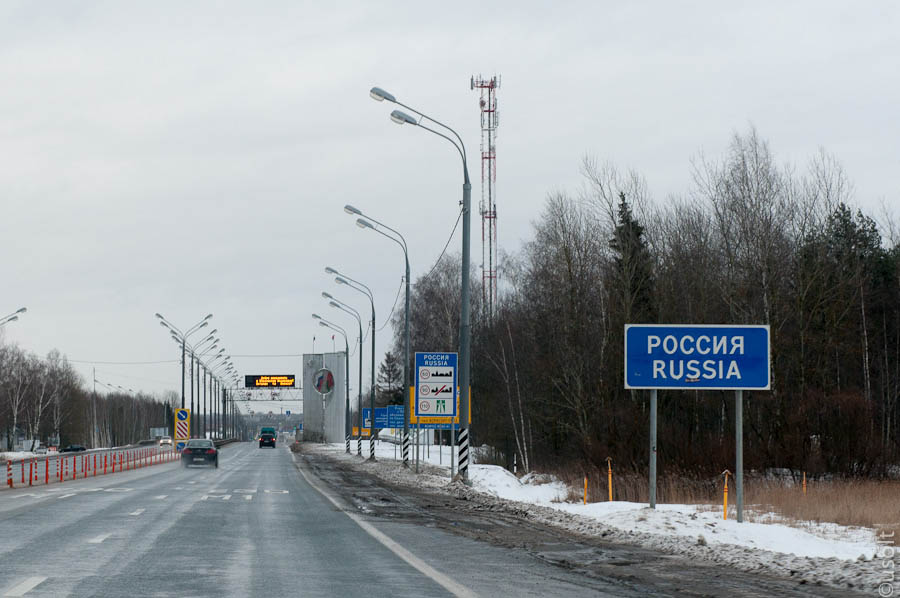
One of the sections of the border of Russia and Belarus
In search of a compromise
Having convinced Lukashenko’s intention to gradually expand the format of the visa -free regime for EU and the USA citizens, Moscow urgently took up the search for at least intermediate solutions. On January 15, 2018, the Russian Foreign Minister Sergei Lavrov announced the desire to sign an agreement with Belarus to introduce a unified visa of the Union State - as the minister believes, this will be removed "all the accumulated border issues." According to Lavrov, the agreement is already “in a high stage of readiness” and in the near future can be signed. “We are ready for this,” said the head of Russian diplomacy. Minsk, in turn, through the lips of the head of the Belarusian Foreign Ministry Vladimir Make, repeated his proposal for mutual recognition of visas. However, the Belarusian political scientist Svetlana Grechulina believes that Moscow and Minsk are coming in their proposals from fundamentally different concepts: “The mutual recognition of visas issued, respectively, by Russian and Belarusian embassies, is simply adjusting the legal acts, the introduction of a allied visa is a real limitation of Belarusian sovereignty,” said Grechulina.
“Interest in Belarus is increasing,” said Lukashenko. “In this regard, we have adopted a number of regulatory acts that simplify entry into the country.” The results are evident: only in Minsk the volume of Belarusian tourist services increased by 35%
Meanwhile, Lukashenko once again criticized Russian fears before the Belarusian visa policy. And the links of Moscow that the restoration of full -fledged border control on the border with Belarus is in the “interests of security”, in his opinion, are far -fetched. “Russia says - about safety violations. But what security can we talk about if we have joint lists of foreigners who are prohibited from entering the territory of the Union State ... Therefore, all sorts of excuses and links to the fact that we allegedly are not going on, is being done, and therefore the border is entered, ”Lukashenko said on January 11 at a meeting on the issues of liberalization of the visa regime. And his Foreign Minister recalled that over the past four years, Belarus has returned more than 230 people to Russia, who penetrated from the territory of the Russian Federation to Belarus to get further into the EU countries. Russia returned to Belarus only one citizen.
The Belarusian leader at a meeting on January 11 also made it clear that he would not turn off the chosen visa -free course: “Today everyone can choose a vacation in our country to their taste and get quality services. Interest in Belarus is increasing, ”said Lukashenko. - In this regard, we adopted a number of regulatory acts that simplify entry into the country. We should continue work in this direction. ”
The new course has already begun to bring dividends to the country: as a result of measures to liberalize the visa regime, according to the Ministry of Foreign Affairs of Belarus, only in Minsk the volume of Belarusian tourism services increased by 35%.
* ISIS, IG, the “Islamic state” - an organization banned in Russia as a terrorist
Read also: