
Translated material
Almost without Russia. What to expect from the forum in Davos
The main Newsmaker of the World Economic Forum will be Donald Trump, the most interesting topic is the future crisis
MAIN
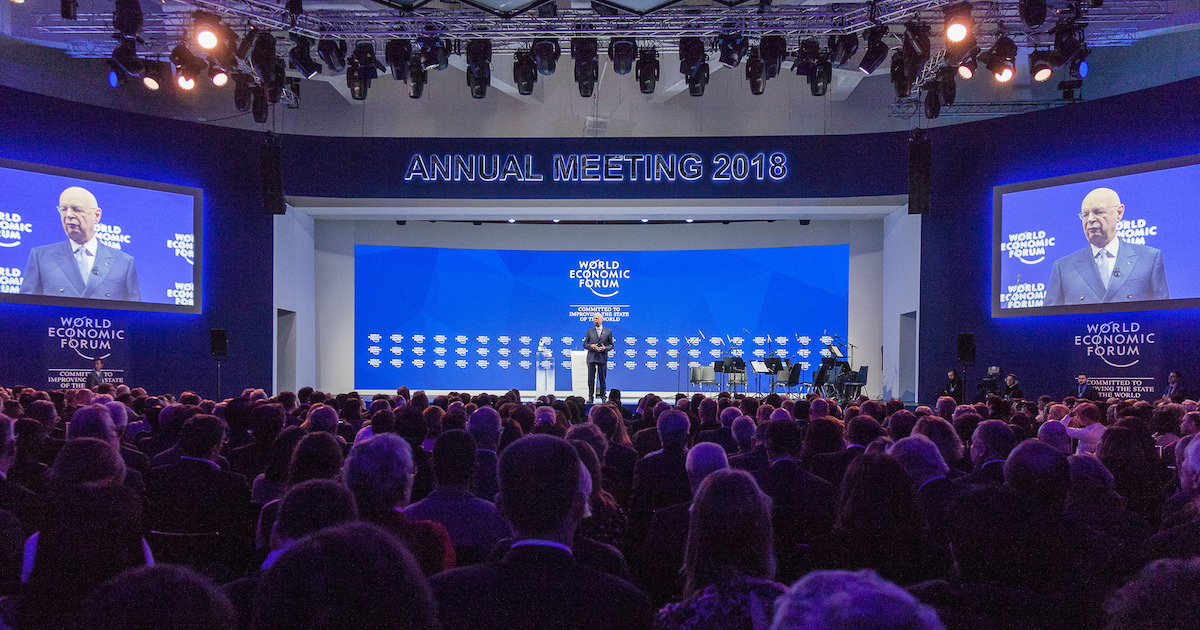
The World Economic Forum starts in Davos. Photo: World Economic Forum / Flickr / ( CC by-NC-SA 2.0 )
Today in Davos the World Economic Forum begins. Its main theme will be “a common future in the split world”. The theme of Russia on the forum will be secondary, and the Russian delegation is not the most representative.
- The delegation was headed by Deputy Prime Minister Arkady Dvorkovich. He will hold tomorrow the only event dedicated to Russia - the “Strategic Prospects of Russia”. Last year, Russia in Davos was represented by First Deputy Prime Minister Igor Shuvalov.
- The Russian delegation in Davos is becoming less and less every year, because Russia is given less and less attention, and “they are not used to such an attitude,” federal official told Vedomosti. Another reason is that the government and business are “nervous” before representing the “Kremlin report” of the US Treasury with a black list of businessmen close to power, who may be under sanctions.
- Donald Trump should become the main new-male Davosa-2018. Most likely, the American president will perform at the forum on the last day, January 26. A year ago, Trump refused to go to the forum, which took place on the eve of his inauguration. This year, the budget crisis that suspended the work of the US government could prevent his arrival, but yesterday it resumed the work after a three -day break.
- One of the main topics will be the stability of world economic growth-on the eve of the IMF forum, he issued an annual report in which he increased the forecast of the growth of world GDP for 2018-2019 to 3.9%, but warned that this cannot be considered “new normal conditions”, and the future economic crisis may be more difficult than the previous ones.
- Detailed previews can be read here and here .
What am I to me?
The fact that the theme of Russia is over a year every day in the first stripes of the world media should not be misleading - in the global economic agenda, we, unfortunately, are only losing significance.
MONEY
Yevtushenkov sacrificed dividends
The main owner of the AFK Sistema Vladimir Yevtushenkov refused the dividends laid for him for 9 months of 2017 and thus saved 4.2 billion rubles for the company. Money allegedly will go to new purchases, although now the main question for the “system” is how to pay the lawsuit of Rosneft. At the end of December, the companies concluded the world, according to which the System obliged to pay 100 billion rubles. The “system” has already transferred 20 billion, the rest should pay before the end of March.
Currency control will be cut
The Ministry of Finance published its proposals on the liberalization of currency legislation for exporters. Fines for non-return of foreign exchange earnings on Russian accounts are proposed to halve, from 75-100%of the amount to 33%-50%, and to impose these fines-only if the delay was more than 30 days. New rules are proposed to introduce since 2019.
PRACTICE
Business has been living for 10 years
Andrei Krivenko, founder of the Zazbenka and Vastiville, made almost the only large Russian retail business from scratch in the late 2000s, became one of the main characters of Russian business magazines. For Inc. Krivenko formulated his “Business Code”-you need to do business in those areas where everything is deplorable, without technology, the entrepreneur has no future, and 10 years-the normal life life for business.
Internet paranoid
In words, we are all for cybersecurity and complete paranoia in the field of personal data on the Internet, but in life we still leave personal data on many Internet resources and do not close the camera and microphone, like Mark Zuckerberg. Of course, Internet companies are earned on this-but this is also good for us, web psychologists Natalie Nahai and Thomas Chamorro-Primusik are sure . They imagined what we would lose if they had become real web paranoids in real life-it turned out not very fun.
Peter Mironenko, The Bell