
Translated material
Tomsk scientists want to program immunity against cancer
The mechanisms of interaction of malignant tumors with the human immune system are studied at TSU. This is necessary to create a new approach to the treatment of cancer, the essence of which in the directed programming of the patient’s immune system to suppress the tumor.
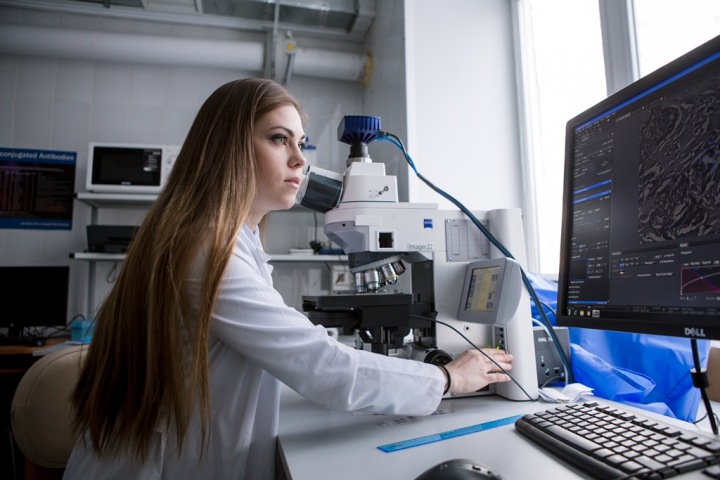
The work is carried out by scientists of the translating cell and molecular biomedicine of TSU, created jointly with Tomsk Nimets under the leadership of the professor of Headelberg University, Yulia Kzhysyshkovskaya, the press service of the university.
In the clinical situation, when the patient has already found a tumor, the immune system does not recognize it as a goal for destruction, since mutant cells are part of the body, that is, “their own”, unlike viruses and bacteria. Moreover, the tumor is capable of programming the immune system, and then immunity helps it grow and give metastases, experts explain.
Within the framework of the interdisciplinary project, supported by the RFFIF grant, researchers intend to find out what mechanisms of regulation of tumor progression are included in the conditions of chemotherapy in patients with breast cancer, from which each 12th woman suffers on average.
“Monocytes and macrophages are playing a large role in this - congenital immunity cells,” says the leading researcher at the laboratory of translating cellular and molecular biomedicine TSU, head of the laboratory of molecular oncology and immunology of the oncology of Tomsk Nadezhdintseva. “Monocytes come out of the blood and, falling into the fabric, ripen in macrophages with a wide range of regulatory activity.”
At the same time, they themselves can be rebuilt from one type of activity to another - to help the growth of the tumor or destroy malignant cells. The activity of monocytes and macrophages can be changed directionally, therefore, the attention of scientists is concentrated on them.
The functional properties of all cells are determined by their genetic apparatus. Laboratory specialists will investigate which genes are activated in certain conditions.
According to Nadezhda Cherdyntseva, a new approach to treatment does not imply abandoning antitumor drugs. In the future, programming of immune cells can be used as an additional tool to increase the effectiveness of chemotherapy and increase the patient's chances for cure.
Along with this, the possibility of using blood monocytes as markers to assess the prospects of the use of a type of chemotherapy in a particular patient will be studied.
A large team of specialists will be involved in the implementation of interdisciplinary research: genetics, oncologists, immunologists, bioinformatics. The project is based on new results obtained by laboratory staff with financial support for the Russian Scientific Fund and the RFFI. Scientists will solve the tasks using modern methods and equipment, in particular, the latest equipment to analyze a large number of genes at the same time.