
Translated material
Letters of the twentieth century
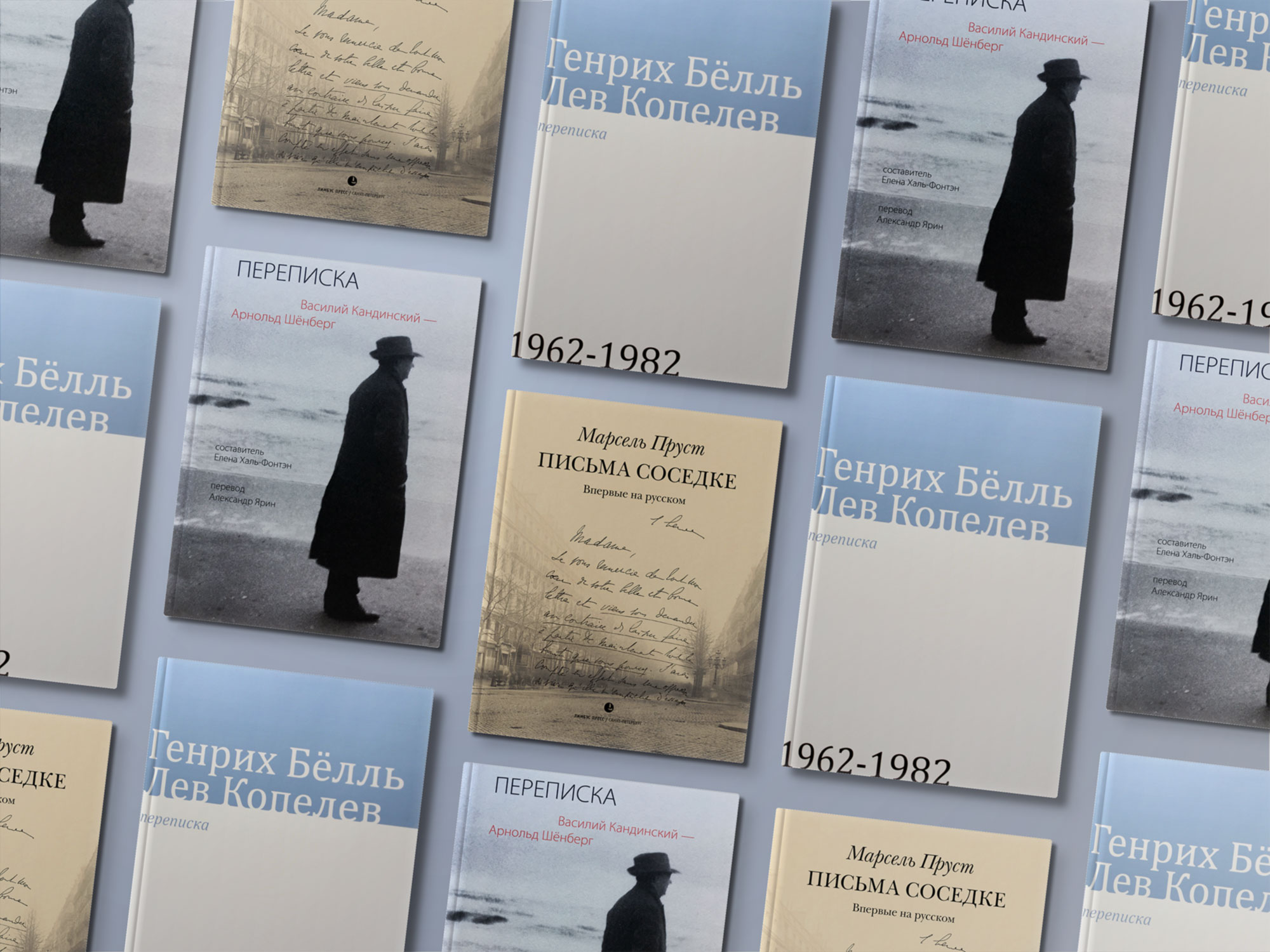
The impossible silence of Proust, the safe nesting dolls of Bell, the Jewish question of Kandinsky - the twentieth century the size of a postal brand in the book review of "such cases"
Marseille Proust. Letters to a neighbor. - St. Petersburg: Limbus Press, LLC Publishing House of K. Tublin. 2018
Paris, the fourth floor of the house No. 102 on the boulevard of Osman, the artist Marie writes a letter to her neighbor from below - Marseille Proust. At this time, her American husband drills his teeth to his client in the next room, which is located right above the cabinet of the great modernist. The writer lived alone in this house from 1907 to 1919. In those years, Proust is better known in a literary environment than among a wide audience. However, he has already received the Gonkurov Prize, but the First World War slows down the output of the next volume of his Opus Magnum "in search of lost time."
The collection gives only the letters of Proust, only you can only guess about the words of the addressee. The writer turns messaging into a literary laboratory, and Marie - into an almost divine creature to which flowers are given and try not to worry about trifles. The enthusiastic lines are often impregnated with irony: “Montesquieu argued that the two most terrible things are neighbors and the smell that reigns in the post offices, that the inability to constantly enjoy their neighborhood leaves regret, comparable to tantalum torments.” But first of all, Proust suffers from asthmatic seizures and growing noise: from repair work outside the window, visits of an electrician, knocking of nails scored into wooden boxes.
The writer asks Marie and her husband to observe the silence at least during his working hours, but the wish looks more like an apology than a threat. Proust with emphasized admiration writes about the adequacy of Malyar Marie, who, unlike colleagues, does not sing at work, but other servants in these letters are less lucky: “Your valet successor works not without noise, but this is not scary. However, some time later he begins to tap slightly. This is not so good. ”
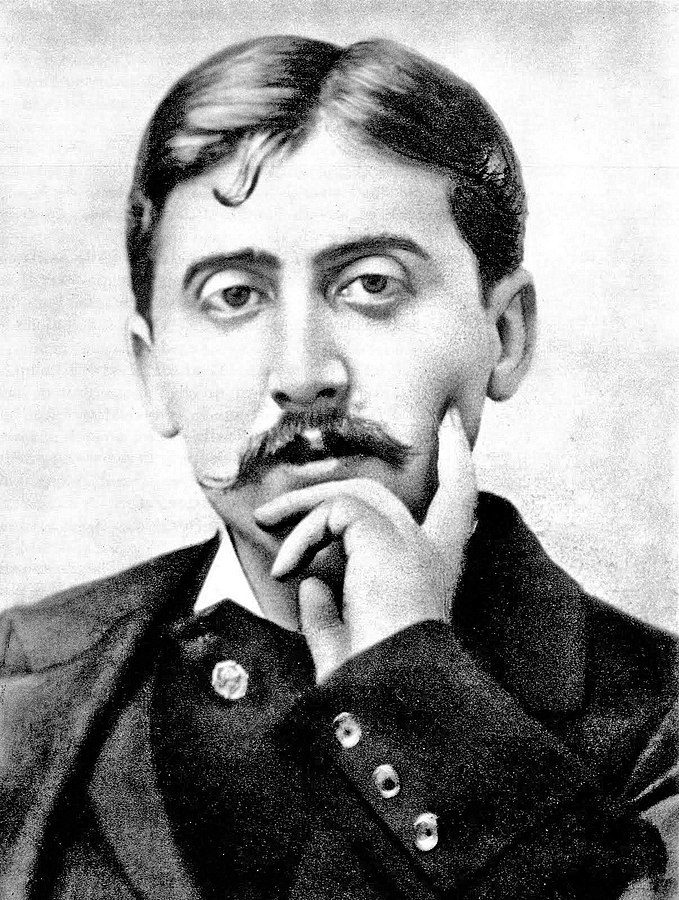 Marseille Proust Photo: Otto Wegener/Commons.wikimedia.org
In his messages, Proust is developing another art - communicating with neighbors, almost lost in the 21st century. Between the enthusiastic lines and requests, the writer mentions that his secretary had fallen from an airplane at sea, is experiencing a bombardment of the Reim Cathedral and by chance mentions his colleague Andre a Jew, with whom he has not seen for 20 years. And at this time, the noise that Marseille Proust constantly complains about, announces the victorious offensive of the 20th century. And about the end of Privacy - for Proust and all of Europe.
Henry Bell. Lev Kopelev. Correspondence 1962-1982. Libra. 2017
A student of the Faculty of Philology of Moscow State University, in the future - Soviet philologist and translator of German poetry Konstantin Bogatyrev in 1951, was arrested "on charges of attempt by a coup and murder of government members. Sentenced to death, later replaced by 25 years in prison. Rehabilitated in 1956. He translated poems by Rilke, Gölderlin, Shamissso, Tselan, Trukla, Benna, Bachman, Drama Frisch and Dürrenmatt. He died from injuries obtained as a result of an attack by unknown. ” This is how the short biography of one of the Soviet friends of Henry Bell, the Nobel Laureate, the influential writer of post -war Europe, looks.
This collection, reminiscent of a documentary romance than a chronicle, includes 153 letters, telegrams, postcards and notes. The twenty-year dialogue (1962-1982) is divided into semantic blocks, where before the start of each section a chronicle of the main events of the public life of Germany and the USSR is cited during this time: from the trial of Joseph Brodsky in the USSR-to the formation of a levoradic group of RAF in Germany and Western Berlin. In the notes, the compilers provide brief information about German and Soviet writers, scientists and other acquaintances of Bell and Kopelev. However, the dates of death are not set for all dead, and sometimes the certificate only incites reader curiosity.
The first visit of Henry Bell to Moscow almost coincides with the Caribbean crisis. The German prose writer and the Russian literary critic are quickly close: both went through the war, Belle - a signalman, Kopelev worked in propaganda. From the memoirs of his daughter, Maria Orlova, it becomes known that the writers most likely fought on the same front.
Kopelev informs the German friend of the main news of the literary process in the USSR: “In the November issue of the New World, they published a story of my friend, which, despite the fact that this is his first publication, reached the heights of our prose and even more. I hope that soon he will come out in German, although, in my opinion, his language poses some impossible tasks for the translator. But you managed to not even Lesemov; And this story from the point of view of the language is similar to it, although rather in the spirit of Leo Tolstoy and Gogol. ” Soviet Germanist Lev Kopelev wrote these lines about the future of the Nobel laureate Alexander Solzhenitsyn. In the 1960s, Bulle, Kopelev and the author of “One Day of Ivan Denisovich” still pass hello to each other and remain along the same side of ideological barricades. But later, Kopelev writes about the author of the “Gulag Archipelago” that in “the West they take him seriously as a representative of another Russia. This is completely wrong. It represents only a part - even a piece - our conservative pseudo -intelligence. God forbid that these people someday come to power! " At the same time, Bell condemns Solzhenitsyn for "pride in Soviet passions, against which everything, all the grief of the world turns pale."
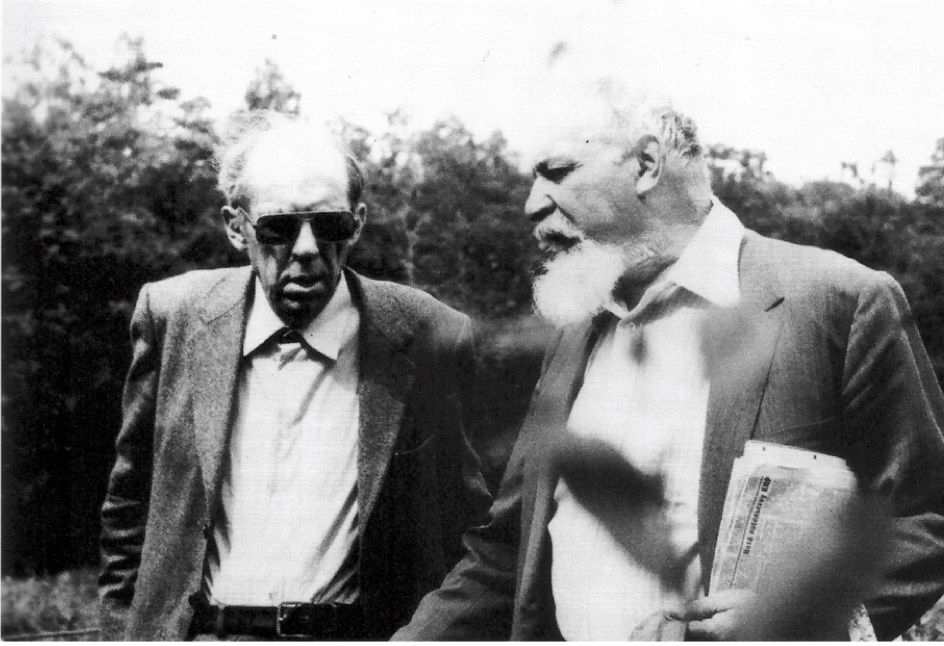 Henry Belll and Lev Kopelev Photo: Libra Publishing House
The letters of Kopelev often end with requests to an influential friend who has more opportunities in a relatively free West. First of all, medicines are needed by friends of literature: glasses for Lydia Chukovskaya, medicines for the writer Frida Vigdorova-the author of the transcript of the process over Joseph Brodsky, and Endoxan is required to Vsevolod Ivanov after surgery (cancer). And the medicine, at the request of Kopelev, is taken from the United States. The German writer in response asks to send nesting dolls - the wooden symbols of Russia travel to Canada, America, Holland, France and "bring joy everywhere."
The couple Bullya arrives in Prague on the evening of August 20, and Soviet tanks appear on the streets on the streets. Belle writes: “For some reason, we were not scared, but this, of course, made us nervous-to see the Czechs brought to the extreme, and, on the contrary, the poor, innocent, brought to the extremes of Soviet soldiers! It was madness, and of course, all four days we thought that it would be about to “begin”-it was a devilishly conceived, clean war of the nerves between Prazhany and Soviet soldiers. I do not drop the incident from the accounts, during which a person died, and yet I must say: both opposing groups were bold and humanly. ”
In the 1970s, Kopelev tells Bellu about the persecution of Okudzhava and Galich, hundreds of Soviet political prisoners and asks to transmit a message about their deplorable state to German politicians, primarily the friendly Willy Brandt and Amnesty International. The Soviet writer remarks about his own position: “I can’t even write a commentary on Goethe’s publication under the pseudonym, friends who had previously“ gave ”me their names for such cases, received a warning.” Kopelev does not answer the tragic question for many Soviet dissidents: "So why can't you come?" But Henry Bellus in the 1970s also does not feel safe-he and other left-oriented writers are searches, his books and political views are constantly “rinsing” in German conservative media.
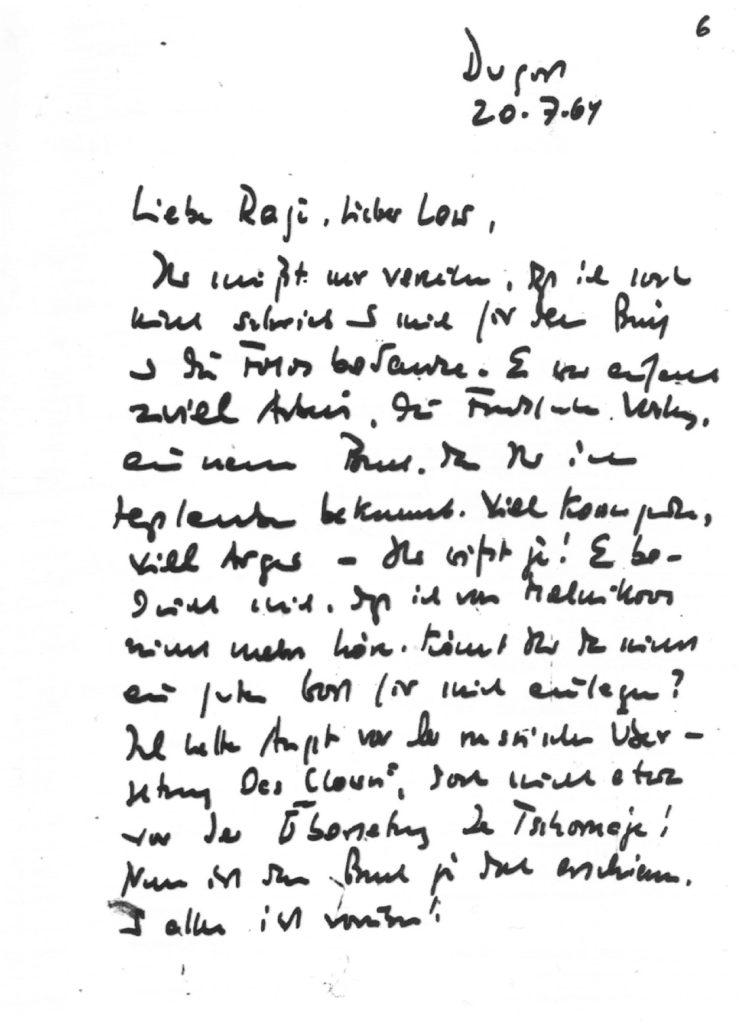 Henry Bell - Lev Kopelev and Raisa Orlova December 21, 1964:
“Dear Leo, dear Paradise,
Until the last moment, we only did what we translated: Salinger, show, now free and tired! Thank you very much for your sweet letter! Can I ask you to send a few wooden dolls again? And this time big! And there are still wooden plates with pecking chicken, are they still? Several came. What can I send you? Books? Give hello to everyone, especially Melnikov!
Hello, paradise, you and the children from all of us, with the best wishes! Henry B. " Photo: Libra Publishing House
In 1972-73, Bell became the president of the PEN club and can more affect the fate of repressed writers around the world. Kopelev’s story is similar to the biographies of other Soviet dissidents: he is fired from work for the publication in the Austrian journal of the article “Is Stalin's rehabilitation possible?”, They are deprived of a party ticket for collecting signatures in defense of Sinyavsky and Daniel.
Henry Belll for Kopelev and his Soviet friends is an example of a free -thinking intellectual who can publicly say what he thinks. The enthusiastic tone of Kopelev’s letters sometimes resembles devotion on the verge of worship: “I can’t finish the letter, but spending so much someone else's time is not good. The time of Henry Bellla is allotted for much greater and more beautiful things. ” However, some sweetness of the speeches of the Soviet writer can be explained by the exceptional nature of such communication: how many Western writers of the first magnitude write a letter to you, come, sympathetically ask about your family and the country? In the 1960s, Kopelev completely compares Bullya with the first cosmonauts: “You are very similar to them, with these cosmic pioneers, you fight for a single humanity in the space of thoughts and souls. Your great compatriot left the covenant: be right, man. ”
In the 70s, Bully's books stopped publishing in the USSR.
Vasily Kandinsky. Arnold Schounberg. Correspondence 1911–1936. Grundrissa. 2017
“Yesterday, the audience was ready to gobble up a man who appeared this new form. And today this form = unshakable law for all times. And this is tragic, because again and again it indicates that people almost always cling to the external. I thought about it for a long time and even found some comfort. But sometimes my patience is ready to burst, ”one of the creators of musical expressionism and dodecafonia writes to his friend.
Grundrissa published 65 letters of Vasily Kandinsky (1866-1944) and Arnold Schonberg (1874-1951)-correspondence of two outstanding artists over a quarter of a century, from 1911 to 1936.
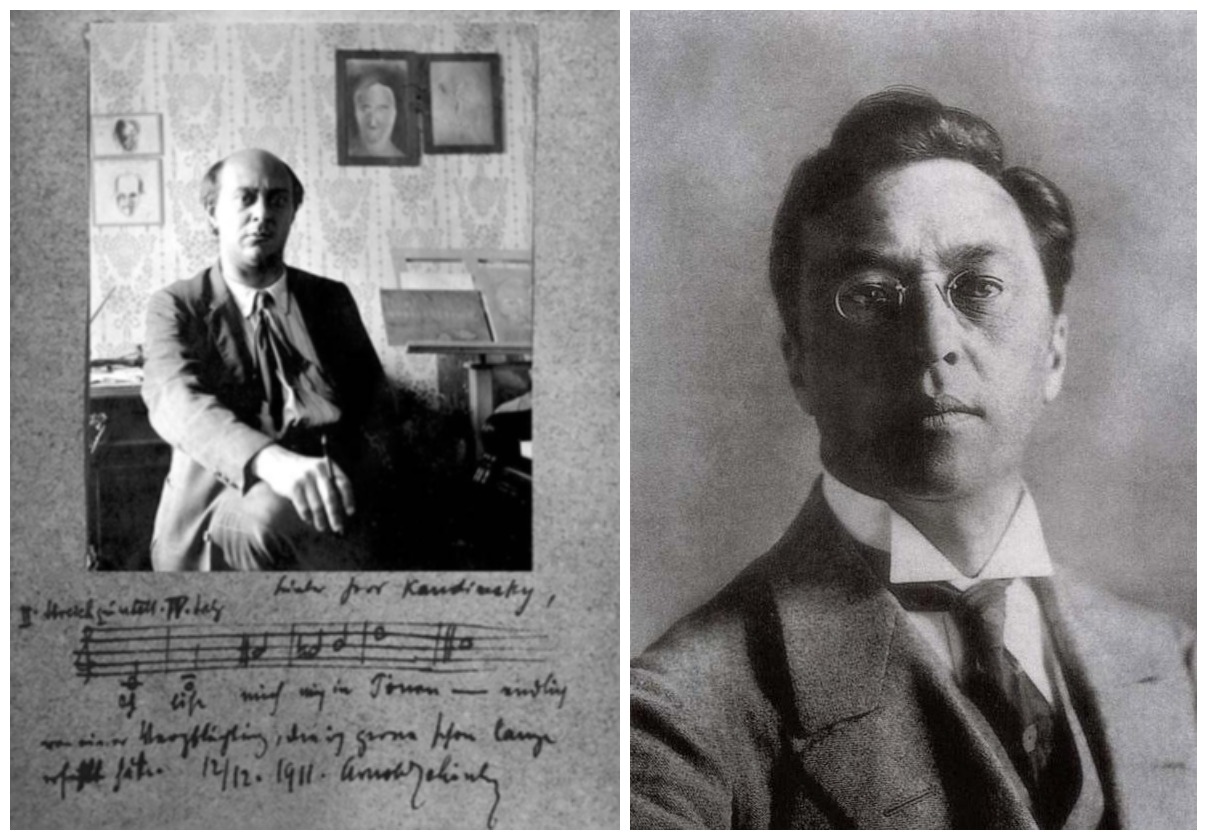 On the left: the photographic portrait of Schoenberg, made no later than 1910, with the dedication of Kandinsky: “Dear Mr. Kandinsky, I pay my duty with sounds-that, finally, with great pleasure, fulfilling the promise so long aslehed.” 12. 12. 1911. Arnold Schounberg
Right: Vasily Kandinsky photo: the author is unknown; Commons.wikimedia.org
Three years before the beginning of World War II, Kandinsky and Schounberg begin an intermittent dialogue about new synthetic art: connecting sound, image and color in one object - a picture or a play. In this courtesy, touching conversation, artists take turns saying goodbye to painting and tonality in music: “jumping spots” of the Russian artist seem to be born when listening to the music of the future, in which every sound has its own place. The composer is working on a "happy hand", the artist - on the opera "Yellow Sound". It seems that in this conversation the third participant is not enough, which is only mentioned in the comments. Alexander Skryabin (1872-1915) at the beginning of the 20th century combined different types of fine art: "The noise of trees, imitation of sunny sunrise and sunset, olfactory influences."
The unconscious in the process of creating works of art, the revival of things and the dematerialization of objects, the romantic-mystical sound, proportions and compositions-all this is vital for both Kandinsky and Schoenberg. The composer advises a friend to change the proportions of objects on canvas, but the author of the “Blue Horseman” notes that “working with dimensions prevents the view to close the picture”. The art for Kandinsky and his colleagues will be associated with the search and destruction of form for a long time.
In the correspondence, Kandinsky plays several roles at once: the publisher and editor of the Almanac of the “Blue Horseman” (creative association of expressionists in Germany, where one of the invited authors - Shenberg); author of the program work "On Spiritual in Art"; organizer of several exhibitions; Agent for the sale of his own and other people's paintings. Schounberg is a reformer of academic music, author of the manifest “On Harmony”, a fan of Malera and Strauss, a destroyer of music for the pleasure of a respected public, a lecturer and even an artist. However, he himself talks about the amateur level of his visual experiments, despite the approval of his paintings by Kandinsky.
Interlocutors rarely intersect the correspondence. The main place of their lifetime being - world culture and its history, says Schounberg: “The teaching incesses us to consider even the works of young composers who have rejected the hearing of their predecessors, as a necessary stage in the development of beauty. However, you should not strive to write things, the responsibility for which you can take only at the cost of a complete taming of the personality, things that the artists created almost against their will, obeying the compulsing logic of their development, and not the boundless self -will of the formally relaxed inappropriate. ” His works are constantly criticized by the conservative press, and the further the composer moves away from the rules adopted in the academic community, the more lonely it is in the musical world: “Schoenberg can only help the intervention of the psychiatrist ... He himself would rather reject the snow than to cover the musical paper with such karakules.”
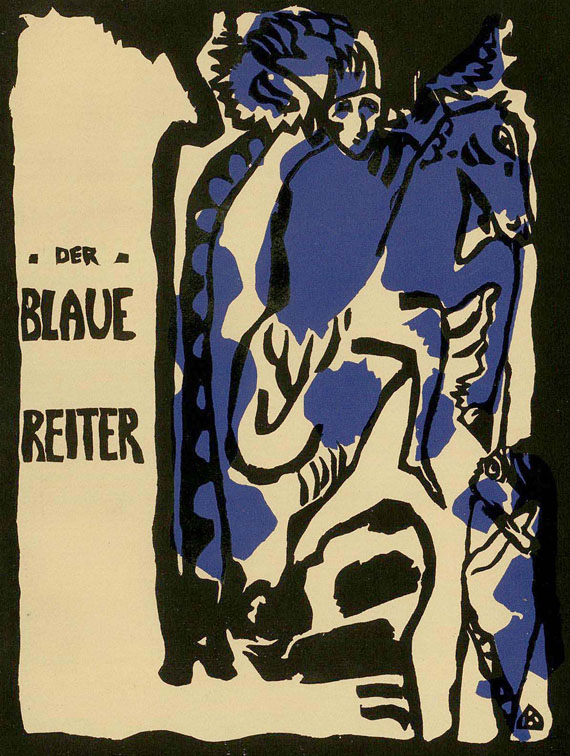 Vasily Kandinsky. The cover of the almanac "Blue Horseman". 1911 Photo: Commons.wikimedia.org
Entertaining documents, random prints of the everyday world are printed between the letters in the book: Schounberg’s passport with a visa for entering the United States, identity card of Professor Bauhaus Vasily Kandinsky. In 1936, when the correspondence breaks, Hitler had already closed the Bauhaus school, and Schounberg, like a Jew and a musical innovator, is waiting for a sad fate in Europe under the shadow of growing Nazism. But you can return to the quiet 1907 and look at the picture of Kandinsky with a cat Vaska.
After correspondence, the book provides a chronology of important events in the life of artists. It turns out that a year before the October Revolution, Kandinsky lived in Moscow on Burdenko Street, and in 1936 John Cage became a student of Schenberg, who runs from the Nazis in the United States. In 1937, Kandinsky’s paintings fall to the exhibition of degenerative art organized by the Nazis.
Shenberg in one of the letters almost breaks relations with Kandinsky because of the anti-Semitic statements of one of the founders of abstractionism. Kandinsky replies to accusations of anti -Semitism that "it is better to be just a person." Schounberg continues to inflamed a paper dispute: “I have not yet said that, for example, when I go along the lane and everyone I meet looks at me on the subject of whether a Jew or a Christian, I cannot explain to everyone that I am just the one for whom Kandinsky and some others make an exception, although Hitler has a different opinion. But from a favorable opinion, I have little use, even if I draw it on a plate and, like a blind beggar, I will hang it on my neck so that everyone can read it. Kandinsky did not think about this? " But even after such a quarrel, Shenberg and Kandinsky remain spiritual partners, and each of them will be able to catch, develop and protect the ideas of synthetic art, the traces of which can be seen today in any museum.
This material uses references and references to the fund to them. Henry Bell, who is recognized in Russia as an unwanted organization.
Do you want us to send the best texts of “such cases” to you by e -mail? Subscribe to our weekly newsletter!
Books