
Translated material
Seven shades of abomination
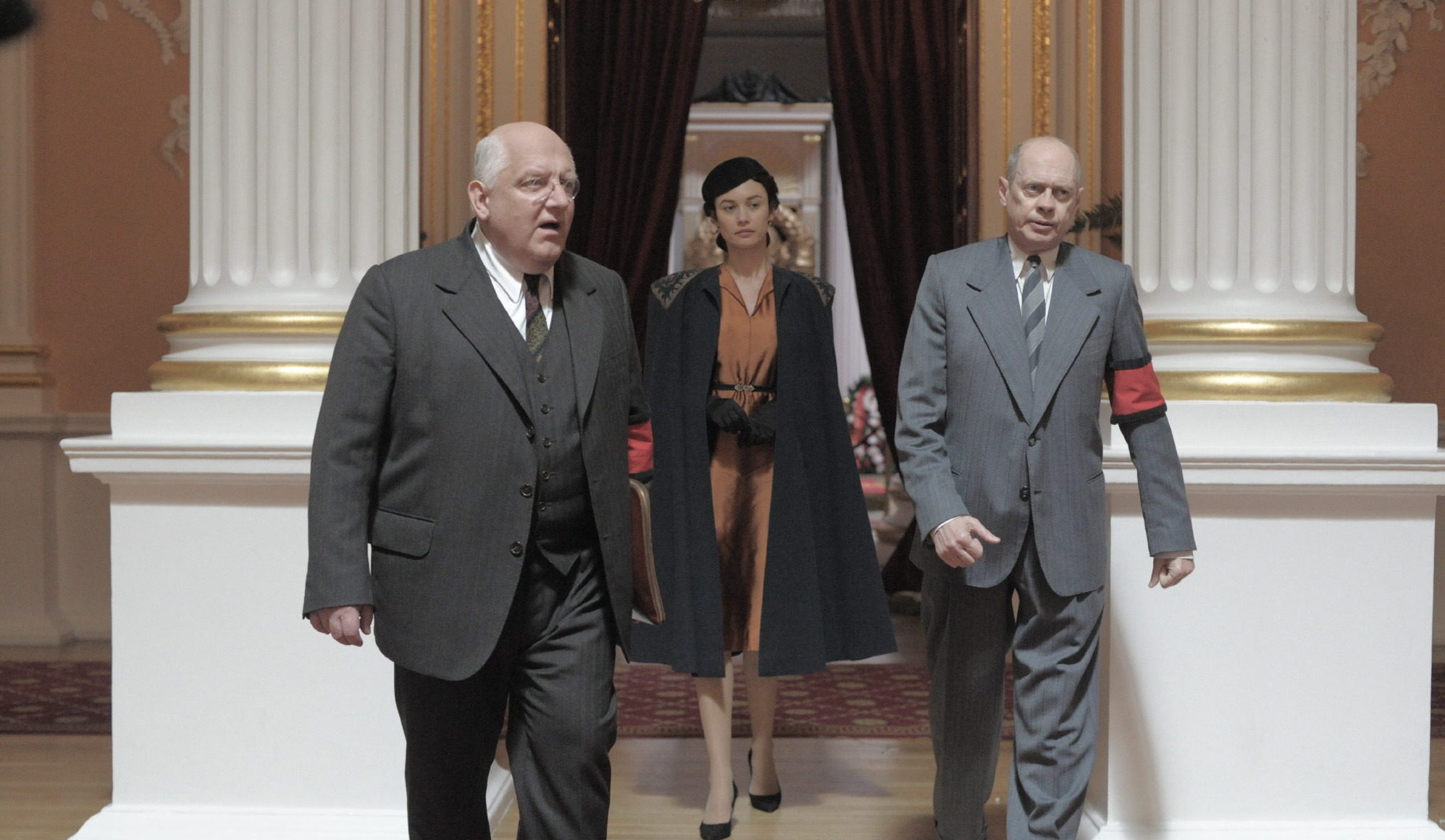
Why is the film Armando Iannuchi “Death of Stalin”, created in the style of a comic book, having received a rental certificate, still did not go to Russian rental
On January 23, from now on, one can be considered a milestone in the latest Russian history - the authorities publicly recognized Stalinism with our ideology. On January 17, the Ministry of Culture issued a rental certificate of the film Armando Iannuchi "Death of Stalin." This satirical picture tells about the struggle for power, which has shaved the near Stalin Circle immediately after his death.
Since January 25, the film was announced to Russian rental. And on January 23, the ministry withdrew the rental certificate, referring to the "numerous requests of the working people." In this case, a group of cultural figures, headed by the chairman of the Public Council of the Ministry of Council by the writer Yuri Polyakov and the executive director of the All -Russian Church Society, Pavel Zatyzhilo, acted as workers.
Polyakov announced “the inadmissibility of imposing such helplessly from an artistic point of view and evil from an ideological point of view of ribbons”, and the attempt to release the film regarding the “obvious imposition and insulting of our civilian and national feelings”. Zvelilo, however, recalled that the “death of Stalin” allegedly defile national historical symbols - the Soviet anthem, orders and medals, and “Marshal Zhukov is portrayed by the moron”. The deputy of the Duma Actress Elena Drapeko admitted that she “never saw more nasty things” at all. This is an absolute Pasquil, provocation, an attempt to convince us that our country is terrible, and our people are idiot, and our rulers are fools. ”
The same group of workers opened the eyes to the Minister of Culture of the Russian Federation that the film contains elements of extremism, and Medinsky, as they say, on a blue eye, without worn out, one might say, shoes after the issuance of “rolling”, he willingly selected it. Most likely, this action - the minister gives out a rental certificate, and then selects it with someone else's hands so as not to get dirty - was planned in advance, but this is not even so important. It is important that censorship in Russia has acquired quite distinct forms.
The leader fell
The film of the master of the political satire of Armando Iannuchi (“Hushch events”, “In the loop”, “Vice President”) begins with the scene of a symphonic concert. At the end of the concert, a call is heard in the cabin of the sound engineer - he calls himself and asks him to send him a recording of the concert. The director is horrified - the recording is not conducted, the concert is finished, people diverge. It is urgent to fill the hall with someone and play again. And then the conductor, having learned about the unreason, loses consciousness from the disorder, hit his head on the floor and freezes. Conservatory workers flee to the street, grab random passers -by and drag them to the concert. At the same time, completely different people grab other people on the street and drag them to a completely different place. All this is mixed on the screen, horror and nervous laughter spills in the air. The recording of the concert was successful, and the favorite pianist of Stalin Maria Yudina (Olga Kurilenko) manages to put a note with curses intended for Stalin.
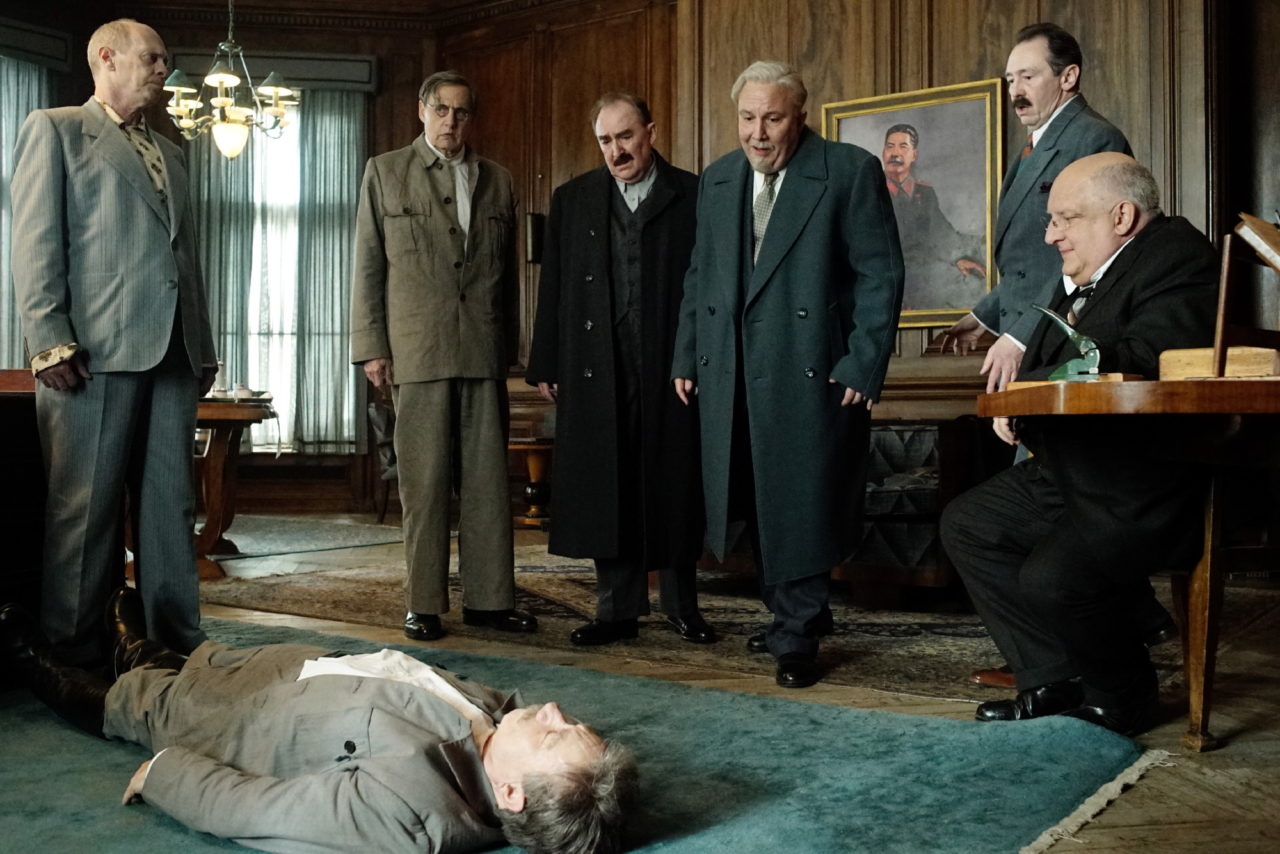 Frame from the film "Death of Stalin" Photo: Shot from the film "Death of Stalin"/Volga
Having received a note, Stalin (Andrew Maclafin) enters the beast -like laughter and, overwhelmed, falls on the carpet, having previously irrigated it with monarch urine. So he will remain to lie - the security, which is naked at fear, does not dare to go into the leader’s room, even hearing the sound of a falling body. Well, since all decent doctors - who is shot, who in the camps - Stalin cannot be saved. And in the paveph will find the same record with a concert. About the plate - pure truth, what was - it was.
Seven samurai in search of power
And then seven characters - Malenkov (Jeffrey Tambor), Khrushchev (Steve Buscami), Beria (Simon Russell Bil), Molotov (Michael Paylin - the same, from Monti Pyton), Kaganovich (Derpin Crowuli), Mikoyan (Paul Whitehaus), Marshal Zhukov (Jason Aisex). This is the very close circle in which the struggle for power first looks only a topic for a ridiculous comic book (it is appropriate to remind you that the film was shot according to the comic book of Fabin Nuri and Thierry Robin), but throughout the film, laughter is bought from fear, giving way to horror and disgust. The mortal intrigue started by Khrushchev against Beria step by step turns into a bloody cruel rebuff.
Together with the intrigue, a rigid metamorphosis passes its initiator - Khrushchev. Finally, Steve Buscami, who starred in almost two hundred films, Talisman Cohen, who received the nickname “Filzes”-waited for the main role on the big screen. Already on the threshold of the 60th anniversary, this megapopular actor got a large role. The cast in “Stalin's Death” is literally exemplary, but only Khrushchev before our eyes pass the path from the ridiculous small shuler-politician to the terrible ruler of fate, who sewed power along the corpses of yesterday's friends. And dosagizing to the coveted goal - the chair of the head of state, which rests on the laurels, Khrushchev receives a black mark from the director. The whole gop company gathered in the conservatory for the same concert that became an indirect culprit of Stalin's death. Calm, relaxed, slightly tired of the subcover contractions of the face. In the foreground - pleased Khrushchev. Everyone looks at the stage, swaying on the waves of classics. And only one person did not look at the musicians-behind Khrushchev, someone who was not in the film was sitting, someone new, rather young, with thick-ghost black-black eyebrows. He stares in the back to the new master of the country ...
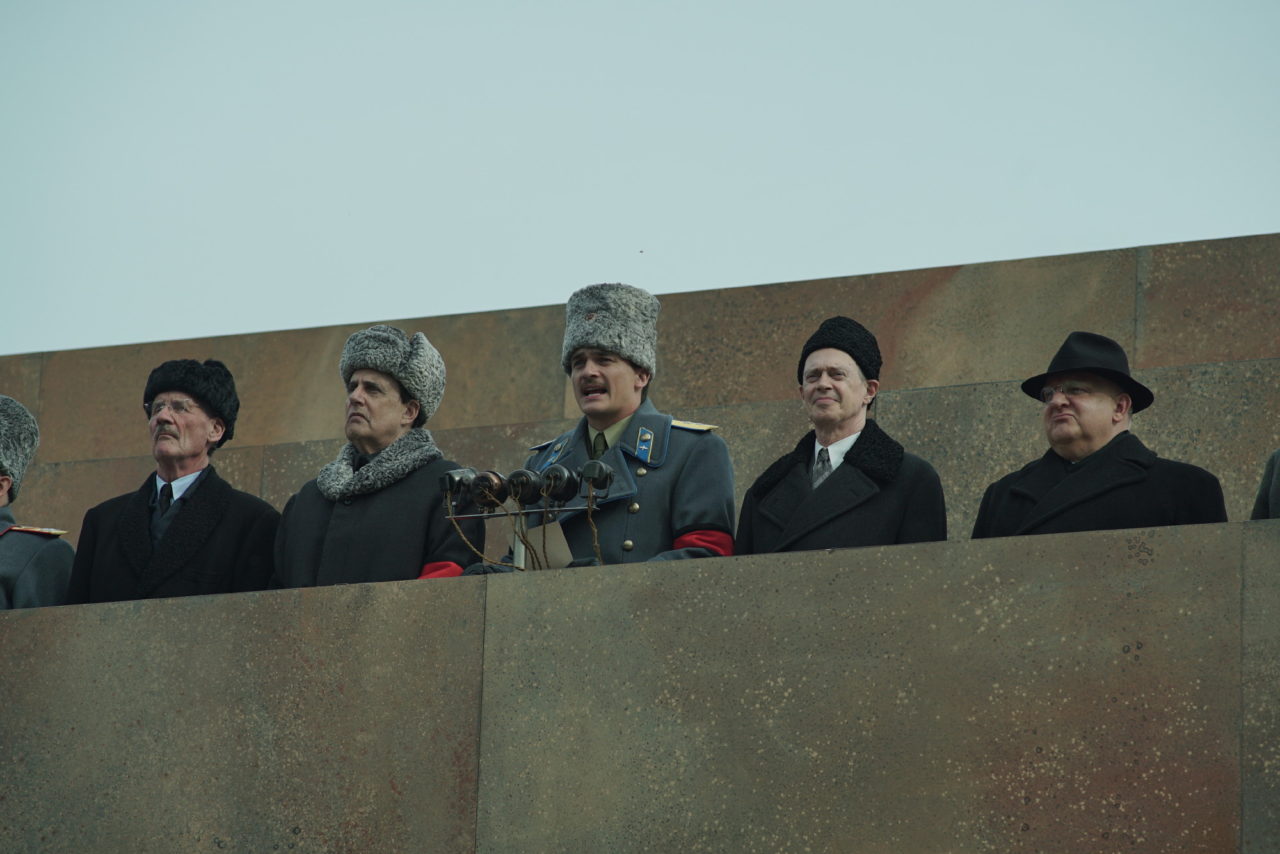 Frame from the film "Death of Stalin" Photo: Shot from the film "Death of Stalin"/Volga
And you understand that every dictator has the end. And if wider - evil will always return a boomerang. Everyone knows this, and the dictators themselves including - but either no dictator considers himself a dictator, or, like all mortals, they are sure that the worst always happens to others. Did Lenin think the leader of the world revolution that death would catch him in a rotten vegetable? The only director in domestic cinema - Alexander Sokurov - decided to touch on this topic in the film "Taurus". In general, we have not been accepted about the leaders without pytet. Thank God, Sokurov was lucky - in 2001, when the film appeared, modern Russian folk fun - to be offended by feelings - has not yet become widespread, otherwise, of course, to leave Sokurov into a dumb defense.
Comic and farce
Iannuchi is not trying to overcome the style of the comic book. Moreover - he dives into her, he masters this stylistics, lives in it and makes actors live. Here each episode is like a page of the “graphic novel”. The director does not force the actors to play psychology, on the contrary, he gives each one -color mask and does not tell him very “psycholar”. What can you do, the genre obliges - the farce, after all. The actors are made up so that no one has doubts - this is a makeup. Faces are exaggeratedly smeared, each of the Seven Samurai is a ready -made character of the comedy del arte. In addition to Khrushchev, only Svetlana Alliluyeva (Andrea Raizborough) looks like a living person who undergoes changes under the plot. In the beginning, we see a super -emotional, slightly fried girl, wringing his hands, outgoing grief or joyful euphoria, sharp and gullible. “I will do everything so that you feel good. You can rely on me in everything, ”Khrushchev cooked, and Svetlana believes. And in the end we see an adult woman, disappointed in yesterday's friends, abandoned by them. “I did not think that it would be you,” Svetlana admits bitterly, looking into the steel eyes of the support of the good Khrushchev, who was expelling her from the country today.
Shades of abomination
Each here has its own shade of abomination, its own screen credo. Khrushchev - treachery. Beria is exorbitant power. Molotov is a chameleon. Michael Payelin, an outstanding English comedian, plays Molotov as an example of organic, chipper meanness, allowing such things incompatible in a normal person, as a love for his wife and the approval of the Stalinist sentence to her. Bulganin is a yel-man, eternally shaking from fear, then from suspicion, then from anticipation. Malenkov is a mini-napoleon who fell asleep with a six at Stalin yesterday, and awakened by the head of state, which is why inflated beyond measure, but does not know what to do from the power that fell on him. Zhukov is a shirt-Parna who puts an end to the stretching struggle for power, helping Khrushchev to outwit everyone. And all of them together are embodied cowardice, stupidity and incompetence.
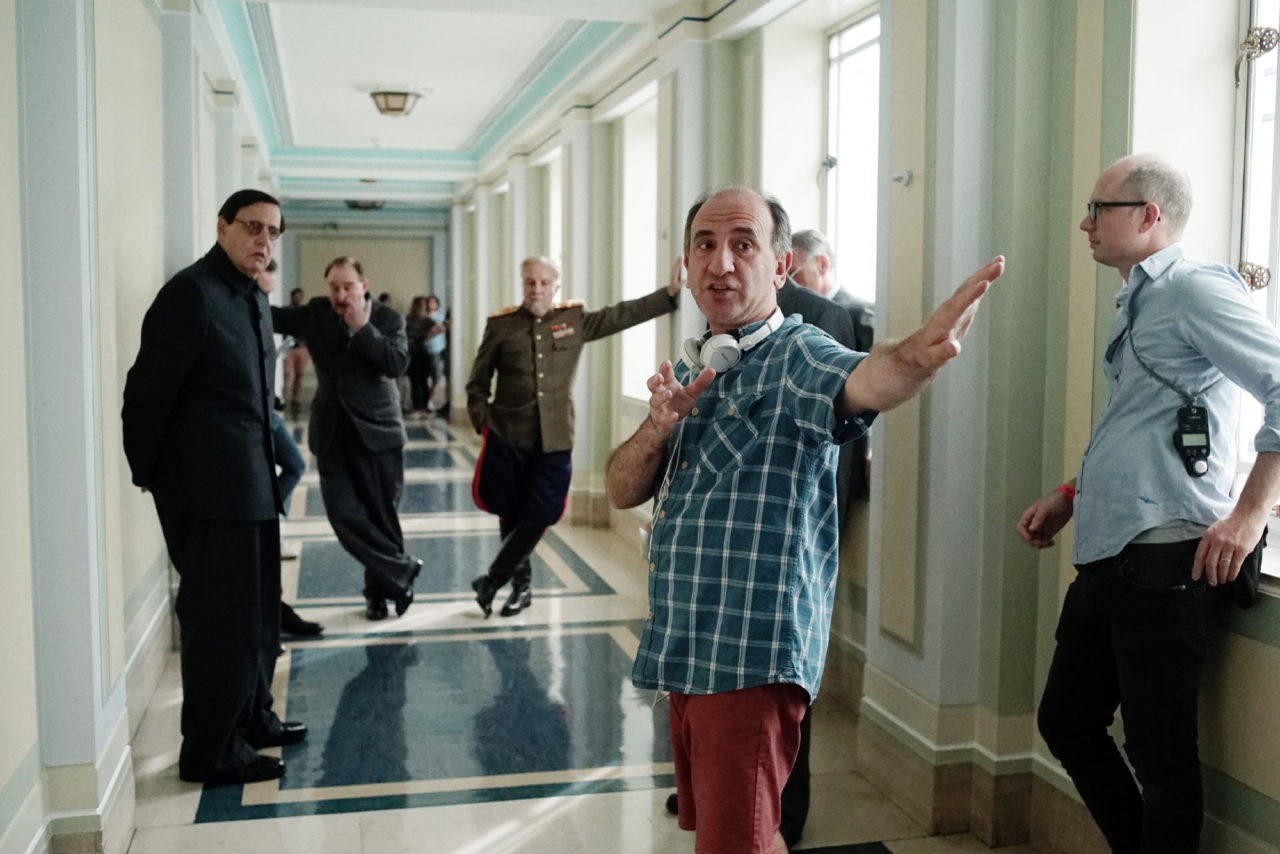 On the set of the film Photo: Frame from the film "Death of Stalin"/Volga
Without going into the area of global generalizations, Iannuchi nevertheless draws a picture usual for any totalitarian state. The dictator died. The clearing is cleaned. All specialists in the camps. The cowardly mediocrity, which the leader surrounded himself, is accepted to share power. Oh no, no, this is not about our future, you do not understand-this is about our past. UV.
Let down or not let
“Stalin's Death” long before the rental tried to take on hostility. The well -known champion of someone else's morality Pavel Zvelilo, at that time the chairman of the Public Council of the Ministry of Culture, just in case was offended in advance, and not only for himself. I remembered not by night Matilda - the mother of all offended. “If the story with Nikolai II is Orthodox people, then the story with Stalin is the Communists. And the same as now with Matilda will arise in the communist ranks, ”a frantic social activist was worried. But then, apparently, they gave the go -ahead not to be offended and quietly handed the film a rental certificate. In general, offended in this case behave smarter - apparently, they are preparing to become in a pose after watching the film. And even “Matilda” and “tanneser” became victims of vulnerable people, who forgot to at least secretly look at the cause of their suffering. It is clear with the “death of Stalin” - on the eve of the elections, it is not customary to tighten the nuts, especially if you want to sit in the Minister’s chair. And the Communists and the Stalinists let them be a boogant later. The Ministry of Culture in any case will have nothing to do with it.
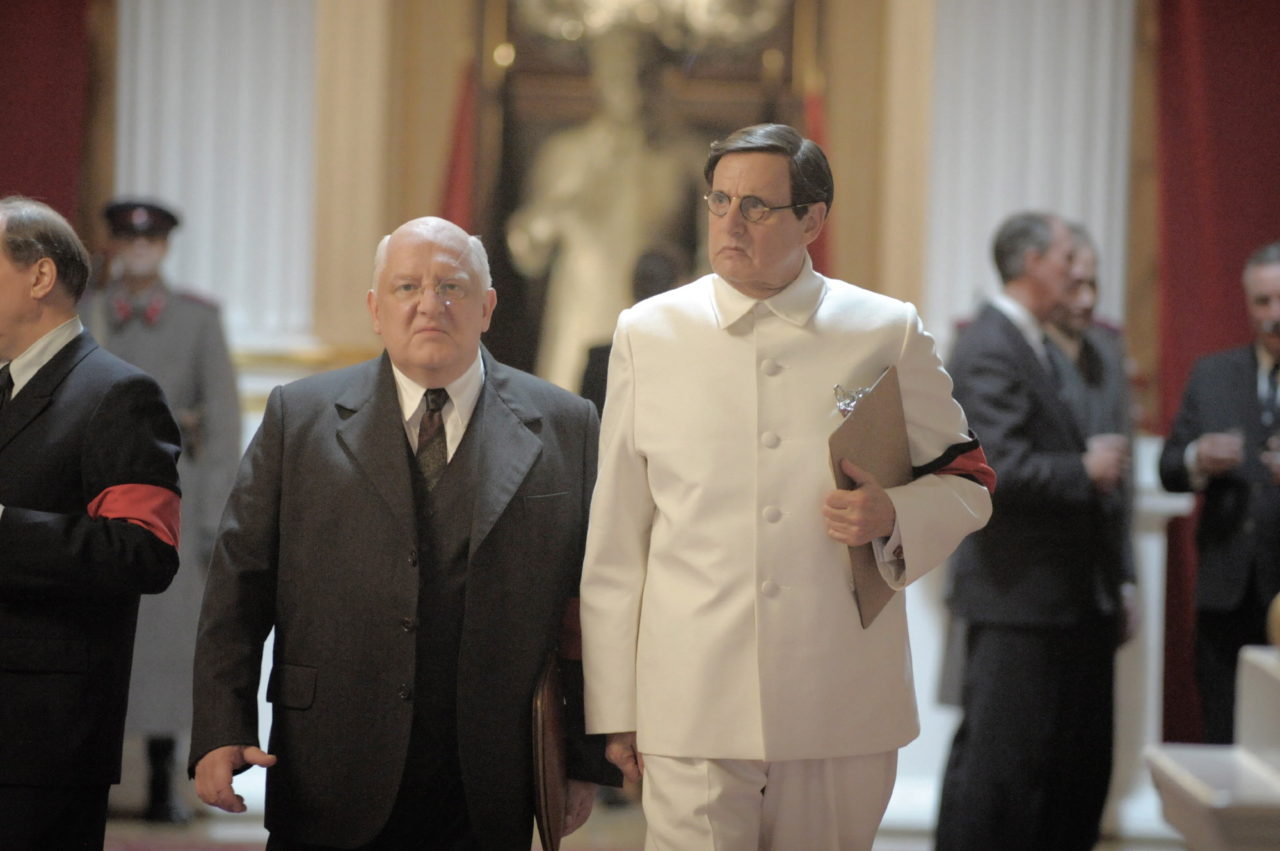 Frame from the film "Death of Stalin" Photo: Shot from the film "Death of Stalin"/Volga
Interesting: a film on such an interesting topic as the struggle for power immediately after the death of Stalin, the liquidation of Beria, the coming to the power of Khrushchev, for so many years in Russia did not remove. Even Parvus reached Trotsky, although both figures in official history are not the most popular, names crossed out of textbooks and historical monographs, prohibited by Stalin, and so still not “untwisted”. Do not consider the bully TV shows by the study of these personalities. And about Stalin, Khrushchev, Zhukov, Malenkov and others like them-not gu-gu. As if the fear of Stalin's times remained sitting in the brain, like a stench that must be taken for centuries. So, stop. And about which of the latest leaders we made films? So, to show all the bends of a sick power consciousness, the road to the throne with bloody tags? It is interesting that no one.
The point here, most likely, is not even a fear of offending someone (in the end, it became fashionable to insult just recently) and not even in subconscious fear. It seems that this is a manifestation of the most vicious phenomenon for any artist - self -censorship. Internal, not spoken. And self -censorship comes from the sacred of power characteristic of a Russian person - a longtime, old, eating a collective Russian brain.
Shades of laughter
The deliberate theatricalization of the film does not prevent the camera from time to time to go beyond the Kremlin and power corridors. Sometimes the action moves to the street, and the “funnels” with the arrested are mainly scurrying here, they pull out the sleepy “spies”, “agents” and “pests” in pajamas and robes from the porches, and, gliding with a chamber by tyranny to Moscow, the director even manages to tell the story of the father’s betrayal in just a few seconds. And the same, in passing, a tiny episode, in the end he will tell you about the meeting of his father who returned from the camp with his son. We will see only close -ups, eyes in which horror and pain. It is also like a comic book page, but this is no less terrible.
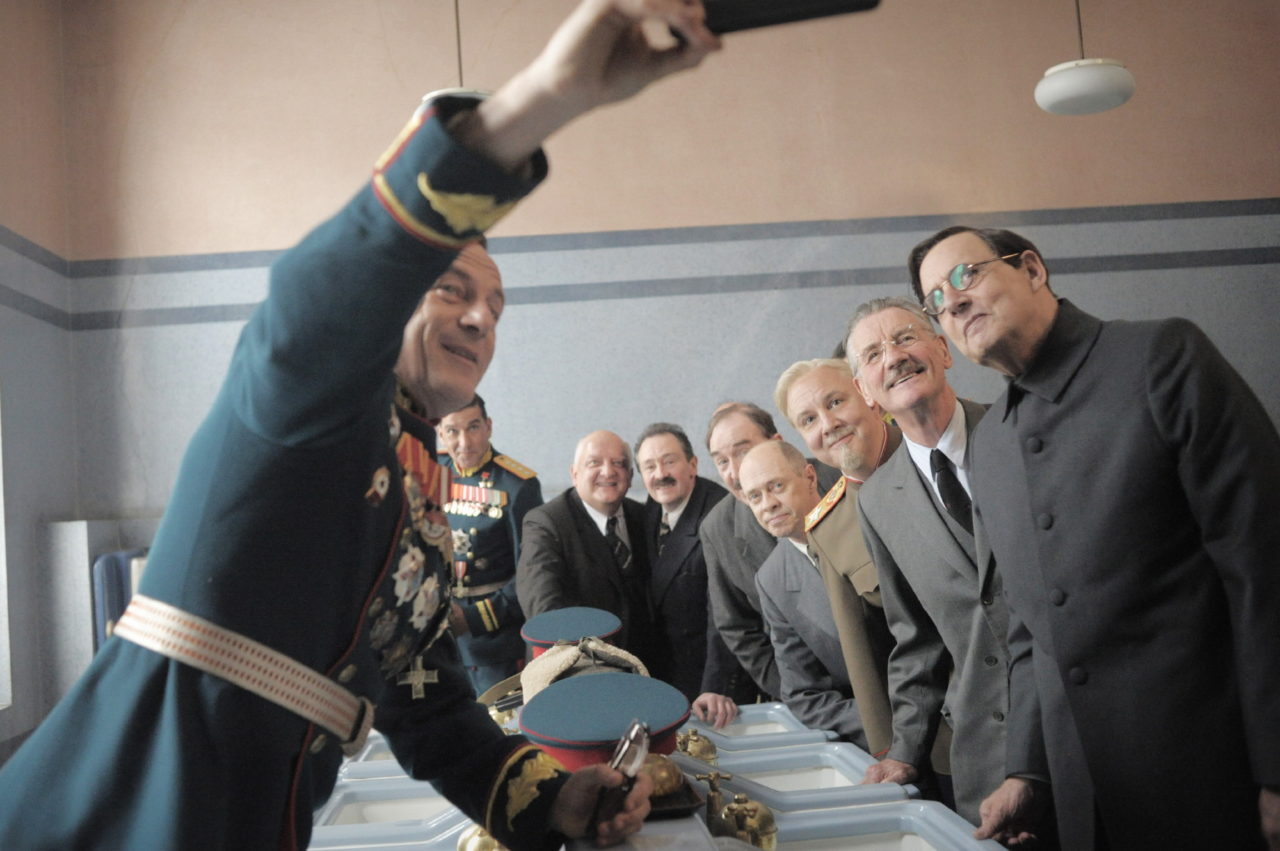 Frame from the film "Death of Stalin" Photo: Shot from the film "Death of Stalin"/Volga
And then the camera will go down to the cellars of the Lubyanka, along which the Enkewers rummage, carrying on themselves bloodied, half-crafts of the same "spies-pest-agents." Behind the walls, screams and shots are heard. It would be ridiculous with its evil fairy tale if it had not been responding in our historical memory by truth. Surely there will be those who say: you can’t laugh at repression, you can’t scream where the tragedy of millions. And again, again, disputes about what you can laugh at, but you can’t. But usually people who do not see and do not hear shades are involved in such disputes. In particular, shades of laughter.
Gilbert Chesterton, the smartest person who invented his own philosophy of happiness, wrote in his “Autobiography”: “You can laugh at anything, but not anywhere. We can joke over death, but we will not joke at the mortal bed. ”
The main thing is not to laugh, like Joseph Vissarionovich at the very beginning. It is dangerous.
Do you want us to send the best texts of “such cases” to you by e -mail? Subscribe to our weekly newsletter!
movie