
Translated material
Tonya without a happy end
Two new comedies that are sorry to miss. Reviews of Larisa Malyukova
Michael Hanke and Craig Gillespi make a movie about the chronic ill health of Europe and America. And there is no “public council” of the Ministry of Culture on them.
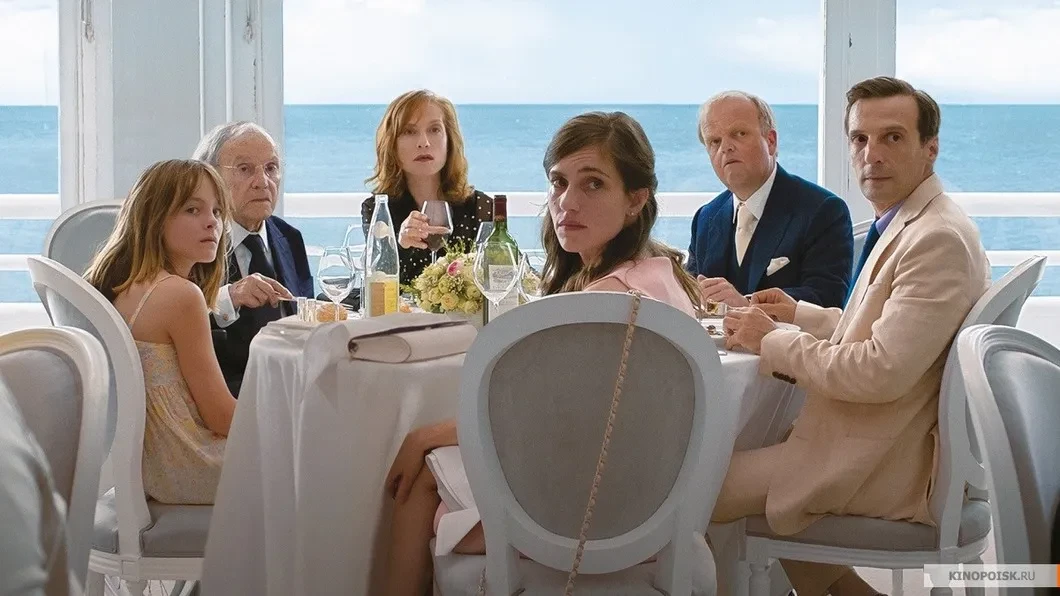
Twice the winner of the “Golden Palm Branch” Michael Hanke (“Pianist”, “White Ribbon”, “Love”) returns to the screens with the Happy End . Do not believe the name, this is a “happy ending” in reading the gloomy misanthrope Hanke, the holder of the Oscar, the multiple winner of the Cannes.
The name of the film is inspired by approximately the same stinging irony as its chilling blood “funny games”. Behind the encouraging heading, the history of the confrontation between bourgeois Europe, which is not devoid of notes of cynicism, is a new immigration wave - on the example of a picturesque French family. Happy End can be considered as the final chapter of a long family saga. Started by the film "Seventh Continent" (fragments from the life of a successful Austrian family). Continued "hidden" (about the secret sins of the family of a prosperous literary critic). You can also recall the “cell of society”, led by a noble strict pastor in the “White Ribbon” with its children-angels-the offspring of evil. Or a pathological family in the "pianist": a music teacher, an old girl and her half -crazy mother ... In the previous, most disappointing one, from the work of Hankee "Love" it was told about the sunset of the life of a married couple: Georges and Ann. Georges (Jean-Louis Trentignan) with the help of a pillow saved his beloved, turning into a “vegetable”, from humiliating suffering.
And here is the finale. Not too happy. Again we see the old Georges and his daughter Ann Laurent (Isabelle Jupper). Or someone is scary to them. And nearby, all the traditionally branched bourgeois French family related to large business, confused in difficult relationships, in elegant aduliers. In the inability to adequately respond to the challenges of time.
Owners of a large -scale construction - cream of society - live in Kala, the same, as we recall, a wonderful prosperous city in the north of France, where, with the support of residents, an extensive camp of migrants was demolished. Fat smear written characters. And transparent family secrets, omissions, skeletons in cabinets and in Internet chats. The director uses different methods of spying on a contradictory reality embodied on the screen: from a camera to a mobile phone, from wide panoramas to a Facebook page and pornographic correspondence of one of the well -being of the family in the messenger.
The Happy End is located almost all the topics that the Haneke touches in its cinema: the cosmic distance between different social layers, the collapse of the family, latent xenophobia, “visible and hidden”, an attempt to dialogue with close death. And if “love” is a physiological essay that rises to the heights of the tragedy and the history of grandiose love, the time of the “happy end” action is after love . According to the Haneca - "invitation to execution", written with your own hand. Tired of life, the hero of Trentignan is trying to appoint a date “The Old Woman with the Key”, but she cunningly dodges the meeting.
The story with refugees is led from the advance deep into the plot, but does not fade at all. Hanke gives a family portrait in the interior of the ugly modern world, exposing the unbearable horror of the upcoming existence behind the placed ritual and decency. The mockery of the neatly written out the macabra is disturbed, causing a nervous laughter and a clear feeling that before the prosperous Europe the very reality in the uniform of the intelligent meterdotel politely opens the door inlaid by the gold ... into the abyss.
Did you want light at the end of the tunnel? Get it. Happy End in all the splendor of the sarcasm of Haneca.
"Tonya against all"
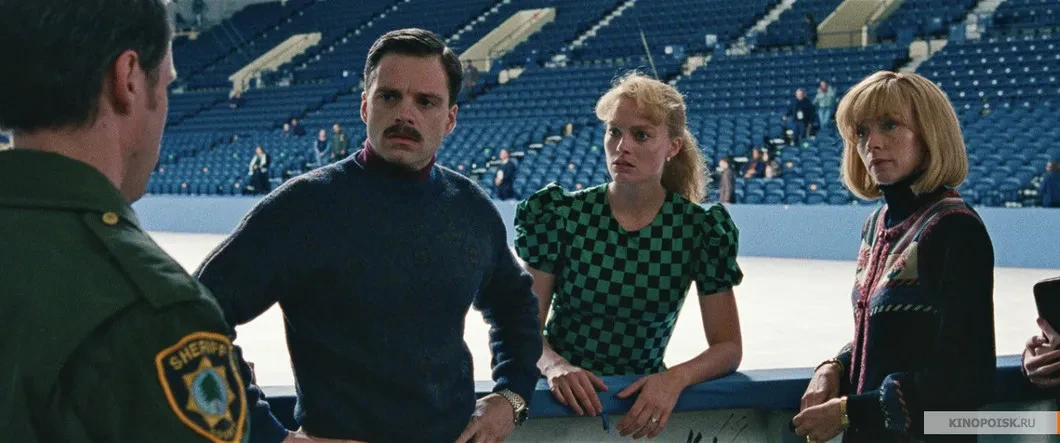
The black comedy “Tonya against all” Craig Gillespi, marked with “golden globes” and fell into Oscar nominations.
In the early 1990s, the scandal associated with her name stirred the whole sports world. Then Tonya Harding was on everyone's lips. The new 24-hour news format poured oil into the fire, constantly reporting all new details. The Americans poured to the screens. They watched a strong blonde, the champion of America, from the country's favorite turns into an object of hatred.
Sports dramas based on real events/biographies are gaining a turn not only in Russia. The film, which in the original is called "I, Tonya," - of those. The heroine is the American skater Tony Harding, the first in the United States to perform a triple axel in competitions. The country will follow her with aspiration. But from snow -white heights of adoration, national pride will fly into tartarara of universal contempt. Without five minutes, a member of the Olympic team will be accused of attempting a competitor to Nancy Kerrigan. Not only sports regalia, but also the future will be deprived. The current story is not only for America ...
The film is built as a chain of documentary interviews with participants in the events. Actors get used to their heroes twice: today and almost twenty years ago. Here is the mother of Tony Lavon Harding (Ellison Jenny), sleeping, humiliating his daughter, by force knocking out records from her. Here is her ex-husband-a shaky salvation for a fifteen-year-old girl from tyranny of mother. But Jeff (Sebastian Stan) turns out to be not just an outsider, he takes revenge on Harding for his own failure, pounds it and blame - alternately. And Tony, meanwhile, lines its own vector of the path from which it can no longer be shot down. True, the future champion is not too attractive. “It looks like firewood will cut firewood every morning,” says a figure skating coach, looking at a 12-year-old skater. “So she cuts it,” agrees the mother of Lavon Harding, who does not take out cigarettes from her mouth even at the rink.
The country needs a cutie in an expensive fur coat, from a full -fledged family, the personification of well -being and Olympic calm. And Tony does not look like an ideal. What an example is she to follow. Habalka, shaggy - and these are the best of the epithets that are rewarded with a simpleton in vulgar costumes with blue varnish on nails spectators and competitors. And this is our champion?
Next to her on the ice, weightless butterflies in designer outfits, twisting their wolves and swallows. But it was Tonya that shows excellent technical skating.
Judges constantly underestimate her points. For what? Because it does not correspond to the ideas about the "American dream."
She will not be allowed to represent the country sparkling well -being in the outside world. The judges do not hide their bias. "What is this cattle on ice?" - shout to her from the stands.
The star of the films “Wolf with Wall Street” and “Suicide Squad” Margot Robbie plays gross vulnerability ... Yes, Tony Cut, straightforward, attacks, defending himself against total rejection. She wants love, but instead she rubs on hatred. The main question on which the intrigue is being built: did Harding know about the attempt on her main competitor Nancy Kerrigan? The attempt will be idiotically organized by her husband and moronic friend, Shone Eckhard (Paul Walter Hauser). And if in reality Tony’s wine is proved, then in the cinema the authors leave the viewer the right to justify the heroine or accuse.
Behind the facade of the plot, a completely different plot develops - the history of the relationship between the multimillion -dollar country and its heroine. This speed, with which the idol of the nation, in the blink of an eye, turns into a whipping boy ... And there is no longer a newspaper, a television program, a fan who would not abandon his handful of stones in the one whom he had offered to heaven yesterday.
“You know, in America they love to love someone excitedly,” Tony, who has grown, admits, “and love to hate. And they do equally and relaxed. ”
You know, and not only in America!