
Translated material
How Russia loses people
By 2030, the country may lose up to 10% of the able -bodied population. There is a hope for the influx of labor migrants, but now the market is not attractive for them, the study of the Central Administration said
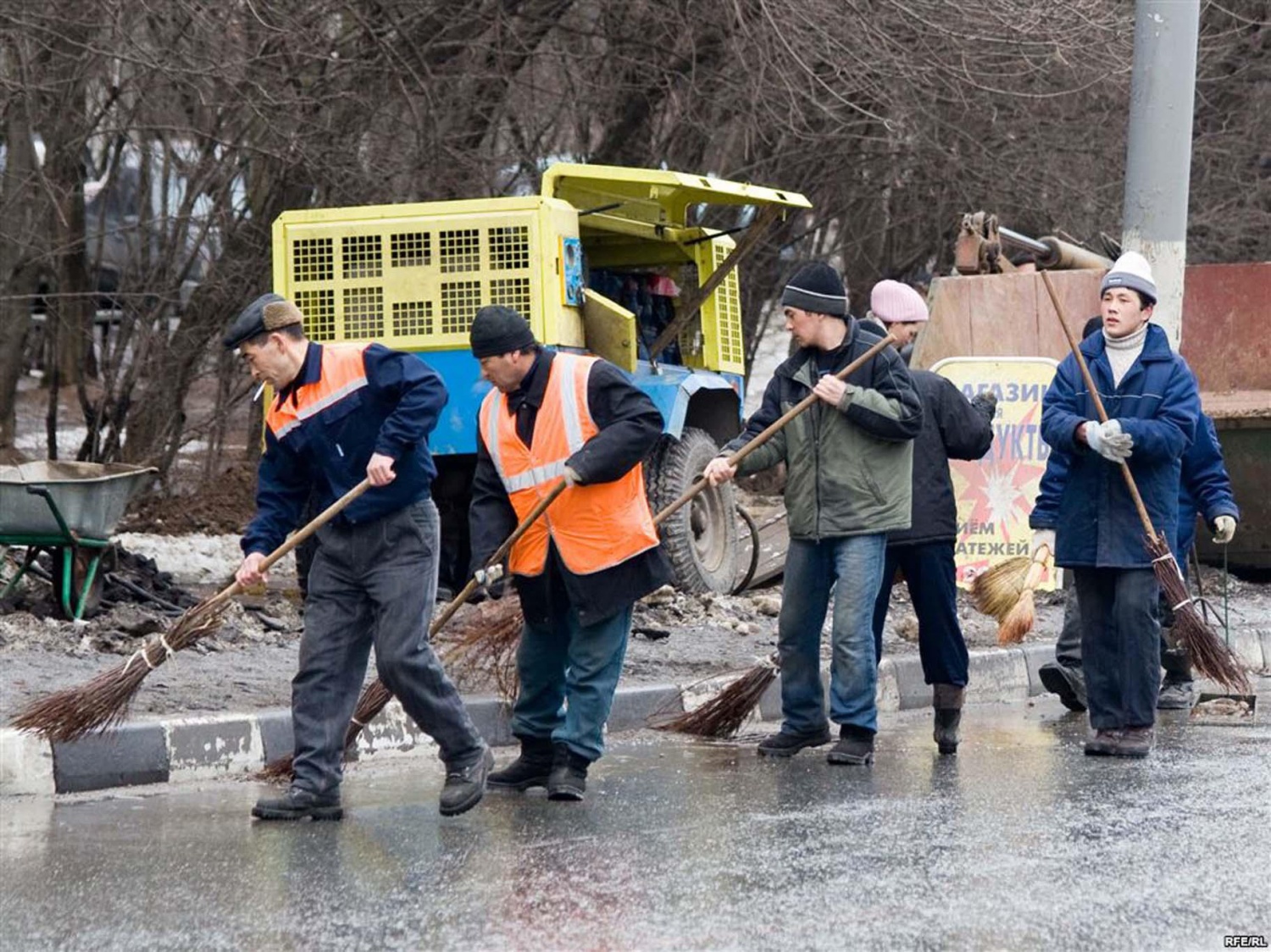
Photo: radiosvoboda.org
The Center for Strategic Development was published by the report “Who, where, why, dedicated to the main problems of Russian migration. Its compilers are a team of authors from HSE and RANEPA. The authors of the report, talking about problems with the number of able -bodied population, note that its total decline until 2030 will be from 11 to 13 million people.
Lack of millions of hands
Given the demographic situation, it is possible to make up for the shortage of workers only with the help of temporary migrants who have long considered the Russian Federation an attractive place to make money. By the end of the 2000s, the number of temporary migrants located at once in Russia amounted to about 10 million people, the report said. Half of this is labor migrants. But since 2015, the entire temporary migration sector has decreased quite much due to the changed economic conditions. The reduction of migrant workers, according to various estimates, amounted to up to 15%. In 2017, these indicators again went up, but they did not reach pre -crisis levels.
The problem with the shortage of employees was complicated by other parameters. “Although the total quantitative reduction in the presence of labor migrants in the Russian Federation since 2014 was not so large -scale, a decrease in the number of legalized foreign workers, on the contrary, turned out to be very impressive - almost half, if you summarize the registered patents and work permits,” the study says. The authors of the report claim that about 30% of migrants work without even the potential to issue their employment.
The legalization of migrants in the domestic legal field will allow you to better control labor migrants and build more clear economic plans both at the government level and at the business structures level, but for this, the authorities need to simplify the design of migrants and create more clear employment rules. The authors of the report also offer financially encouraging legal workers who are in the Russian Federation without violations.
Migration reserves at the end
After the collapse of the USSR, Russia was one of the most attractive places for permanent residence of immigrants from most republics of the Union. About 10 million people moved here since 1993. This partly helped solve the problems with depopulation, which amounted to 13 million. Nevertheless, "since the beginning of the 2000s, the migration growth does not exceed 320 thousand people, according to this indicator, Russia does not stand out among large European countries." Thus, it is becoming increasingly difficult to hold the stable number of the country's working population.
The guidelines of potential migrants are also changing-due to economic difficulties, many people go to European or Asian countries. They ceased to be donors of migrants Kazakhstan and Azerbaijan, who became economic competitors of Russia
The situation is aggravated by the fact that "reserves close in ethnocultural terms of migration in post -Soviet countries are largely exhausted." The authors of the report claim that over the past two decades, the number of Russian and Russian -speaking people in the countries of the former USSR (and especially Central Asia countries) has been seriously reduced. New generations of residents of post -Soviet countries have fewer opportunities for teaching the Russian language. Therefore, it is more difficult for many who come to integrate into the country and work in conditions of real competition.
The guidelines of potential migrants are also changing-due to economic difficulties in Russia, many people go to other European or Asian countries. They ceased to be the donors of migrants of Kazakhstan and Azerbaijan, who, according to the authors of the report, became the economic competitors of Russia.
“At the same time, there are significant, practically unlimited resources of migration for Russia outside the post -Soviet space - in Iran, Afghanistan, countries of the Middle East, Pakistan and India,” experts say. At the same time, people from these countries will be difficult to integrate into Russian realities, researchers write.
No strategy
The situation is also problematic because “today in Russia there is no integration policy that would include naturalization programs (language teaching, the basics of statehood) of those migrants who would like to stay here and get citizenship.” The authors invite the authorities to formulate a clear migration policy that would not have changed depending on the conjuncture.
“It is necessary to develop integration programs aimed at different groups of migrants: those who intend to stay in Russia, children of migrants, as well as for the hosts and work with the media”
Particularly worked out the problems of reducing the number of highly qualified migrants - over 5 years, from 2011 to 2016, only 150 thousand such people were attracted. Researchers propose to change the mechanisms of obtaining a residence permit and citizenship, since now there are no such mechanisms in a transparent form.
There is no thoughtful policy of integration of visitors in the country, the authors summarize. “It is necessary to develop integration programs aimed at different groups of migrants: those who intend to stay in Russia, children of migrants, as well as for the hosts and work with the media,” experts of the CSR suggest. Without a clear integration policy in the country,, among other things, conflicts on national grounds and the age of social tension can become more frequent, experts warn.