
Translated material
He changed your apartment
The founder of IKEA Ingvar Kampad died
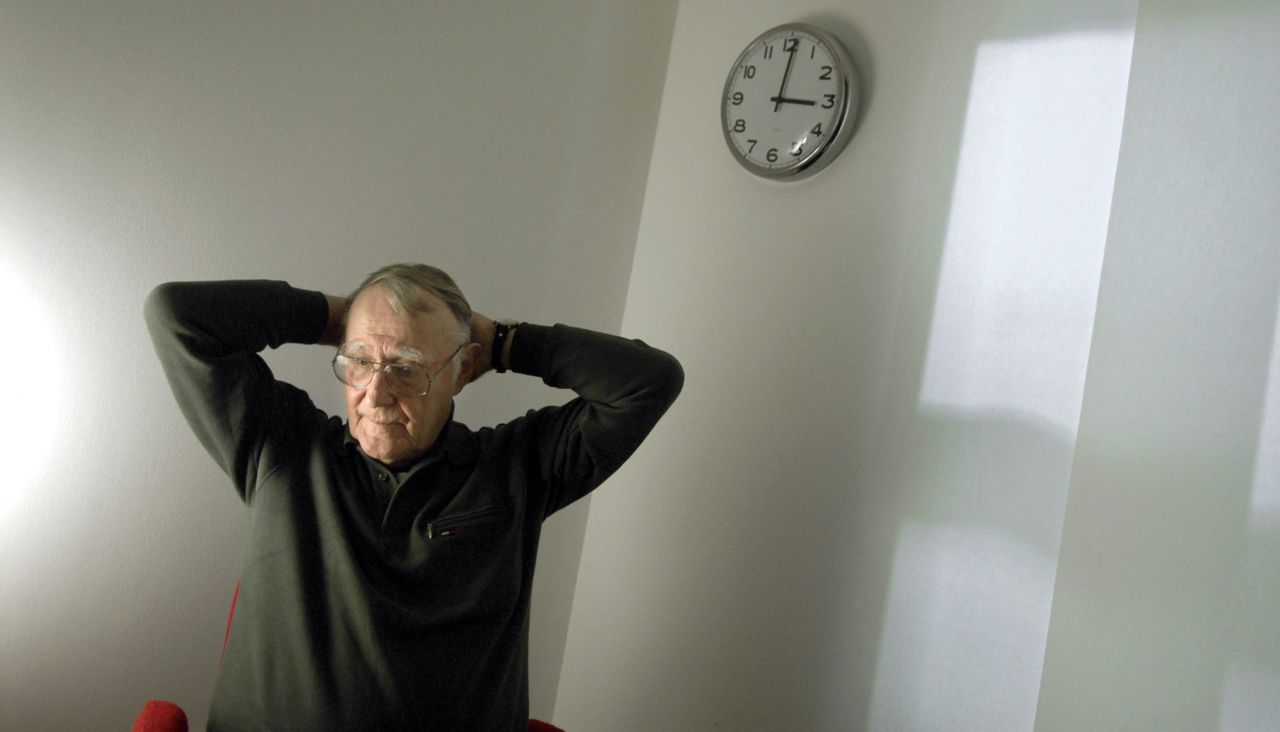
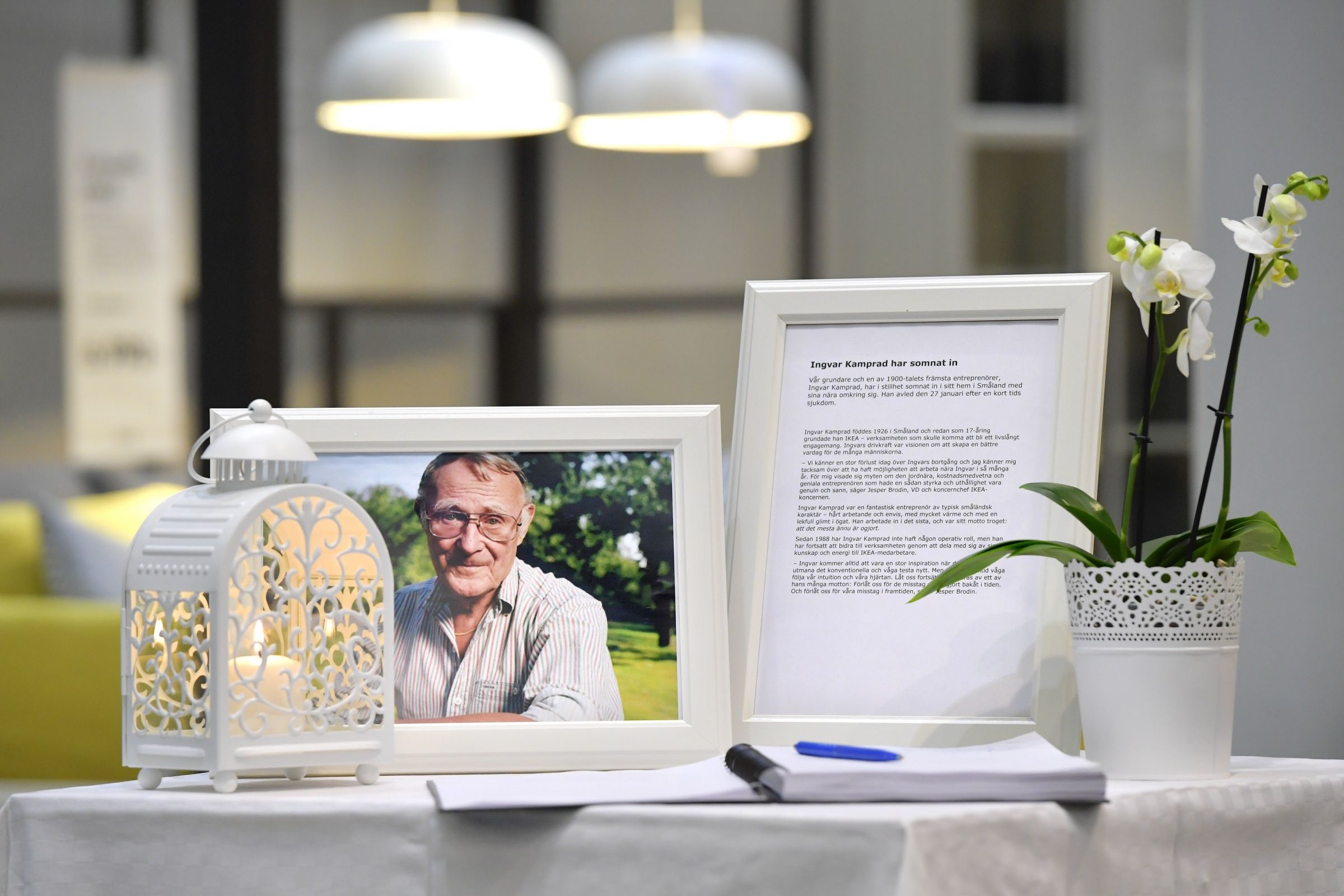
On January 27, the founder of IKEA Ingvar Camprad died in his house in Smoland in Smoland in the year 92 of his life - perhaps the most unusual billionaire from the Forbes rating. His main idea in his life was a tangency, bordering on fingertips: he flew with an economy class, drove on an old car, spent decades in the same chair, left Sweden in protest against high taxes and registered IKEA in the Netherlands (for the same reasons).
In a sense, he wrote the best obituary to Ingvar Kamprad. Rather, he dictated - Bertil’s book “Saga about IKEA” was made on the basis of numerous interviews with Camprad. It makes it possible to understand what memory of myself Kamprad would like to leave. Here is a quote:
At that time, I sold the clock to various watchmakers in Stockholm. [...] Gunnar Jansson, a man of about fifty, offered me a batch of 55 kroons each (almost $ 7). I could not afford it, which I honestly confessed to him. Apparently, my youth and desire to become a businessman caused him sympathy, and he decided to help me. “Good, young man,” he said, softening, “I will sell them 52 kroons.”
“The profit will be small,” I replied, “but I accept your proposal.”
“Young man, you will never become a businessman. At first you said that you can buy a clock of 50 kroons, when I offered them to you 55 each. And when I offered you 52 crowns, you gladly agreed, without trying to stare them for 51 kroons and 50 era. You should remember one thing - in business, even ten era matters. ”
“I promise that I will never forget this,” I said politely and keep my promise since then. Even today, in a free market, when I live in Switzerland , I have preserved the habit of always asking when making a purchase, can I get my goods a little cheaper. My wife is terribly annoying.
On the way home, I was terribly worried that I did not try to bargain the clock of 51 kroons.
Crosswoman
The history of the foundation of IKEA is well known: as a child, Ingvar Kamprad was obsessed with the idea of trade. He bought in bulk of matches, pencils and erasers and sold them in retail. At first, Kamprad himself traveled to the clients on a bicycle, then he began to use the mail. Then he came up with the name of IKEA, where the first two letters are its initials, and E and A indicate where the company comes from (Elmtaryd and Agunnaryd).
IKEA (in the person of her only employee) sold watches, fish, seeds and a fountain pen (just entered in fashion), but once Kamprad realized that using advertising in newspapers can also be sold furniture produced at small enterprises. Since the entrepreneurial Swede could not remember digital articles, he began to invent the furniture of the name. Thus began that IKEA, which now has shops around the world, and the annual turnover exceeds 35 billion euros.
The desire to save in the 1960s led Campad to the idea of buying goods in socialist Poland, which is especially emphasized in his biography by Forbes journalists. It was with Campad that, by the way, one of the most famous mistakes of this magazine is associated: from 2005 to 2010, he estimated the state of the Swede at $ 28 billion and considered it one of the richest people in the world. In 2011, IKEA lawyers disclosed the documents according to which the owner of the furniture company was not Kamprad itself, but the fund in Liechtenstein with a confusing property structure, which is obliged to invest in IKEA or give it to charity. Now the magazine evaluates the “modest” of $ 3.5 billion at “modest”.
Kamprad never studied for the designer, and perhaps this is what helped him come up with one of the main features of IKEA - flat packaging. According to legend, the idea came to Kamprad in the head when he saw his employee unscrewing his leg at the chair so that he would fit into the car.
Another know-how Kamprad is the free colorful IKEA catalogs, which he himself called one of the most popular publications in the world: the total circulation of one number is more than 200 million, which allows business publications to compare catalogs of a furniture company with the Qur'an and the Bible. The publication differs from the country to the country - IKEA previously studies local features. For example, in China, it is ineffective to promote the same kitchens as in the USA - because there are much fewer kitchen in Chinese apartments.
For non -wives IKEA (with the headquarters of the apartment in the Netherlands and belonging to the Liechtenstein fund) is one of the main symbols of the kingdom. The company itself actively supports this image: from a yellow-blue logo and a corner with Swedish products in any store to ideology-Kamprad to himself loved to stand behind the counter, and arranged his sons in IKEA in the lowest positions. It was to them - Peter, Junas and Matias - in recent years, the company's management gradually crossed; In 2013, Kamprad Sr. completely retired.
Perhaps it was precisely the construction of the brand around the Swedish values that IKEA helped not to notice the scandal, which in the 90s erupted around Campers himself. In 1994, the Swedish media published materials that in his youth the billionaire supported the pro -fascist movements in Sweden and even raised money for one of the organizations. Kamprad publicly apologized and called his youthful glances a mistake - and the label of the "fascist" did not stick to the company.
Kamprad had several principles that prevented the company from entering new markets for themselves. One of them was not to give bribes - even in situations where it would seem impossible without them. That is why Kamprad was seriously worried about the story that happened to the store in St. Petersburg, when the contractor with the knowledge of the heads of the local IKEA branch gave a bribe for the “solution of problems” with energy supply. The leaders of the Russian IKEA were dismissed, and Kamprad, by his own admission, cried from despair.
According to Kamprad, he was never sure that he wanted to build a global company, but in the end the company works in Europe, in America, China, and in Saudi Arabia. It's not only about profit. “Our business philosophy is based on the democratization process. We produce high -quality and beautiful things that are cheap and accessible to most people. I think this is directly related to democracy, ”it is written in the book, from the quote from which this text began.
Alexander Polivanov