Translated material
Paris does not see the shores
Flooding pictures
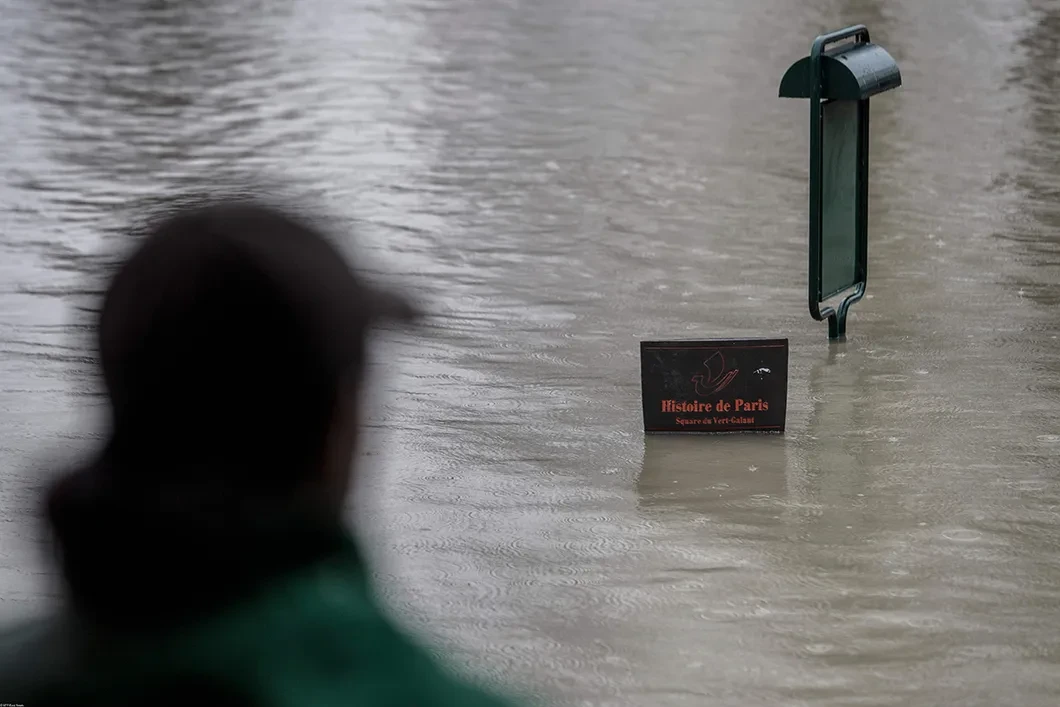
No, friends, Paris will not become Venice, even though he has a ship on the coat of arms. And then, after all, brown water of the Seine managed to splash out on the blue screens of many countries. A little more-and Paris could drown in the stream of news about the flood. But it seems to have carried. Although the city, of course, has changed - a drop and for a while
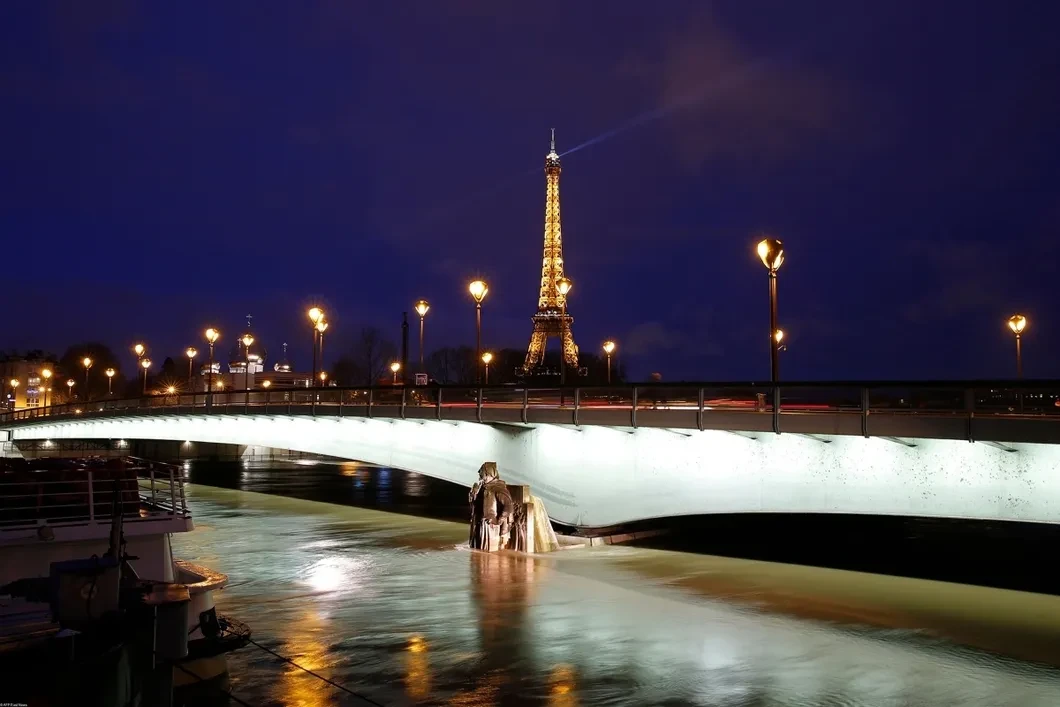
The muddy hay gained a huge speed, but empty. In ordinary times, traffic here, like on a garden ring: barges crawl, walking boats run, a cheerful audience “floats” on the Arrow of the island of Sita into a country of intoxication.
Now the arrow has gone under the water, along with benches, from which it is so great to observe a stormy life flowing in the hay and in the vicinity. Now on the arrow there were only trees, led by the weeping willow. Deprived of scenery, they came to the fore - similar to unaccounted bald pensioners who decided to plunge before breakfast: while the entire sanatorium is sleeping.
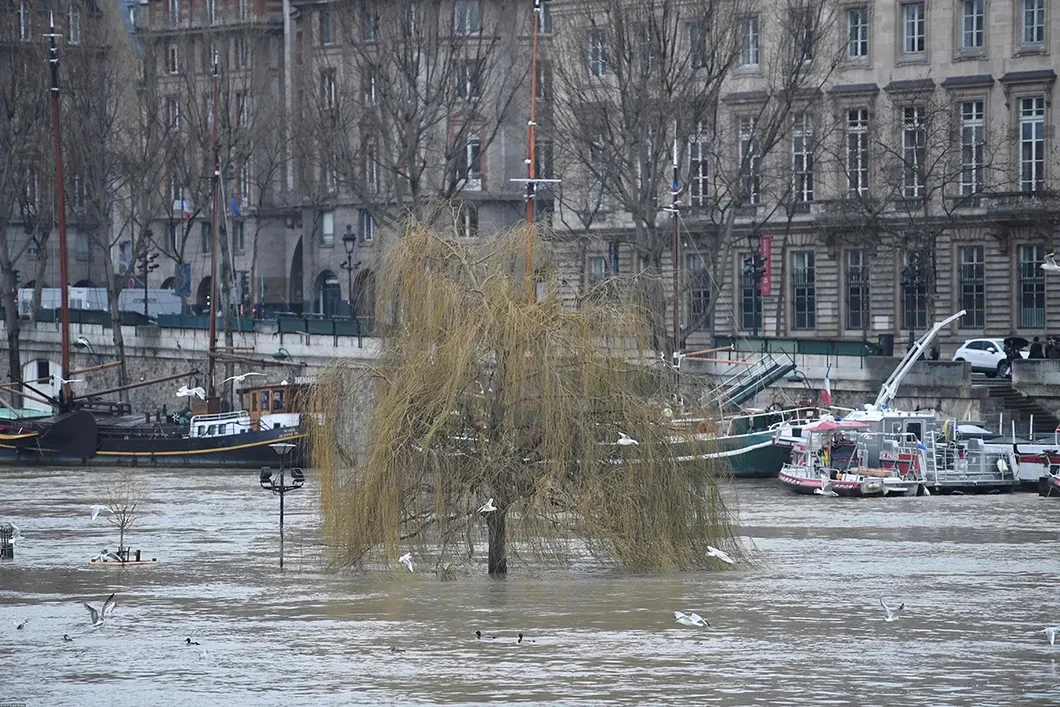
Tourists take pictures of them, standing at the monument to Henry IV, on the new bridge. Between the bridge and water - two meters, no more. What a shipping here.
Ducks and swans swim between the extinct heads of the lanterns.
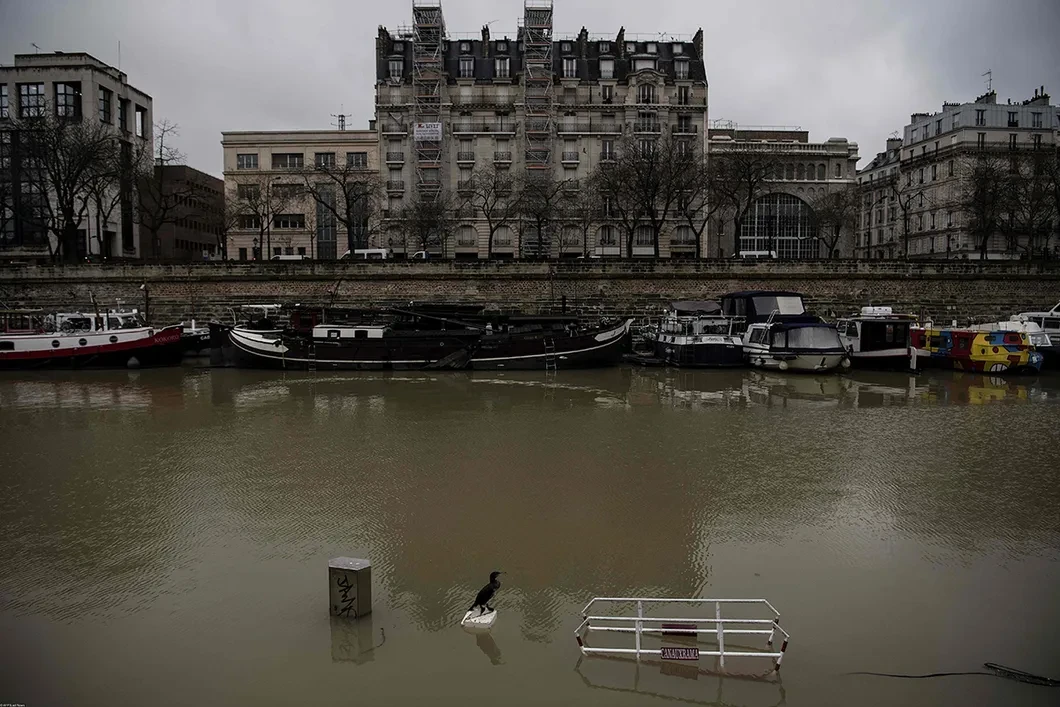
Shipping stopped for three weeks, as they say in the city hall. So tourists were not lucky. Paris from the water - he is different, he is special, of course, he must also be seen.
But the weather pumped up this winter.
In December-January, 200 mm rain fell on the city. He walked almost every day and in all ways: he drizzled, then drummed to the accompaniment of Norman prickly winds, breaking umbrellas and bending human figures. We have not seen such rains since 1900 - Meteo France experts say. And before, they say, they could not see, because they did not make observations.
In the last couple of days, the rains ceased, and the water level still did not exceed 6 m 20 cm, as predicted, and did not beat the last records (in the usual state, the level-from 1 to 2 meters above the zero mark of the ruler installed on the Austerlitsky bridge). Now weather forecasters say that the water will not go above 5.95, the peak will be passed that night, by Monday.
In this situation, the flood almost does not affect the life of citizens who are not engaged in the prevention of its consequences.
Well, the trains of the line C do not go throughout the entire city (the stations “Notre-Dam-Szen Michel”, “Museum of Orsse”, “Mars of the Eifelev Tower” ...) are closed ...): the line goes along the embankment. Well, the Louvre closed some halls in the lower floor.
The river business - restaurants on steamboats, bars on barges ... The French manufacturer of cement Lafarge is suffering, which makes the goods right within the city, on the embankment: near the Ministry of Economy, in Bercy, and next to the Eiffel Tower, on Zhavel. Now everything is flooded there. In the past flood, in June-2016 we lost 700 thousand euros, ”the representative of the plant complains, but reassures: this time we took measures and losses will be smaller.
And Frank Gallan, who is called one of the best researchers in the field of water security in Europe, says in an interview with Challenges that France is time to stop “galloping urbanization” and “thoughtless soil concrete”: there is nowhere to leave the water. In addition to this, the level of groundwater rises every year. In peak periods, the river is sharply filled with both from above and below.
Representatives of the state structure of Seine Grand Lacs are about what kind of rod of water they managed to stop on the outskirts of the city. After all, they control 4 artificial lakes dug southeast of Paris specifically for such purposes. Lakes contain 800 million cubic meters of water, and already on Saturday were filled. Due to this, the water level decreased in Paris by 50 centimeters, this is a serious result, but you need to dig a fifth lake, representatives of Seine Grand Lacs say. This will help in the future to play from nature more than 5 centimeters. The researcher Gallan calls this measure of little use: it is cheaper and more effective - to free the earth in the city from asphalt: where it is possible. And he cites a New York as an example, where they began to pursue such a policy since 2012, after a hurricane Sandy. Says: Politics showed effectiveness.
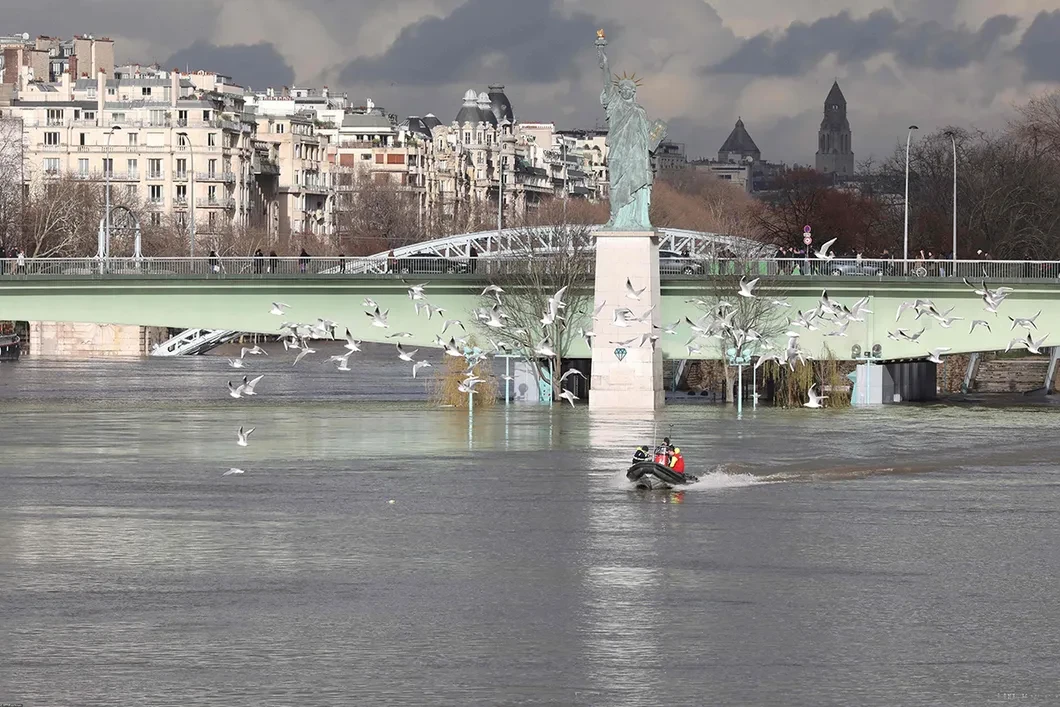
Since 2014, the Paris authorities have also achieved some success in preventing floods, the OSCE fresh report said, but “not enough”, it is necessary to significantly accelerate the work.
Because if the flood comes, as in 1910 - 8 m 62 cm, the consequences will be extremely unpleasant and monstrously expensive. The past, the “educational” flood of June 2016 (6 m 10 cm), cost Paris 1.3 billion euros.
The time for counting new losses has not yet arrived-the water will be higher than the normal level for another two to three weeks.
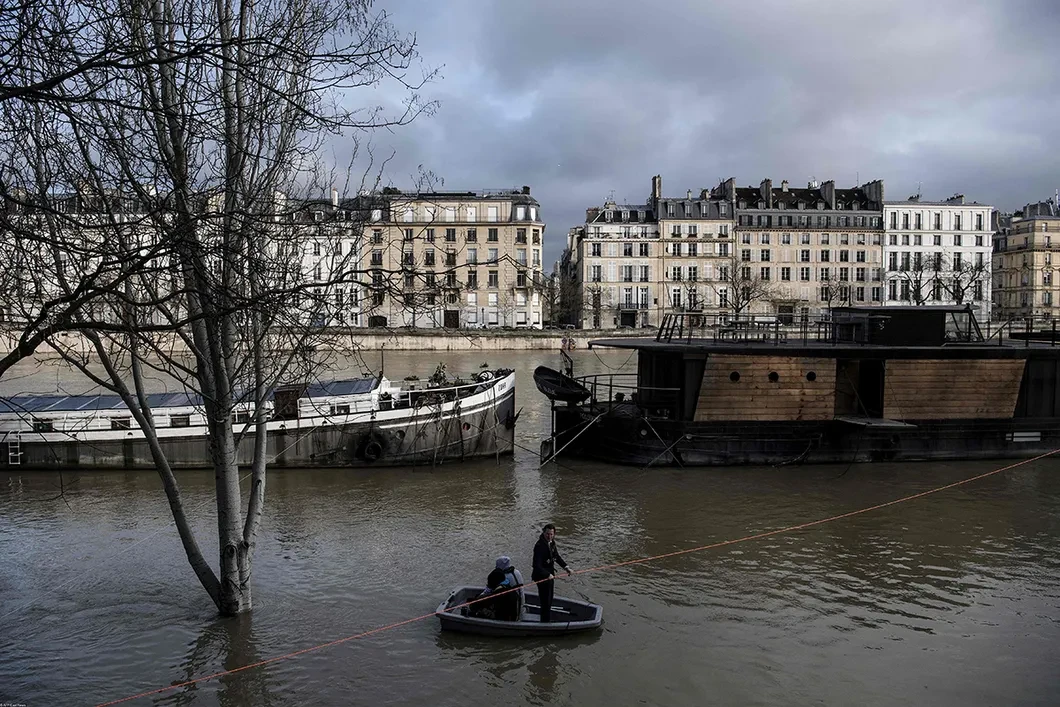
In the meantime, the inhabitants of the barge, moored near the (former) shore, are transported to the "mainland" in rubber boats, holding on to the ropes.