
Translated material
Nuclear dream of reason
The Kremlin has achieved: the new defense doctrine of Trump is built from the assumption that Putin can press the red button
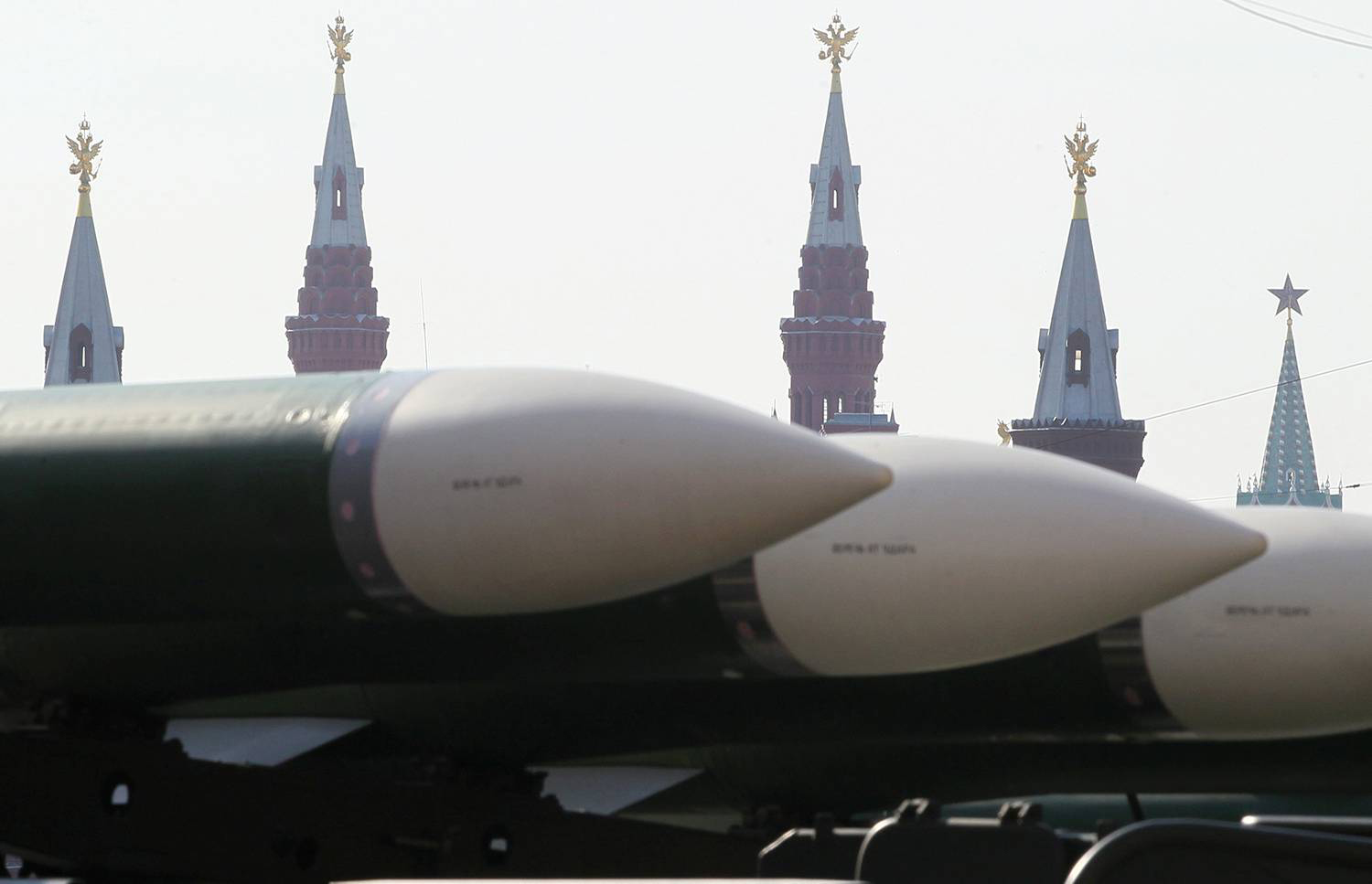
Fear to dream, dreams come true. For many years, Russian diplomats complained that, horror, the world forgot that our country is a great nuclear power, which should be treated in a special way, and its rights to some “privileged interests” should be recognized. In fact, all these complaints came down to Maxim - let them not respect, if only they were afraid. And now the dream came true. In the United States, one after another, doctrinal documents are published that will determine the policy of national security and defense for the period of the presidency of Donald Trump. And in each of them our country is given an honorable place: along with China, North Korea and Iran, it is considered the embodiment of the main threat to the security of the United States. With marginal frankness, this approach will most likely appear in the most specific of these documents - Nuclear Posture Review (“Review of Nuclear Forces”) dedicated to nuclear strategy and politics. Note that the review itself has not yet been officially published. This will happen in February. However, some time ago, the initial option developed in the Pentagon, “flowed” into the press, brought into the confusion of understanding people. At least, both Russian and American experts, with whom the NT correspondent spoke, expressed the timid hope that, as a result of interdepartmental approvals, some formulations would be smoothed out or completely disappear.
Goodbye, the dream of a nuclear world
However, the NPR in its original form is a decisive break with the heritage of Barack Obama, who, as we recall, dreamed of a nuclear world, relied on the gradual reduction of nuclear arsenals and actually approached the refusal of the use of nuclear weapons first. Trump's doctrine allows the use of nuclear weapons even in response to a non -nuclear attack if she threatens the vital interests of the United States and their allies. The review states that over the past decade, Russia and China have implemented programs to decisively build up its strategic weapons. In particular, it is indicated that Moscow currently implements at least two programs for creating new intercontinental media (obviously, this refers to the “heavy” intercontinental ballistic missile “Sarmat” and strategic nuclear submarines “Borey”), a hypersonic missile and an autonomous torpedo - a carrier of a megaton class charge. The authors of the review did not have time to include the resumption of the production of strategic Tu-160 strategic bombers , as Putin reported last week.
The review emphasizes that the United States did not create any new nuclear weapons during the same period. It should be recognized that this was not necessary - all the previous decade of the United States had a significant quantitative superiority in nuclear weapons - missiles, submarines, strategic bombers - over Russia, not to mention China. However, now the possibilities for modernizing the UGIO class submarines, the Minitman ground missiles, which have been in the service for more than 40 years, have been practically exhausted. The Pentagon begins a large -scale nuclear re -equipment program, designed for 15–20 years. It is supposed to create new underwater missile carriers of Colombia, new ground strategic missiles, as well as B-21 Raider bombers. In addition, a new nuclear cruise missile of air base will be created. And the nuclear winged missile “Tomagavk” of the sea base of large -range, which Obama refused eight years ago, will be returned to operation. Finally, at some missiles, Trive, which are on submarines, will be installed by low -power warheads. Tactical nuclear weapons are represented by B-61-12 bombs equipped with guidance systems. The fifth-generation F-35A will deliver them to the goal of them.
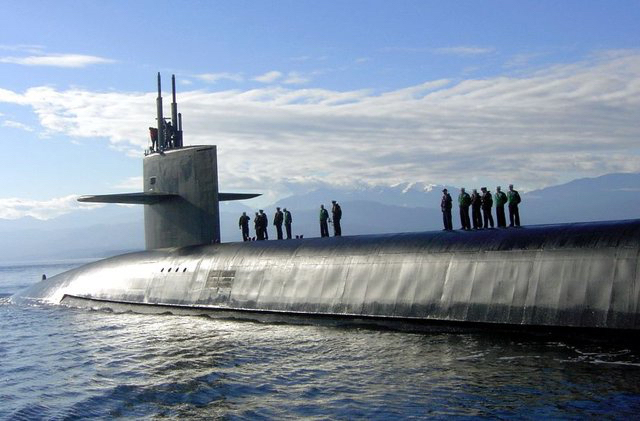
on submarines, the Pentagon suggests
install low -power warheads photo: fas.org
The creation of new cruise missiles, the return from the warehouses of the old ones, as well as the deployment of low -power ammunition (in fact, as far as you can understand, it is about a capacity of 10 to 20 kilotons - this is the strength of a bomb dropped at Hiroshima), are aimed exclusively at the restraint of Russia. As for winged missiles, this is a response to a violation of an agreement on medium and smaller missiles (RSMD). Washington claims that Moscow secretly created a high -range terrestrial winged missile, and, deploying its cruise missiles, intends to nullify the military advantages received by Russia. A special conversation about nuclear ammunition of low power.
The creation of new cruise missiles, the return from the warehouses of the old ones, as well as the deployment of low -power ammunition, are aimed exclusively at the deterrent of Russia
The authors of the review proceed from the fact that the Kremlin, guided by the concept of “escalation for de -escalation”, is ready to use low -power nuclear weapons even in a local conflict in order to force the United States and NATO countries to stop the war on extremely favorable conditions for Moscow. A considerable number of comments appeared immediately, the authors of which either receive actual data directly from the CIA and RUMO, or take it from the ceiling. So on The Wall Street Journal on January 25, the text “The Case for Tactical US Nukes” appeared, written by Matthew Kroenig, a professor of Georgetown, who claims that Russia has an ammunition of less than a kiloton. This information did not appear in any open sources.
Do not in vain talk about inconceivable
In the same way, Moscow never officially declared intention to use nuclear weapons in a local conflict. The nuclear policy of Russia is extremely reasonably formulated in the current military doctrine: “The Russian Federation reserves the right to use nuclear weapons in response to the use of its nuclear and other types of weapons of mass destruction against it and (or) in the event of aggression against the Russian Federation with the use of ordinary weapons, when the existence of the state itself was spelled. The decision on the use of nuclear weapons is made by the President of the Russian Federation. ”
Alas, a reasonable formulation cannot cancel the flows of irresponsible chatter about nuclear weapons and the possibilities of its use, which have been poured out of the very peaks of the Russian government for years. It is enough to recall the notorious interview of the Secretary of the Security Council Nikolai Patrushev in Izvestia in October 2009. Just there, he talked about the possibility of using nuclear weapons by Russia in regional and local conflicts and even its “right” to apply a preventive nuclear strike. And what are Putin’s statements and Shoiga about the resumption of a certain “combat patrol” with strategic bombers. Before the current president and the head of the Ministry of Defense, the term “combat patrol” was used exclusively in relation to atomic submarines and meant the presence of nuclear weapons on board. One can recall Putin's arguments regarding the possibility of declaring increased readiness for the missile forces of strategic appointment at the time of the annexation of Crimea (God alone knows what the Supreme Commander -in -Chief had in mind - the Strategic Missile Forces are in constant combat readiness).
The purpose of all these statements is understandable - to scare the Western "partners" of Russian recklessness. Like, if anything, we will push the button - and hell with her, with a calorifica. For the time being, Washington pretended that these escapations did not touch him. Let, they say, Russians, if they so want, they get out of their inferiority complex. But now, after the annexation of Crimea and the war in the Donbass, when Moscow, as they say, in fact proved its own unpredictability, the Americans began to be guided by another logic: the worst of the fact that the Kremlin can commit, it will ultimately do.
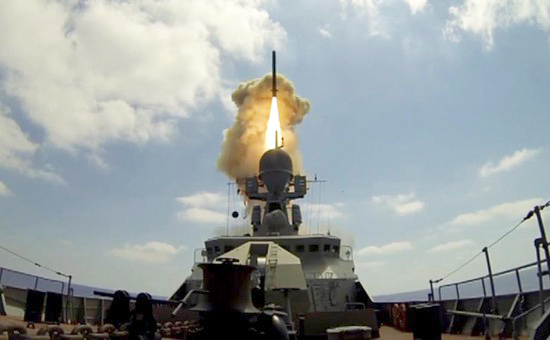
Photo: Newspile.ru
And as before the script of the “escalation that leads to de -escalation”, that is, the use of nuclear weapons in order to stop the successful offensive of the enemy, it was worked out in 1999. The then maneuvers of the “West-1999” were a kind of response to the shock of Russian generals, who caused the NATO operation in Yugoslavia, which demonstrated a high-tech non-contact war. It was clear that Russia could not wage war. And the maneuvers ended at first with an imitation of struck by strategic bombers, and then a training strategic missile. In this way, it was supposed to force the Americans to stop aggression. Just at the turn of the 1990s and 2000s, a lot of work on nuclear de-escalation was written. It can be assumed that in the absence of intelligible information about the Russian nuclear strategy, American experts now transfer the plans for nuclear de -escalation to the level of local conflict when they see Vladimir Putin's rapture from the possession of Caliber cruise missiles. His words that the Kremlin will get the political will to use this weapon was by no means addressed to terrorists in Syria.
For the time being, Washington pretended that these escapations did not touch him. Let, they say, Russians, if they so want, they get out of their inferiority complex. But now, after the annexation of Crimea and the war in the Donbass, the Americans began to be guided by another logic: the Kremlin can commit the worst
Two minutes before the disaster
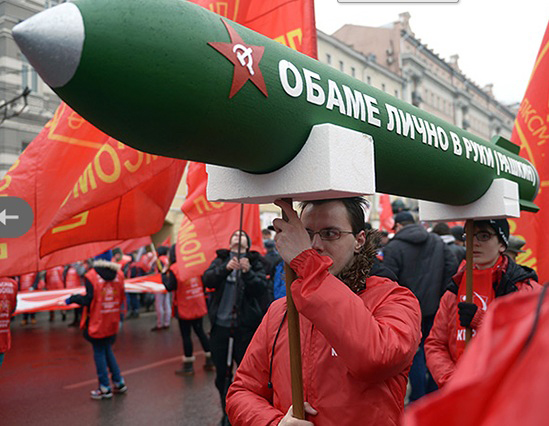
But even if the authors of the review are right and the Kremlin is really ready to use non -strategic nuclear weapons in local wars, will there be low -power ammunition with a restraining factor? In a review of nuclear forces, the words are repeated as a mantra that the United States does not intend to lower the threshold of using nuclear weapons. But if you create low -power ammunition that you believe, your opponent has, then that this is not a decrease in the threshold of using nuclear weapons? If you discard verbal apples, then the review allows the possibility of limited nuclear war in the form of an exchange of blows using low -power ammunition. As you know, in 1970-1980, American strategists were guided by the concept of limited nuclear war, which involved a strike not on cities, but on the most important military facilities of the enemy. Their destruction should lead to the end of the conflict without the destruction of all living things on the planet. However, all attempts to play such a scenario during the exercises inevitably led to the same result - a global nuclear war. Any attempts to lower the restraint level will turn into only an increase in the risk of nuclear war.
It was on these days that American scientists moved the arrows of the famous day of jail another 30 seconds closer to 12. Now the symbolic 2 minutes separate us from the disaster. So it was in the mid-1950s, when the Korean war had just ended and there was a Caribbean crisis ahead, at the time of which the arrows completely approached the fatal mark.
However, it should be recognized that 70 years ago the parties that opposed each other did not have at the disposal of such technical means, such a fantastic power that they now have. In addition, Khrushchev, Brezhnev, Eisenhower, Kennedy - all passed the second world, they personally represented the results of the massive (even non -nuclear) bombing of residential quarters. And this circumstance forced them to depart from the red line under any crisis.
Today, of course, there is no ideological confrontation between the two systems that required to win at all costs. However, for the current leaders - both for Russian and American - the desire to inflate bets is characteristic, without thinking about the consequences. And the generals who want to curry up will definitely slip them a kind of miracle-armed, which will surely force the enemy to give in. And this makes today's nuclear confrontation very dangerous.