
Translated material
"This is for lawyers"
The Magazine "Theater" released a number about the "Platform" and the Russian theater "Times of Medvedev"
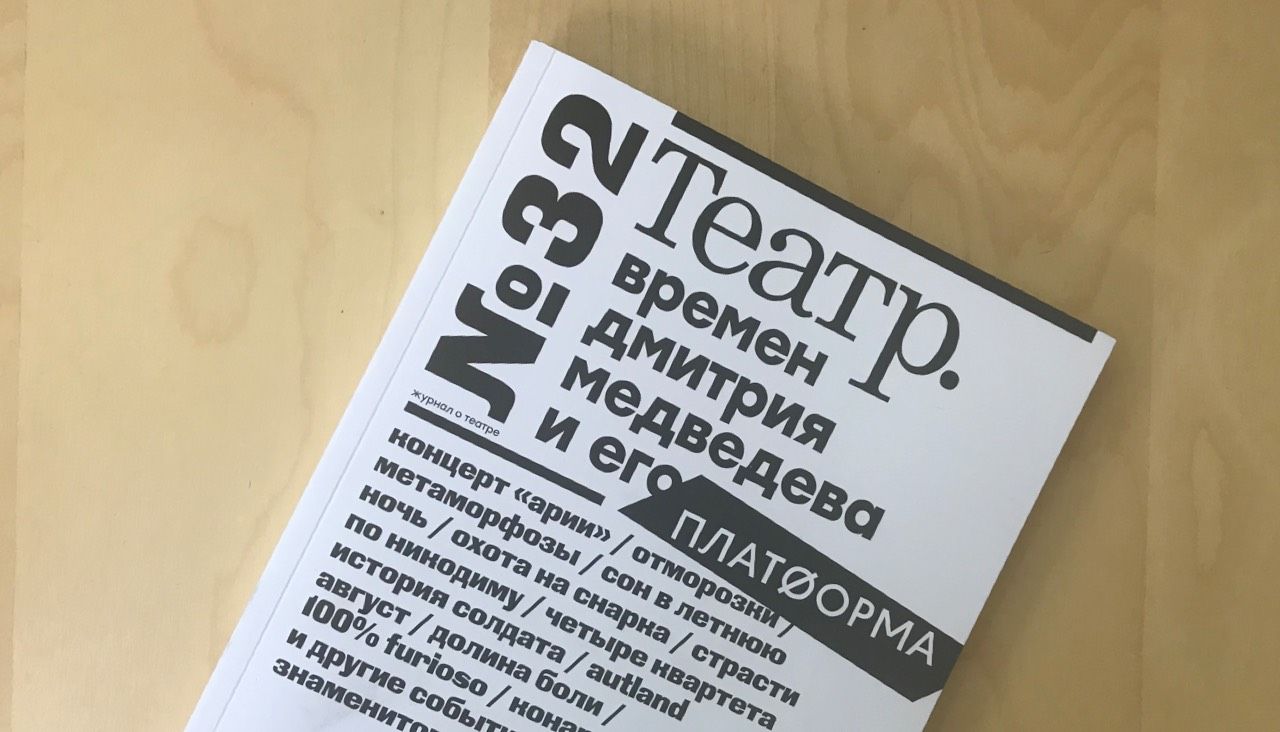
In January, the 32nd issue of the magazine Theater, entirely dedicated to the Platform project and the Russian theater from the time of President Dmitry Medvedev, was released-those conditions, public and political, in which the Platform was created. Since the former managers of the project, together with director Kirill Serebrennikov, are under investigation in the case of the theft of budget funds, the theater decided to collect reviews, posters and photographs of those performances, lectures and concerts (about one hundred events) that went on the “platform”, to show what public money was spent on. Medusa publishes a comment by Marina Davydova, editor -in -chief of the magazine Theater, as well as a fragment of the article “Platform” and impassive numbers, which tells about the budgets of various theaters in 2014.
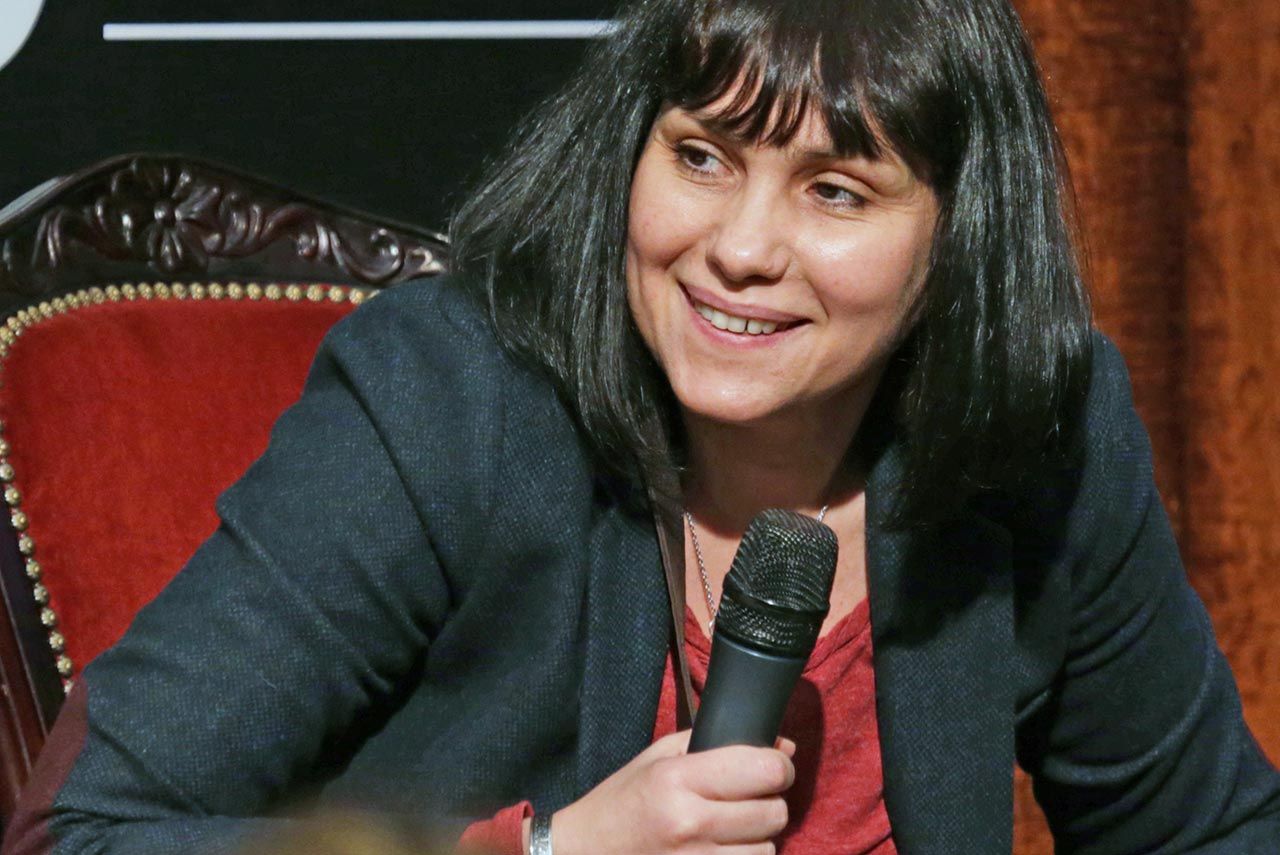
Marina Davydova
editor -in -chief of the magazine "Theater"
Honestly, for this winter we planned the release of a completely different number, we are working on it now: the magazine goes out once a quarter, so we plan and announce all topics at the beginning of the year. The decision to release a number about the “platform” came spontaneously somewhere in October, when several ships have already passed [in the case of the Seventh Studio ]. We suddenly realized that now it would be right to make a high -humid theater magazine with copyright texts, but to carry out archival work and arrange such a “theater.doc” so that the era spoke with its voices.
On the one hand, this is a number for lawyers, I do not hide it. The lawyer can bring the magazine to the court, put on the table and say: “You say that the money intended for this project has been stolen. But look how much it was written about him. ” To confirm that there really were performances, concerts, lectures, master classes on the “platform”, we made a maximum selection for each event: from announcements in the magazine “Poster” to reviews in newspapers and on sites. We chose detailed descriptions made by completely different people, and not just two or three critics who are “in conspiracy” with the “platform”. From these descriptions it is clear that many people came to the performances, that there were decorations, music-it was not a “theater on the rug”, all this required some investments. For meetings, lectures, master classes-there were about 80 of all such events that were not reviewed-we made a tab with photographs and posters. In addition, we, using open sources, conducted our own audit of the Platforms and compared its budget with the budget of the usual Moscow theater of those years. I’m not sure that about any other theater, the same Gogol Theater, before he became a Gogol Center, you could write a whole number, although in those years he received no less funding.
On the other hand, we wanted to make a kind of reconstruction of the era in this issue, which is associated with the name [President Dmitry] Medvedev. Although it did not begin with him and ended after him. This is the end of the zero - the beginning of the tenths; The time when the request for archaic traditional values has not yet been in the air. It was a time, the main words of which were “innovation” and “modernization”. And just the Platform project became the ideological, showcase project of this modernization in the theater. And in a conservative theater environment at that time it was not easy to find a person who could do this project. Therefore, it is not surprising that the choice fell on Cyril. There were few people like him - the workaholics who openly declare their commitment to modernization, to westernization - there were few, and the theater is very small.
The conditions, including political and public, in which the “platform” arose and ended, up to the point that Vladimir Medinsky spoke about it at different times, we tried to describe.
"Platform" and impassive numbers "
Fragment of the article by Marina Andreikina
How the amount allocated to the “platform” correlates with the budgets of other projects in the field of culture; how it correlates with the expenses of other theaters; And if you implement such a project as a “platform”, will there be something that could be stolen.
Here are several subsidies of Moscow theaters in 2014.
- Moscow Drama Theater of the P/R. Dzhigarkhanyan - 85.9 million rubles.
- Moscow Theater "School of Modern Play" - 102.0 million rubles.
- Moscow Jewish Theater "Shalom" - 118.2 million rubles.
- The Moscow Experimental Theater of the P/R V. Spesivtseva - 70.5 million rubles.
- Moscow Theater of Russian Drama P/R M. Shchepenko - 48.3 million rubles.
- Theater and cultural center named after Sun. Meyerhold - 58 million rubles.
- The experimental theater center of the new drama "Practice" - 40.8 million rubles.
- The Center for Drama and Directions - 75.5 million rubles.
- Russian Spiritual theater "Glass" - 75.1 million rubles.
- Moscow Cultural Folk Center of the P/R L. Ryumina - 92.9 million rubles.
From the given sample it can be seen that organizations that declare their commitment to traditional and national forms of art also receive budget funds during the years of “platform”, and they were not only comparable to financing the Platform project, but sometimes superior to it.
But how many prime ministers were produced by Moscow theaters?
For the purity of the experiment, let's look more closely in the activities of the State Budgetary Institution of Culture of the city of Moscow “Moscow Drama Theater named after N.V. Gogol ”, which later became the Gogol Center (take the years before the arrival of Kirill Serebrennikov to this theater):
So, the Moscow Drama Theater named after N.V. Gogol received a subsidy:
- In 2009 - 57.5 million rubles.
- In 2010 - 73.2 million rubles.
- In 2011 - 96.3 million rubles.
At the same time:
- In 2009, he released 3 new productions, the budget is 1,968,000 rubles. (in total, 2,998,000 rubles were spent),
- In 2010 - 2 new productions, budget 2,359,000 rubles. (in total, 2,899,000 rubles were spent),
- In 2011 - 1 new production, budget 2,359,000 rubles. (A total of 2,556,000 rubles were spent).
Total: 6,686,000 rubles. budget funds for three years (in total with extrabudget 8,453,000 rubles).
That is, in three years, six years were released against dozens of productions and events on the “platform”.
Here it is necessary to make another clarification. What do theaters include in staged expenses? In the order of the Department of Culture of the city of Moscow dated 05/28/2014 No. 468, which fixed the same standards, the estimate of the cost of creating a creative project was also approved. Two articles were included in it: unrealizable costs (which included the author of the play or staging, director of the production designer, costume artist, artist, composer, choreographer and taxes on them) and compressed costs (only the scenery, furniture, butaforia, button Props, costumes, shoes, hats, payment for advertising). Thus, no payment of artists (and in the musical performance there are also musicians), nor payment of the premises in which rehearsals should be held, and then the release and show of the performance, no payment of light and sound equipment, nor the work of administrative and technical personnel. For the budget theater, these expenses are included in its subsidy.
It turns out that a fair amount should be added to the standard for financing the production in conditional 2 million rubles, which would cover the expenses not provided for by the norm (artists, other theater workers, premises, technical support, etc.). Of course, it is incorrect to directly correlate the subsidy of the repertoire budget theater, in which the main task is to rent performances, and not their production. But it must be remembered that most budget repertoire theaters (including the Gogol Theater) have their own building, which is already equipped technically and, as a rule, gives opportunities to rehearse and play without rental costs. And the white shop at the “Vinzavod”, where the “platform” is located, is an empty stone space, in which there was nothing initially to accept the audience. Even chairs! And for this reason, not only performances, but even concerts in which there are almost no scenery, expected expenses, and considerable.
<...>
You can look at the case and on the other hand - to compare the financing of the “platform” not with budget repertoire theaters, but with separately funded projects in the field of culture.
In large theaters of large cities, only the size of the director’s fee can approach a couple of millions of rubles. It should be added to him by the fee of the artist, costume artist, artist, composer, conductor (in a musical performance or concert). Each of them is several hundred thousand rubles. In 2014, the Ministry of Culture in the Lot “The production of the performance” presented very different options - from 300,000 rubles. In the regional doll theater up to 8 million rubles. In Alexandrinka. In 2015, only rehearsals of the performance in the Mikhailovsky Theater were paid by the Ministry of Culture in the amount of 3 million rubles.
<...>
It should be borne in mind that the “Seventh Studio” ANO directly ordered the creation of many works, and also brought foreign authors and performers, that is, the costs of carrying out such measures by definition could not be low.
In addition to the rental of premises, rental or purchase of stage equipment and subsequent storage of property, it is necessary to add the work of administrative and technical personnel and the work of curators, including Kirill Serebrennikov and other leaders of the Seventh Studio. If you return to the comparison of the Platform project with Moscow budget repertoire theaters (which suggests itself, since there were many events and this implies the constant work of part of the personnel), then in 2014 the salary of the heads of Moscow theaters, if you rejected the extreme values, were located mainly within 150,000 - 300,000 rubles.
Let's try to summarize. The size of the state subsidy for the three-year activity of the ANO “Seventh Studio” on the Moscow Cultural Field in 2012-2014 is average and even gravitates to the lower bar of the cost of close to it. And the number of premieres that occurred on the “platform” was several times superior to the number of premieres in the average Moscow theater.
Without even knowing the exact amounts spent on each specific event, we can confidently say that it is impossible to carry out such an impressive volume of work in the absence of their premises and stealing almost a third of the budget even theoretically.
Recorded Alexander Mirror