
Translated material
"The fate is a slut"
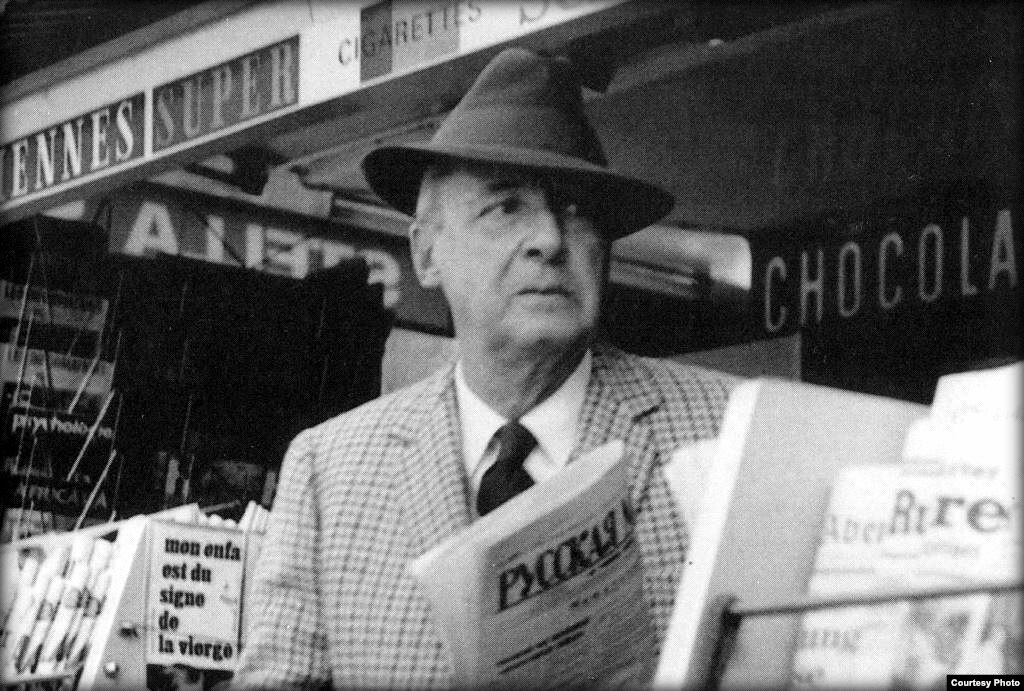
Vladimir Nabokov. Letters to faith / article by B. Boyd, comment. O. Voronina and B. Boyd, translation by A. Glebovskaya. -M.: Hummingbird, ABC-Atticus, 2018.
"When you and I were in the cemetery, I felt so piercingly and clearly: you know everything, you know what will happen after death - you know very simple and forth, - as the bird knows, that, having been spent from the branch, it will fly, will not fall ... And so I'm so happy with you, my good." Nabokov addressed these lines to his future wife on August 13, 1924 and, as much as one can judge, he searched - and found - a satellite not only for earthly, but also after the afterlife. They met on May 8, 1923 at a charity ball in Berlin; Vera Slonim was in a mask that she did not withdraw to this day: 314 letters were published, and she carefully destroyed her faith. For more than half a century of life together, Vera and Vladimir did not carry out in a total of a total of two years; More often, Nabokov left for literary, teaching or everyday affairs, sometimes Vera improved health in resorts. Then the correspondence began, on the part of Nabokov is very intense, sometimes he wrote twice a day, wrote almost a diary: with whom he met, the content of conversations, the state of health, diet, literary troubles, earnings and expenses, creative ideas, etc.
For more than half a century of life together, Vera and Vladimir did not carry out a total of a total of two years
Emigrant and Cosmopolitan Nabokov are surrounded by restless cities and alarming years. He lived in Berlin for one and a half years, whom he did not like: “I think with horror about another winter here. I am sick of German speech - because you can’t live on the lanterns on the asphalt alone, except for these glitches, and flowering chestnuts, and angel -like dogs leading the local blind, there is still all the wretched nasty boring of Berlin, the coarse boredom of Berlin. Rotten sausage and self -permanent ugliness! " The best German specialist in Nabokov, Deter Zimmer, believes that the German language of the writer was unstable. In December 1923, Nabokova’s mother received a pension of the Czech government and moved to Prague with her daughter and younger son. Nabokov visited them in 1924, 1926, 1930, 1932 and 1937. "The hill on the one hand breaks off the fortress wall, and at the top of it stands a two-tower dark cathedral, seized in some places with a worm carvings, as if Slavic glow on Gothic geometry."
The center of emigrant literature was Paris, where Nabokov made glorious raids in 1932, 1936 and 1937, transported his family in 1938 and from where he fled in 1940: "The subway stinks like in the intervals of his foot fingers, and I love clapping iron slingshots, dinks (" Merde ") Brunettes, the wine of smelling men, the dead-sounding names of the stations. "
The second Russian tract in France was the azure coast, where the Nabokovs lived a year, and Vladimir was even before: “There is a tiny Russian restaurant in the dirty part of Marseille. I drove there with Russian sailors-and no one knew who I was and came from, and I myself had once been wearing ties and thin socks. Flies spun over the stains of borsch and wine, from the street pulled from the street. sour freshness and hum of port nights. "
In continental Europe, the Earth was burning under the feet of faith and Vladimir, and from the late 30s they connected their hopes with the world of the Atlantic Charter. England, where Nabokov learned, and in 1939 he tried to start an academic career, remained theatrical scrapes of the Shakespearean play: “The weather was perfect, the day lasted a long time, all the time, while the trees went to bed, throat and birds were heard, then the pigeons, and the course of this evening action did not match the theatrical, so that the sky played the sky and the park played the sky One, but people are different. "
America saved and gave a chance to get rich, but became not a house, but a series of marins: “A cotton hotel, outside the window rain, in the room of the Bible and the telephone book: for the convenience of messages with heaven and the office” (see the English poem “Room”).
Wretched muck, rude boredom of Berlin, a taste of rotten sausage and smug ugliness!
The earthly paradise of the Nabokovs eventually became the old bourgeois Europe: "The shutters were opened more than expected. I got to the first performance of an apricot and blue dawn. I see the sea and (from the balcony) of an ethnu, on which the cloud cap is silver, and the Cyprus star is silver."
The letters of Nabokov to his wife are the diary of a homeless writer in an alarming world: “Claires of trouble” pour on the shoulders, and Prague bugs - on the head; The writer must conquer a large pulsating animal - the audience. After the death of Poplavsky, Montparnassian poets go with the faces of meek martyrs, and the advice of the Communist Pozner’s hands prevent the French edition of the “feat”. In American colleges, they are waiting for the "master with the beard of Dostoevsky, in the Stalin mustache, the Chekhov pince -nez and the sweatshirt." I have to show ingenuity and quickness: “I decided to finish reading Mozart and Salieri, and since here it is not Tokmo Pushkin, but also music in great honor, I had a somewhat mischievous thought to flood the violin, and then the piano in those three places where Mozart (and the poor musician) produce music. Using a gramophone record and pianist. The effect is again quite comic. "
In Paris, I love clapping iron slingshots, strokes ("Merde") on the wall, painted brunettes, the wine of smelling men, the dead-caustic names of the stations
The writer Nabokov knew himself the price and distanced, as far as possible, all kinds of literary comflows and even literary conversations: "I got acquainted with Felzen, they talked exclusively about literature, I soon started to feel sick. I did not conduct such conversations from the gymnasium years." If anyone actually interested Nabokov in the world of literature, then the main figures. He admires "perfect artistry, depth, divine tongue -tied" Proust. Nabokov tells his wife about a meeting with Joyce, about his terrible lead look - Joyce was blind on one eye, and in the other instead of the pupil, a hole was drilled. The Russian writer was not afraid of rivalry with the Irish: “About these new things: abstract puns, masquerades of words, shadow of words, words of words. Parrowing it: Creaming at the Pot of His Joice (swirls with cream in his Joyce Crinka, in the end of his voice). In the end: the mind enters the mind, and so far, and for now It comes, the sky is delightful, but then - the night. "
An unsuccessful attempt to achieve professors in Lids causes a shadow of Kafka: "I will be ready to return to Paris, leaving the Lida castle hanging in a lilac turbidity to the top of the horizon, but if, believe me, this will not be my fault. The main thing is now it seems to me to deliver the papers there and appear. Struve is even more doubtful than the messenger of Klamma." And is there any doubt that the author of the “invitation to execution” and the reader Zamyatin was not an attentive reader of the “process”?! Alfred Appel retained the lovely Nabokovsky apocrypha in his memory: in 1923, Nabokov and Kafka were more than once traveling with the same route of the Berlin subway, and Vladimir looked into the bottomless eyes of Franz.
But the meetings with Khodasevich, Bunin, Aldanov, Kuprin, Balmont, Adamovich, Tuffy, Berberova and their entourage became only the reason for creating well -aimed and sarcastic portraits: “Khodasevich’s fingers were tied - boils, and her face is yellow, and a thin red lip is sighed poisonously, and his wife with beautiful, and his wife with beautiful ones Loving eyes and in general to the lower back (from top to bottom) is not bad, but then the hips that she guiltily hide in the movements of the gait, like a bag with dirty linen, suddenly flourish. Aldanov noticed such a feature of large artists: "He said that when Bunin and I speak to each other and look at each other, it is felt that two cinematic apparatus are working all the time." The writer and the other Nabokov, who, must say, helped about the same attitude as modest possibilities. "Today I had breakfast near the Luxembourg Garden with Sergey and his husband. The husband must admit, a very nice, completely non -pederast type, with an attractive face and manner."
An attentive reader of letters also recognizes the author’s opinions about the most important objects: emigrant nostalgia (“like a toy with a key, everything is already wrapped in memory-but nothing is moved outside it”), life and death (“I reached the border of suicide, through which they missed because of you in the luggage”), the change of literary language (“passionate desire to write and write in Russian, and one cannot”).
A passionate desire to write-and write in Russian, and you can’t
And of course, the letters of the person that "is ready to test the Chinese torture for the find of a single epithet" are full of creative ideas and keys. Here Nabokov jokingly rephrazes Pushkin and involuntarily reveals the secret of his poetry: "What is letters? - a white patch on a black robbery of separation." Or tells Vera about the plan of the story about the special voices of the rooms, about the crazy glances of mirrors on a person, and this story will turn into a Russian poem "Room". The letters contain unimportant ideas: a novel about a posthumous car exam about the streets and intersections of life; the script about the little king, whom the revolution returns to toys and radio; The play about the young, obsessed actress in the resort. But in this fragment, in my opinion (impeccable commentators are silent), the poems of Godunov-Cherdyntsev are anticipated about the lost and found ball in the 1st chapter of “Dara”: “Things have some kind of instinct of self-preservation. If you throw the ball in a huge room, where there is no furniture, except for one chair-nothing, except for him, then the ball is certainly for him. roll up. "
In a letter dated March 18, 1941, Nabokov paints a fever that had fallen to him and adds that "he brought out a rather wonderful thing from him, which will fertilize one place in a new" gift ".
Here I am approaching the dark time in the biography of the writer, the events of 1937–40: the flight of the Nabokovs from fascist Germany, the novel by Vladimir and Irina Guadanini. It seems important to note the influence of life circumstances on creativity. Perhaps, for the first time, the theme of the death of his beloved wife appeared in the story "The Return of Chorba", published six months after the wedding of Vladimir and Vera. But in the plans of the late 30s of the beginning of the 40s, this motive becomes somewhat obsessive.
The author of the lengthy essay about the killer of the second volume of his novel, Vladimir Nabokov rejected the continuation of his "gift". The scenery of the second volume "Dara", and its action takes 10 years later, is Paris and the Cote d'Azur of 1938-39:
"... and past the pale bananas,
Fruit shops past ...
Advertising around the living
and multi -legged drums
your corner restrooms,
Paris! I am leaving without anger ... Then the poems gradually go into prose. Fedor Konstantinovich returns home. "
The hero is noticeably burdened by the family life with Zina Mertz: crowding, lack of money, boredom, youth has passed, annoying his wife's relatives! He is fascinated by dates with the Paris Grisetka Ivonn (Kolette), something was used later in Lolita. The reaction of Fedor to the death of his wife under the wheels of the car, at first glance, is amazing: "Nonsense with money. He left south early in the morning. There is no, I don’t want to know anything, there is no funeral, there is no one to bury it." This does not seem to be a conclusion of grief in a conscious cocoon, just Godunov-Cherdynts mentally parted with Zina during her lifetime.
On the Cote d'Azur, an affair with a previously familiar Muse of Blagoveshchenskaya (or incense, like the second wife in the pseudo -muaders, “Look at the Harlequins!”) Walks soon: “I have a free room in the guesthouse. Aversion and tenderness. Ice spring, mimosa.” In the latest notes, the case takes place in Paris during the German raid, and the meeting of Godunov and Koshcheev (the deceased Khodasevich) is very seductive to rhyme with the Little-Hidding Tercinas Eliot, with the Hero with Dante Nightmare London Blitz.
“Almost attended ... Faliter broke up” - these are Nabokov's notes on the drafts of the “gift”, where it says about the death of the hero’s wife. Meanwhile, Falter is an important character in the story written by Nabokov in the same years, years of "change of fate." The story was published in the 42nd year, called Ultima Thule, the hero-the artist Sineusova, a pregnant wife dies from consumption: "Are you sure, doctor, that science is unknown to such exceptional cases when a child is born in the grave?"
There, on Riviera, Sineusov meets a person from his Russian past. Then Falter was a private teacher of mathematics, now he became a successful businessman, but ... he looked at the jellyfish, recognized the title of things and turned into a chimpanzee, parodying Sibarite. Sineusov is imposed by the universe of the universe, shocked by the mind of the ex-teacher, hoping that she will help him meet his wife again. The story of Ultima Thule is a fragment of an incomplete novel with a complex composition. Two years earlier, Nabokov published an excerpt by Solus Rex about intrigues at the court of a certain northern kingdom "outside the sea", his main hero of the Kyrgyz Republic. He inherits his uncle, silently heading the conspiracy-the murder of the heir, his cousin, a fair-in-law lecherous bisexual. The artist of the Sineuses during the dying of his wife and after her death made illustrations for the story of the Scandinavian writer about the king of the distant and sad island, fate "slipped the paint of temporaryness in return for the graphic pattern of eternity." The unfortunate and unfraternized king, like a non -free artist, also lost his wife - once the terrorists were blown up in an excerpt by the Belinda on the bridge.
Published Laura drafts give birth to a riddle equal to the secret of Edwin Drud
In 1943, Nabokov published a story "... Once in Aleppo," whose hero runs from military Europe to America, killing his wife out of jealousy in the way. The hero of the novel "under the sign of the illegitimate" (1947) loses his wife at the very beginning ("the operation was unsuccessful") and remains with his son in her arms. After that, Nabokov calmed down for a long time and only in the "translucent objects" Hugh Person killed the adored wife, suddenly clinging himself with his mind. But in the novel "Laura and its original", which Nabokov did not have time to complete, "the writer creates the image of his beloved and destroys her." The published drafts "Laura ..." give birth to a riddle equal to the secret of Edwin Drud.
As far as 138 surviving cards allow, there are three main characters and two books in Nabokov’s novel. Philip Weild, a rich and well-known neurologist, writes a Devtor's book about self-destruction and unfortunate family life with Flora Lind. Ivan Vogan, a nervous and cynical writer, according to the results of a love novel with Flora writes "My Laura".
As much as you can understand, the readers of Nabokov had to look at the heroine through the eyes of Philip Wilde, Ivan Vogan, other characters (Card 118: “Notes by Eric”), and on the cross of all these views there would be an image of Laura - an immortal lover (in cards of 11 and 43 flora it is directly compared with the book).
The structure of the book is also mysterious. Author's notes in the fields indicate a double numbering of the 1st and 5th chapters. I think that this is not about the chapters of different parts of the novel: each chapter was to contain the “Vilda Trek” and “Voran angle”. You can even easily find through motives in the "angles" of some chapters and group cards differently than in existing publications. Unfortunately, the surviving 138 cards tell us a lot about the "original Laura", but almost nothing about herself. Perhaps, the passage can be attributed to Laura in the card 121: Flora is overwhelming religious excitement, it fears ridicule. These are probably traces of the influence of the novel Laura on its original.
The last Nabokov romance is an exciting story, and it remains only to be surprised at how a whimsical source of art can be life. But it is much more important and remarkable that the writer’s mortal stories, but their correspondence became a true monument to the family life of faith and Vladimir. The Nabokov’s fantasy for fiction of affectionate nicknames was invented by his wife: an old man, a puppy, a gosenka, a fire-sound, a monkey, a mattress, a carcass, a lump, a warm, a Koshenka, a long paradise bird with a precious tail, my life, love.