
Translated material
Russians in Prague
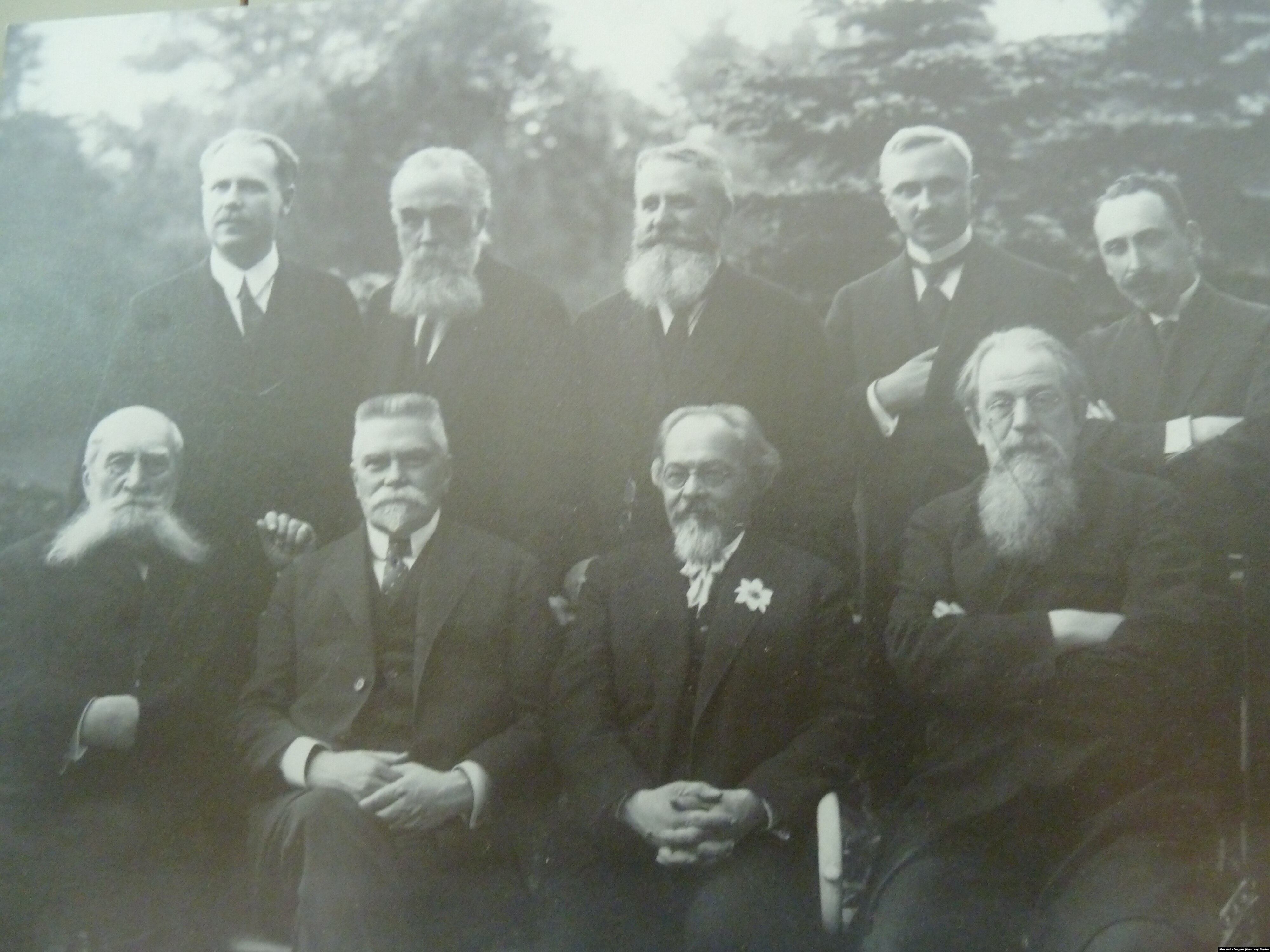
In 1924, thanks to the so -called "Russian Assistance Promotion", declared after the Bolshevik Revolution President Tomash Masarik and the Government of Czechoslovakia, almost 30 thousand immigrants from the former Russian Empire lived in this country. Most of them are representatives of the intelligentsia: among the exiles were, for example, professors and students of eleven Russian universities. All of them - thanks to Czechoslovak state support - were able to continue their studies and scientific research.
To this end, several scientific institutions were founded where teaching was carried out in Russian, including the Russian gymnasium, the Russian People’s University, the Russian Faculty of Law at the Karlovy University, the Russian Institute of Agricultural Cooperation and others.
Ten years later, Czechoslovakia will establish diplomatic relations with the USSR, which, of course, will affect the position of Russian immigrants. By this time, many of them will leave Czechoslovakia, most often to France, which has become the main center of Russian emigration of the "first wave". The remaining people who received citizenship or left the Nansen passport - encountered large -scale repressions after the appearance of the Red Army in Central Europe at the end of World War II. The book “Russians in Prague. Russian intellectuals in interwar Czechoslovakia”, published by the philosophical faculty of Karlov University as part of the Collegia Europeae project, designed to popularize the history of Russian, Ukrainian and Belarusian emigration in interwar Czechoslovakia, tells about the fate of some of them.
Subscribe to us in Telegram
The book mentions more than 30 names, among them - who lived in Prague and her environs of the poetess Marina Tsvetaeva, the last secretary of Leo Tolstoy Valentin Bulgakov, linguist Roman Jacobson, as well as the names of those who were deported from Czechoslovakia and exiled to the camp of Gulag, as a conservative philosopher Peter Savitsky or philosopher Konstantin Chkhaidze, or disappeared, or without a witch Literature historian Alfred Bem, in May 1945, arrested by the Soviet intelligence services.
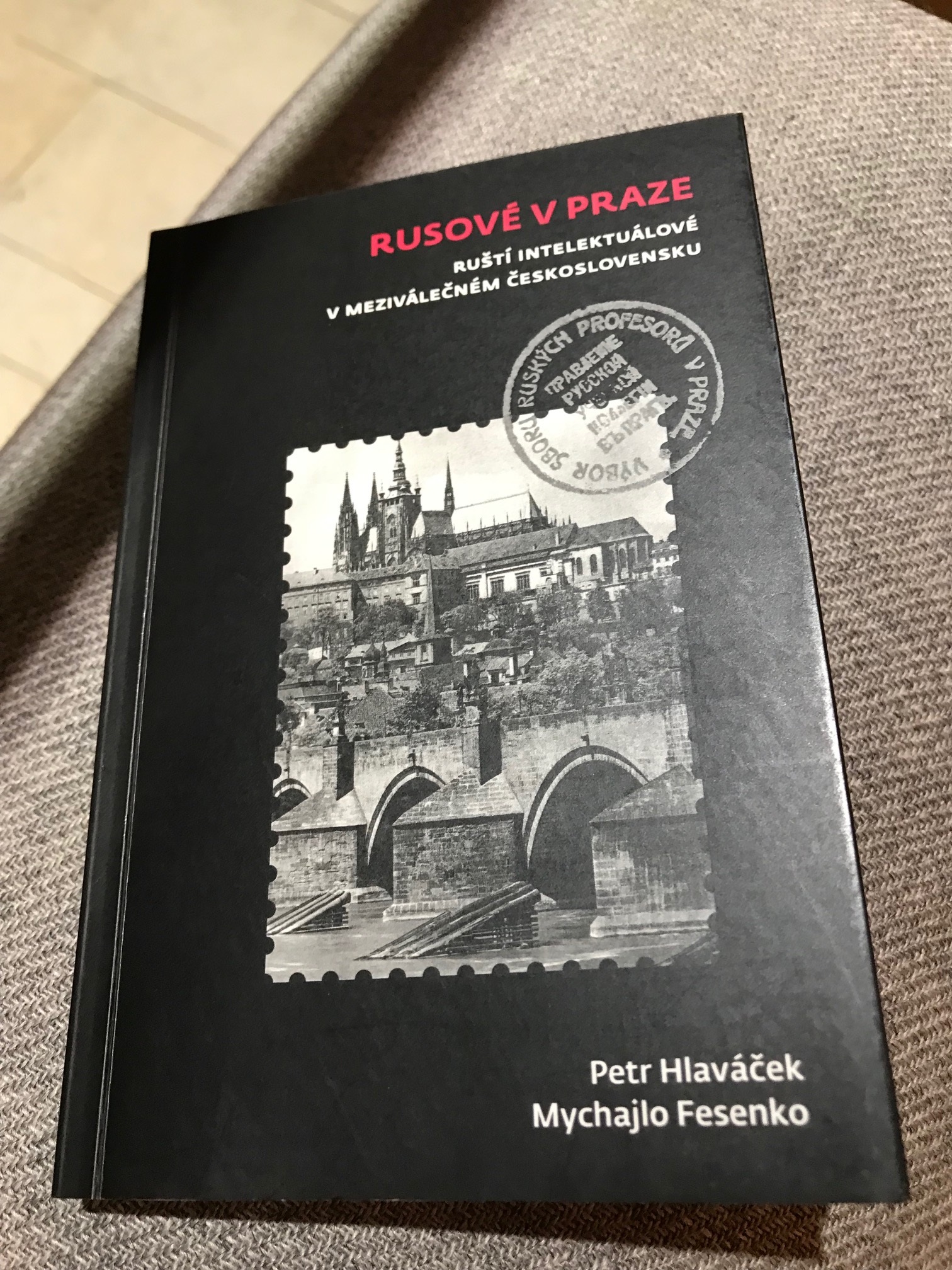
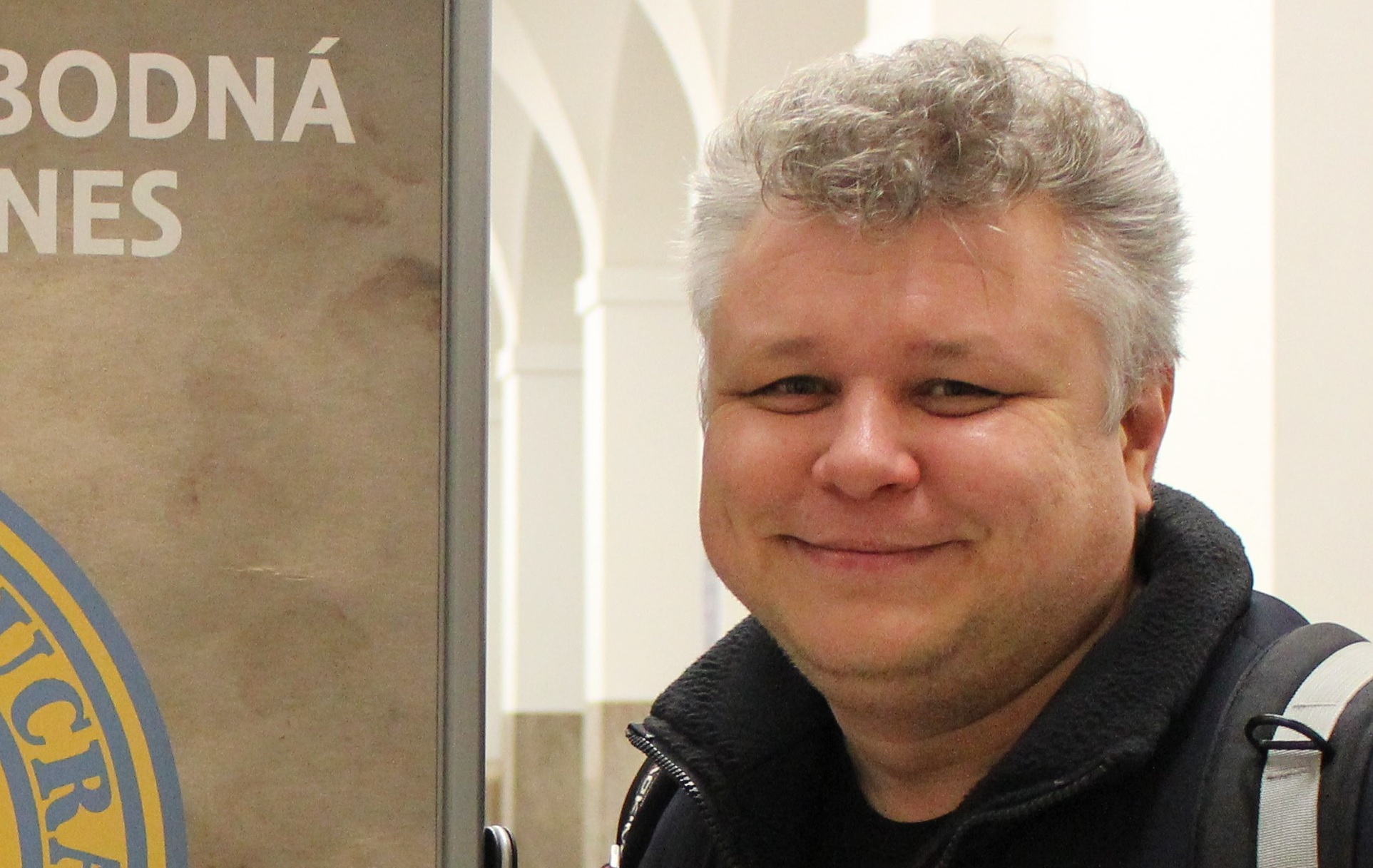
"The Czechoslovak political and intellectual elites then, due to gratitude to the Soviet Union, turned a blind eye to the murders and deportation of their neighbors ... At the same time, it was the fate of the" Russian Czechoslovaks "who was a distinct omen between the imperial monster of the Euro-Asian East and Czechoslovakia, that is, between Moscow and the new Russian province. Belarusian) emigration in Czechoslovakia was also sorrowful because it was impossible to talk about it for four decades, because the memory of this “Russia outside Russia” was completely unacceptable for the Soviet-Russian narrative, ”the authors of the book“ Russians in Prague ”write. One of them, an employee of the Slavic library , Mikhail Fesenko , explains why in the book it was decided to tell only the fate of intellectuals, because not only they fled to Czechoslovakia in the framework of the Russian Promotion of Assistance:
- We tried to show that among the emigrants there was primarily the elite. This has determined our choice. About the Russians as such, you can learn every day from newspapers telling how they live in Prague, what they are, special studies are being conducted by the Institute of Sociology of the Czech Academy of Sciences. And very little recalls about intellectuals recently. I think that, of course, this is fraught with the spirit of time.
- The story of how these intellectuals ended up in Prague are quite interesting, they lived in difficult times: in the preface in relation to this speaks of disaster.
-It is very difficult to make some generalizations here, because the fate of each person, both mentioned in the book, is never mentioned, is individual. A lot of memories have been written about this, there are collections of documents, scientific publications on this topic have been published in the Czech Republic and Russia. It is known, of course, what happened after 1945, when the Red Army entered Prague, which had in hand the lists of all the so -called anti -Soviet elements that belonged to the organizations unfriendly Soviet Union at one time. And those who did not manage to escape were either in Czechoslovakia to be criminalized under the then laws, or were taken to the Soviet Union. Such a fate suffered, for example, the Georgian prince Konstantin Chkheidze. The Czechoslovak authorities at that time forbade to live in Prague to his family, his wife-Cheshka and daughter. Thus, they found themselves outside the capital. The wife could not find a job. She sweeping the streets or selling tickets at the box office of the cinema. The prince himself at that time was in camps in the Soviet Union. But he still managed to return to Prague after the imprisonment and managed to get to his feet again. A very interesting person, a very interesting fate. I am surprised that so little is known about him. Konstantin Chkheidze called himself a man of Russian culture, that is, his ethnicity, I think, is not important here. He returned to Prague after the exile, for a very long time he could not find a work corresponding to his qualifications. He wrote in Russian stories and novels, which were then transferred to Czech, but the then Czechoslovak Union of Writers, reformed according to the Soviet model, of course, did not accept his work. And he earned the fact that he wrote stories for the radio in Russian, which were then translated into Czech. Since the regime was tightened over time, he could not realize himself and shot himself, but did not die immediately, but only after a while, in my opinion, two days later. Here is such a tragic fate, when a person cannot bear what is happening around him and becomes a victim of circumstances.
There was a tragic fate of Peter Savitsky, who also returned after labor camps in the Soviet Union, and which had to overcome different problems related to the persecution of the then power in Czechoslovakia.
- These people fell into Czechoslovakia during the “Russian Assistance Protectse”, which they organized in order to help those who fled from Russia after the revolution, in the hope that in Russia the situation can change in Russia and these people will be able to return back. You mention in the book there are many educational institutions that were organized for Russian emigrants, where Russian emigrants worked and taught.
- Emigrants themselves created their partnerships, their own societies, their organizations. To a certain extent, there was the possibility of such an organization. This is, for example, about the Russian Law Faculty of Karlov University. We are talking about the Russian Free University. There are different options for the name of this educational institution. We are talking about a wide variety of societies, circles, about the archaeological seminar of Kondakov, which was postponed here from Berlin. But everything relied on existing material support. In addition, it was possible to unite and create, for example, their housing cooperatives, to build houses. The church in the Olshansky cemetery, which was previously planned as a chapel, was built with the help of the Assumption Brotherhood by the forces of a large Russian diaspora. So the cultural life was multifaceted, versatile.
- When the Red Army came, the life of Russian emigration changed. What happened to public organizations in which Russian emigrants participated?
The policy of solidarity with the Soviet Union was pursued, and it was inconvenient to recall these names
-Those who did not manage to go further abroad were persecuted by the Soviet authorities, from the NKVD, SMERSH, etc. To whom it was lucky ... In this case, it could not be generalized, since everyone had their own fate, because of this, certain difficulties in the study arose. At first glance, it seems that there are many sources, which means that everything is known, but in fact it is not. We worked directly in the archives of Prague with the personal documents of those who are mentioned in the book, and even the dates and places of birth and death were not always able to confirm immediately, we had to conduct an additional study.
- You focus on the fact that the Czechoslovak authorities turned a blind eye to those repressions that were carried out by Smeresh and the NKVD in relation to Russian emigrants. Why did this happen? After all, the Communists did not come to power in Czechoslovakia immediately after the end of World War II, but three years later, in 1948.
- There was a certain rash in front of the Red Army, gratitude for the liberation of most of the Czechoslovakia. The policy of solidarity with the Soviet Union was pursued, and of course, it was inconvenient to recall these names or these events. We stopped on this version, it is the main, dominant. Of course, in the process of writing a book, we faced new facts, but it was not always possible to find written confirmation to them. It was, for example, about the murder of one of the inhabitants of the cooperative house in the Prague district of Bubenech, who, as they say, was dropped by the agent into the elevator mine. But we did not find evidence of this, ”says Mikhail Fesenko.