
Translated material
"In Silicon Valley, people are exhausted to a terrible state"
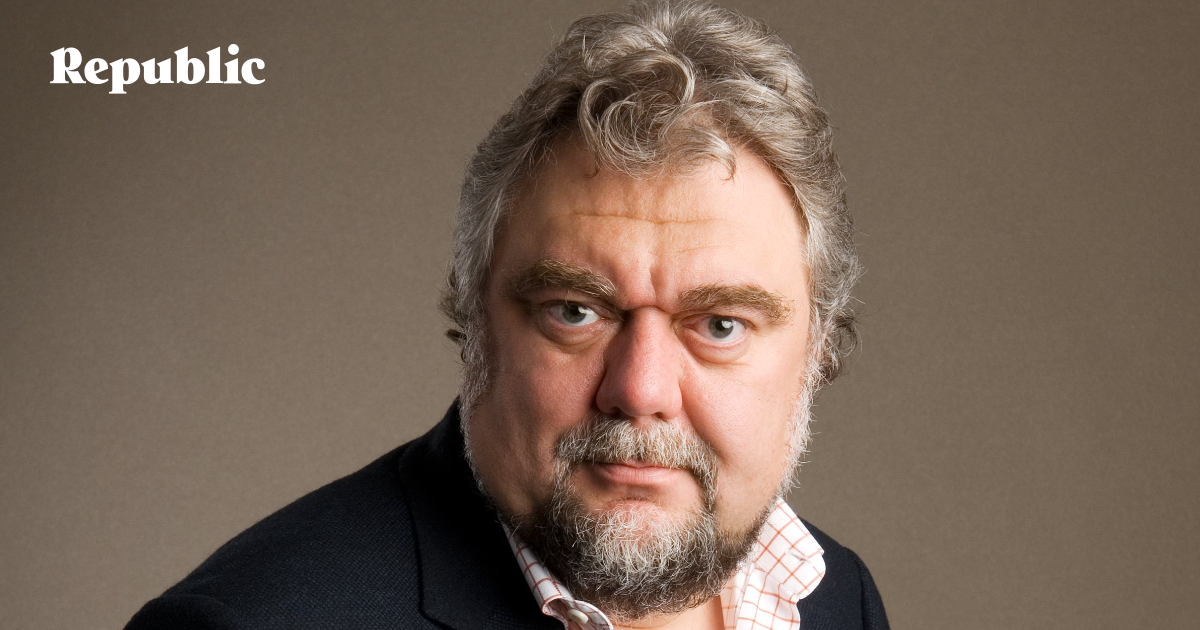
Mike (Mikhail) Sandler in the 1990s left Russia to Canada to engage in programming: there were no interesting offers in his homeland. There he founded several companies that he successfully sold to larger players. In 2003, Sandler created the Epiphan Video - a manufacturer of equipment for capturing a video signal, which in 2016 was on the list of the fastest growing companies in Canada. The total revenue of the Epiphan Video from the moment of founding exceeded $ 100 million. A few years ago, an additional office in Palo-Alto, where Sandler moved, was opened. In a conversation with Republic, he talked about stereotypes about Russians and how entrepreneurs are exhausted in Silicon Valley.
- You studied programming at the MIPT and worked in the RAS. How did you end up in Palo Alto?
- In 1991, in Russia, programmers had nothing to do. I graduated from the institute then, I was 26 years old. I learned that there is interesting work in Canada. Any movement should go from work, the things you do. I was interested in doing what I studied. I lived in Canada for 22 years, created several companies. The latter turned out to be long -playing, I sold everything else. Epiphan Video expanded, grew, and at some point we decided that it was time to open the office in Palo Alto.
- What does Epiphan Video do?
- We are working on the democratization of video production. Previously, to make a video of good quality, a studio for millions of dollars was needed. Many of our large studios, CBS, NBC, ABC or Disney have a lot of equipment on which many people work. But more budget studios appear. For example, at the rain. Looking at him by the eye of a professional, I can say that we could put the equipment that they have for reasonable money. There are even smaller studios, for example, the [video blogger] Yuri Dudia. Everything that he will need, including lighting, will cost in the range of $ 5000–10,000. At the same time, the quality will correspond to CNN. You can go even lower - there are many video bloggers who have small home studios. Some channel about cooking and the like. To do this, we have a device for transmitting a video signal in a Live broadcast of WebSaster X2 for $ 300, which is sold as hot pies, including in Russia. This is democratization.
A strong decline in cost in the production of electronics can be achieved by taking elements, for example, microcircuits or finished boards made in large quantities as a basis. So we did-we found a TV setup collected from standard components, added some changes to it. The device began to encode the signal from the camera to the Internet. And the usual TV setting decodes the video stream from the Internet and displays it on the TV.
Subscribe to read the whole
Make a subscription Redefine.media to read Republic
Subscribe [you can pay for a Russian or foreign card. The subscription is extended automatically. You can unsubscribe at any time.]
Where are the money subscribers going