
Translated material
"The moment came when people rested"
Historian Oleg Budnitsky - about the Battle of Stalingrad, the psychological fracture, truth and myths of the Great Patriotic War
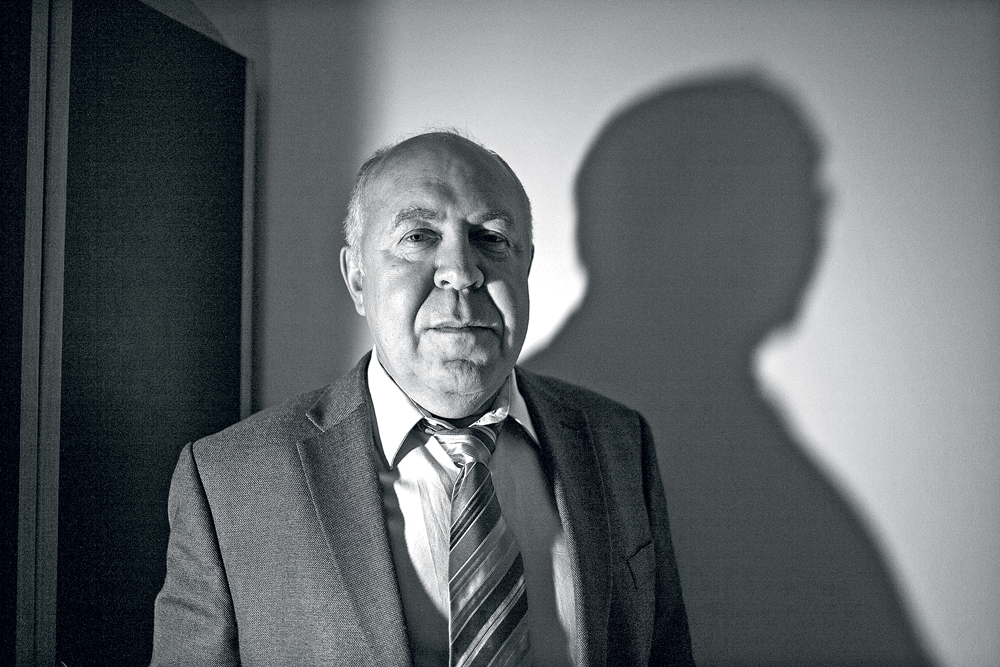
Oleg Vitalievich Budnitsky (b. 1954) - Doctor of Historical Sciences, Director of the International Center for the History and Sociology of World War II and its consequences to the Higher School of Economics, Member of the European Academy of Sciences Photo: Vasily Popov
NT: *The film by Fedor Bondarchuk "Stalingrad", shot to the 70th anniversary of the battle, unexpectedly for many became the leader of the rental and caused a lot of disputes. Did you like him? *
As a spectacle, as a militant he is made well, everything develops dynamically there. If you look for some new knowledge about the war in it, a new understanding of events and people who participated in them, then it is not suitable for this role. There are many points when I want to say: "I do not believe." There is such a task in the film-agitprop, I would say: look, the Germans killed our women and children, and Russian rescuers pull out German teenagers from the rubble after the tragedy in Fukushima-the film begins with this. This is extremely primitive.
As a historical one you can’t watch at this film. But two important topics are raised in it. The first is women in the conditions of occupation, the second (and, perhaps, the first) is the civilian population in Stalingrad. How did the battle in official military historiography describe? This is the battle of two armies, there are no civilians there. But at the beginning of the Battle of Stalingrad in the city there were 200 thousand people, the evacuation was not organized, only the party elite left. The film shows a city that is full of civilians - and this is true. The relationship of women with the Germans during the war is also a fairly massive phenomenon. In the occupied territories, 75 percent of our population were women.
NT: *Does the name of the picture of false expectations form - the audience goes to watch the epic canvas about the battle, but fall on the melodrama. *
The authors need the audience to go. Stalingrad is sold, this is a brand. This is the most famous battle of World War II.
The moment came when people rested. The psychological turning point occurred in Stalingrad
NT: *but not decisive? *
* From September 12, 1942-commander of the 62nd Army, which became famous for the heroic six-month defense of Stalingrad. Twice Hero of the Soviet Union (1944, 1945)
And no. The main battle by meaning, in my opinion, is the Moscow battle. Blitzkrieg failed, and Germany was not able to win a protracted war. But the Battle of Stalingrad still can rightfully claim a decisive battle. The defeat of this scale of the Wehrmacht happened for the first time. Drapali (ours) to Stalingrad, and then suddenly rested! The writer Vasily Grossman in notebooks has a wonderful dialogue with Vasily Ivanovich Chuykov* in Stalingrad, in the days of the battle. They talk about what happened. Chuikov says: "Everyone knew that the escapers would shoot on the spot, it is worse than the Germans." But both agree that not only this played a role. The moment came when people rested. The psychological fracture occurred in Stalingrad. Grossman told Chuikov about the miracle of stamina, which he does not understand, "as the flees before became persistent." Chuikov admitted that he himself did not fully understand this. It is no coincidence that in the center of the Roman of Grossman “Life and Fate”, “based on” whose “Stalingrad” was removed, who actually has nothing to do with the literary basis - this is the most, like people who retreated to the Volga, launched the course of the war - and the course of history.
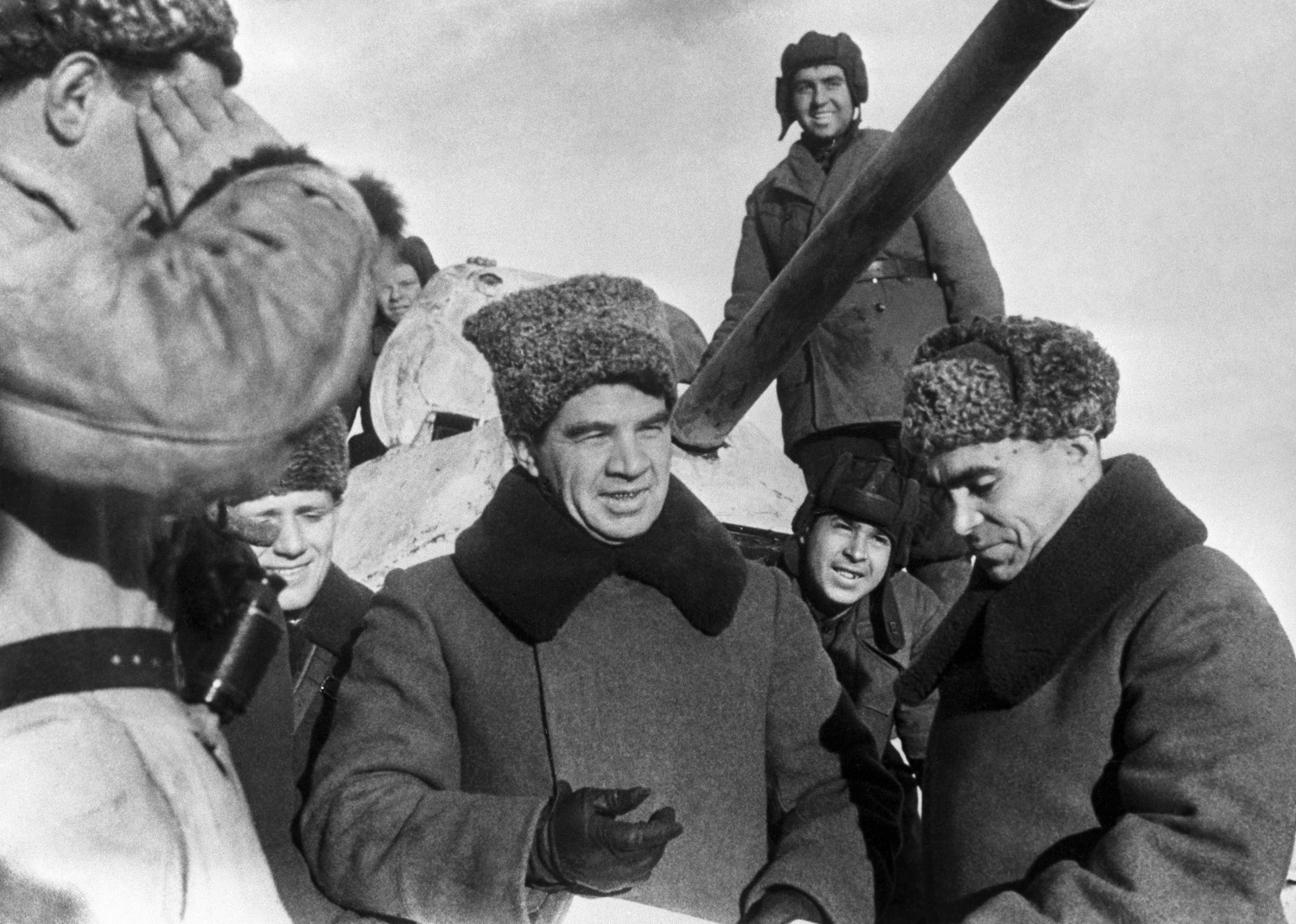
The commander of the 62nd Army, Lieutenant General Vasily Chuikov (in the center) on the Stalingrad Front. November 1942 Photo: ITAR-TASS
The war is like a support
NT: *What causes such an interest in the Second World War recently, including in academic circles? *
The history of the war has always been in demand. Each nation has the so -called base of the base. In France, this is a great French revolution. There was a great October revolution in the Soviet Union. However, already in Soviet times it became clear that this did not work. The myth of the October Revolution began to push away, giving way to the myth of the Patriotic War. This line can be clearly marked-1965, the 20th anniversary of the Victory, when they returned on May 9 as a day off. And the point is not only that almost all the then party leaders took part in the war. The whole meaning of the country's existence before the war was reduced by party ideologists to prepare for the war. Victory as if attributed to the crimes of the Stalin regime. This, of course, is vicious logic, but it still acts. The nation should rely on something in its past.
NT: *Is the war in reality that "crossbreak" that can unite everyone? The concept of teaching domestic history, which caused so many disputes, says that "the most important components of victories were a patriotic rise, unity of the front and rear, as well as the unsuccessful attempts of the Nazis to drive a wedge between the peoples of the USSR." Is it so? *
To drive the wedge, it was not necessary to make special efforts. The population of territories that were attached in 1939-1940 (usually forgetting that Western Ukraine, Galicia was never part of the Russian Empire), did not experience any patriotic feelings in relation to the Soviet Union, and the hunger of 1932-1933, collectivization did not contribute to love for Soviet power. About 300 thousand people served in the German auxiliary police in Ukraine and Belarus. And in total, in the armed formations that fought on the side of the Nazis or in the Wehrmacht itself, about a million. These are large numbers. We say “punished peoples” ... to punish entire peoples for the crimes of individuals is wildness, but the fact that the Nazis managed to create national formations from representatives of some peoples of the USSR, alas, a historical fact. There are already many works on this topic, but the problem, in professional language, requires further study.
** Leopold von Ranke - the famous German historian of the XIX century, historiographer of Prussia
For us, the war does not become history. The people of our generation are still alive by some relatives who fought or survived the war for children, this is part of family history, and therefore not the past. The history of the war for a long time was reduced only to the study of exploits, a heroic narrative. But if we want to understand why the victory was given at such an expensive price, but we just want to get a real idea of the past, find out how Leopold von Ranke ** dreamed, “how really was everything”, then we must work with previously inaccessible archival documents, wartime diaries, written once “in the table”, not for printing. And then things are opened that do not fit into the standard idea of the war - this is tremendous theft and corruption, for example. If you read the soldier's memoirs - a huge place in them is occupied by stories about malnutrition, hunger and the like. This is confirmed by documents from the former Central Party Archive - stolen in colossal volumes. Who? Railways and railway police, for example. Especially alcohol and alcohol, the "currency" of that time.
At the beginning of the war, the strengthening of repression and mass sweeps followed
I’m not talking about textbooks regarding the blockade: a giant supply difference, which was completely immoral, is an enhanced supply for the party-ideological apparatus, for example. Or the activities of the NKVD: such an impression is sometimes created that the war began - and Stalinism did not. But he did not go anywhere. The organs continued to operate in the same way. The thing that shocked me at one time: expulsions were made from the blockade Leningrad. There were categories of people who were subject to expulsion - German origin, Finnish, Estonian, who had a criminal record.
At the beginning of the war, in accordance with the logic of the Stalinist system, the strengthening of repressions and mass sweeps throughout the country followed, and among those who were subject to “seizure”, former members of the petty -bourgeois and counter -revolutionary parties were listed and attention! -Members of the Orthodox and monarchical underground. That is, the authorities, which after some time turned to the church, cleaned the clergy at the beginning of the war-there were repressions, executions. Not only in the frontline zone - throughout the country. There are many such things that need to be studied, otherwise it is impossible to understand what kind of society it was, including the one in which we now live.
NT: *They always want to make history a means of education and/or propaganda. In this regard, the question is: how should you talk about the war in the new history textbook? *
We must give a concept of the real history of war. We must always remember the tremendous victims made in the name of the defeat of Nazism. For the victory, we had to pay an unthinkable price - this is such a blow to the gene pool, which is still felt. In my opinion, the victory in the war in no way write off the responsibility of the Stalin regime and personally Stalin for the scale of losses. On the one hand, we want to part with Stalinism, Stalin is a criminal, this is the official position of the state, but Stalin was commander in chief during the war, and the war was our everything. In the mass consciousness, this contradiction is intractable.
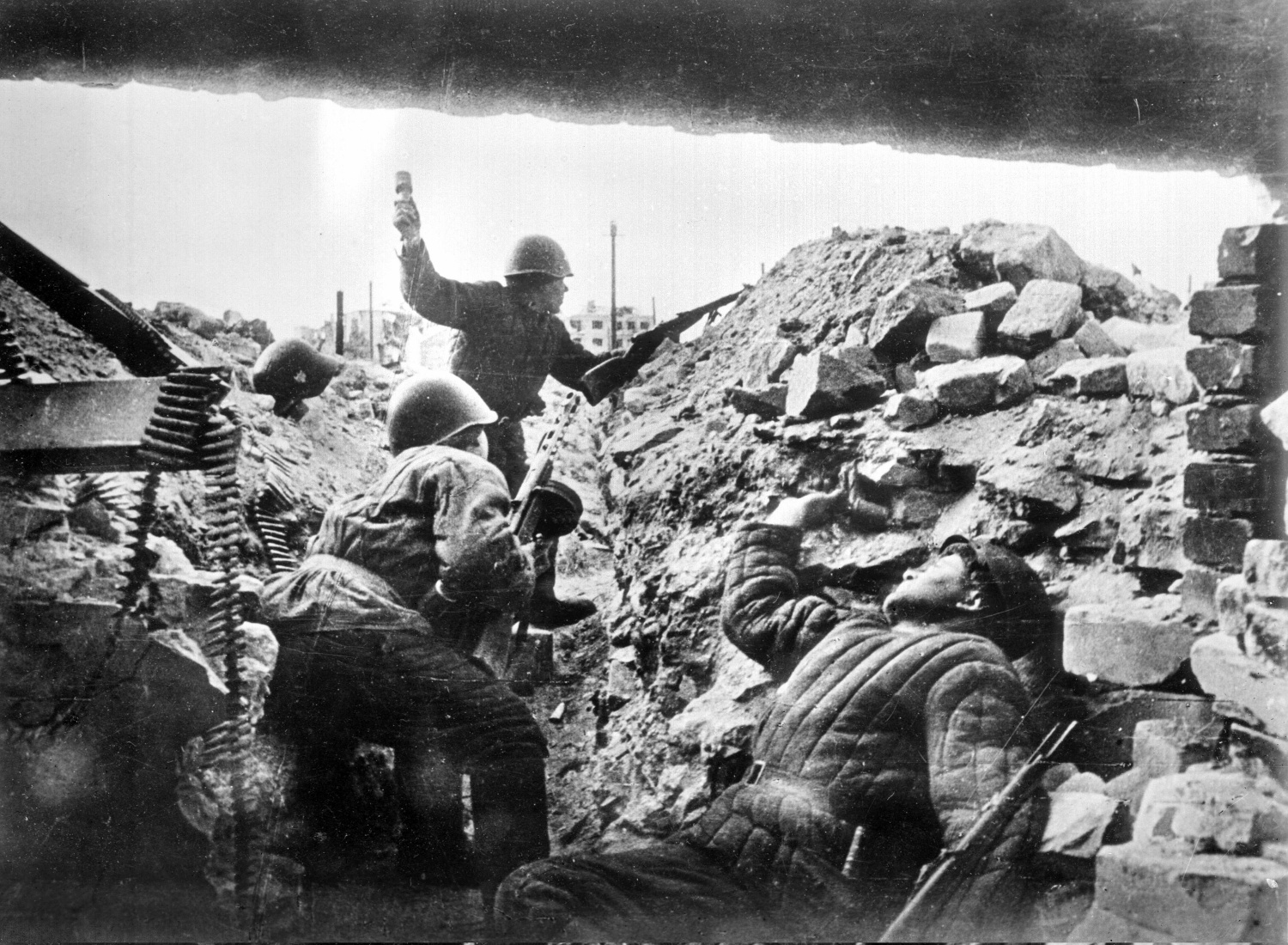
Street battle in Stalingrad. September 1942 Photo: East News
Knowledge and faith
NT: *One of the compilers of the concept said that "the figure of Stalin is all of the halftones." What do you think? *
These disputes resemble walking in a circle. Attitude to Stalin - if we are talking about modern society - the question is rather not analysis or knowledge, but beliefs, faith. Stalin stood at the head of the country during the war years, of course, the victory in the war was won, including thanks to his efforts. I emphasize - including. The victory in the war became the fruit of collective efforts and cost huge casualties. In general, these are well -known truths. But Stalin’s contribution to the victory does not write off his miscalculations and direct crimes that cost the country monstrous losses, the demographic consequences of which are still affected.
One of Stalin's largest miscalculations is an actual union with Nazi Germany. Recently, the NKVD reports were published on the mood in the country, and on the occasion of the agreement with Germany and the invasion of the Red Army in Poland, the peasant of the Ledyanka of the Antoninovsky district of the Kamenetz-Podolsk region, Grigory Savvovich Rogazyuk, stated: “What is this Hitler is cunning, he managed to approach the USSR and conclude an agreement. Now Germany will beat all countries, and the USSR will sit and be silent, and after Germany will think about the Soviet Union. ” As the peasant looked into the water. The agreement with Nazi Germany was, paraphrasing the expression of Talleyrand, "worse than a crime - it was a mistake." Olga Bergholz recorded in a diary in June 1942: “I am glad that in the days of June 1940, when the German tanks on our gasoline went to Paris, I protested against this, feeling the death of Paris as the death of some great part of my soul, like our shame-our moral death.” She protested, of course, not publicly - in verses written on the table.
Another question that suddenly became discussion in our time is about repressions in the army in 1937-1938. Modern Stalinists justify the actions of an “effective manager”, talk about the mediocrity of the destroyed military leaders, that their views on military affairs are hopelessly outdated, and repressions freed places for new, young, talented commanders, who were to win the war. Of course, the repressed military leaders were different. Probably among them were not very capable and not very educated. But how can this be installed? After all, this is not a computer game where you can play the story again. We can judge only by analogy. When during the Soviet-Finnish war it became clear that the Red Army was in a very deplorable state, many dismissed and repressed military leaders were returned into the army. Among them was the commander of Rokossovsky, who was knocked out by the teeth during the interrogation, broke the ribs, brought it out to be executed to get the necessary readings. Is it necessary to remind that he became one of the most outstanding commanders of the Great Patriotic War? The brigade commander in Gorbatov-arrested, transferred torture, beatings, was sent to the camp for Kolyma, then liberated, returned to the army, ended the war as a colonel general, the army under his command ended the war on May 8, 1945 at Elbe. Then he was the commandant of Berlin. And he could well turn into “camp dust”.
The leader sympathetically remarked that Meretskov looks bad. Others were less lucky - they were shot
The conversations that repressions cleared the path to young and talented are not only immoral - they are absurd and do not reflect historical realities. Everyone knows the names of the marshals of victory, but few remember the names of the generals of the defeat. I will quote Marshal Zhukov’s note about the team shots addressed to the head of the main department of personnel of the People’s Commissariat of Defense Golikov - pay attention to the date! - August 22, 1944: “We did not have pre -selected and well -trained commanders of fronts, armies, corps and divisions. At the head of the fronts were people who failed one thing after another (Pavlov, Kuznetsov, Popov, Budyonny, Cherevichenko, Tynev, Ryabyshev, Tymoshenko, etc.). People knew badly. The People’s Commissariat of Defense in peacetime not only did not train candidates, but did not even prepare the commanders - to command fronts and armies. The situation was even worse with the commanders of the divisions, brigades and regiments. At the division, brigades and shelves, especially the secondary ones, the commanders did not correspond to their business. Each of us knows the consequences of the command of these people and what our homeland survived, entrusting our fate into the hands of such commanders and commanders. ” ("Source", 1996, No. 2.)
Let me remind you that Vannikov met a really effective manager on June 22, 1941 in prison; Fortunately, he was not destroyed, became the People's Commissar of Military Ensigns, later the head of the Soviet atomic project. The future Marshal Meretskov was arrested on June 23, 1941, underwent beast bends, signed recognition in various crimes. On September 8, he was released and appointed commander of the army, three months later - the front! He was dressed right in prison in a new uniform and on the same day he was brought to Stalin. The leader sympathetically remarked that Meretskov looks bad, and coped with health. Other military leaders, arrested on the eve or at the beginning of the war, were less fortunate - they were shot in October 1941.
The whole 30s seemed to be preparing for war, and when it actually began, the case turned into the greatest catastrophe in the history of the Russian army. Some contemporaries at the same time adequately appreciated the quality of the Stalinist leadership and his ability to anticipate the course of events. Lyubrazorin wrote Leningradka in the diary on October 14, 1941: “What do our owes that overtook America think and feel and feel. In all photographs of Stalin, incredible complacency. It’s now to a poor fool who believed that he was really a great, omnipotent, all-war, divine August. ” Shaporina was a Russian patriot, but the Soviet government did not love much. However, the convinced support of the communist ideas, who soon received the honorary nickname “Voice of Leningrad”, Olga Bergholz three months after the outbreak of war, upon receipt of the news of the surrender of Kyiv, writes almost the same in meaning, only in more sharp expressions: “I don’t know what is more in me - hatred of Germans or irritation, mild, mixed with wild pity, - to our government. This is crap! "
To get out of that position, it required incredible efforts and many millions of human lives.
First published in NT No. 1 of January 20, 2014