
Translated material
The Manchester Gallery removed the picture from the exposition to "talk about the rights of women." The museum was accused of censorship, the picture had to be returned
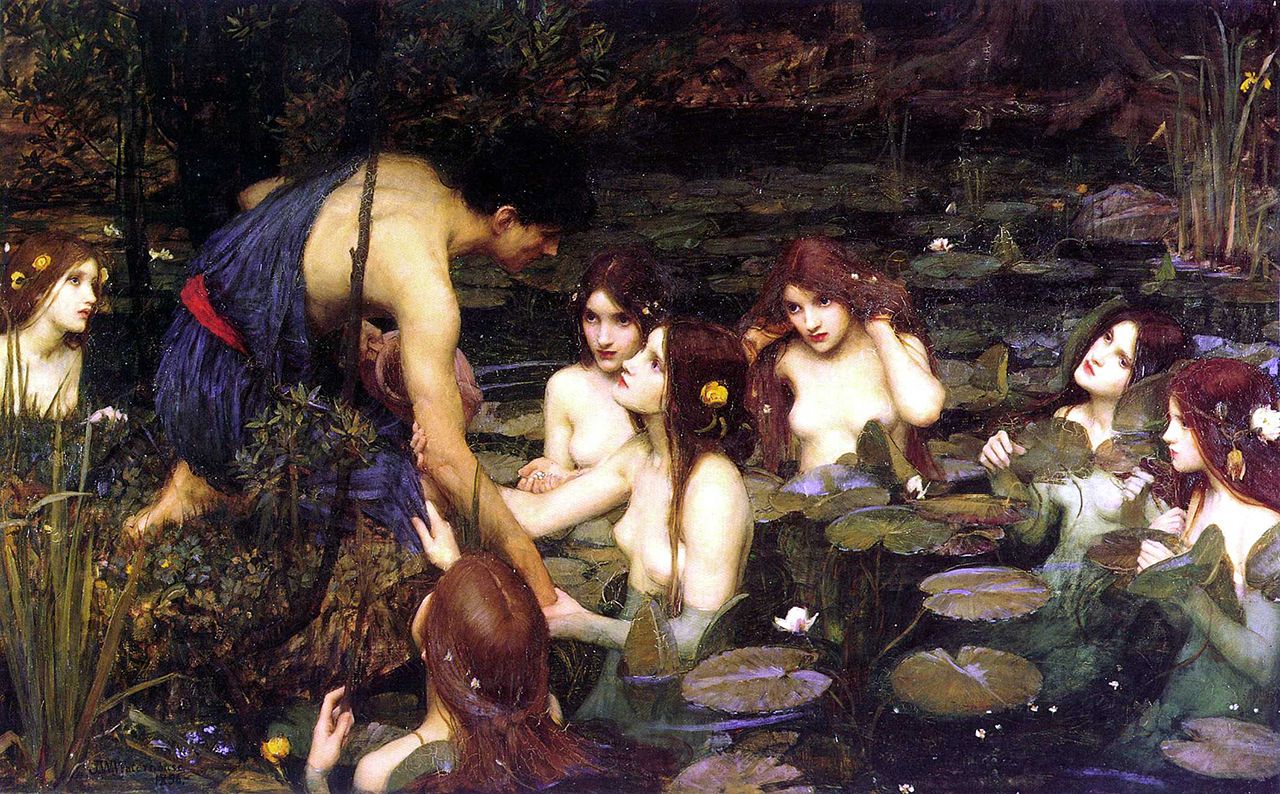
The Manchester art gallery for a week removed from the exposition a picture of Pre -Raphaelite John William Waterhouse “Gilas and Nymphs” to talk with visitors about how to demonstrate a naked female body in museums in the 21st century. In response, visitors and art historians accused the gallery of censoring art.
On January 26, the Manchester art gallery temporarily removed the picture of John William Waterhouse “Gilas and Nymphs” from a constant exhibition. Representatives of the museum reported this decision on their blog . Gallery employees recorded on the video how Waterhouse was shot from the wall: in March, this video will become part of the exhibition of modern British artist Sonya Boyce. On the wall where the picture hung, they placed a text explaining that it was removed to "cause a discussion about how the Manchester gallery demonstrates and interprets works from its collection."
Pre -Raphael John William Waterhouse wrote “Gilas and Nymphs” in 1896. The basis for the work was the plot from ancient Greek mythology: a beautiful young man, a favorite of Hercules and a participant in the campaign of the Argonauts, went for water to the river, where river nymphs, struck by his beauty, dragged Gilas to his bottom.
The text of the gallery said that in the paintings from the Museum’s collection, a woman is traditionally depicted either as a “passive decorative form” - or as a “fatal woman”. The curator of the contemporary art department Claire Ganneway later added in the commentary on the gallery blog that the hall in which the Waterehouse canvas was placed is called “in pursuit of beauty,” and one of the goals of employees of the Manchester museum is to change the idea that the female body is a “passive object of male consumption” and look at the paintings in 2018 in a new way. The message on the wall with which Gilas and Nymph was removed was ended with a call: “Let's chase this Victorian fantasy!” Postcards with the image of a picture from the museum souvenir store also temporarily disappeared.
Visitors were offered to write their opinion on the sticker and stick it on the wall, where the picture hung, as well as post a comment on the museum blog or on a hashter with a hashtag #magsoniaboyce. For a few days, the gallery received about 800 blog comments and several thousand shots on the hashtag. Most commentators demanded to return the picture and accused the museum of censorship and puritania . The stickers that visitors left on the wall also mainly contained calls to return the picture.
On February 1, representatives of the Manchester gallery responded to accusations of censorship. The curator of Claire Ganneway said in the commentary of The Guardian that the goal of the museum was not to censor art, but to provoke the discussion: “It was not about denying the existence of specific works. <...> The matter is not only in this picture, but in the context in which there is a gallery. " According to Genneway, the decision to make a picture is associated with a wide discussion of movements against the objectification and operation of women - Timeʼs Up , #Metoo and scandal at the British auction The Presidents Club, where for more than 30 years a closed dinner was carried out only for men and the guests harassed the waitress.
According to the BBC, visitors reacted to the gallery’s statements with stickers on the wall with the words “feminism has gone crazy” and “create and show an art that reflects today's ideology, along with the old one. There is enough space for both for another. ”
The art critic Liz Prettedzhon, which oversee the Waterhouse exhibition in London in 2009, said “BBC”: “Removal from the exposition is the murder of any debate that could arise around the truly interesting problems of sexuality and gender relations.”
On February 2, the Manchester art gallery released a press release in which it announced that the removal of Waterhouse’s canvas was part of the joint project of the gallery and artist Sonya Boys from London, which, in particular, is engaged in a performance with improvisation and video art. The new work of Boyce is aimed at combining groups of people in different situations and investigating what this reaction will cause. The removal of the picture of Waterhouse became part of the performance of Boyce, whose recording will be demonstrated at her personal exhibition on March 23.
The press release reports that, “given what a wide discussion the act was called, the gallery plans to hold a series of events to openly discuss this and more global issues.” The temporary director of the Gallery Amanda Wallace said that representatives of the gallery were amazed at the “depth and a range of feelings that the visitors caused the removal of“ Gilas and Nymph ”.” On February 3, the museum returned the picture to its old place - right on top of the stickers with notes of visitors.
Alexandra Mirror