
Translated material
Trump economy
The reforms of the US president are collapsing both markets and a ruble. What to wait, what to look at?
The American stock market was feverish all week. The Dow Jones industrial index twice updated historical anti -records, collapsing more than 1000 points within one trading day. The index of the largest joint -stock companies in the USA S&P 500 has demonstrated the worst dynamics over the past 7 years. Compared to the peak values of January, key indices sank by about 11%. Turbulence spread from the American market to European and Asian stock platforms. In a short period of time, investors from around the world lost more than $ 5 trillion.
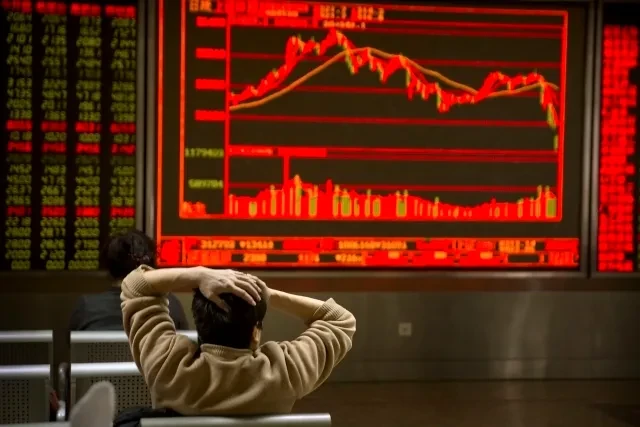
The first collapse on February 5 coincided with Donald Trump’s performance in Ohio, where the president told the public about the excellent state of the US economy.
The conservative Fox News, Trump's favorite television channel, was forced to interrupt the broadcast of his speech in order to tell the audience the urgent news: the rise in the American market, which lasted almost two years in a row, has changed a massive sale of assets.
The market rolled down so swiftly that the analysts only shrugged, uncertainly explaining the record volatility by the influence of algorithmic trading. In the next two days, the hope appeared that the market felt for the bottom, but on February 8, the fall resumed with renewed vigor. Trump, who for a long time could not get enough “all new and new records on the stock market”, after a long silence called what was happening “a big mistake”.
Correction in the American stock market was brewing for a long time: the discussions about the “overheating” amid anomalous growth in 2017 have been conducted for the past few months, and everyone knew that the value of assets was seriously overestimated. In this regard, the psychological state of the markets is noticeably different from past financial crises, which usually caught investors by surprise and provoked panic moods. In relative terms, the correction also does not look like a disaster: during the Black Monday in 1987, Dow Jones fell by 23%in one day. The market cooling has taken place - now the intrigue is whether the correction will go into a “bearish” trend or not. On Friday, bidding closed on a positive note, but investment bankers and traders froze in intense expectation.
An interesting feature of the situation is that there are no fundamental causes for a protracted crisis in the United States. Vice versa!
Everything is so good that any positive news-high growth rates of the global economy, growth in employment and salaries in the United States, normalizing the pace of inflation-force the markets to suspect the Fed that the regulator will more aggressively tighten monetary policy against the backdrop of favorable conditions. An increase in interest rates that have been at the ultranism level over the past 10 years will increase the cost of borrowed funds for companies, will adversely affect the attractiveness of shares and slow down the overall growth of the American economy.
Another cause of stress in the market is associated with the unorthodox economic policy of Trump. In addition to doubts about whether the American president understands the significance of the term “financial bubble”, economists with great skepticism relate to the tax reform of the Republicans. Since the Great Depression, fiscal incentives are used to use during an economic recession, and when raising business activity, put public finances in order. Trump acts exactly the opposite: with a healthy economy, his government increases expenses and reduces taxes, which is why the budget will lose more than $ 700 billion within two years. The two -time increase in the US budget deficit (from $ 665 billion in 2017 to $ 1.2 trillion in 2019) will push the percentage rates up with all the consequences for the stock markets.
The decline in the largest trading floors of the world traditionally leads to the withdrawal of investors from the high -risk assets of developing countries. Last week, news from the United States, coupled with a drop in oil prices, exerted pressure on the ruble, which fell to 58.5 rubles per dollar. The government and the Central Bank, however, do not yet show signs of anxiety and act on their own agenda, despite the risks of new shocks in world markets. On Friday, the Central Bank lowered the key rate of 0.25 percentage points (up to 7.5%) against the backdrop of record low inflation, and the Ministry of Finance had previously placed the next issue of state debt bonds.
In the coming days, the cost of the Russian currency will develop under the influence of oil prices and the state of the American market, but analysts do not predict strong fluctuations.
However, in the medium term, a premonition of the end of the period of “cheap money” in developed countries can more than once lead to high volatility in world markets and a sharp sale of ruble assets.