
Translated material
Deripaskrybnadzor
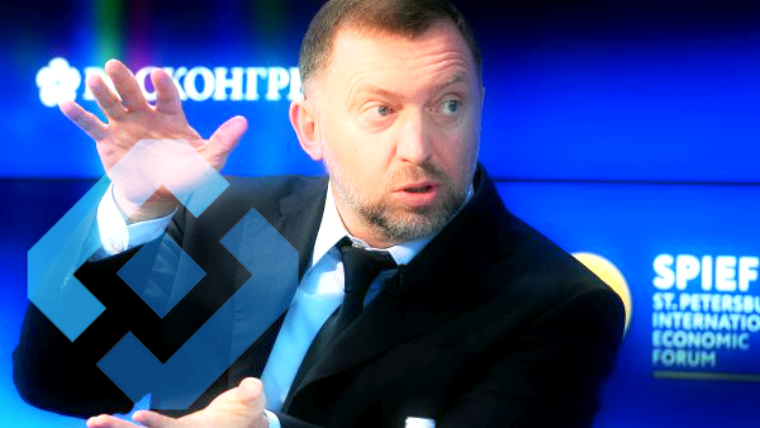
The epic with the censorship of publications containing at least some information about Oleg Deripaska and Nasta, does not subside: the RKN conducts a “great cleaning” of the media, and the author of the sensational investigation achieves justice through the court.
Politician Alexei Navalny sued Roskomnadzor, who demanded to delete information about the investigation about billionaire Oleg Deripaska and the head of the government apparatus Sergei Prikhodko from the Navalny.com website. The lawsuit was filed in the Tagansky District Court of Moscow. The opposition requires recognizing the actions of Roskomnadzor illegal and oblige him to exclude his pages from the register of prohibited information.
The lawsuit states that the other day Navalny received a notification from Roskomnadzor that the two pages of his site were included in the register of prohibited information. As the basis, the decision of the Ust-Labinsky District Court of the Krasnodar Territory of February 9 was indicated. The lawsuit provides information from the investigation of Navalny, in particular, that Prikhodko presumably rested on a yacht belonging to the Yacht Club Center LLC. The final beneficiary of this company is Oleg Deripaska's mother - Valentina Petrovna Deripaska. “Gratuitous use of a water vessel owned by a legal entity is the receipt of remuneration (income) in kind, not provided for by law for a member of the Government of the Russian Federation,” that is, a brush, the lawsuit said.
The Human Rights Convention say that freedom to express opinions can be limited, in particular, to protect the reputation or rights of other persons or to prevent the disclosure of information received confidentially. However, there is no such information in this investigation. The lawsuit stated that the investigation was conducted on the basis of open sources - the book of Nastya Pisces “A diary for seducing a billionaire, or a clone for an oligarch”, photographs from Instagram and other open information.
Recall that scandalous articles and a video released by Alexei Navalny and the Corruption Fund (FBK) were promptly prohibited by the Ust-Labinsky District Court of the Krasnodar Territory-less than a day it took Oleg Deripaska to draw up a claim, and the court to make an appropriate decision. Based on this court decision, Roskomnadzor immediately sent the Znak, Mediazone and Radio Liberty letters with a demand to delete this material.
No appeals to the supervisory authority by journalists, human rights activists and lawyers had no visible effect-the RKN continued to send letters demanding to distort the material not only to Russian publications, but also by Instagram with YouTube, giving both American Internet services until February 14:
Moreover, the “fundamental” of the Russian supervisory authority, which was reminded of the network users: is especially indicative:
YouTube has already reacted to the letter of Roskomnadzor and asked the Navalny Live channel to delete the air of the Navalny program at 20:18 on February 8, which spoke about the investigation of the FBC about oligarch Oleg Deripaska and Deputy Prime Minister Sergei Prikhodko. The representative of Google told the Russian media that this is a standard notice, "which is always sent in accordance with the law." When asked why the company asks to remove content if the FBK appealed the interim measures in the claim, Google answered: “No comment”.
It is also said in the lawsuit of Navalny that according to the law on information, the basis for inclusion in the register may be decisions of federal authorities (in relation to information on suicide methods, the spread of drugs, child pornography, etc.) and a court decision that has entered into legal force. The pages on navalny.com did not contain such information, and there was no legal decision that came into force. Blocking pages on the Navalny website and in other media outlets became a securing measure for the claim of Deripaska to the model Anastasia Vyukevich (Nastya Rybka) and her “sex trainer” Alexander Kirillov (Alex Leslie). The corresponding ruling on February 9 was issued by the Ust-Labinsk District Court. The representative of Deripaska said that the case is considered at a closed meeting, since the lawsuit is about protecting the plaintiff’s private life.
In addition, Navalny refers to the appeal of the Moscow Regional Court of April 21, 2014. In it, the court, in particular, said that Internet sites containing inaccurate defamatory citizens or organizations are not related to the materials or information that may be included in the register of prohibited materials, and Roskomnadzor is not credited to make decisions in relation to such information.
“We understand that it is stringent to appeal the ruling of the Ust-Labinsky court, but if we are not allowed there and do not take our complaint about the ruling of security measures, then we are left without the right to judicial protection and can appeal the actions of Roskomnadzor as a body that violates our rights,” says Ivan Zhdanov, lawyer of the corruption (FBK) fund. The other day, FBK lawyers tried to get the ruling of the Ust-Labinsky court, but they were refused, since they were not a party to the case.
As it turned out, the appetites of Mr. Deripaska, the Ust-Labinsky court and Roskomnadzor were not limited to news portals. A notification with the requirement to delete scandalous material was received by MAXIM magazine - in the electronic version of the popular magazine there was a publication, with jokes about Nasta Fish.
After a letter from the RKN, the article had to be removed from the site, but a copy of the article can still be found on the services of the Internet archives.
On the same day, that Znak with the mediazone, the order of Roskomnadzor received the publications The Village , Snob and Newsru.com .
UPD 02/13/2018 17:09. Znak reports that he also sues Roskomnadzor:
“Meanwhile, we turn to the Tagansky court of Moscow with a request to recognize the decision of the RKN to include the publication of Deripaska and Nasta Fish in the register of prohibited information.”
As expected, the fight against Rybagat had its fruits - the video on YouTube has already gained 4.7 million views, and figures appeared in the Russian information field, which had not previously fallen into the public plane.
The FBK lawyer Vyacheslav Himadi calls the definition of the Ust-Labinsky court illegal, and this illegality is “obvious even without a detailed analysis of its text (which no one has seen and not the fact that it exists at all)”, therefore, according to him, “citizens have the right not to recognize and ignore the decisions of the“ court ”.
UPD 02/13/2018 19:32. Many experts note that in the actions of the authorities, in fact, there is nothing new except the lightning fasteners with which they began to censure the Internet space when it touched “friends”.
It is worth noting that earlier, when it concerned the opponents of the current government, federal channels have repeatedly used data from a much more personal nature - under the pretext that they represent socially significant information. This once again gives a reason to think about double standards that have become an integral part of modern Russian reality.
The journalist of “Echo of Moscow” Alexander Plyushchev noted that the Russian government, when something is extremely sensitive to her, demonstrates not even double standards, but simply the complete absence of any rules and frames. In this case, the principle of selectivity and censorship is again involved. Even with formal compliance with the legal procedure, the public has not yet submitted a document on which Roskomnadzor is in force - the supervisory authority has so far been limited only by oral statements.
“Of course, Deripaska succeeds in the law, but completely not in the framework of law enforcement practice,” says Poyshchev. - Not a single Russian court within a day takes such cases for consideration and does not impose interim measures. I myself found myself in such a situation. The bourgeois court published my personal data on the site and at first refused to remove it. Only after we filed a complaint, did they tell me that it was a technical mistake. It is very difficult for ordinary people to achieve anything in such a situation. I appealed the actions of the philistine court wherever possible - including the same Roskomnadzor. Representatives of the department then did not even understand what I want from them. Apparently, Deripaska explains more intelligibly than an ordinary person like me. I really want to learn such a language of communication with officials so that they understand you at a glance - and preferably even from half a vapor or wink. ”
The head of the Agora international human rights organization Pavel Chikov notes that from a formal point of view we are talking about a civil case, which is a plaintiff and defendant. The subject of the claim lies in the illegality of the spread of information about private life, and the plaintiff asks to take interim measures before consideration, namely, to oblige the media to remove the contested information.
“Is it right or not is an open and controversial issue,” says Chikov. - The court decided to satisfy the petition and issued a ruling. Since it concerns issues related to the removal of disputed content on sites, the state body responsible for execution is Roskomnadzor. There are no complaints about resources that voluntarily comply with his requirement. And in relation to those who refuse, coercion measures that Roskomnadzor have in the arsenal can be applied - that is, the termination of access to specific content. ”
The problem is, according to the head of the Agora, that based on this decision, Roskomnadzor will demand to ban access to the specific YouTube and Instagram page, and in the civilized world it is customary to fulfill such decisions - this is business ethics. Plus, we are talking about protecting the right to private life, and its elements are present in the video. “These moments are very sensitive to the Western world,” he notes. In addition, technically in Russia, the absolute number of Internet providers is not able to block only one page. This requires special equipment. In reality, such a requirement can be fulfilled only in one way: to ban access to the resource (YouTube, Instagram) in general.
The incident is also that this blocking is a security measure, and not the final, and its purpose is not to satisfy the plaintiff’s claim against the defendants, namely the blocking of content. “We know,” Chikov notes, “that there is nothing more permanent than temporary. And in this case there is an abuse of the right from the plaintiff. ” By virtue of its YouTube and Instagram policy, he summarizes, most likely they will block access to specific pages and photographs.
The head of the Roskomvoboda Artyom Kozlyuk calls this case unprecedented-no one can recall a similar situation when, within literally a few hours after applying to the court, interim measures were superimposed on numerous Internet publications. It is especially alarming what operational Roskomnadzor began to send the requirements to remove a particular content. The legality of such actions, in his opinion, raises many questions, and here Artyom Kozlyuk was also mentioned by the fact that no one had seen the court’s decision - neither the media, nor related to the company's video:
“Even lawyers cannot learn about the legitimacy and powers of Roskomnadzor's requirements. Nevertheless, they are reinsured and recommend that their customers delete materials to avoid complete blocking of sites. Indeed, according to the law, it is allowed to block not only specific content, but also a domain and IP address.
So, on the one hand, the actions of the media are justified. But on the other, until at least some cohesion is felt. Where is the Union of Journalists or the Union of Journalists and Media Workers? The media should be in this situation to oppose a certain consolidated front against such an outright censorship. I do not urge to save materials-here we are still talking about business, preserving advertisers and, in principle, about the threat of existence. But some solidarity should be manifested. ”
Access to YouTube rollers is not so rare- about a thousand has already accumulated in the register of prohibited sites, however, access to the territory of the Russian Federation is not limited to the Internet service itself. “In my opinion, the complete blocking of YouTube or Instagram in case they do not remove the required rollers and posts, it will be possible only with a political decision. If Roskomnadzor introduces their real IP addresses to the register, then this means that he was given a go-ahead: they say, it's okay if YouTube or Instagram will be blocked in Russia, ”Kozlyuk said.
The head of the human rights association “Team 29” Igor Pavlov notes that this situation is demonstrating - now there is one standard in Russia: all, the rest is the law.
“The speed with which the Ust-Labinsk District Court decided that the published pictures violate the“ rights to the image, the confidentiality of personal data and the inviolability of private life, ”of course, is simply amazing,” says the head of “team 29”. - I knew that the Russian court works quite efficiently, but did not assume that so.
... The reaction of Navalny's opponents indicates that he raised a whole layer of very undesirable information for them. Indeed, in his investigation, it is not only about corruption, but also about international relations - and this topic is taboo for all kinds of research today. ”
Read also:
?
New borders of the state online censorship
?
Report "Agora": 115 thousand cases of restrictions on the freedom of Runet for 2017
?