
Translated material
For a service user
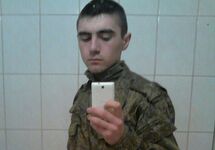
The Ministry of Defense sent recommendations for the behavior of employees of the department and military personnel on the Internet, Izvestia reports . Soldiers and officers are advised to limit or completely stop using social networks "Odnoklassniki", "VKontakte", Facebook and other similar resources.
Recommendations were developed at the end of 2017. They are decorated in the form of a memo and visual aids. So far, the rules of conduct on the Internet are advisory in nature. However, the Ministry of Defense is already preparing amendments to the laws "On military duty and military service" and "On the status of military personnel." Military personnel will be forbidden to disclose their departmental affiliation and details of the service - both their own and fellow soldiers. For violation, disciplinary and criminal liability is provided.
The military requires "not to publish information about their service and units, to disable geolocation in phones." Soldiers and officers are advised to make their accounts in social networks as closed as possible and not add strangers as friends. It is recommended to regularly update applications, not install suspicious programs and come up with a unique and complex password for each Internet service.
The military warns that foreign resources administrators have full access to personal information placed on them. The document notes that the publications of military personnel are constantly analyzed by foreign intelligence services, which is why photographs and video materials attached to the area can "lead to disruption of a combat mission." Soldiers and officers are also recommended to ask their relatives and loved ones not to spread about their service.
In addition, military personnel recall that publications that incite interethnic or inter -religious discord are able to cause "significant reputation harm to the armed forces", and their author can bear administrative, disciplinary or criminal liability.
According to the presidential adviser on the Internet, German Klimenko, such an instruction is primarily needed for soldiers so that they do not fall into unpleasant situations. “We know the story of how, with the help of certain services, we found out where the guard of the American army go. Therefore, recommendations for the use of mobile phones, smartphones and other gadgets are necessary. Especially in regime parts,” Klimenko said.
The military messages published in social networks have repeatedly launched the basis of investigations of their activities. In particular, in this way it was possible to track the movement of the Russian air defense system "Buk" who had shot down on July 17, 2014 in the sky above the Donetsk region of the Malaysian Boeing-777.
In Russia, it was repeatedly proposed to limit civil servants the right to use social networks and messengars, especially foreign ones. In 2015, attention to the use of civil servants of foreign services was attracted by the Secretary of the Security Council Nikolai Patrushev. According to him, with an increase in the number of computer attacks on the information systems of the authorities, "the presence of foreign technical intelligence in the systems of software systems."
In 2016, a law was adopted, according to which civilian civil servants are obliged to report on activity in social networks . They should “present information about the addresses of sites or pages of sites on the Internet, on which these persons posted publicly available information, as well as data that allow them to identify.” If the official forgets to tell about some account, this will be considered the presentation of "inaccurate and incomplete information." This entails the liberation of the employee from his post and his dismissal. An official who does not use social networks, Dollen to declare this in writing.