
Translated material
Not one sex
The world is not in vain so eagerly and widely celebrates St. Valentine, he is the day of lovers. Love is the biggest mystery that a person is trying to solve the age from the age
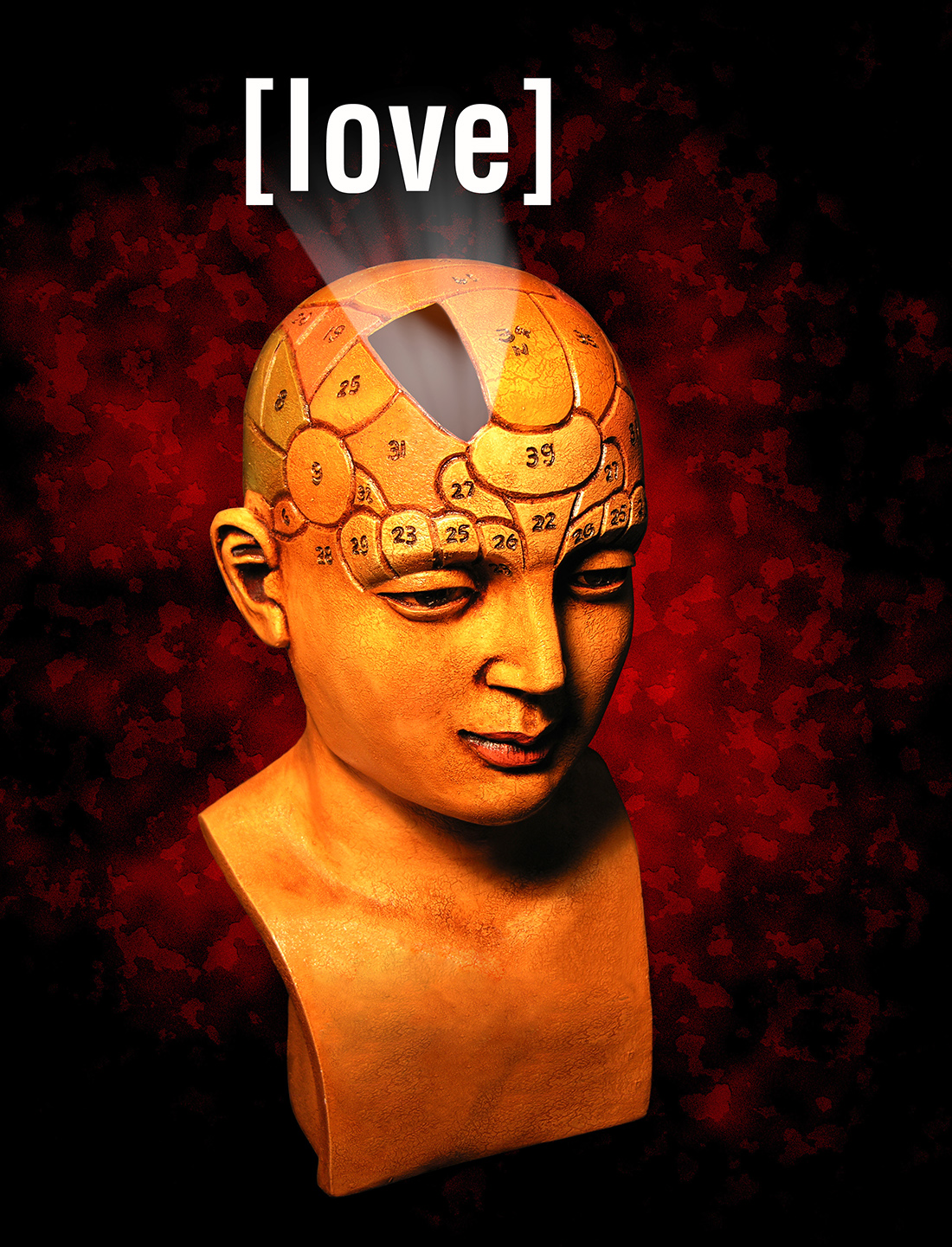
Is the instinct of continuing the genus “to blame” in the storm of feelings that masters the lovers and makes them commit madness and go to the feat? What does modern science say about the “delicate passion”?
Lovers experience sensations similar to the symptoms of mental illness or drug intoxication: the world around is becoming much more colorful, every detail of communication with his beloved leaves a long mark in memory, a person ceases to critically evaluate the subject of his love, he has an obsessive desire to constantly be with the object of passion and at the same time - the fear of being rejected. Poll 839 lovers in the USA and Japan showed that about 80% of them experienced a feeling of “flight” after they learned that their feeling is mutually*. What happens in the brain of a lover, what causes such a biochemical storm?
The organ of love
* Who We Love: The Nature and Chemistry of Romantic Love by Helen Fisher, 2004.
The main "organ of love" is, of course, our brain. Anthropologist Helen Fisher from New York, who is engaged in the research of love and sex, came to the conclusion that for romantic love, for sex and long-term family affection (both both, and the third we call love) are responsible for different brain systems. They are interconnected and interact with each other: romantic relationships naturally push people to sex, and initially prosaic carnal relationships can develop into long -term affection and even - which also happens - suddenly cause a flash of romantic love.
** is located in the center of the brain, under the hemispheres.
*** is located in the lower part of the brain, under large hemispheres.
**** Almond, or amygdala, is the center of emotions. It is located inside the temporal lobe of the brain.
***** The Female Brain by Louann Brizendine, 2007
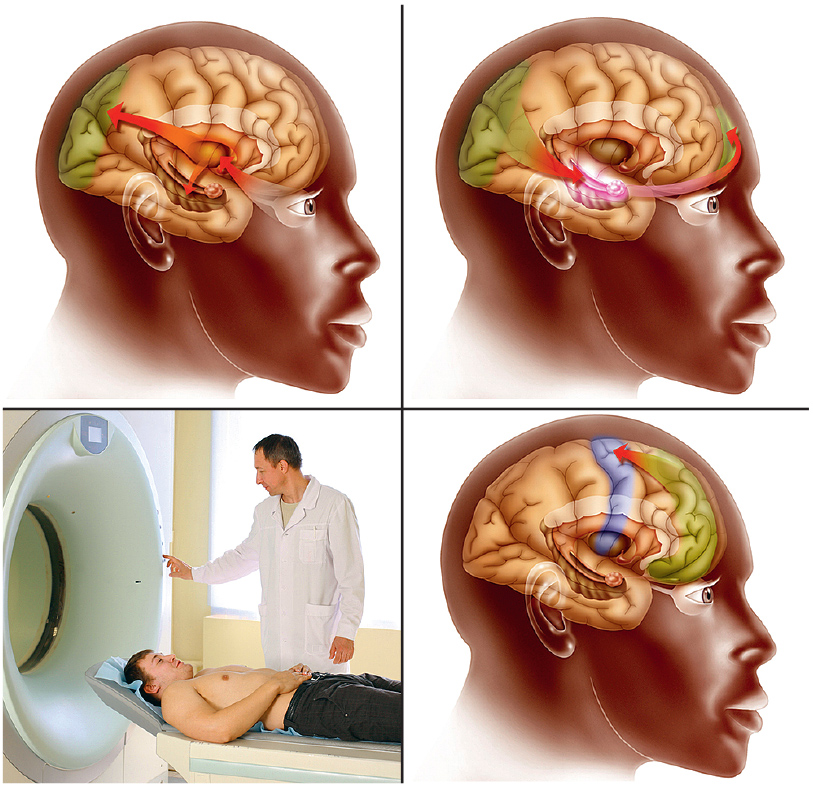
The state of love, Fisher believes, is associated with the activity of such brain zones as the ventral region of the tire **, the tail core *** and the frontal share of the cortex of the cerebral hemispheres. The first is the main part of the brain system, which is responsible for the desire for the goal and the desire to receive a reward. The second forms preferences when choosing an object of love, motivation for achieving the desired and pushes to action. Well, the frontal share of the cortex of the hemispheres, the “main manager” of the brain, leads, including emotions, interacting with the so -called amygdocal body ****. The function of the frontal lobe in relation to the center of emotions (both positive and negative, for example, fear) - restraining. But the matter is not only and not so much in managing feelings. Neuropsychiatrist Luann Bryisendine from the University of California to San Francisco, a female brain researcher *****, found: in order for the woman to experience an orgasm during sex, Amigdal should completely turn off (for men it is uncritical). In this state, a woman forgets about all stress and anxiety.
Scientists study the work of the brain in love, comparing the “testimony” of lovers with the scans of their brain obtained using magnetic resonance imaging. Some experiments are conducted not in public, but on animals - after all, the "love zones" of the brain appeared in the process of evolution for a very long time. For example, the caudate nucleus (Caudate nucleus), whose activity increases during the period of falling in love, is not only among mammals, but also in reptiles, from which it can be concluded that some love emotions appeared more than 300 million years ago, when evolutionary lines leading to reptiles and mammals were dispersed.
Love cocktail
A person who is even leading active sexual life can (and some never) have been loved, romantic elation of feelings in relation to another person. What “includes” and “turns off” the brain departments that are responsible for “romance” - hobby, increased interest, the emergence of desire, love dreams, passion, the formation of attachment and other elements of love, understood as a complex complex of feelings and desires?
Each of the more than 10 billion brain nerve cells synthesizes special substances (neurotransmitters) that help cells communicate with each other, transmit signals from one parts of the brain to another. An increase or decrease in the level of neurotransmitters and hormones entails, respectively, the growth or decrease in the activity of certain zones of the brain. The origin of love feelings, according to Helen Fisher, is most facilitated by neurotransmitter Dopamine (dopamine) - “Elixir of pleasure”, which causes euphoria and determines the ability to enjoy life. The same substance makes a person act, directs him to the goal, in the case of love - to his beloved or beloved. Most dopamine is produced by the ventral region of the tire. From here it is distributed to other areas of the brain, in particular, into the tail nucleus, which, according to scientists, is responsible for preferences when choosing an object of love.
Why is she?
The issue of preferences is rather thin. Why do we fall in love with one and not another and choose, as a rule, a person whom we consider beautiful or, at least, attractive? There is a theory that at a subconscious level beauty is a synonym for health: people with the right, symmetrical facial features are more like, because asymmetry can mean genes' defects or malformations of intrauterine development. Maybe beautifully subconsciously attract that children from such a partner will also like other people - this gives an advantage in continuing the genus. At the same time, “beauty” can be interpreted in the broad sense: a person is “beautiful” not only with anatomy, but also with habits, dressing, communicate, etc.
****** The production of sex hormones is regulated by the hypothalamus - the highest subcortical center of the autonomic nervous system, which also participating in the organization of nervous mechanisms responsible for sexual behavior in general
An increased level of dopamine causes a “love madness” in a person, which is not surprising: after all, the imbalance of dopamine is associated with real madness, for example, schizophrenia and mania. Some drugs, in particular amphetamines, imitate the effect of dopamine. Yes, and dopamine itself causes symptoms of addiction, it is no coincidence that lovers suffer greatly during separation. The high level of dopamine pushes the brain to produce more testosterone - the hormone of sexual desire ******.
Reasonable question: how is the action of dopamine and testosterone related? Is the release of testosterone affects the increase in dopamine, or vice versa? Scientists have no unequivocal answer to this question. Helen Fisher believes that this is a mutual process: as a high level of dopamine, testosterone can launch, and vice versa. But the first, in her opinion, is more likely (that is, a romantic hobby “launches” sexual attraction).
Comparing the "testimony" of lovers with scans
their brain obtained using
Magnetic resonance tomography photo: Fotolia/Photoexpress.ru, BSIP/EAST News
As proof, the researcher gives an example of bodybuilders who accept the synthetic analogues of testosterone - androgens: it is noted that it is more difficult for them to fall in love.
The chemical “brother” of dopamine, norepinephrine, along with the dopamine “guilty” in insomnia and the loss of appetite, which are not uncommon for lovers. Norepinephrine improves the work of memory - which is why people remember the smallest details of romantic moments even after decades.
Another neurotransmitter, serotonin, helps a person maintain a calm, prosperous attitude to life. It is no wonder that the level of serotonin during love does not increase, but decreases. In a normal state, a lack of serotonin can cause depression, obsessive fears and neurosis of obsessive states (a disorder in which people, for example, wash their hands endlessly). But the lovers are intoxicated by a dopamine, so they have a lack of serotonin just a desire to call the subject of his passion twenty times a day. It is interesting that some people to whom the doctors prescribed antidepressants cannot fall in love: they still feel “flat”. The fact is that antidepressants artificially support the high level of serotonin, which does not allow dopamine and surrender to intoxicating love.
Dopamin fields
Over time, dopamine fire fades away, and oxytocin becomes the main substance supporting affection - this substance stands out in a woman when a man hugs her. Luann Braisentine believes that mothers are not in vain warning their daughters not to hug with unfamiliar men - the allocation of oxytocin sharply enhances the feeling of trust. In this state, a person is uncritical of words, does not notice the inconsistencies. The researcher gives the results of the experiment conducted by the Swedish scientists: potential investors who sprayed in their nose a liquid containing oxytocin, were ready to invest in the same project twice as much money than before the experiment. Over the years of married life, oxytocin works against dopamine, replacing the flight of passion with home comfort.
Not one sex
******* On Beauty and Being Just by Elaine Scarry, 1999
People have long guessed (and confirmation of this - all world literature) that the simple task of continuing the genus is not the only goal of love. To the same conclusion that love and continuation of the genus, with all the interdependence, are not identical, and scientists come. Professor of the aesthetics of Harvard University Elaine Skerry in his treatise on beauty generally considers love as a special case of admiration for beauty, any beautiful objects - flowers, birds, even music *******. The primary desire of a person, Skerry believes - to follow beauty and try to reproduce this beauty, including giving birth to children from loved ones. Sexual reproduction, according to Skerry, simply exploits the aesthetic pleasure that a person experiences while meeting harmony in other people. Skerry retells Plato, who said that when the man’s eyes see a beautiful woman, his whole body wants to repeat this woman in his offspring.
First published in NT No. 5 of February 15, 2010