
Translated material
A person from the Internet
For ten years, Alexei Navalny turned into the owner of his own media imperia from the blogger of the Living Journal
Updated
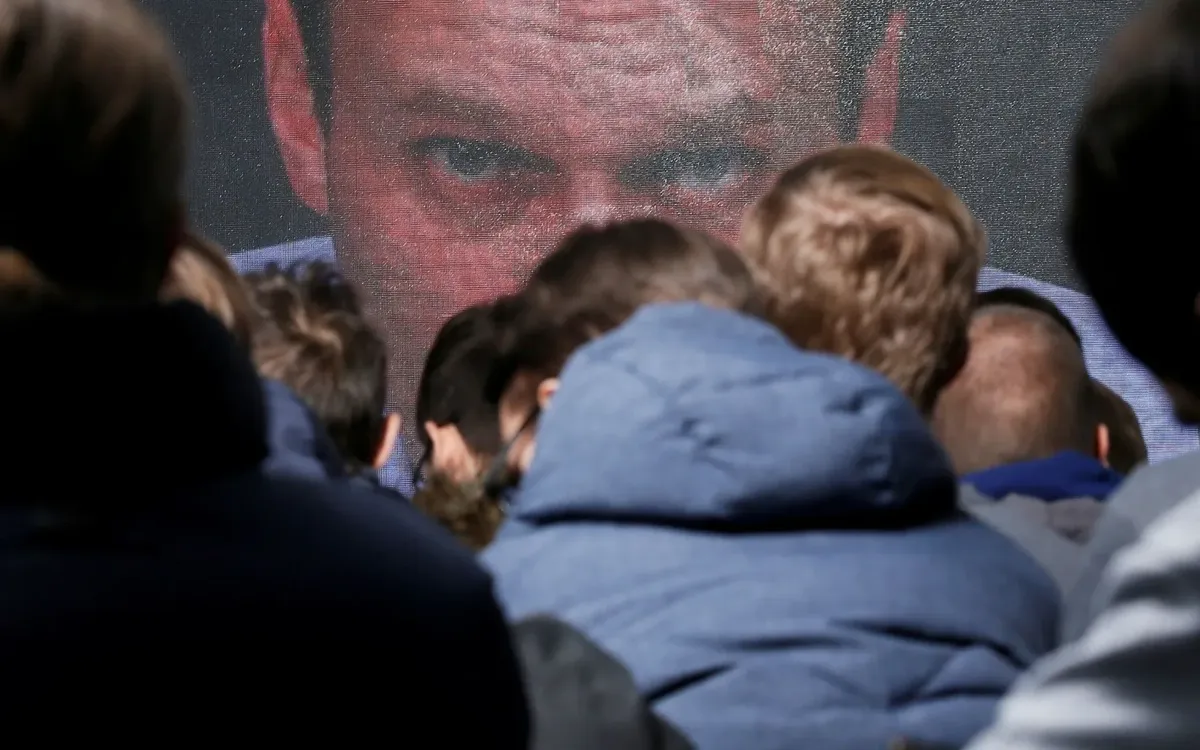
On February 15, Internet providers at the request of Roskomnadzor began to block access to the Navalny.com website
... Last week, the Corruption Fund under the leadership of Alexei Navalny, according to the opposition himself, was “the most strange and scandalous investigation” in the history of his work. We are talking about a video telling about the rest of businessman Oleg Deripaska and Deputy Prime Minister Sergei Prikhodko on the oligarch yacht in the company of the alleged representative of the escort services industry Anastasia Vesukevich (Nastya Rybka).
In four days from the moment the video was published, we watched almost four million times. The Court of Ust-Labinsk in the Krasnodar Territory, meanwhile, accepted Deripaska’s lawsuit against Vaskevich about the distribution of data from his personal life, and as a security measure demanded to remove all materials about the events on the oligarch yacht from the network. Roskomnadzor ordered to remove the relevant information from YouTube and Instagram until the evening of February 14, threatening other social networks in Russia otherwise. On the same day, Russian YouTube users reported about the problems with the service - rumors about the start of blocking went. Representatives of the company called the incident a "technical failure." At the time of preparation of the publication of the video about Deripaska and Vashukevich, it is still available on YouTube.
Now at least 8 million visitors enter the Navalny.com website, more than 1.7 million people have been signed on the Aleksey Navalny channel in YouTube, and the Navalny Live direct broadcasts have acquired an audience of 435 thousand subscribers.
More recently, in November 2017, the oppositionist also started a telegram channel, which after three months has been reading more than 83 thousand people. In addition, the Navalny team began to produce podcasts as an alternative to broadcasting.
How over a few years the opposition, who began from the blog in the “Live magazine”, created his own media imperial, with which Deripaska, the court of Ust-Labinsk, Roskomnadzor and everyone else are fighting today?
Stage No. 1. From the Living Journal - to the Time list
The blog of Alexei Navalny in Runet began gaining popularity in 2008, when a young lawyer and former member of Yabloko, having bought the shares of the largest Russian state -owned companies for several million rubles, began to identify “gray” money laundering schemes for money laundering.
One of the first records in the “Live Journal” of Navalny, which made a lot of noise, was dedicated to the scheme of the alleged multimillion -dollar theft of funds at Gazprom OJSC. Navalny claimed: Gazprom refused to buy gas from the company “Novatek” at the proposed price, motivating the decision with the lack of funds, and a few days later the intermediary, which the same “Gazprom” had been led, bought the gas from Novatek and sold Gazprom itself - only at a price twice as high as the initial. The difference from transactions of 1.5 billion rubles, according to Navalny, settled in the pockets of “effective managers”. On the fact of theft of funds, the investigation even opened a criminal case, but soon it was closed.
The next step of Navalny towards wide fame is the story published in LiveJournal called “How to Saw in VTB”-on the purchase of VTB-Linging drilling rigs. Based on his post, the opposition in 2009 first releases a video shot in imitation of the film "Star Wars".
But it does not turn out to be popular at the expense of the picture-the video fully fits into the style of the then NTV (scandals-engagements) and looks quite artisanly by today's standards. However, in just a few days, the video in which the blogger accused the bank’s managers of laundering money when purchasing equipment, gains more than 70 thousand views. Despite this, the activist failed to bring the case to the court again, and VTB leaves the scandal, announcing the dismissal of several employees.
In 2011, a new stage in the anti -corruption activity of Alexei Navalny began - the Rospil project was launched. Its main task is control over the expenses of budget funds for public procurement. In addition, the Rosyama public project appears. The idea is simple: users publish photos of road pits indicating the place where it was removed, after which the automated system generates and sends a complaint to the traffic police. On the implementation of the idea at the initial stage, Navalny spends, by his own admission, one hundred thousand rubles from personal funds.
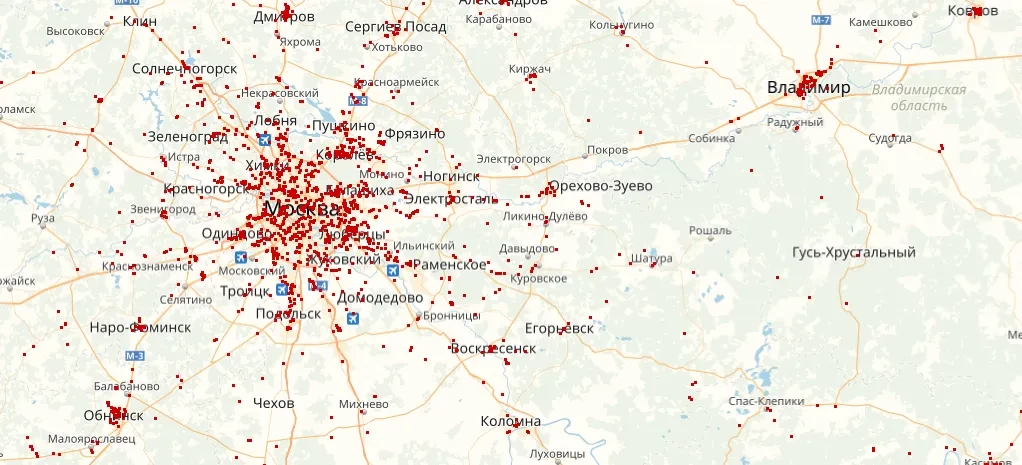
New projects and Blogger investigations attract more and more attention to him from business publications. During the broadcast on the Finam-FM radio station, Navalny pronounces the phrase “Party of Crooks and Thieves” in relation to “United Russia”, which turns into a meme. At the same time, the number of subscribers in his “living magazine” was growing at a high pace. By the end of 2011, 55 thousand people read the blog daily, and Alexei Navalny himself falls on the cover of the Esquire magazine, becomes a man of the year according to GQ in the nomination “Chief Editor” and is one of the “most influential people of the world” according to Time magazine.
Stage number 2. From "Pekhting" to drones
In the wake of protest activity related to the dissatisfaction of citizens with large -scale falsifications during the 2011 parliamentary elections, Alexei Navalny announces the struggle for fair elections and launches another project - “Roster”. Its goal is to organize active voting in the 2012 presidential election, especially in those areas where obvious falsifications were previously noticed.
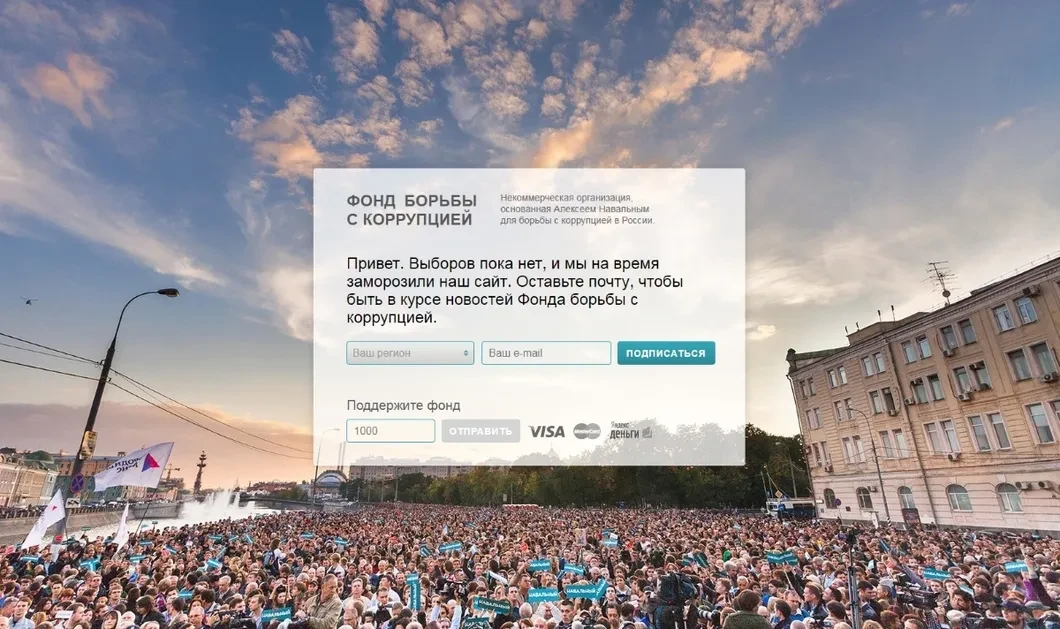
Rospil and Rosyama previously existed at the expense of crowdfunding, but in 2012 Navalny refuses anonymous donations and, with the support of sponsors, combines all projects into a single structure - the Foundation for the fight against corruption (FBK).
The financial support of the new organization is now publicly provided by 16 sponsors, including Rosgosstrakh Vice President Roman Borisovich, ex-director of the Russian Economic School Sergey Guriev, entrepreneur Boris Zimin and even journalist Leonid Parfyonov.
The first investigation of the FBK appeared thanks to the co -founder of Dissernet and later to the author of Novaya Gazeta Andrei Zazakin, who had previously been engaged in the search for plagiarism in the dissertations of deputies of the State Duma. “When I made a decision to help the FBK, Navalny looked the only one who was afraid of the authorities,” says Zazakin.
Based on the hypothesis that wealthy Russians are often acquired by real estate in Miami, Zayakin decided to sill deputies to own any property in the American registry and found data on the property of the United Russia Vladimir Pekhtin. It turned out that the parliamentarian is the owner of two apartments and even at home in Miami. In the FBK, they doubted that the purchase of such property can be afforded for honest income of a civil servant. So in February 2013 the first investigation of the fund appeared. “For the first time, the tools that we use almost every day were tested in it,” said the ally of Navalny George Alburov in one of the air on YouTube.
The investigation was successful: within two days after the publication, the surname of Pekhtin came to the first place according to the references on Twitter, and the material itself for a couple of months scored 300 thousand views in the Live Journal. The plots of the investigation were shown even on the NTV channel. The main result of history was the departure of Pekhtin from the post of deputy, although publicly the connection between dismissal and publication was not confirmed.
The Internet called the process of deprivation of the post by exposing "packeting".
Now even the most passable videos of the FBK and Navalny are watching much more people. According to Alburov, if they, as before, were viewed only for 300 thousand Internet users, then the video production could be fired. “Since 2012, no one else has demonstrated the same media and organizational growth as Alexei Navalny,” confirms Andrei Zazakin.
After the publication of the story about Pekhtin, George Alburov has an idea not only to look at the real estate of officials from satellite cards, but also to have a detailed idea of possessions hidden behind high fences. He persuades Alexei Navalny to buy a drone. Without much enthusiasm, the opposition is allocated for its acquisition of 24 thousand rubles. With this money, Alburov in the Savelovsky market buys a drone, a GoPro camera and tape to attach it. The first object that the drone explores is the property of Yuri Vorobyov, the father of the current governor of the Moscow region Andrei Vorobyov. “The first shooting turned out to be very shameful, to be honest, the wind, everything is staggering,” Alburov said a few years later.
In the future, FBK officers tried to build a new drone that would have all the necessary functions for the flight over bureaucratic estates. Almost two years were spent on work, but when the next drone, nicknamed “Volodya”, was ready, it turned out that all additions are already present in new models, and its own invention is constantly falling. Nevertheless, one “combat” departure, according to Alburov, that drone made.
The third DJI Phantom 4 for 90 thousand rubles was the third. According to George Alburov, “it was almost the main breadwinner of the FBK”, since the network users sent a lot of donations to see the flight of the drone.
And more recently, in January 2018, crypto-investors transferred 300 thousand rubles to the FBK for the right to name a new drone in honor of the non-Bulas cryptocurrency.
Stage No. 3. Road to the mayors of Moscow
During the election campaign, as a candidate for the post of mayor of the capital in 2013, Navalny stopped being the only author of his blog-in writing many posts, his first press secretary Anna Vedita participated. It is at that time that the Golden Blog, in fact, transforms in the present media.
In an interview with the magazine The Secret of the Company, Vedyta said that then they had an editorial policy: there are more criticisms regarding the city hall and Sergey Sobyanin personally, at least three posts a day, and the most important set up first, about noon. ”
In July 2013, the first video was published on the YouTube channel of Alexei Navalny, while the politician himself did not light up in it. The video was instructions for the assembly and operation of the campaign cube. The following videos on the channel were released as part of the Navalny circles project, invented as an alternative to election advertising. “Navalny circles” were supposed to work as a series of meetings with representatives of professional communities. The politician spoke with teachers about education, with doctors - about health care, with lawyers - about the system of law enforcement agencies.
He attracted attention to the videos, referring to subscribers on his blog: “Everyone has a friend or a friend associated with medicine. Everyone has a familiar teacher or school principal. Your children have a teacher and she has an e-mail. Everyone has a friend that is interested in the “national question” - send him this particular “Circle of Navalny,” he wrote. However, this tactic was not too effective - most of the videos watched no more than 30 thousand people, and they were almost not discussed on the network.
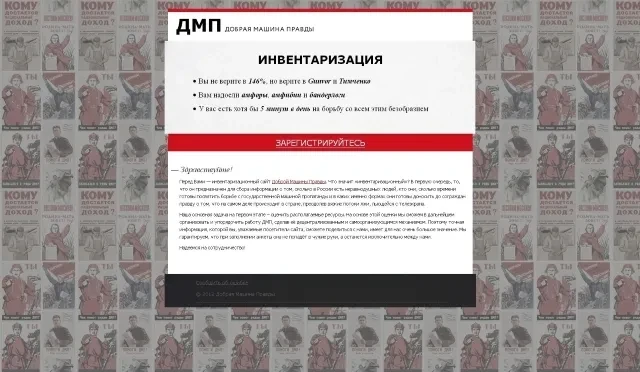
Another not the most successful project was the “good car of truth” - the dissemination of information about abuses in power and corruption through printed leaflets and reposts in social networks. As planned, the volunteers had to register on the Mashina.org website and talk about the ways of possible “propaganda”. Navalny himself admitted that he did not quite understand how this should work, but if “the propaganda machine is in power”, then he should have a similar gun. Ultimately, the idea was more reminiscent of the spam newsletter system in social networks. “I am terribly infuriated by the shares of the DMP. They are so infuriated so much that with the release of each new one I want to write a post about how disgusting, it is not good and vile, ”the municipal deputy Maxim Katz spoke angrily about the project at that time. After the elections, the “kind car of Pravda” stalled.
Despite the misses, in 2013, Navalny still managed to significantly increase the number of supporters. His election shares and mobility looked especially advantageous against the background of a rather closed Sergei Sobyanin. As a result, Navalny took second place with a result of 27.24% of the vote.
Stage No. 4. Film, film, film
In March 2014, the Prosecutor General’s Office demanded to limit access to the opposition page in the “Live Journal”, thereby forcing him to transfer his blog to a separate site.
The new platform turned out to be overwhelming only on hand: firstly, by that time, LiveJournal has ceased to be an relevant resource, and secondly, any ban, as a rule, only strengthen the public interest. This happened this time.
“Anti -corruption struggle as a political tool for coming to power is not new. This is a good populist tool. Navalny as a politician, a populist and an outstanding in a political sense, a person grabs the most painful part. When a person receives a salary of 20 thousand rubles, and Medvedev has a billion rubles at the disposal, this causes a storm of emotions. In this sense, Navalny, on the one hand, did nothing new, on the other, he spun this topic best, closed himself on himself and became a symbol of the struggle against corruption, ”political analyst Dmitry Oreshkin explains this phenomenon.
In 2015, the Navalny team releases the film "Seagull" - about possible violations in the activities of the sons of the Russian Prosecutor General. Filming "Seagulls" cost 250 thousand rubles, wrote Navalny himself. “When we launched it, we set the“ support FBK ”buttons in the video itself and on the investigation page. Plus, we made a fundraising email, and I wrote a special post, ”he said in one of his publications.
The “box office” of the film justified itself - the picture brought the fund 3 million 75 thousand rubles of one -time donations.
“This was our first such experience - we decided to publish an investigation not only in writing, as usual, but to make a film, hoping that it could attract a new audience,” explains the producer of the Navalny Kira Yarmysh channel. - So it happened, so for our next big investigation - about Shuvalov and his plane on which he carries the dogs of Corgi to the exhibition - we also made a video. It was the summer of 2016, and from about this time we are counting the existence of our video sales. ”
In August 2016, Alexei Navalny set the task of attracting a million subscribers on the YouTube channel. “There is a YouTube channel-there are 81 thousand subscribers. The main videos have from 150 to 400 thousand views - this is not bad, and, most importantly, gives us an increase in the audience that does not want to read posts. Our immediate goal is a million subscribers on the channel, two or three videos a week and one weekly live broadcast, ”he wrote on his website.
In less than a year, the goal was achieved - largely thanks to the release of the largest project of the politician - the film “He is not Dimon for you”. Its production cost 415 thousand rubles, the number of views today is 26 million.
“He is not Dimon” we did on our own - we all filmed and mounted everything completely ourselves, ”says Yarmysh. - The growth of our audience is primarily associated with the content of the video and the presentation manner. We make videos about politics, which used to be in Russian YouTube, and call a spade a spade. I think that the popularity of the channel is associated with this - we speak honestly and directly, without smoothing the corners, on political topics that are usually afraid to speak. ”
According to the producer, in addition to Navalny, four people do all the work - Yarmysh herself, two video engineers and a designer.
Stage No. 5. On a straight line with the Internet
At the strategic session of the fund at the end of 2016, Alexei Navalny and his like -minded people discussed the need to create an additional channel. On the main one - “Alexey Navalny” - then only investigations and statements of the politician were laid out. “We needed another channel for direct broadcasts, to spread our ideas, our views, so that we could exchange it with our audience, because before that we used only meetings in offline, newsletters, but we were no longer allowed to television,” the lawyer of the Foundation Lyubov Sobol tells the Novaya Gazeta.
The ideas were different: someone offered to launch their radio station, someone was a television channel. Own channel seemed to be the assembled too ambitious venture, there was simply not enough resources. It was not easier to get a frequency for radio broadcasting - first of all, it is expensive, and to obtain a license it is necessary to overcome an administrative filter. Ultimately, the new channel of direct broadcasts decided to create on an already familiar site - in YouTube.
In 2017, Oksana Baulina joined the FBK team, which previously worked in glossy magazines Glamor, Instyle and Condé Nast Traveller. «Когда я узнала, что Алексей Навальный будет выдвигать свою кандидатуру в президенты, я связалась с начальником его штаба Леонидом Волковым и сказала, что хочу прийти и готова делать что угодно», — вспоминает Баулина. Волков поручил ей заняться новым каналом.
Два месяца ушло на то, чтобы переделать маленькую комнату колл-центра ФБК в студию, разработать идеи, придумать антураж, закупить технику. По словам Баулиной, методом проб и ошибок удалось прийти к минималистичному, но достойному решению.
15 марта Леонид Волков в рамках первого прямого эфира канала «Навальный LIVE» рассказывал про кампанию. Впоследствии его выходы в эфир стали называться программой «Штаб». На следующий день вышел первый выпуск «Кактуса».
«Пилот программы, в которой мы с Николаем Ляскиным обсуждаем пять актуальных политических инфоповодов, мы записали после новогодних праздников и показали Алексею Навальному. Идея ему понравилась. Потом мы придумали приглашать каких-то гостей, брать комментарии», — говорит Любовь Соболь, экс-ведущая программы.
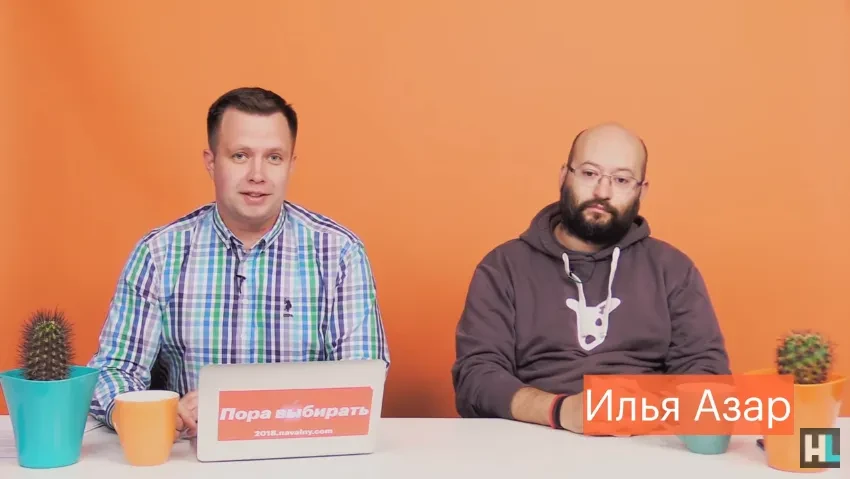
Утренняя программа, несмотря на раннее время выхода в эфир (изначально 8 часов утра) и не очень высокое качество картинки, оказалась достаточно популярной среди пользователей Ютуба. Сам Навальный тогда считал, что прямые эфиры станут смотреть человек пятьсот, а в записи — тысяч десять, однако премьерный выпуск «Кактуса» посмотрели 37 тысяч человек.
«Мы пытаемся добавить к неподцензурным островкам информации наш канал. Мы знаем, люди этого хотят», — сказал Алексей Навальный в ходе дебютного выпуска самой рейтинговой программы канала — «Навальный в 20.18» — и подчеркнул, что презирает все, что происходит на федеральном телевидении. According to him,
запуск «Навальный. LIVE» — это возможность «внести свою лепту в уничтожение этого телевидения».
Первые выпуски «Навального в 20.18» смотрели в среднем миллион человек. Самым успешным оказался эфир, в котором политик выступил, будучи облитым зеленкой (1,8 млн просмотров).
Позднее канал «Навальный LIVE» запустил новые программы: «Будет хуже» с главредом «Медиазоны» Сергеем Смирновым и «Где деньги?» с политиком Владимиром Миловым. На первых порах производством контента занимались четыре человека, позднее штат расширили.
Менее чем через год после запуска аудитория канала выросла почти до 450 тысяч человек.
«Это все только органический трафик, — уверяет Баулина. — Никакие видео канала мы не ставили на платное продвижение. Мы пытались каким-то образом промоутировать аккаунты в соцсетях, но нашу рекламу не брали ни «ВКонтакте», ни «Одноклассники», а в YouTube платное продвижение мы никогда не запускали».
Как рассказывает Любовь Соболь, в планах — запустить круглосуточное вещание. «Когда все начиналось, мы планировали, что в среднесрочной перспективе выйдем на шесть часов вещания в день, но до сих пор не получилось», — говорит она.
Следующий шаг в этом направлении уже сделан. 28 января, в день всероссийской «забастовки избирателей», объявленной Алексеем Навальным, появился новый медиапроект политика — «Новости». Старт получился ярким: под звуки болгарки, которой полиция вскрывала дверь офиса ФБК, ведущие Елена Малаховская и Дмитрий Низовцев рассказывали о ходе протестной акции по всей стране. Прервать интернет-трансляцию на канале «Навальный LIVE» правоохранители не смогли — основная студия находилась в другом месте, которое так и не было обнаружено. А между тем эфир посмотрели более 1,6 млн человек.
Спустя несколько дней Алексей Навальный на своем сайте официально объявил о поиске сотрудников для новостного проекта. «Не сомневаюсь, что новости «Навальный LIVE» войдут в десятку крупнейших оставшихся российских новостных СМИ, способных рассказывать какую-то правду», — написал он и, кажется, не слишком преувеличил. Новостные выпуски на канале стали выходить три раза в день.