
Translated material
Virusophobic campaign
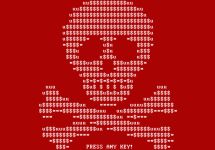
The Notpetya virus, Russia's attack was organized by Russia to destabilize the government systems of Ukraine. This is stated in a statement by the press secretary of the White House Sarah Sanders, reports Reuters.
The attack, begun in June 2017 by the Russian military, "spread around the world, incurring the losses of billions of dollars in Europe, Asia and America," Sanders emphasized.
“This was part of the Kremlin’s ongoing efforts on the destabilization of Ukraine, and even more clearly demonstrates Russia's involvement in the continuing conflict,” the statement said. “These were also reckless and unhappy cyber ends that would have international consequences.”
The US authorities “are considering a number of options,” said a senior White House official when he was asked about possible response. However, he did not clarify what these options are and what was meant by "international consequences."
According to CNBC, the US President’s assistant Rob Joyce said that Russia would have to answer for acts of aggression in cyberspace. The official promised that the American government would find leverage in order to force the Kremlin to "pay". According to Joyce, the notpetya virus epidemic is "an" indistinct attack by Russia against Ukraine in the conditions of ongoing hostilities in this country. "
Meanwhile, the head of the Ministry of Communications of Russia Nikolai Nikiforov called the charges of Russia of creating the virus baseless. According to Nikiforov, a notpetya could create "any more or less technically subsidized student." At the same time, the virus is based on the vulnerability of the American operating system (Windows. - Ed.). “What, Russia laid this vulnerability there? No, the Americans programmed it,” the minister added.
On the eve of the British Foreign Ministry assigned responsibility for Kiberataka using the Notpetya virus. “The Government of Great Britain believes that the Russian government, in particular the Russian military, were responsible for the destructive attack of the notpetya virus in June 2017,” said the deputy head of the British Foreign Ministry Tarik Ahmad. “The attack became evidence of the sovereignty of Ukraine. This reckless action violated the work of organizations in Europe, which cost millions of pounds.”
The Minister of Defense of Denmark Klaus Yort Fredericksen made a similar statement.
The Kremlin denies Russia's involvement in cyber attacks. “We categorically reject such accusations, we consider them unproven, baseless. This is nothing more than a continuation of the Russophobic campaign that is not based on any evidence,” said Presidential press secretary Dmitry Peskov.
On January 13, The Washington Post, citing sources, reported that the US Central Intelligence Directorate came to the conclusion that the Petya-Monk (also called notpetya) was created with the participation of the Main Directorate of the General Staff of the Russian Armed Forces (former GRU). The fact that the Russian military intelligence is involved in the creation of the virus with a high degree of probability, according to the secret report of the CIA released back in November, sources said. It is noted that the attack began on June 27, on the Day of the Constitution of Ukraine. The attack was conducted with the aim of paralyzing the country's financial system. The CIA was refused from official comments.
On June 27, computer networks of the Government of Ukraine, the Kiev Gorgosa Administration, dozens of state and private large banks and companies becamevictims of a massive cyber attack , which in some cases led to the stop of their operations. The reason was the Petya-Monk virus that blocks the loading of the operating system. A message demanding a ransom ($ 300 in bitcoins) said that the virus uses the "military encryption algorithm" and encodes the entire hard drive at once.
The attack began with Ukraine, which was most affected by cyber attacks, but the virus quickly spread around the world. According to the ESET antivirus laboratory, in the top ten countries that the virus affected the most sensitive, Italy, Israel, Serbia, Hungary, Romania, Poland, Argentina, the Czech Republic and Germany also entered.
In Russia, which was in 14th place, the Rosneft and Bashneft server, the Evraz metallurgical company and a number of smaller companies were subjected to the virus attack.
On July 1, the Security Service of Ukraine accused the Russian special services of involvement in the spread of the Petya virus. According to the SBU, the goal of cyber attack was not enrichment, but the "destabilization of the socio-political situation" in Ukraine. The virus allegedly had to destroy important data, as well as violate the work of state and private institutions of the country "to spread panic moods" among the population. The special services also noted that the infection was planned and carried out in advance.
According to the SBU, the same hacker groups were involved in the attacks that in December 2016 they attacked the financial system, objects of transport and energy of Ukraine. "This indicates the involvement of the special services of the Russian Federation in this attack," the SBU claimed.