
Translated material
Alexey German: "Do you want North Korea to arrange here?"
The famous director about his film “Dovlatov”, a special climate of the Motherland, about the generation of people with straight backs, about military rhetoric and growing emigration
- How did Dovlatov arise in your life?
- I heard this surname at home in childhood. They had some relationship with their father, then his father was offended by him for saying something about his grandfather. Then they reconciled. By this time I was interested in books about aliens and vampires. He read his four-volume somewhere after twenty. I even thought to put something. But everything was forgotten. And in 2008, the producer Artem Vasiliev handed me a letter from Ekaterina Dovlatova with a proposal to film something from his father's works. Then there was no possibility. And recently they decided to return to that idea. Contacted Katya and Elena Dovlatova. Slowly began work.
- How did the balance of a fictional and real film arise in the film?
- We tried to create a “hyperrealist world” (they recreated everything, built in a detailed way), where there are recognizable moments, recognizable people. There are even their discoveries: Brodsky’s translations, which have not sounded anywhere. But this is in many ways a story we composed.
- And Brodsky’s translations that were not sounding before, where?
- They were written to one Polish film. During the preparation, we found interesting documents.
- You talk about the young Dovlatov, but in your story, Brodsky also occupies the central place. That is, this is not a “solo on Underwood”, but the “duet” of the authors who fall out of time ...
- Brodsky is necessary, on the one hand, as a comrade Dovlatov, on the other - an energy antipode, on the third - as a measure of fame ... This is also important for rental. We understand that Brodsky in the world knows more. Foreigners about us again understand every year less and less. The consonance and internal dialogue of such different authors is important here - by nature, the behavioral model, in relation to the challenges that had to be reflected. Two destinies, but reflected in each other.
- And this is a movie about time: prickly, inhospitable. Aleksey Yuryevich German was then shot “checks on the roads”, the film will be knocked on the shelf for a long time. So this is the time of checks and choosing everyone.
- The artists went more than others: they were forbidden, they were not allowed to exhibit. Many were drunk, died from heart attacks. Poets, writers who could not be printed had colossal problems.
- Your father said that when removing the Lapshin, he wanted to express tenderness in relation to people of that time. Did you have a desire to express time through them?
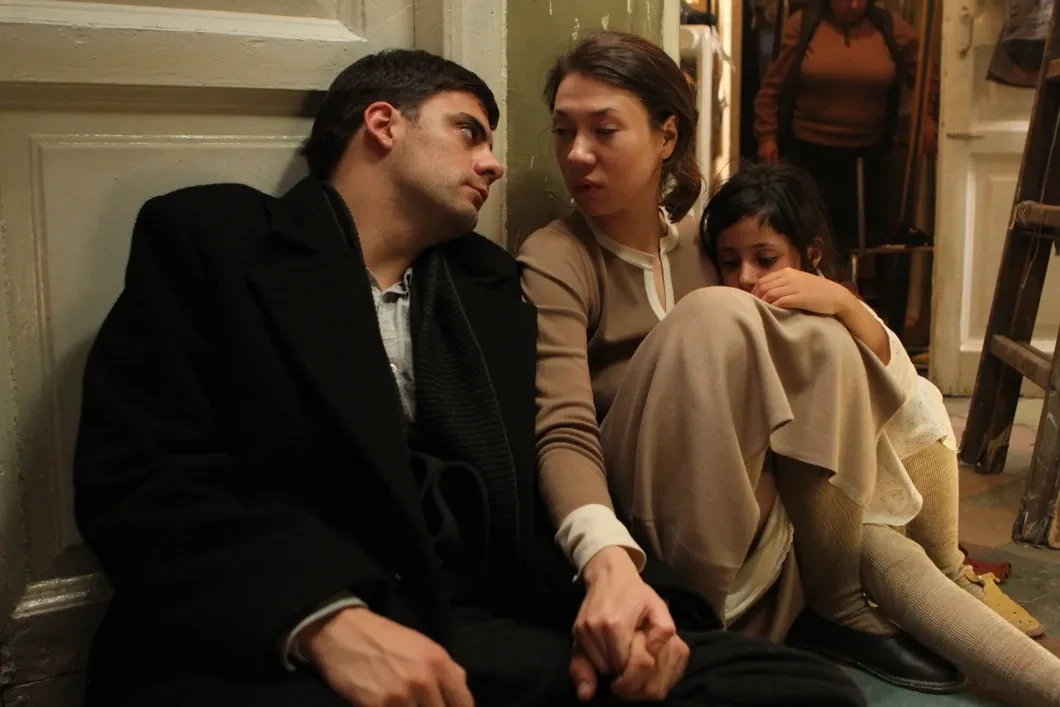
- I love dad very much, but he sometimes used slogans and hyperbola. Of course, it is difficult to make a movie about the era, about the people of the last surge of Leningrad culture, if you do not have empathy for them. I was born later, but the 80s came from the stagnant 70s. I remember these streets, communal services and large "laureate" apartments. I remember the focal collections of intelligentsia in the kitchens, in the dachas ... For me, that era is the brightest point of development of St. Petersburg culture of the second half of the century. Then they began to leave, die ... My parents were young, and some fragments of their world were preserved in me.
- From these fragments, the organic of the world "Dovlatov" consists of. Today, much in the atmosphere resembles the time of the 70s ... On the one hand, some kind of dust, craving for archaic, on the other hand, a clear threat of unreliable thinking, from the third, the weak position of the artists, their dependence on the state. We again move along a circular track laid before us.
- The film “Paper Soldier”, partly and “Under the Electric Clouds”, was shot about this. I am not embarrassed by the fact that there are cyclic periods in Russia. The reason for this is history, geography, ethnic, climate, etc. The fate of Russia is such and not because only kings decide our lives. Fate stems from the structure of the country, its location, of ourselves. Not democrats or patriots, but communities. The climate of the Motherland is inside, we are doomed to these repetitions - frosts, thaw, frost, thaw ... post -Persian period, archpri, imperial ...
- Freezing is long, thaws are short. Are people different now?
- What confuses me: there are fewer people. I can’t forget the big gatherings of my parents, their close circle. True, then not only people were broken, but also for relations. When dad was banned, the phone almost stopped calling. Apparently, this also influenced me: I keep the distance, including with cinematic colleagues.
-And yet, then the relationship was more open, relatives?
- Closer because the country was closed.
- Are they rallying the confrontation with the official “top”?
- Most likely, they were for preserving themselves. But this communication space was extremely significant. Plus a different intensity of cultural life. Whether we like it or not, but if we consider the Soviet Union of that time, then Balayan, Muratov, Papa, Averbakh, Ryazanov, Danelia are immediately recalled. Shepipiko, Klimov. Individuals Club inside a powerful culture. I think that with all the repressive mood in Soviet times, the density of culture was much higher than today. And today there are separate talents. But alas, there is no bright generation. There is not enough human and authoriality, the ability to value and hear another. Everything became more fussy, pompous. As if the Korean car pretends to be a Mercedes.
- It seems to me that Dovlatovskoy can say about our contemporaries: “People with such a flexible mentality are a very valuable acquisition for the authorities. Any bureaucracy is ready to give them tribute, the position "What do you deign?" It suits any bosses. "
- I have a simple approach. I believe that there are two types of nations - imperial and non -imperial. From this, the countries and the trader countries stem from this.
- That is, Germany, Britain and Russia imperial countries? So the war?
- Imperial nations are tuned to expansion and result by any way. But imperial nations can go to trade, and vice versa. And the more at the next historical stage we are approaching the empire’s intention to expand, the closer we come to the militaristic estate system. In this system there are nobles, military and relatively speaking, “artisans”, who are put under a gun in peak minutes.
- And culture in such a system becomes an extra segment.
- Maybe not superfluous, but optional - propaganda becomes mandatory.
- In your film there is a second plot about the generation, maybe not ruined, but pushed away, expelled. And not necessarily abroad, but in life without air. Now about the same thing is happening with their children. Again, it is difficult for the artist to do what he wants.
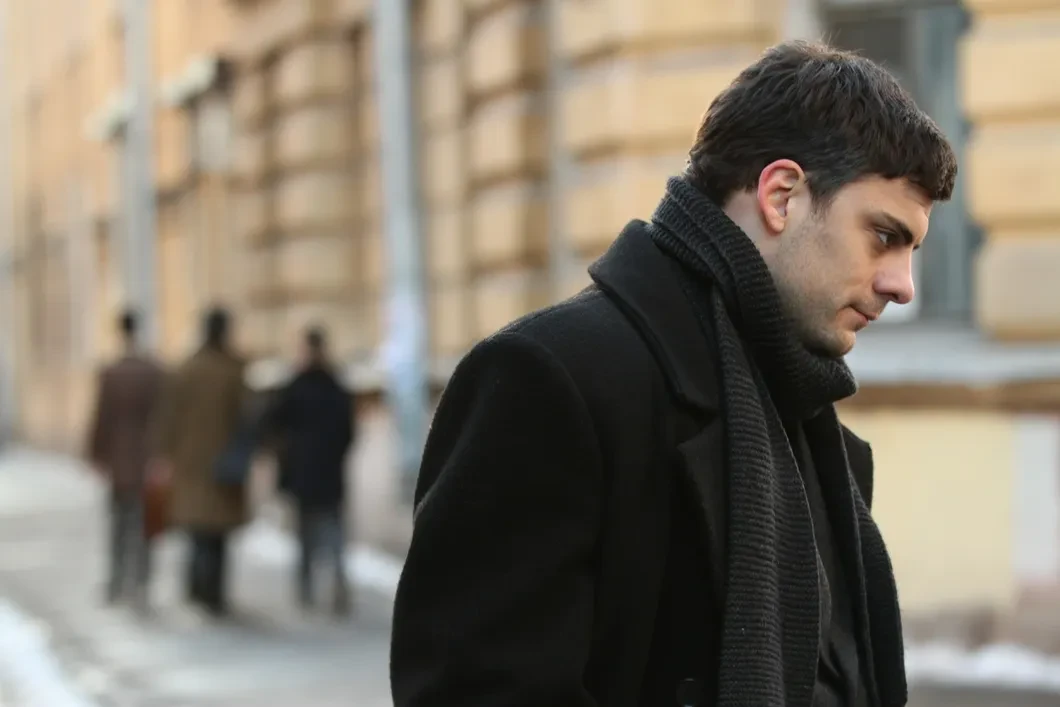
- This plot is important in the film, because it, relatively speaking, is a generation of outsiders. Not in an artistic sense, in social. Talents of unclaimed, unnecessary. Beating his head against the wall. Now is partly another situation. The current generation of creators is less ambitious. The value of the 20+ is different. Of great importance is comfort, adaptability. Generation of Brodsky, Dovlatov, etc. It lived on the Hamburg account, for them in the first place was an artistic achievement.
- They were ready for self -sacrifice ...
- Because art is not a way of enrichment, but to defend oneself, a way of realization, and possibly the only justified meaning of existence in the universe. It was a literary -centric era that ended. But if today we are anxiously peering into the near future, then comparing the Soviet Union and Russia with all the understanding of the terrible “theatrical business” is wrong.
- The conflict “Power and Artists” undergoes changes?
- So far, we still have two authorities: one is configured to ban everything, to crush - only the majestic should be majestic. Now she is preparing for a jerk. It is no coincidence that such a tough struggle for the ministerial chair. There is another power that says: “We have already twisted our hands and nuts, we didn’t work out ... Outstanding talents have left, today we are losing the best, and young. Do you want Northern Korea to arrange here? "
I am afraid that over time, the space of non -standard thought will contract. I was one democratic leader about five years ago, even before Ukraine said: "Guys, do you understand that the country is on the verge of war?" “You will either change rhetoric or people who support you will be less and less.” Given the history of our country, society will be rally.
- Around the military rhetoric?
- Around the idea of the besieged fortress.
- But in warlike rhetoric is a charge of self -destruction, and the people begin to support it gradually.
-The pre-war hysteria will be escalated until the goals are achieved by someone (it is obvious that long-term goals are formulated by us and the Americans). And that means any non -standard thought will cause suspicion. I think this trend is a state mistake. We still live in the world of high technologies that aggregate and come up with shallow people. And people shallow for development are necessary for the space of thought, free discussion. You can, of course, again drive everyone into the “sharashki”, but the number of significant technological directions increases every year, it is impossible to make a scientific breakthrough planned. You can plan a science and technical parity: the state poses priority and second-hand tasks. But without free will, scientific thought rests at a dead end.
- Dovlatov said about Brodsky that the poet is not fighting with the regime, he simply does not notice him. How many artists who without noticing the regime are doing their own business today?
“ I don’t know, so far no one is dictating to me.” Maybe for now. And there are people who are trying to exist, if not separately, then isolated. Moreover, Moscow lives in one way, Leningrad - others. Today it is a rather apolitical city.
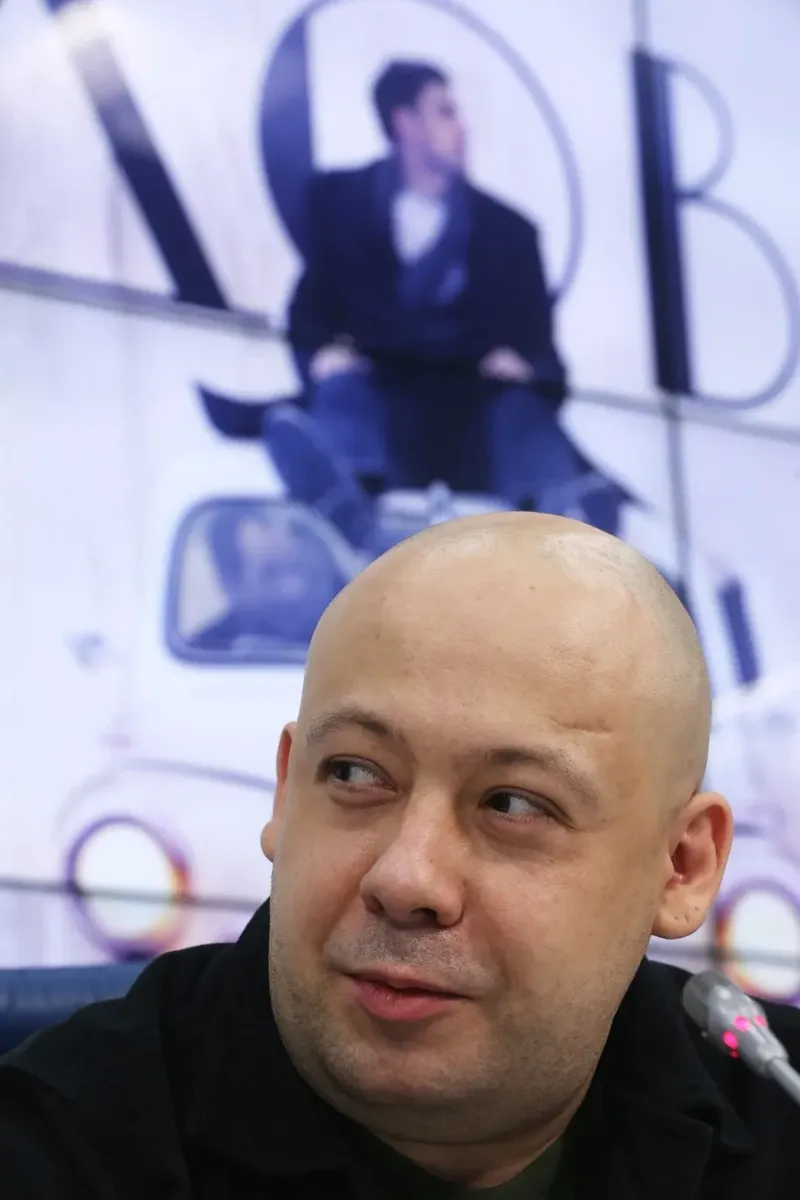
- By the way, you have Leningrad - one of the heroes of the film: the image of the frozen time. You said that then we had the last powerful literary generation in our history.
- Astafyev was still in excellent shape, Aksenov, Strugatsky, Yevtushenko, Kushner, Popov: “Times do not choose, they live and die” ... Now, unfortunately, there are extremely few authors so sophisticated in style, who are able to “slow down the reader, grab him by the throat.” In modern prose there are many words “from random selection”, they knock, the dialogs are bad.
- Dovlatov, despite the deceptively simple style, seriously engaged in the word, syllable, style.
- I spent days, a day, a watch on this. That is, it would seem, this light, eating out of consciousness is an accident. Behind this ability to be precise, laconic is the colossal work of the perfectionist.
- Andrei Aryev has an interesting definition of the Dovlatov style - “theatrical realism”. It seems to me that this wording is partly suitable for your movie. It also contains “sketches from nature” on the eve of the holiday of the October Revolution, and there is a cafe where Leningrad writers, artists gather. A strange, alarming “cabaret”, a condensed almost concert absurdity of life.
- I do not like a dull imitation of reality. It seems to me that any artistic search is an attempt to find the quintessence of a place-time. And the sensations of people living in this place-time. Just each specific film requires a different approach.
- Dovlatov said: "Our vile generation, like the generation of Lermontov, will survive, because among it there are artists of such a scale as Brodsky." You show us artists of a large scale without food, but it is important for you that they are talented.
- I, as the British, "who do not consider themselves stupid Jews, so they are not prone to anti -Semitism." Remember this phrase Churchill? I will say a terrible thing: I do not consider myself stupid than Brodsky or Dovlatov. It may sound arrogant, but it is. Therefore, I do not have low worship in front of geniuses. This does not mean that I consider myself outstanding, super -talented.
I admire the genius of Brodsky, his unbending. There is no such thing in me. But I consider them as people with my pain, problems. People-not the projection of time, symbols of someone’s ideas about them. People who can sit next to you at the table. The literary gift of which cannot interfere with drink, talk and even argue.
- You have been looking for the performer of the role of Dovlatov for a long time. How did Serbian actor Milan Marich convince you?
- It was necessary not just acting potential, but Hemingeeevskaya charisma. When Milan appeared after a long search, exactly 10 minutes later it became clear that we had Dovlatov. The point, of course, is not only in the profession, but in personality, in the character of character, in internal similarity, in a combination of energy and reflection, mind and humor, masculine principle and tenderness. We tormented him for a few more hours, but for ourselves we decided everything at once.
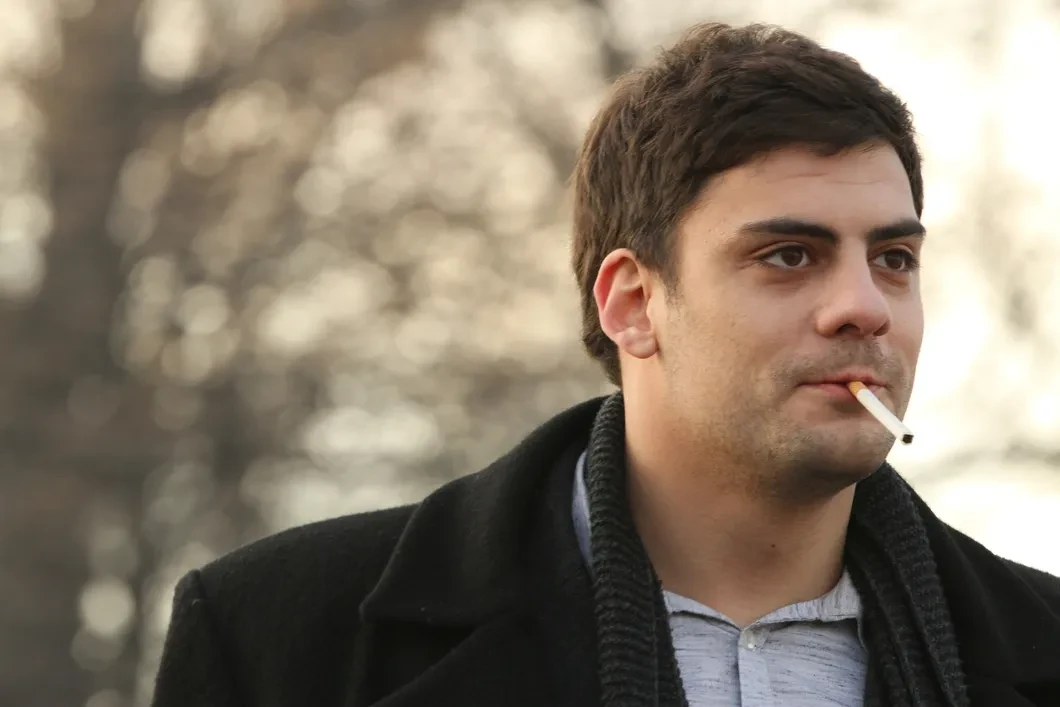
- In this segment, picked up from time, when Dovlatov has not yet left to Estonia, Brodsky - the question is being abroad: "Leave - stay." Everyone solves it differently.
- This, unfortunately, is an incredibly relevant topic. Around you and me, a huge layer of people, including loved ones , disappeared. And emigration is gaining momentum. In addition to those who left, even more people are considering whether to leave. The key mistake of the authorities to pretend that nothing like this happens. It is clear that the comfort of the cities of this problem cannot be solved, because there must be internal comfort. The possibility of planning your children of the future. Although there is a great exaggeration and a widespread opinion: they say, everything has collapsed with us. You come to the province, you see a huge factory that fits in full pairs. But the problem of internal anxiety and uncertainty remains, being becomes somewhat unbearable. Another thing is that Dovlatov and Brodsky had the challenges were much worse: they were supposed to be planted, the second was not printed ... We must pay tribute to this generation with straight backs. They actually loved their country and did not rush to the West. If such a pressure was at least a few percent ...
- Well, listen, Sentsov is sitting in the White Lebed, Serebrennikov - under house arrest.
- This is another story, quite local. At the same time, unbearable and painful. By the way, also stimulating many to leave. Moreover, now many people who are low -income are leaving, who have neither savings nor profitable invitations. I ask: "What did you leave, did you have a normal job here?" They explain: "I can’t, stuffy." This is a great danger to society. Therefore, any parish of ultra -conservatives, especially in culture - and it will be coming - will lead to even greater outflow and emigration.
- Elena and Ekaterina Dovlatov took part in the creation of the film. How did they accept it?
- We talked a lot in the process of work, consulted. Yes, they watched the movie. They took the film seemingly good. Gather for the premiere.