
Translated material
Erdogan threatened America with "Ottoman slapd"
Turkish military operation against the Kurds led to a sharp exacerbation of relations with the United States
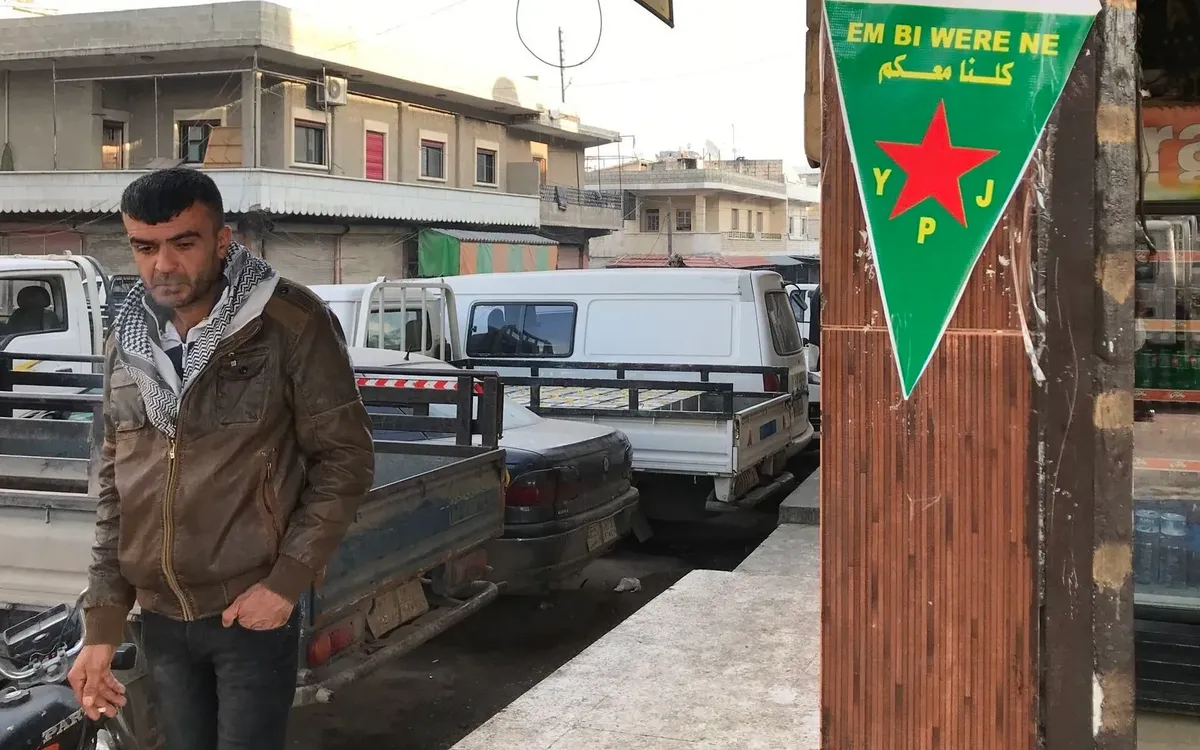
For almost a month, the operation of the Turkish Army “Olive Branch” has been continuing to clean up the border Syrian region around the city of Afrin from the YPG Kurdish self -defense units. At the very beginning of the invasion of politics and generals, they promised as soon as possible to "free the local population from terrorists and restore a democratic order." However, the victorious blitzkrieg did not happen, the resistance of the Kurds was not broken, the Turkish army carries losses in manpower and technology, and Ankara’s warlike statements caused an aggravation of relations with Washington.
The beginning of the Olive Branch operation was marked by massive missile and bombing of the Turkish Air Force at the YPG strongholds, in which about 70 aircraft were involved. In parallel, artillery worked on them. These actions, according to the military, should have caused significant damage to the militants, demoralize the enemy and facilitate the land of the operation.
The victorious relations of the Turkish General Staff followed one after another: dozens of defensive structures were disabled, hundreds of militants were destroyed, Syrian villages are liberated one after another, their own losses are minimal. At the same time, Ankara claimed that she was striking exclusively on military facilities and no one was injured among the civilian population. By the beginning of February, according to the Turkish side, about a thousand fighters lost, and the Turks - only 16 military personnel.
However, according to other sources that the Syrian observation post on human rights, the loss of YPG amounted to 123 people. At the same time, 68 civilians died as a result of bombing, 21 of them.
The Turkish military and the statistics of their losses are cunning. The specificity of the “olive branch” lies in the fact that in it the main strike force of the infantry is composed of units of the anti -Asadi “free Syrian army” (SSA). So, in their composition, according to the same human rights activists, about 150 fighters were removed only in the first days of battles.
At the same time, their own losses of the Turkish army continue to grow. The weekend was really black for her on February 10-11. In two days, 12 troops died, a military helicopter and several units of armored vehicles were shot down. Thus, the number of total losses in manpower approached 30, while in all seven months of the operation “Euphrates Shield” 72 Turkish soldiers were killed.
According to international observers, Türkiye is unlikely to be able to achieve the set “olive branch” - destroy the main bases of Kurdish militants and completely oust them from Northern Syria. The mountainous terrain of the region, which makes it difficult to use heavy armored vehicles, allows the mobile small detachments of YPG to wage a long -term partisan war.
In Turkey itself, an organized anti -war movement has not yet arisen. The country still has an emergency law introduced after the coup of 2016. The authorities, referring to him, harshly suppress not only the slightest attempts to conduct rallies and demonstrations against hostilities in Northern Syria, but also pursue those who criticize a military operation on social networks, calls for negotiations with the Kurds and restore peace.
So, over the past three weeks, almost 700 people have been arrested and administrative penalties, of which about 500 were for anti -war statements on the Internet. All of them are charged with a standard accusation of aiding terrorists and inciting interethnic enmity.
The union of Turkish doctors made an open condemnation of the intervention in Syria. In their appeal, they called for immediately stop the war. The next day, 11 leading members of the Union, including the chairman, were behind bars.
It was worth in the opposition newspaper Cumhuriyet to appear about the new victims of the war among Turkish soldiers, as the shaft of accusations and threats to physical reprisals collapsed to the editor.
The host of one of the pro -government television channels, calling the publication by traitors on the live broadcast of journalists, said that they had to chop off their heads.
The official authorities of Ankara, under the slogan of the struggle against Kurdish terrorism, fuel patriotic and military hysteria in every possible way. President Erdogan, despite the growing losses of the Turkish army, at the end of January announced plans to expand the operation from Afrin east in the direction of the city of Manbij. “We,” the head of Turkey emphasized, “will continue our struggle until a single terrorist remains until the Iraqi border.”
Erdogan's intentions caused serious concern in Washington. The manbija region controls the Alliance of the Democratic Forces of Syria forces (SDS), which includes Kurdish detachments and groups of various opponents of Assad. The United States actively support the SDS: supply weapons and military-technical materials, American instructors work in training centers for combat training, American special forces are engaged in intelligence and conduct special operations.
Ankara’s response was given by the commander of the international coalition forces, American General Paul Funk: “If we are attacking, then we will deliver a decisive response blow.” In the light of the recent defeat of the column of Assad’s troops (it included Russian mercenaries from the Wagner PMC), who tried to move to the territory controlled by the SDS, are not empty words at all.
However, this only broke Erdogan. Speaking the other day before the party associates from the parliamentary faction, the Turkish president promised that the Turks would not directly shoot the Americans, their goal is to destroy terrorists, as well as those who are nearby. Therefore, for them (Americans) it would be better to stay away from the terrorists, whom they pat on the shoulder.
And obviously, at Fanca, he added: “It is clear that those who say“ we will react hard, if you attack ”have never received Ottoman slaps.”
The Minister of Defense James Mattis, who accused the Turks of having agreed on the “olive branch” with the Russians, was involved in the US Secretary of Defense, among the Russian side partners from the American side. And the former state ambassador to Ankara Eric Edelman called on Washington to do with Turkey also tough, as the Kremlin did after the Russian aircraft shot down by the Turks - to freeze all relations. Only in this way, they say, one can influence Erdogan, who perceives only the language of power.
The intensity of passions on both sides reached the point where it was urgent to connect the highest diplomatic circles. US Secretary of State Rex Tillerson was sent to Turkey.
During a three -hour conversation with the American, Erdogan repeated the previously formed position: the United States should stop helping the Kurds, withdraw American weapons from them and withdraw instructors, as well as abandon the idea of creating border troops on the basis of the SDS. In turn, Tillerson assured the Turkish president that America never supplied the YPG detachments with heavy weapons and does not pursue the goals to damage the national security of Turkey.
So far, the only result of two -day negotiations was a mutual desire to continue contacts and the search for ways of de -escalation of relations. The next at the highest level is scheduled for mid -March.
Meanwhile, anti -American rhetoric of the Turkish authorities brings tangible fruits. According to the analytical estimates of the Center for American Progress, 83% of the Turks are negative about the United States and only 10% of the population are still ready to see their allies in the Americans.