
Translated material
East wind of change
NATO agreed on measures in case of conflict with Russia: the European military -industrial complex wakes up, defense expenses are increasing, new headquarters are being created
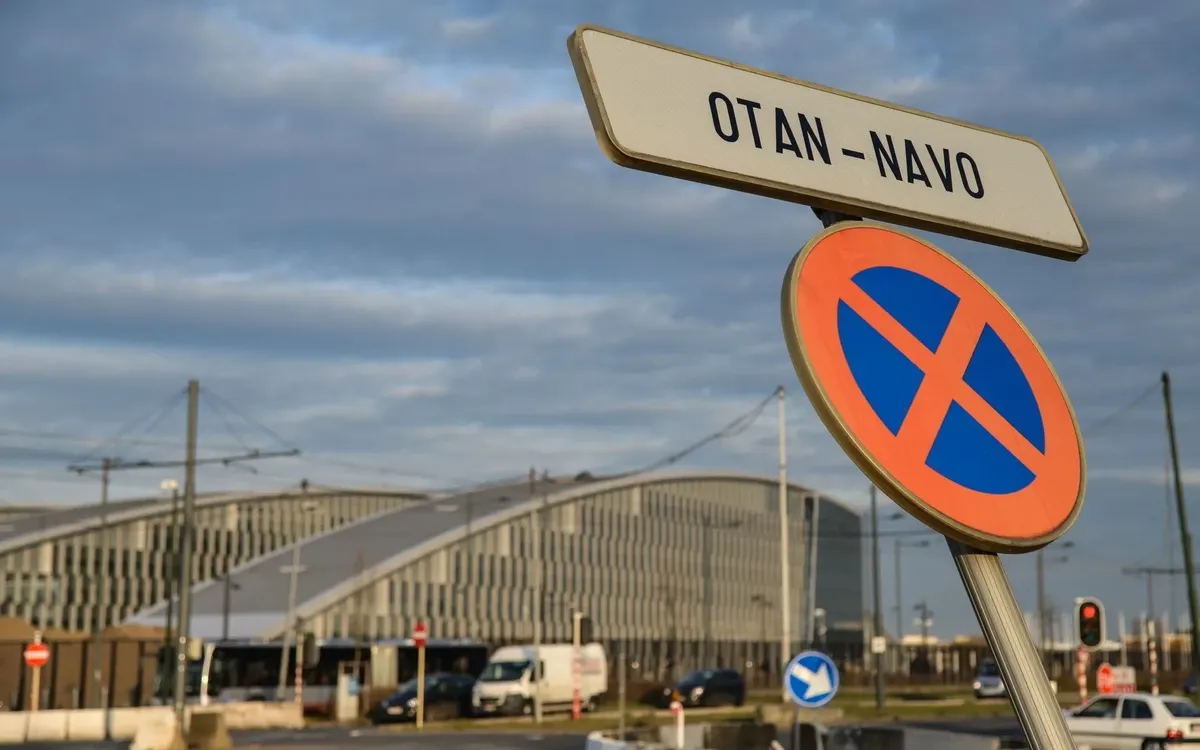
Military and international officials, representatives of the participating countries and partners at the NATO headquarters in Brussels (up to 4,000 people) have many worries. But the most urgent are not connected, as one might think, with the restructuring of the alliance for a new confrontation with Russia, but rather with the inevitable move to the new luxurious building across the road (Leopold III Boulevard) on the outskirts of Brussels, near the international airport, from the old - low and ugly.
At one time, it was urgently redone in 1967, when the French President Charles de Gaulle drove the Kremlin to the Kremlin the headquarters of NATO from Paris, and the headquarters of the Supreme Commission of NATO in Europe and all NATO military-from France. Probably, Moscow has never been as close as then, to the coveted goal of the collapse of the nasty Alliance and the separation of Europe from America. But it did not work out. The alliance did not die, but survived and expanded (today already 29 members), and a few more desires persistently knock on the door: Macedonia, stuck in the hallway because of a stupid dispute with Greece about the name of the country, as well as Georgia and Ukraine, which everyone hopes to take refuge near the NATO umbrella from the all-seeing Kremlin;
The new alliance, uniting almost all the liberal-democratic nations of the northern hemisphere (plus a couple of not very liberal ones), obviously needed a modern innovative and outologous headquarters. And such construction sites, apparently, are nowhere to be anywhere without waste. Belgian contractors, as representatives of the country of stay, built a long time and exceeded the initial estimate by 30 percent. As a result, 1.1 billion euros came out. Not Sochi-2014, of course, not a Russian scope, but a new headquarters of a huge (almost 250 thousand square meters) and luxurious-modern, glass and steel (which should indicate transparency), in the form of 8 intertwined fingers (if you look from above) as a sign of an indestructible alliance. In May 2017, the new headquarters was opened for a short time for the summit with Donald Trump, a new grass was covered around and beautiful trees were stuck.
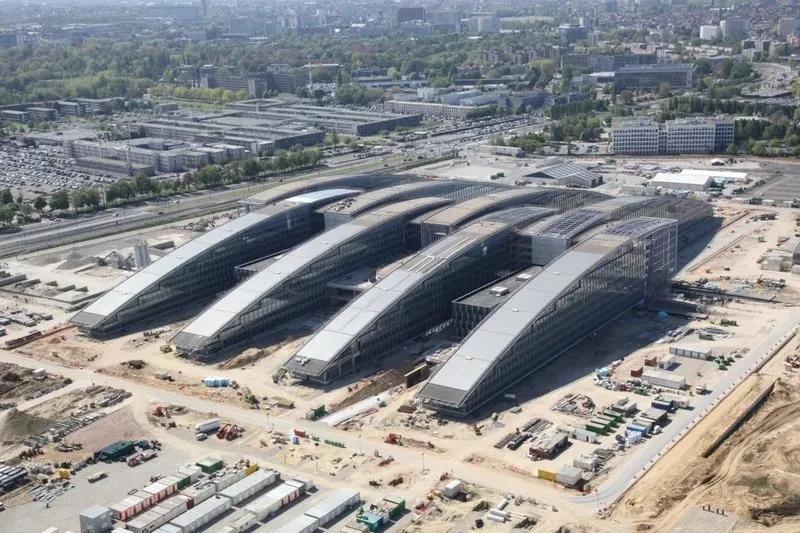
Trump left, and the new headquarters was closed, the new trees were taken away, and the grassy grass was hastily drunk. The local serving people do not want to in the new headquarters, almost like our officials to New Moscow: it is uncomfortable and unhealthy there, in the summer it is hot behind transparent walls, and in winter all beauty will inevitably be covered from eternal Belgian rains-they are tortured by the rows. For almost a year, the official people were delayed for almost a year, but now there is nowhere to go - it is necessary. The great, almost global alliance, who has found a new life in the confrontation with modern Russia, needs a new imperial headquarters. In the summer there will be a new NATO summit in Brussels, Trump will fly again, and you need to match. Now, in the headquarters open for journalists and employees of the headquarters near the cafeteria samples, special, secret-tapping containers are set, which will stand out in a limited number to all units and in which everything you need to move to a new building must be fitted.
The overgrown alliance is not easy to keep in jun, but the obvious organizational paralysis did not occur in the course of the expansion of NATO, no matter how much in Moscow they hoped. Their “scrapers” were too strong, including the main one - the threat from the East. After 1991, Russia in Europe was considered a “partner”, albeit complicated and unpredictable. The war with the Russian Federation in Europe was not considered, and no one was preparing for it in the West. Military expenses were reduced, the armies were reduced. Previously, the great military powers-France, Germany and Great Britain remained for three about 800 tanks, and those not all on the go.
But the Russian General Staff, after 2014, took advantage of the atmosphere of confrontation and began to rapidly increase the tank park through deep factory modernization using technologies purchased in the West. Today, the T-72B3 are massively entered, and new tank and motorized rifle divisions are unfolding in the western and southwestern strategic directions. The total number of tanks has been brought, according to some information (official figures are not published), up to 20 thousand - twice as much as in the entire multinational NATO block, where Turkey (outdated) and the USA are most of the cars in their own territory.
For our “tank” generals that today they dominate the General Staff and in all the armed forces (even aviation - the VKS - commands the “tanker” today) the rapid revival of the Soviet model of total armoredomalization is very cool, it opens up many additional career capabilities.
And in Europe they suddenly saw that at the eastern line they had a hole and that the former “partner” suddenly increased his steel club. It is clear that tank armada is a weapon, first of all, offensive.
During the exercises and sudden inspections of recent years, Russian aircraft proved the ability to rapidly transfer large masses of fighters and equipment to the western and southwestern directions. Now the possibilities of strategic mobility are trying to increase in the West. Last week in Brussels, the defense ministers of NATO countries agreed on a set of joint mobilization decisions and create new command and staff structures: the United Atlantic Command in the United States, the Logistic Headquarters in Germany, the Cyber Cyber headquarters at the SACEUR headquarters and two more additional regional commands in Europe (the exact location will be approved by summer).
In the case of a probable war in Europe, the alliance should ensure the transfer of forces and funds through the Atlantic. The convoys must be protected, and then move to the east on rail and highways, and prepare infrastructure with logistics. And the detailed allied forces will lead additional commands into battle.
In “peacetime”, as the officials of the alliance explain, the new Atlantic command and many other structures will “sleep” in the abbreviated composition and will unfold if the military conflict with Russia will begin seriously. Europeans are quite frightened, and the strict Norwegian Secretary General of NATO Jens Stoltenberg builds them, constantly recalling that it is necessary to spend 2% of GDP per year on the defense from the Russian Federation. The European military-industrial complex that had ended after 1991 and the remaining out of work, the military leaders hope to get more money and influence.
Yes, the strange headquarters came out at the Alliance. But while in the east he continues to threshed menacingly updated iron, and shells are torn every day in the Donbass, they will succeed. In 1991, up to 25 thousand served in the central apparatus and in NATO headquarters, and now about 7 thousand are left. And in the USSR, in general, more than 100 thousand were prepared by 1989. Everyone has where to grow.
Brussels-Moscow