
Translated material
Magnetic monopol
Why did Sergey Galitsky get rid of the network
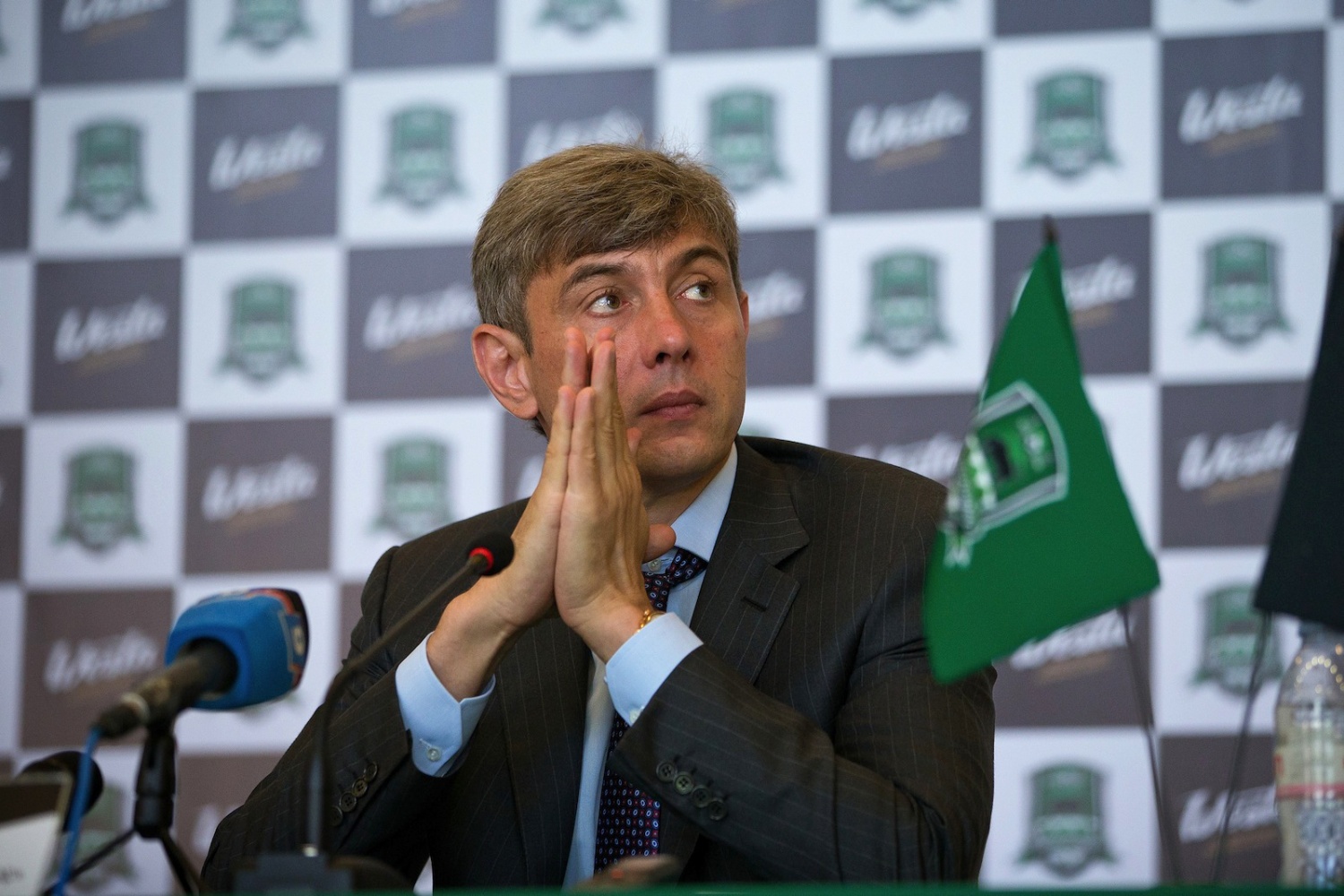
Sergey Galitsky Photo: Fedor Frillis / Yugopolis
The sale of the largest Retail network “Magnit” in the VTB State Bank is a transaction that is unlikely to be pleased. Meanwhile, she does not look like a conspiracy against the owner of Magnit, Sergei Galitsky, not a criminal story and not the recklessness of VTB managers who believe that they can control the Magnit better than a person who, five years ago, amazed the most sophisticated investment battemes in the world. This is a story about hospitalism in Russia - calm, logical, mechanistic and, most likely, not even realizing completely what it does and how it will end.
Arrived and left
Probably, this will seem strange, but Magnit experienced the best times of its existence in October 2014. The capitalization of a business founded by Sergei Galitsky in 1995 at that time exceeded 1 trillion rubles. In dollars, it was $ 25 billion, and at that moment Magnit, one of the largest retail chains of Europe, exceeded the capitalization of the VTB State Bank by almost double. Everything was not bad in May 2015, when Forbes estimated Galitsky’s fortune $ 8.3 billion-although worse than a year ago, in May 2014, when Galitsky, the icon of all Russian young business people, cost $ 10.4 billion. When February 16, 2018 in Sochi, where the head of Magnit was born, was announced on the sale of Galician actually a control package The shares of his company, it looked like a tragedy - if only because Sergei Galitsky himself, in some confusion, warned everyone present at the signing that, in fact, no tragedy was happening, everything is fine. He sold 30% of Magnit’s shares for $ 2.4 billion, or for 138 billion rubles. For about a third of those money that he seemed to cost three years ago. What is important is the largest stake in a company that has not been considered one of the most innovative businesses in the world and inferior in the cost of retail business only to three American giants-Walmart, Target, Tesco and the American premium Whole Foods, sold with a 2.9% discount to its market price. This is a very rare situation when a controlling stake in such a business is sold without a large bonus for its capitalization, and it should be a very risky and very profitable transaction for the buyer.
The buyer is the same Gosbank VTB under the leadership of Andrei Kostin. VTB itself is now estimated at the market at about 670 billion rubles, and it is clear that the main thing in this assessment is not the management of the company, not successful transactions, not technologies, and not strategically important shareholders who expect further development. 60% of VTB shares belongs to the Russian Federation, and this is a guarantee that the bank can pursue a rather risky policy: in Russia to Big to Fail (too much to screw) is translated in the case of the Bank with the term “do -a -Russian”. It doesn’t matter what VTB buys. He could afford the purchase of a Bank of Moscow, which on the balance sheet will find a “hole” of 300 billion rubles. He could afford the “folk IPO” - VTB shares began to fall two months after the placement. He could afford to receive a clean loss at the end of the year. It doesn’t matter at all whether VTB has a “hole” in the balance sheet for many hundreds of billions of rubles, which is attributed to evil languages - it is quite different: VTB is a visible symbol of the nationalization of the loan in the country and, wider, a symbol of state capitalism.
Actually, there is nothing to unlock. An unstable and huge state bank bought one of the largest and rapidly developing private companies in Russia - what else needs to be proved to those who do not believe that the country has problems with the development of a free market? Already half an hour after the announcement of historical sale (Galitsky will receive his 138 billion rubles. At the expense of the closing of the transaction), social networks began to write about the “state retail network”, which Andrei Kostin, apparently, would build together with the head of the FSB, Alexander Bortnikov. More accurately the situation was described by the immediately born joke, in which the head of the Central Bank Elvira Nabiullina in a conversation with Kostin in horror says: “I just asked to bring a magnet from Sochi to the refrigerator!” Galitsky went to his Krasnodar, said goodbye to the staff and now, judging by his Twitter, continues to pretend that he is no longer interested in anything except football and occasionally fools, whom he really does not like. The themselves 16 thousand retail stores "Magnit" continued to work as they worked. Everything seems to be clear.
Nothing is clear. Without a doubt, hospitalism in Russia occurs - but for reasons that it would be nice to know in details, important details and with spaces in the understanding that even among experts in a huge transaction.
Experts, by the way, in a certain bewilderment from everything that is happening around the “magnet”, although everything looks logical and completely immature.
It does not matter at all whether VTB has a “hole” in the balance sheet for many hundreds of billions of rubles, it is important that VTB is a visible symbol of the nationalization of a loan in the country and, wider, a symbol of state capitalism
The usual market loss
You should start with the fact that everything that happens with Galitsky and Magnit, with the exception of the last episode with the sale of business, is a purely market situation. The stock market is a very good indicator of the market situation, and the drop in the capitalization of Magnit from a peak indicator of almost $ 30 billion to the present less than $ 10 billion - in its pure form, the result of competition. The main competitor of Magnit is the X5 Retail Group (Pyaterochka, Crossroads, Carousels). From the moment when X5 was created by the Alpha group in 2006, they competed daily. In 2011, both companies cost about $ 8 billion and were approximately equal in terms of indicators. Then, in the X5, problems began - first of all, with the network management, with the Czech of managers at the head - and the Magnit did not have these problems. Then the X5 solved her internal problems and began to catch up with Galitsky - and almost caught up in 2017.
The initial strategies of the two quite dissimilar companies were completely diverged. Magnit was a network of food stores for the poorest part of the Russian “middle class”, X5 claimed a richer part. Magnit expanded extensive and mainly in small cities, almost did not master Moscow and St. Petersburg-the expansion of X5 went from the center to the outskirts. X5 bought retail competitors and attached them to her, the “Magnit” tried to squeeze them out and ruin them in competition. X5 experimented with formats, Magnit was fond of formats, design, and new specializations less - and put on iron logistics, on his own fleet, on his network of distribution centers. X5 always wanted to be a little more "European" than the money allowed. “Magnit” always considered itself (and was considered) a little more “folk”.
The “European” began to win the “popular”, apparently, in the second half of 2015.
The annual report of 2017 was, frankly, not very good. Magnit increased its sales in 2017 by 6.7%, X5 by 25.5%. Undoubtedly, it was very, very bad: the retail space of two competitors are approximately equal (“magnets” due to a smaller number of hypermarkets are more numerous, according to the number of stores, the company of Galitsky remained a leader), but the revenue X5 already exceeded the revenue of Magnit. True, Galitsky’s debts remained less than that of competitors, which is also important, and Magnit itself was supposed to complete the program of large -scale modernization of the old part of its retail network by the beginning of 2019.
Actually, it was then that it was possible to find out who won and who lost. By the ability to manage the costs of Magnit, has always been a very advanced company. The main clientele of Magnit - Russian state employees - in 2018 were supposed to receive a fair “recharge” in the form of at least the election growth of salaries from the federal government. Finally, Galitsky, as a recognized leader in the company, has repeatedly shown that he was able to fight.
For rough estimates (the exact assessment of actual votes at the collection of shareholders of the company is very complicated), Galitsky and the management of Magnit were controlled by the company about 40% of the shares, among the remaining 60%, about 20% were completely hopelessly blurred (which is made by VTB, a package of Galician control), and about 30% of foreign, primarily American investment funds. Formally the largest foreign co -owner in Magnet is the American investment bank JP Morgan Chase - he is also the holder of GDR receipts for Magnit’s promotions. For foreign investors playing in the Russian securities market, Magnit has always been the second Sberbank.
And it was they who stopped believing Galitsky. Because for the investment management business there is no “hospitalism” and “market capitalism”. There are only profit and expectations. Galitsky refused to submit an annual report of Magnit on a conference-column in 2018. Galitsky as the main shareholder, apparently, planned to vote for the non -payment of the dividends of Magnit at the end of the year - a profit was needed for changes in the company. Investors needed something else. Galitsky was supposed to leave.
There is no “hospitalism” and “market capitalism” for the investment management business. There are only profit and expectations. Investors needed something else. Galitsky had to leave
Sale of a suitcase without a pen
In order to understand how Magnit, a symbol of non -state capitalism, suddenly became (albeit in an indirect form) by a state asset, it makes sense to look at the situation with two third -party eyes - the eyes of a foreign shareholder of the company Sergei Galitsky and the eyes of Galitsky himself. Of course, we will not be able to reliably do this, but even approximately clear what is happening.
From the point of view of a foreigner, Magnit and his successes in Russia is a large extent. The ingenious, purely Russian, very profitable, but still accident, and even worse - a chain of accidents. It should not have been, because the Magnit’s strategy was the madness: to develop the federal retail network, ignoring the two largest and most solvents of a huge country, Moscow and St. Petersburg-only Galitsky, who was mistakenly assumed that the foreign Retail would very soon begin the development of Russia and begin with Moscow and St. Petersburg (the foreign retail, of course, began, but its successes began, but its successes began, but its successes began, but its successes began. In comparison with domestic mastodons, retail is not yet going to). After 2005, to develop a network at such a pace on short loans is also madness. In 2009, refusing to buy bending small networks, calmly looking at how competitors do this, is also madness. Not to finish the competitor in 2011-and this could be done using some familiar stunt from the arsenal of Russian super-rich people-another madness, but Galitsky behaved that way.
And who is he? A person living in Krasnodar, because he likes the climate more (in Italy he also likes it, but in Krasnodar, you see more). The owner of a huge state, almost not included in the national GR games: Galitsky, of course, is familiar with Putin since the 2000s, investing tens of billions of rubles in football, has a large yacht and his own plane, but in general, of course, he does not use the capabilities of the “Honored Entrepreneur of the Russian Federation” in terms of exploitation of intimacy to power. In essence, he is not an oligarch. Just a very rich carrot merchant and sneakers.
Now look at the situation from Galitsky himself. The main problem that Magnit experiences in the last quarters does not depend on the Magnet itself is an ultra -low inflation. The whole philosophy of the Magnit business is built on a relatively high - at least by world standards - the marginality of business and high inflation: ahead of it, you can scale to just such a pace: every day - several new stores. Low inflation is apparently for a long time. There are three alternatives. First: to “pave” shareholders for another year of the last powerful jerk. This is a high risk of losing quite a lot of money. The second: to go immediately to a completely different business - painstakingly, for many years, by a penny to improve the economy of the entire giant network, to change in the structure of the talented talented people to effective and reliable mediocrity. Third: to jerk to go to a new level, entering into a major merger deal with a significant competitor.
I think that it was these three options for Galitsky that were in the summer-autumn of 2017, when he already understood what was happening. But the shareholders were unavailable ...
Selling a significant part of Magnit to a strategic partner in Russia is just a risk of losing the company in a few years, no matter how much it costs. The idea to become one of the “oligarchs” is completely, not in form, but in content, Galitsky hardly liked it. It is impossible to find a “strategist” outside Russia.
I think that the key point for Galitsky, oddly enough, was the “Kremlin list” - he found himself in the list of 96 “oligarchs that are surrounded by Putin”. Fate in the coming years is determined - it is not.
There are no signs that Magnit had some unaccounted obligations to someone, the company clearly does not depend on commercial creditors, is not under political pressure and would definitely not go broke without a change in shareholders. There would be nothing particularly pleasant, but the disaster was not expected.
And at that moment Andrei Kostin and VTB Bank appear from the bushes.
I think that the key point for Galitsky, oddly enough, was the “Kremlin list” - he found himself in the list of 96 “oligarchs that are surrounded by Putin”. Fate in the coming years is determined - it is not
Other people's fantasies
The most interesting things in the world cannot be recognized. For example, what Galitsky thinks about the development plan of the Magnit, which forms the basis of the transaction with VTB.
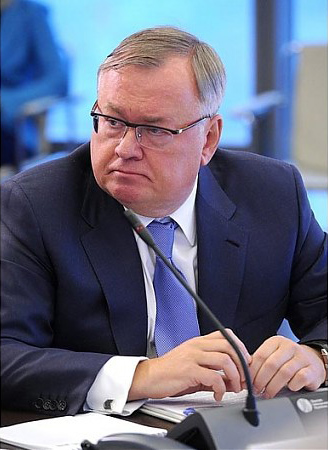
Board VTB Andrey Kostin
Photo: kremlin.ru
VTB, of course, has no experience in managing such a scale by companies - but, on the heart, they are now possessed only by Magnit and X5. The purpose of the purchase is the implementation of a strategic agreement between VTB, Magnit and Russian Post. The idea of the VTB team is to develop not even three, but four businesses-Banking Business Business Business Business “Russian Post”, the retail retail of the joint Bank of VTB and “Russian Post”, the Bank Post, and, finally, the trade of “Magnit” itself-and all this is within a single structure. What does Galitsky think about it?
Perhaps he thinks that in fact, you should not look at all this synergy in terms of pure commerce. In the end, it is the state to think less about how much this whole carrot-financial giant will cost, and think more about how good this idea is from the point of view of its image in the eyes of the population. In the end, what is Magnit and its indicators when state programs and in general - power?
Galitsky could not sell VTB Magnit - everyone is sure of this. He is unlikely to have personal debts. It is unlikely that he should be pressure. It is unlikely that the company's indicators are worse in reality than can be seen from the reporting. This is hardly a deal under the influence of emotions. And this is unlikely to be part of some more business compination. Rather, this is a really conscious decision to get out of a business, the prospects of which the owner are not satisfied for some reason.
When Galitsky realized that VTB could buy a “magnet” at about a market price, at the same moment he realized that resistance is not so much useless - no matter how pointless.
What does Galitsky think about it? Perhaps he thinks that it is the state, in order to think less about how much this whole carrot-financial giant will cost more about how good this idea is from the point of view of its image in the eyes of the population
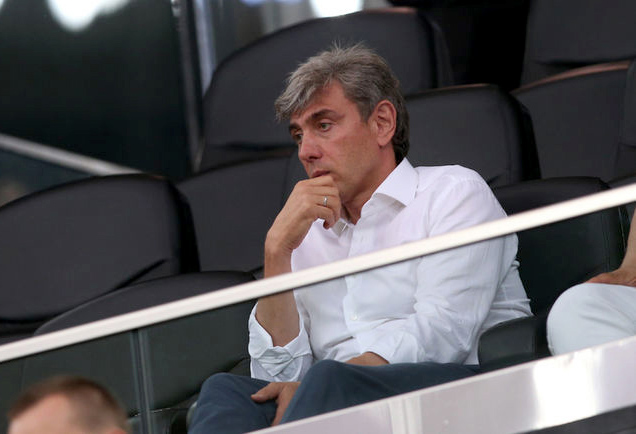
a symbol of capitalism from the Earth in Russia,
will engage in football development ...
Photo: Sport-express.ru / Vitaly Timkiv
The state banks are in the hospitalist economy one step closer to money, and this step is irresistible for a private structure. Russians Steve Jobs and Elon Musk would be a member of the Presidential Council for Physical Culture - since this would allow them to more sweepingly provide the world with new iPhone models and fly faster to Mars. This does not mean, however, that the Russian Jobs and the mask must be sought surrounded by Dmitry Rogozin - they will appear only when the state will be forced to sell all the hospitalism accumulated over the years of building or will fall apart. Business Genia generally begins something on ruins.
But for now, let things go to your things. And Sergey Galitsky will take football in Krasnodar. It has $ 2.4 billion and quite a lot of time to wait for all this to end - and maybe even start all over again.
* Author - Deputy editor -in -chief of the newspaper Kommersant, the text is written specifically for The New Times