
Translated material
Dr. Zhivago and West
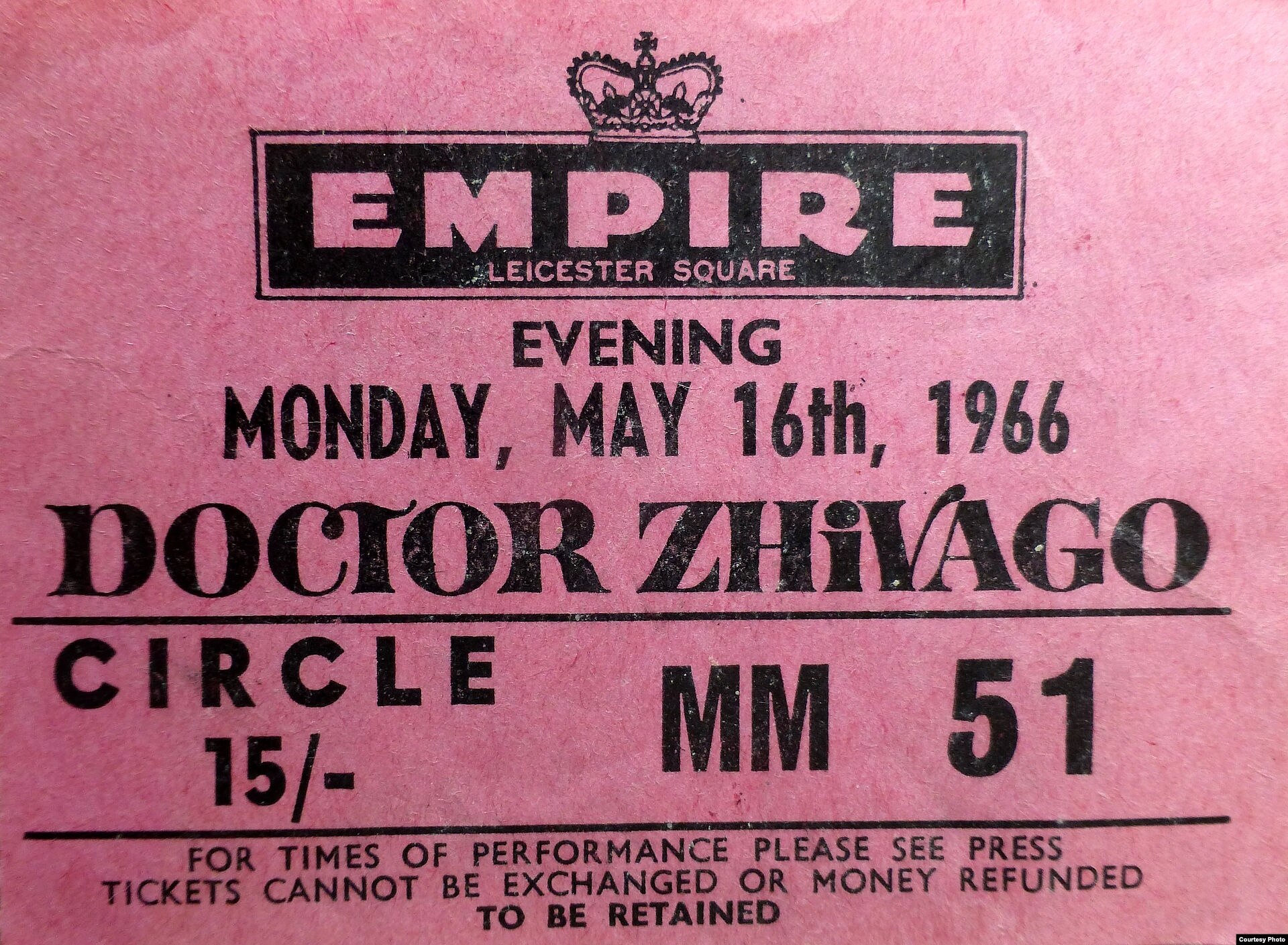
From the cycle of V. Abarinov "Muse for export"
Alexander Genis: Today Ach will open the second episode of the author's cycle of Vladimir Abarinov.
Vladimir Abarinov: “Muse for export” is a cycle in which we talk about the perception of our favorite books in America. It is flattering that these books are translated and published, but that a stranger can understand in them, except for the plot?
The case of Boris Pasternak is special. His novel "Dr. Zhivago" came to Russia from the West. It was there that he received worldwide recognition. It was first published in Italian in Milan in November 1957 and only in 1988 was published in the Soviet Union. We can talk about the fate of the novel, or you can - about the novel of fate. For Pasternak, Roman became the result of his whole life, her explanation, her acquired meaning. Therefore, he could not leave him in the manuscript, as he could not leave his own life in drafts. The novel was supposed to be published at all costs.
We are talking about the novel Dr. Zhivago and his fateful role with Ivan Tolstoy - our colleague, the historian of literature, the author of Pasternak’s Roman: “Doctor Zhivago” between the KGB and the CIA. ”
Ivan, for me in this whole story, the main thing was the main fear of Pasternak with the publication of the novel. He understood that in an unexplored form - this is in the best case - the novel could not go out in the Soviet Union, and consciously decided to transfer the manuscript to the West. How did he come to this decision, how did it ripen?
Ivan Tolstoy: The decision ripened for a very long time, and Pasternak himself did not even know that the result of his thoughts, his torment, his searches would take this form of returns of the manuscript to the West. It was very difficult to do, he fluctuated until the very last minute, judging by the memoirs of people who witnessed his act, that is, the transfer of the manuscript to the Italian communist journalist, which is very important to remember-communist Sergio D'anjelo, who worked on international Moscow radio. Just a few years ago, Stalin was alive, and it was simply impossible to think about the transfer of the manuscript to the West. Well, here Pasternak lived until 1956, the XX Congress passed, and of course he released the reins, he was no longer with such fear, horror and trepidation at this decision.
But it ripened, I repeated, for a very long time. Pasternak wanted to write prose always, from the very beginning. From the moment when he began to compose the first verses when the first lines flowed, then the first prosaic lines began. By the time of the revolution, Pasternak was written by some prose, shortly after the revolution it was printed, and Pasternak was both a poet and a prose writer. He believed that prose gives the author a scale - of course, in this he was absolutely right. But what would be stronger in it, poetic or prosaic, he did not understand for a very long time. And others did not see a prose writer in it. He was, of course, the talented, brightest, individual of the Russian poets of the 20th century. But it was impossible to say this about prose. Actually, no one said - until Pasternak felt that the poetic form of it is no longer occupied and not as interested in as a certain kind of set of thoughts, feelings, experiences, spiritual searches, religious thoughts, that is, everything that then made up the backbone and content of the novel "Dr. Zhivago".
This came to Pasternak by the mid-30s and was due to a lot of circumstances. This is the political crisis in the Soviet Union, this is Pasternakov’s disappointment in the revolution, these are the began repressions that carried his acquaintances and well -known literary figures, and so on. And the most important moment on this path of realization that he should be the author of some big and serious work, was Pasternak’s trip to the anti-fascist Congress to Paris. There, Pasternak, the International European Public, gathered in the Maison de La Mutualité hall in the very center of Paris, had such an enthusiastic reception that Pasternak was finally confused in these searches for his path, because Europe welcomed him for what he did not feel inside. It is very important to remember in search of an answer why Pasternak sent his manuscript abroad. Pasternak was given an advance, whom he did not expect and whom he did not consider himself worthy.
Vladimir Abarinov: Congress in Paris is 1935.
Ivan Tolstoy: Absolutely true, this is 1935, Paris, June, where the writer, literary, journalistic public from around the world, famous writers, gathered, and there was a large Soviet delegation. And Pasternak participated in it. We will not be distracted now: there were circumstances, he arrived at the very last moment, he didn’t want to go anywhere, he was forced, he was forcibly sewn a suit at night in the writer's studio and, together with Isaac Babel, was sent by train through Berlin to Paris. He arrived at the last moment. What he said in his speech at the Mutualite Palace, no one really knows, although they claim that Pasternak said such and such words. In any case, Pasternak said something, and his speech was interrupted, covered, flooded with a public with the public. In Pasternak, a figure was welcomed, not speech, not verses that many did not know, not prose, which had not yet reached Europe, - in Pasternak they greeted the identity. Which is also very important for understanding the whole history of Pasternak as a whole, the whole drama of his fate, which, perhaps, is his most ingenious work.
The dramaturgy of his life is, perhaps, the highest that Pasternak created. Consciously, with your own hands, your will, your actions, your ethics. So: a trip to Paris and the advances that Pasternak received, introduced into his mind, soul, brain, understanding of responsibility for his fate. He thought that he did nothing else in his life. Did not make worthy. That he is engaged in some kind of tinsel, that he is not doing the same. And he rejected what he was doing, and gradually for 10 years the denial of that system, that life, of the moral norms, among which he existed in the Soviet Union, had matured in him, and this led him to the fact that at the end of 1945 he sat down and began to write his novel. That is, his act was laid down from his youngest, adolescent, dairy years, through the 1920-30s, through the receipt of an advance in Paris, after 10 painful years, from the mid-1930s until the end of the war and through determination to write a book for 10 years.
He has been creating a novel for 10 years, in the 55th he ends it, in June of the 56th he comes to him Sergio d'Andjelo and says: “Give me, I will show my publisher the communist Feltrinelli.” And at that moment the Pasternak fate is decided. If there were not all 40 previous years, it is not known how Pasternak would have done. But these 40 years were just that. And therefore, carefully looking into the eyes of Sergio d'anjelo, he turned, climbed the second floor of his cottage and a few minutes later he went down with a thick folder. Ringing this folder Sergio d'angelo, he allegedly (this is the memory of Sergio d'Andjelo) said the phrase: "You invited me to my execution." Pasternak said so or not, we do not know. But at that moment Pasternak was really determined. This is proved by those four years that passed after that. Over the next four years, Pasternak did not and did not say anything that would refute this idea of the complete conscious determination for such an act.
Vladimir Abarinov: This Nabokov phrase about the invitation to execution is Nabokovskaya, because this is the name of Nabokov’s novel, and Pasternak could read it in “Modern Notes” - this phrase refutes the version that Pasternak did this naive, not having miscalculating the possible consequences. He understood everything and crossed this Rubicon completely consciously.
Ivan Tolstoy: I completely agree with you - absolutely consciously. Pasternak was a brave man. Although, as it were, timid. Here is the courage and timidity in it in a paradoxical way. And in principle, this phrase, by the way, could pronounce Pasternak. These are the later memories of Sergio d'angelo when he himself met Nabokov’s novel and therefore could attribute such words to Pasternak. But after all, Pasternak, apparently, has not yet been proved-he read Nabokov, he read it in those numbers of the Modern Notes magazine that fell into his hands in the late 1940s. Yes, Pasternak made it consciously, it was his choice, he challenged the era, a challenge to his fate or, in another way, he remained faithful to this fate. This is the answer to the question why he received the Nobel Prize. Pasternak received the Nobel Prize for fidelity to fate.
(Music)
Announcer: The Paris newspaper Mond printed an interview with its correspondent with Boris Pasternak on the occasion of the Nobel Prize in Literature. According to the newspaper, Pasternak said: "The Nobel Prize is a great joy for me. But it is more. It is moral support for me. Tell your readers also that I am very lonely in my joy."
Vladimir Abarinov: It was a fragment of the transfer of the Radio Station radio station - the predecessor of Radio Liberty.
Ivan, Pasternak, of course, was waiting for attacks, even the anger of the authorities, but was he ready for the whole set of consequences?
Ivan Tolstoy: It seems to me that not to the end. To such a set - no. Firstly, Pasternak was never humiliated by power, even Stalin. Stalin did not insult him. And Pasternak lived his life almost until the very end by anyone was not offended by anyone. In general, looking at him, at his whole appearance, you understand that this person simply would not know how to exist if he was offended. Well, that is, we see how he behaved, when the persecution began in the Soviet press, when stones threw stones at his house and were ready to almost throw it with stones on Peredelkino paths. We see how he closed, how he fell silent, how he was proud, but still he lived all his life unfrozen. And he was not ready for insults. We see him with a straight back, with a highly raised chin, and this is his inner state, self -esteem. No, it seems to me that he could not imagine that such humiliations were waiting for him. He was waiting for some defeat, reprimands, but a worthy conversation. He is used to talking on equal terms, if not with the great, then in any case with the high world, unattainable of this world. Naturally, I mean the leader of all peoples. He was used to the fact that the leader of all peoples calls him, and not he reptiles before him. And therefore, of course, to foresee all the humiliation, I think, he could not. But he knew that the consequences would be very serious.
Vladimir Abarinov: In order to make the level of polemics to feel, we give an excerpt from the speech of Vladimir Semi -City - at that time the first secretary of the Komsomol Central Committee, and later the chairman of the KGB.
Vladimir Seminstaya: As the Russian proverb says, and a lousy sheep starts in a good herd. We have such a lousy sheep in our socialist society in the person of Pasternak, who performed with his slanderous so -called work ... This man took and spat in the face of our people ... Pig - she never shits where he eats, where she sleeps where he sleeps ... And why not this inner emigrant noted the air of the capitalist, which he missed so much and about which he was about which he was in His work spoke out? .. Let him become a real emigrant and let him go to his capitalist paradise!
Vladimir Abarinov: Ultimately Pasternak, in order to avoid the worst, announced the abandonment of the Nobel Prize. Excerpt from the transfer of Radio Liberation dated October 29, 1958.
Receisor: says the Radio "Liberation". The Swedish Academy of literature and linguistics officially announced today that Boris Pasternak refused the Nobel Prize in literature awarded to him. The text of the telegram sent by Pasternak from Moscow in French says:
“In connection with the meaning that the society to which I belong gives to your reward, I must abandon the undeserved distinction awarded to me. I ask you not to accept my voluntary refusal of resentment. Pasternak.”
Academy Secretary of the Academy Dr. Anders Estherling, in whose name Pasternak sent his telegram, said:
“Pasternak may abandon the prize, but the honor of this difference remains with him. He had the full right to abandon the Nobel Prize, which has assigned such a difficult responsibility on him.”
Vladimir Abarinov: Ivan, let's look at the situation from the reverse side. Why did Feltrinelli grabbed the novel like that, why did such a stir in the West instantly arose?
Ivan Tolstoy: To answer the question why Feltrinelli grabbed - the same as to answer, why and how he reacted to the novel "Doctor Zhivago" the whole West. Feltrinelli is part of the West, as, indeed, those people who did not accept the novel - for example, Nabokov. And Feltrinelli, and many others, and critics in Italy, in France, in Scandinavia, in America realized that they had a double, difficult, and therefore especially interesting situation.
First of all, in front of them is the revealing Soviet Union. The XX Party Congress with the exposure of Stalin has just ended - incomplete, incomplete, there will still be the XXII Congress in 1961, but before that it was still necessary to survive. The position and action of Khrushchev was already a blow. Pasternak was in this fairway. He did not follow Khrushchev, but the very logic of the development of the historical “today” was such that Pasternak was part of this political rapids rushing around the world and dumbfounding public opinion in all countries. A new novel from the Soviet Union. The Soviet Union is revealed and acquires a human face, still timid, not yet completely outlined, but in any case, more pretty than just recently. After the terrible death of these Soviet bricks, prose and poetic, after socialist realism in painting and music, a book is not similar to anything. We have not yet revealed it-we Western readers-but we already understand that something unusual, unusual is connected around her and her.
It was a Soviet book that came from the Soviet Union, but it was spring, it was thawing, it was new in its temperature, meaning and history of its appearance.
On the other hand, as the Nobel Committee subsequently noted, Pasternak was awarded the prize, in particular, for the continuation of the tradition of the great Russian novel. That is, Pasternak was simultaneously from old Russia, which everyone praised: Lev Tolstoy, Dostoevsky, Chekhov and so on, and on the other hand, it was a new book, it came from the USSR after the XX Congress. These two factors made the world just soak from interest. And many, still without reading a novel, were waiting for incredible shifts from him in a social, artistic, political consciousness.
Vladimir Abarinov: Detective adventures of the manuscript, struggle of intelligence and propaganda machines, awarding a bonus and a forced rejection of the award - all this contributed to the success of the novel in the West. But if we exclude the political thriller, which greatly inflated the bets that you can say about the purely literary success of the "live" from the Western public? Was he? What exactly attracted the Western reader? After all, Russian novels about the revolution have already been published in Europe: “Walking through the torment” of Alexei Tolstoy, “Quiet Don” Sholokhov. Maybe the "live" is written in a coordinate system that is more understandable to the European - it is not overloaded with politics, he has a melodramatic plot, understandable heroes?
Ivan Tolstoy: I do not agree that the "Doctor Zhivago" was like the Western canon. This book is completely not western. However, it is also knocked out of the traditions of Russian prose. Pasternak’s book is completely individual, and let's not portray that we are unknown critical reviews about it, that this novel does not understand a huge number of readers, does not recognize. Pasternak’s novel is very similar to Pasternak himself. This is a favorite work that is composed of a variety of thoughts, undertakings and impulses of Pasternak. This book is a greatly poetic work, simply not in rhyme. For example, a description of the creative process, the description of nature - these pages are absolutely brilliant in the Dr. Zhivago. But they treat prose in the same way as poetry.
I would say that this is rather a poetic form, completely great pages, and if you cover the cover and read aloud to a person who does not know the novel, he will say that this is very reminiscent of Nabokov, sometimes simply indistinguishable. But the rest ... "Dr. Zhivago" - at the same time a treatise, and religious thoughts, a philosophical composition, and a summary, and a quick retelling - there is absolutely no such a classic, familiar novel form. Roman Pasternak is the collapse of the novel, but completely Pasternakovsky. This is not the death of the novel that the French and many Europeans spoke of during the 20th century, this is not the death of the usual form, but this is the creation of the form of Pasternakovskaya. Pasternak did not write anything in the classical spirit, in the European or Russian tradition. He could not have succeeded. But when he wrote Dr. Zhivago, ”this book turned out to be so peculiar that it is very difficult to choose some kind of genre epithet for it, put it on a shelf. Yes, we don’t need to put a novel on a shelf. This is a strange work full of charm, full of weakness, failures and failures, also in its own way.
Владимир Абаринов: Пастернака радовал успех на Западе, но он все же очень хотел увидеть книгу изданной по-русски. Он надеялся, что она все-таки вернется в Россию?
Иван Толстой: Пастернак был человек нервный, ранимый, нравственный и считал, что такой должна быть и власть, таким должно быть и общество, иначе зачем жить? Пастернак был уверен, что появление русского текста на Западе пристыдит Никиту Сергеевича Хрущева или кого там? Поспеловых и прочих чиновников, которые ставили преграды на пути этой книги. Ему думалось, что ну невозможно, если книгу будут читать, писать на нее рецензии на Западе, чтобы ей не заинтересовались и в Советском Союзе. Безусловно, он был уверен, что все вернется.
Он прожил долгую жизнь, и он видел, как возвращаются писатели. Ведь на дворе был уже 56-й, 57-й, 58-й год. Сколько непечатаемых ранее авторов стали появляться, продаваться, переводиться, впервые издаваться по-русски, люди читали их с жадностью. Пастернак видел, что, по словам Корнея Чуковского, в России нужно жить долго, и если ты долго живешь, то ты увидишь, как мимо тебя проплывет не только труп твоего врага, но и дружественный корабль, который предложит тебе присоединиться к общему веселью на палубе.
Пастернак знал, что это произойдет, и мы все тоже знаем и живем тем, что наши дела когда-нибудь вернутся, и мы будем оправданы в своих переживаниях и в неправедном гонении. Да, это настолько было естественно для Бориса Леонидовича, что он в этом не сомневался. Он был одержим круговой порукой добра и интеллигентности. Вот почему он и отдал свою рукопись на Запад нескольким очень малоизвестным ему людям. Он увидел порядочность и в переводчице Элен Пельтье, которой достался один экземпляр, и в Жаклин де Пруайяр, тоже переводчице и специалисту по русской литературе, которой достался другой экземпляр. Он раздавал текст иногда очень малознакомым людям в надежде, что люди прежде всего порядочны. А так ведет себя только человек, который порядочен сам.
Владимир Абаринов: Следующий этап адаптации на Западе – это экранизация. Конечно, Омар Шариф не имеет ничего общего с героем Пастернака, в картине много развесистой клюквы. Тем не менее "Живаго" Дэвида Лина, фильм 1965 года, стал одним из самых успешных проектов студии MGM, он получил пять "Оскаров", в том числе за музыку, которую написал Морис Жарр. Именно пластинка с саундтреком способствовала наплыву публики в кинотеатры, до ее выхода картину показывали в полупустых залах. Так или иначе, "Живаго" стал фактом американской поп-культуры, главная музыкальная тема из "Живаго" так же популярна и узнаваема в Америке, как увертюра Чайковского "1812 год". Но каков же сухой остаток? Вошел ли "Живаго" в круг чтения западного интеллектуала и просто культурного человека?
Иван Толстой: Мне кажется, что не очень вошел и, в общем, это объяснимо. Ведь в круг чтения входит и "Одиссея", и "Божественная комедия", и много других произведений. Но, понимаете, "Войну-то и мир" многие не дочитывают до конца, а пользуются выжимками, пересказом и тем, что интернет теперь позволяет быстро узнать, кто там на ком женился и кто кого прирезал. "Доктор Живаго" труден для восприятия западным читателем, мне кажется. Он и русским-то читателям нелегок, а западным тем более, потому что нужно разбираться, кто был кто, какая русская революция, какие там большевики, а остальные кто там, а что такое революционные события до 1917 года... Все это в общем непонятно. Какая-то Сибирь, куда-то уехали, какие-то партизаны, странные имена непривычные, долгие рассуждения, мало действия... Эта книга, если она и входит в канон, а она безусловно входит в главный литературный канон, – в основные сто книг XX века или вообще сто книг человечества, – то мне не кажется, что она из тех, которые реально читаются. Я очень редко встречаю западные положительные отклики на "Доктора Живаго" – скорее недоумение.
Резкого отрицания тоже не очень много, хотя и есть. А в основном недоумение: мы не поняли, говорят люди, это что-то непонятное, у этого какая-то не очень приятная и не захватывающая форма подачи – все то, что, собственно, и мы ведь знаем, но часто стесняемся в приличном обществе сказать. Нам кажется, что бросить камень в "Доктора Живаго" – это то же самое, что еще раз оскорбить Пастернака, оскорбить его судьбу, судьбу человека, который решился на такое. Поэтому мы осторожничаем, ведем себя политкорректно в этом смысле. Хотя, когда мы видим, что собеседник не обидится, мы даем себе волю и говорим: ну, в общем, книга не очень получилась, книга слабая. Вот западный читатель, мне кажется, которого теперь уже нельзя отделить от западного зрителя, потому что где ты проведешь эту границу, если с 1965 года существует фильм? И вообще мы сами обманываемся. Мы часто видим фильм, а думаем, что рассуждаем о книге.
Да и фильм-то, честно говоря, удивляет тем, что у него такое количество "Оскаров". Фильм-то тоже не очень пережеванный и вообще имеющий мало отношения к тексту романа. Фильм, по-моему, слабый, а сыграло здесь роль все то же, что сыграло и для продвижения романа – это судьба автора. Пастернак – это фигура, которая недаром получила Нобелевскую премию, недаром столь знаменита, недаром по его книге снимают фильм в Голливуде, недаром там играют красавцы актеры, недаром к этому фильму пишется гениальная музыка французского композитора Мориса Жарра. Все это вместе теперь расчленить уже нельзя, фарш невозможно провернуть назад. Мы не знаем, на какие атомы делится сознание человека, оценивающего "Доктора Живаго" – и фильм, и роман, и судьбу Пастернака, и книги о нем, и просто его славу. И это навсегда, ибо это называется судьбой.