
Translated material
Red Army Myth
Official historiography claims: on February 23, 1918, “Invincible and Legendary” was born
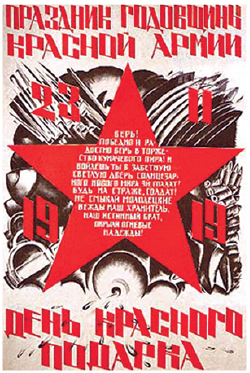
The “Encyclopedias of the Civil War in the USSR” says: “In the situation of the attack of the German-Austrian bloc on Soviet Russia on February 22, 1918, the Decree-Exhibition of the Council of People's Commissars of February 21-“ Socialist Fatherland in Dangers ”was published. On February 23, 1918, rallies took place in various cities of the country. This day was marked by the mass entry of volunteers into the Red Army. In February 23, the day of February 23 began to celebrate annually, to commemorate the mass rise of the Soviet people to protect the socialist Fatherland and courageous resistance of the Red Army, on February 23. ”
In fact, the decree on the formation of the Workers 'and Peasants' Red Army (Red Army), written by the chairman of the Revolutionary Military Council of the Republic of L. Trotsky and approved by the Council of People's Commissars, was published on January 15, 1918 (January 28 according to the new style). But until the conclusion of the Brest Peace Treaty (March 3, 1918), the Bolsheviks did not advance in the creation of the Red Army.
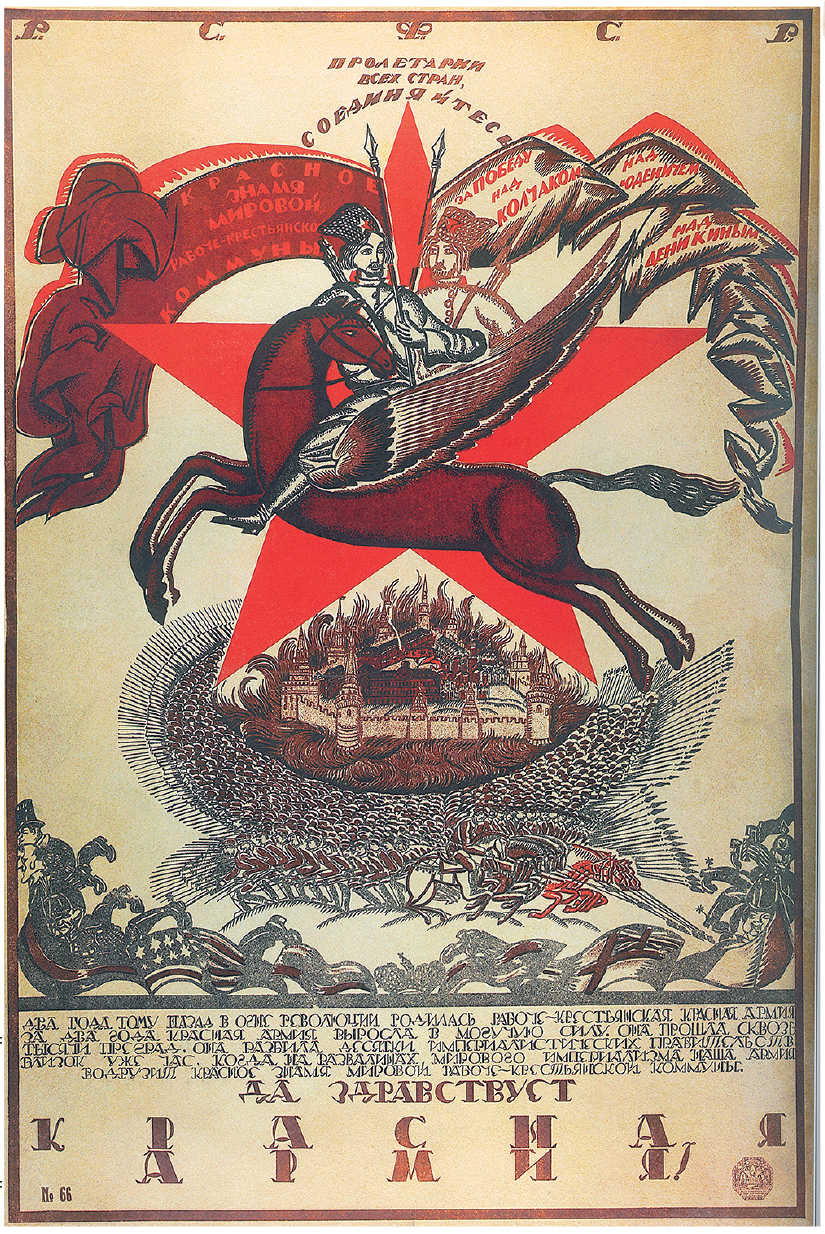
Publishing House "Contact-Culture"
As for February 22–23, these days passed under the sign of a completely different decree - “Socialist Fatherland in danger” (author - L. Trotsky). This document returned to practice the death penalty, which the Bolsheviks were canceled when they only came to power. It was precisely the decree on the death penalty under the bright slogan “Socialist Fatherland in danger” by the Council of People's Commissars and considered it necessary to bring to the attention of the widest masses. All this happened in the conditions of German troops on Petrograd. The “courageous resistance to the invaders”, which was reported by Soviet history, was not. The detachments of the sailors-Kronstadtsy-the beauty and pride of the revolution, which were sent to Narva-heroically fled from the battlefield, for which their leader Sailor Dybenko was given to the party court. The only organized resistance was provided by the detachments of Colonel Peklivanov. This is a Russian subject of Bulgarian origin, who earned his military ranks in the First World War. He did not swear allegiance to the Council of People's Commissars, but gathered the St. George Cavaliers around him, received some weapons from Petrograd and detained the Germans. Soon after, the Brest Peace Treaty was concluded, and Colonel Peklivanov was excluded from the “red” history.
A day of a red gift
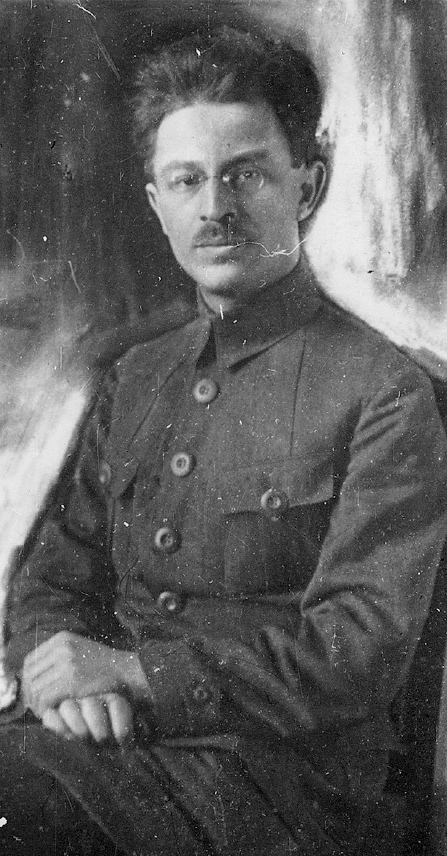
Red Army Day - Deputy Trotsky
In the RVSR Efraim Sklyansky (CFA CFD). In 1924
removed from all military posts, headed
Mossukno trust. In 1925 - on the third
The day after arriving on a business trip to the United States -
During a boat on Lake Lake Lake
drowned under mysterious circumstances
A year later, on February 23, 1919, he was declared a red gift day - it was a question of voluntary donations from the population of the war veterans. Documents have been preserved that indicate that the proposal for the Day of the Red Gift was formulated by the deputy Trotsky E.M. Sklyansky back in January 1919. By February 23, posters were prepared, rallies were organized and, most importantly, mass confiscations were carried out. The Red Army really needed warm clothing, in medicines, but the overwhelming and barely surviving population was in no hurry to give the latter. These confiscations were remembered on February 23 - until those who remembered these terrible years were still alive.
In 1920, the authorities needed mass manifestations - to commemorate the victories over the whites on the Eastern Front and on the eve of the battles on the southern and northern fronts. It was then that there was talk about the celebration of the Day of the Red Army. However, with the second anniversary of the decree on the creation of the Red Army (January 15), they were late. In return, they chose the day of the red gift. The holiday was celebrated modestly - several articles in the press and insignificant rallies. And fully - a parade on Red Square - the day of the Red Army celebrated on February 23, 1922. Later this day was also canonized in the “Brief course of the history of the CPSU (b)”, which was written on the personal assignment of I. Stalin. It was said that on February 23, 1918, the detachments of the young Red Army (which, recall, then there was no one) showed heroic resistance to the German invaders.
"The Red Army of everyone is stronger ..."
The main myth of the Red Army is the myth of its enemy. Until the end of the 70s, the story was written in such a way that the opponent of the Red Army was a kind of abstract evil, which at first, in the 30s, was called “white gangs”, and later “the troops of the White Guards and interventionists”-a certain speculative “monster of the oblory, mischievously, huge, stousic and barking”, which hung, like the serpent of Gorynych, over the little, over the little, over the little, over the little. torn and hungry, but very heroic Red Army soldier.
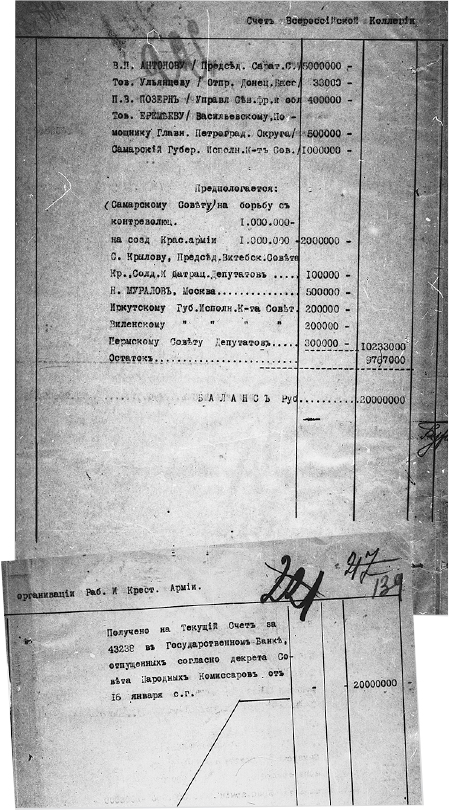
Army. The costs of its creation began
with a total of 20 million rubles. Soon so much
There were 20 boxes of matches (RGVA.
It is published for the first time) increase
In the 70s, a series of documents in several volumes was preparing for the publication-“Directives of the main and front-line command of the Red Army”. It was a little -type, designed for specialists from the publication. When the prepared materials of the collection had to be published, a wild scandal erupted due to the last reference volume, which also contained information about the real combat composition of the Red Army and the real combat composition of white units. It turned out that the ratio of the combat forces of the Red Army to the forces of the White Army - 15: 1. For example: in October 1919, as written in history textbooks, there was a heroic defense of Petrograd, the cradle of the revolution, from the white gangs of General Yudenich. All forces are tense: in September and October, the same number of cartridges as the rest of the army absorbed in the city - about 20 million rounds per month. A member of the Revolutionary Military Council and a member of the Council of People's Commissars I. Stalin, chairman of the Revolutionary Military Council of the Republic of L. Trotsky - actually the Supreme Commander -in -Chief and Minister of Defense are sent to Petrograd. Petrograd twice with difficulty defended. So, from the materials of the reference collection it turned out that the total number of only the ground forces that defended the city, excluding the crews and fortresses of the Baltic Fleet, was more than 142 thousand people. There were 15 thousand infantry people with two guns and 150 cavalry sabers. Approximately the same ratio was on the rest of the fronts.
Hunger - weapon of the proletariat
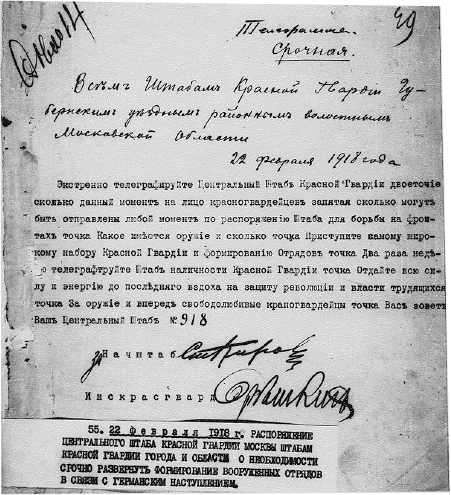
Guard of Moscow dated February 22, 1918.
Then the Red Army existed
What is in fantasies. (RGVA. Published
For the first time) increase
By the end of 1920, the Red Army reached 5.5 million people. Together with people who were not formally in the Red Army, but wore weapons (the NChK troops, emergency detachments, internal security troops), 6 million were delivered under the gun, that is, more than 6% of the total population, including old people, children and women who then lived in Russia.
In the ranks of the Red Army, people drove repression and hunger. The soldiers received a Red Army ration, on which in those hungry 1919-1920 it was possible to survive. (For comparison: the dependent of the bourgeois layers per year was supposed to 1 egg and 0.5 kg of bread.)
But even from such an army they tried to flee. The official data of the Soviet period, published in the late 70s, cited the figures of deserters who voluntarily returned to the Red Army-700–900 thousand people a year. Behind the scenes there was how many deserters did not return. At least 650–680 thousand annually forcibly, after mass raids, was delivered to the fronts. At the VIII Party Congress in March 1919, one of the leaders of the Red Army, Grigory Sokolnikov, described the state of the Red Army: "The heroism of individuals and banditry of the main masses."
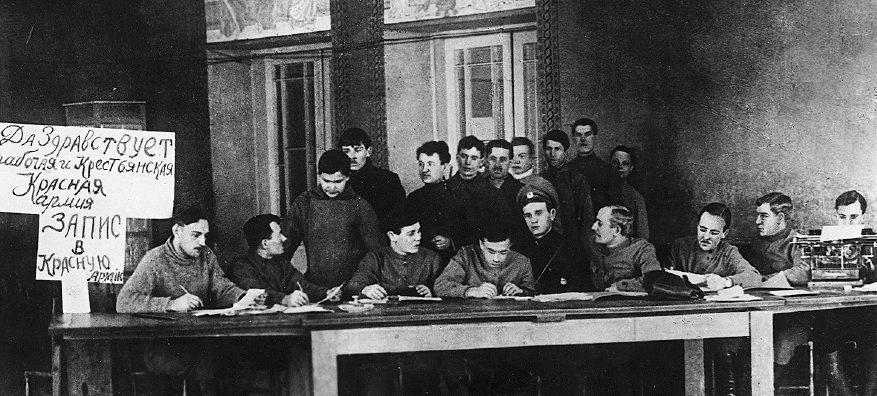
The embodiment of the myth. The photograph made in 1923 for the exhibition "5 years of the Red Army". Invariably issued for the true document of February 1918
"Sons of the bourgeoisie"
Simultaneously with the legend of the victorious Red Army, the myth of the White Army, which was equipped, according to the myth, was born “sons of the bourgeoisie and landowners”. The basis of white forces was a few ideological people who fought not for fear, but for conscience. But the white movement was not homogeneous. Behind the backs of romantic youths, honest officers-patriots and intelligentsia hid a rabble who personified the worst that was in the Dofegguras of Russia. This is a bribery, the bourgeoisie, which, as the monarchist deputy Vasily Shulgin said at one time, "turned out to be a patriot of his pocket."
Moreover, during the years of the Civil War it was rather a rule than the exception that the same soldiers fought for the “whites” or for the “red”. The peasant was completely indifferent: that he was under the commissar, that he was under an officer.
The civil war ended not because the Red Army defeated the whites. The civil war ended because the bulk of the population was tired of war, gangs, hunger, lawlessness and blood in which the country was already choked.
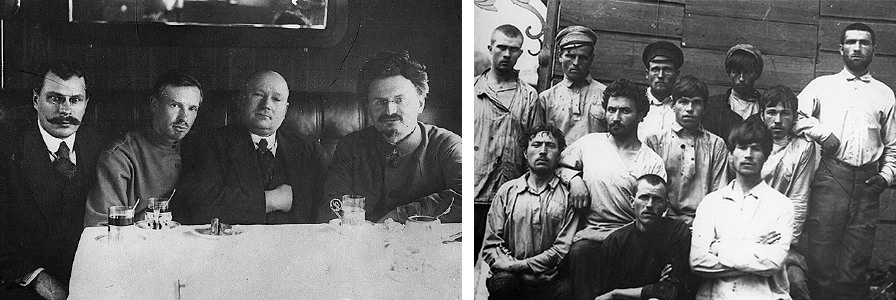
On the left are the first real top leaders of the Red Army. From right to left is the chairman of the RVSR L.D. Trotsky, commander in chief of all the Armed Forces of the Republic I.I. Vacietis, member of the RVSR, head of the operational department of Narkomvoen S.I. Aralov, member of the College of Narkomor S.E. Saxon. (At the time of the meeting on the Trotsky train, the former carriage of Nicholas II). On the right - few of many who, with weapons in their hands, defended their right to not serve either “red” or “white”: a group of participants in one of the peasant uprisings against “commissar -containing” and the return of the “old regime”. Tambov province, 1920. (CGA KFD)
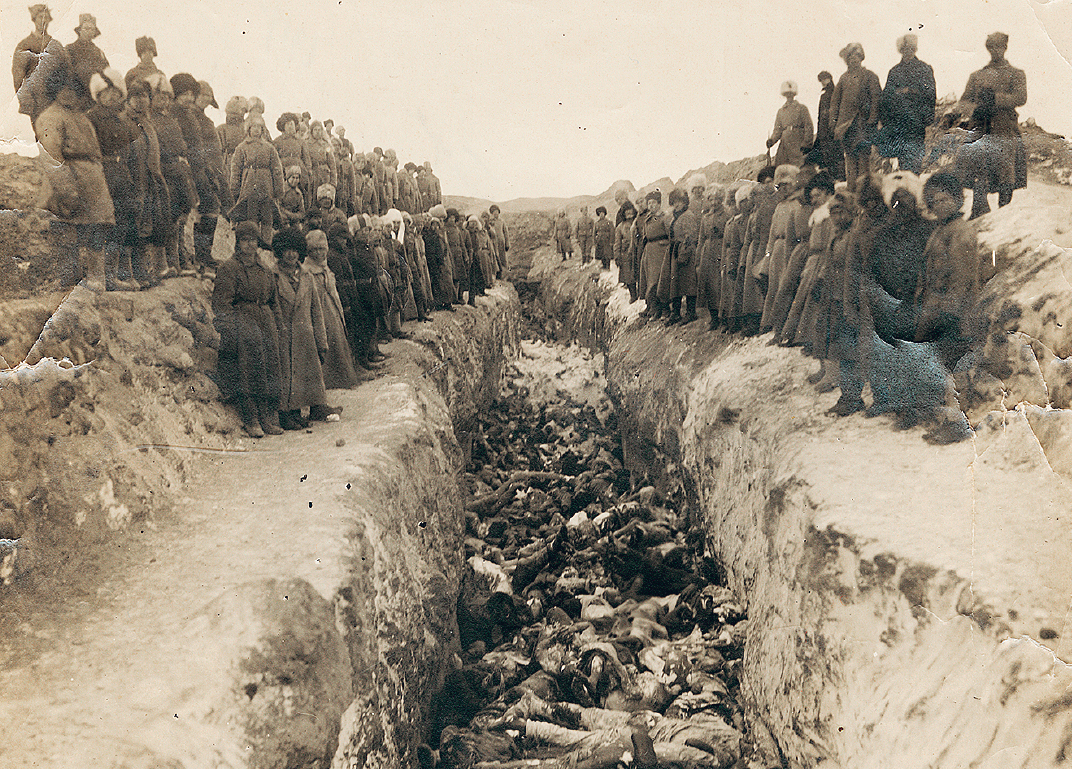
One of the tens of thousands of mass graves scattered on the routes of the Red Army in 1918-1922. (from the photo fund of the CMVS)
Materials provided by Alexander Krushelnitsky
First published in NT No. 8 of February 25, 2008