
Translated material
Memory. Vasily Kapnist
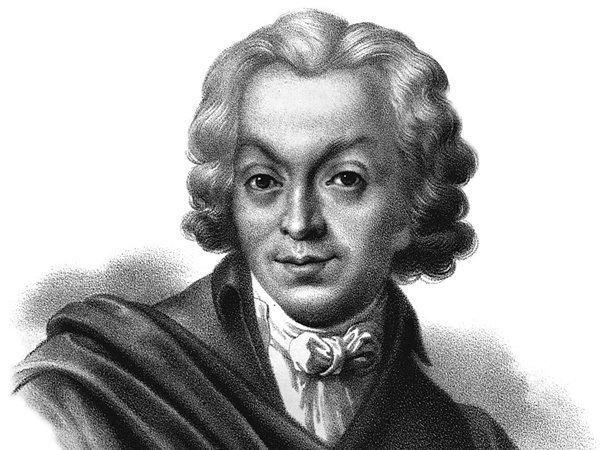
February 23, 1758, Vasily Kapnist, poet and playwright were born
Personal business
Vasily Vasilievich Kapnist (1758 - 1823) was born in the village of Obukhovka, Mirgorodsky district of the Poltava province. His father was a colonel of the Mirgorod regiment and died before the birth of his son, in the battle with the Prussians near the village of Gross-Egersdorf in East Prussia. Initial education, Vasily Kapnist received at home. At the age of thirteen, he was sent to St. Petersburg, where he was enrolled in the rank of corporal to the school at the Izmailovsky Life Guards Regiment. Soon he received the rank of healer, and then - a sergeant of the guard.
In 1773, Vasily Kapnist was transferred to the Preobrazhensky regiment, where he met and made friends with Gabriel Derzhavin, who served as an officer in this regiment at that time. In his free time, Vasily Kapnist studies European languages and reads a lot of both foreign authors and recognized Russian writers of that time: Lomonosov, Kantemir, Sumarokov. In 1774, Kapnist composes the first poetic work he published-an ode in French dedicated to the conclusion of the Kuchuk-Cainardian world. Later, Kapnist said that it was "a transfiguled ode, written by the writer in the 17th year of his age, that however, he does not put his work in his work as a stupid."
In 1775, Vasily Kapnist resigned from military service, wanting to devote himself to literary activity. But he attracted attention to himself by publishing in 1780 in the “St. Petersburg Bulletin” his “satire the first”, since that year he became a regular author of this magazine. At the same time, Kapnist leaves Petersburg, and settles on his native estate, visiting the capital only by raids. On one of these visits in 1781, he married Alexander Askseevna Dyakova, whose relatives sisters became the wives of Nikolai Lviv and Gabriel Derzhavin. He publishes his original works and translations of foreign authors in the magazines “New Monthly Works”, “Moscow Journal”, “Aonids”, “Son of the Fatherland”, “Reading in the conversation of lovers of the Russian word”, “Proceeds of the Kazan Society of Lovers of Russian literature”, “Works of the Society of Lovers of Russian Literature” and others.
In 1782, Vasily Kapnist was elected the leader of the nobility of the Mirgorod district, and in 1785 he became the leader of the nobility of the entire Kyiv province. In 1799, the capnist, by decree of Emperor Paul I, began to manage the Russian troupes of all metropolitan theaters. But his activity as a theater leader was short -lived. After the death of Pavel, Vasily Kapnist resigned and returned to life in his estate. In 1802, Vasily Kapnist was elected general judge of the Poltava province, and in the summer of that year he served as the director of the provincial public schools. In 1806, the book “Lyrical Works” was published, which became the most complete lifetime collection of poems by Vasily Kapnist. It consisted of four sections. The first (“spiritual odes”) contained poetic arrangements of the psalms, followed by “solemn” and “ODs of moralizing and elegic”, finally, in the section “Horace and anacreontic Odes”, translations from Horace and Anacreont were collected. Vasily Kapnist died from pneumonia on October 28, 1823 in the village of Kibintsy Poltava province and was buried in his native Obukhovka.
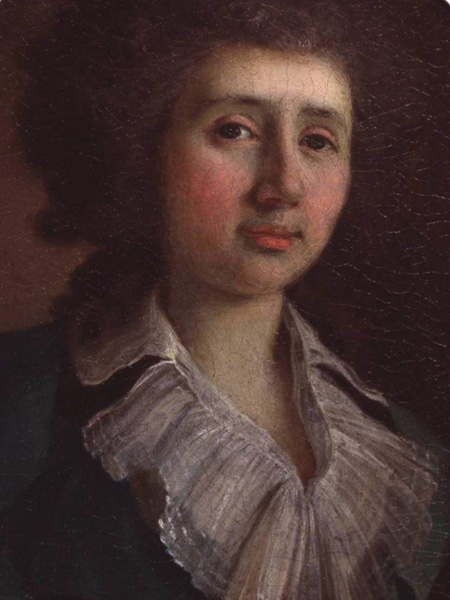 V.L. Borovikovsky. Portrait of Vasily Kapnist State Literary Museum
What is famous
A significant Russian poet of the late XVIII - early XIX centuries, influencing the work of the next generation, including Pushkin and Lermontov. He began mainly as the author of satirical poems, later in his work the central place was occupied by philosophical thoughts, sentimental lyrics, topics of private life with an almost unchanged shade of sadness and melancholy. Translations of one Horace significantly influenced the original work of Kapnist, endowing it with the accuracy of domestic descriptions (in the later ODs “Obukhovka”, “The approach of a thunderstorm”, “In memory of birch bark”). The author of the plays: comedy “Yabeda”, the tragedies of “Antigon” and “Gurevna”, the comic opera “Clorida and Milon”).
What you need to know about
The most famous work of Vasily Kapnist was the comedy “Yabeda”, which anticipated many of the features of the Gogol’s “Examiner”. It was based on the real trial on the complaint of Kapnist’s mother against another landowner who illegally appropriated land ownership. The case lasted for decades to no avail. Judicial officials were depicted in the play as bribe takers and dexterous scammers. The play was composed by a capnist in 1794 - 1798. It was printed and staged on the stage of the St. Petersburg Stone (Big) Theater. The comedy was successful, but after the first four ideas it was on the personal order of Paul I, and the printed circulation was confiscated. Further productions and publication were prohibited. It is noteworthy that the emperor personally liked the play, as he soon entrusted the Kapnist by the leadership of the Petersburg theaters. The ban on the play “Yabeda” caused a historical legend that Pavel allegedly, after watching the first acts of the play, was so angry that he ordered the author to immediately send the author to Siberia, chaining in a chain. But the emperor was satisfied with the final acts and sent a new messenger with an order to return the capnist and reward. The legend is reflected in the song by Julia Kim and the play “Kapnist there and back”, staged in the Moscow Hermitage Theater.
Direct speech
You look at those nations
Where slavery burns people,
Where there are no kindness of freedom
And the sound of chains is heard:
There are born to the poverty of the mortal
To the humble conviction,
Misfortune will fill the bowl;
Under the yoke of heavy power
Bloody sweat pour flows
And the larger death, life attract life;
The violence of the authorities is afraid;
Gazing, must be wall;
Raising the head, they are afraid to look
On the rod, ready to punish them.
They are discouraged in the Verigs of slavery,
Overturn the yoke do not dare
Burdening them,
From the fear of executions
And they laugh at thought
R shinled against your shackles.
"Ode for slavery" (fragment)
Dear Chizhik yellow -sided!
Up, my friend! Do not take off
Do not put the nest high,
But in the dense grass, SWING.
You look like a smooth hawk
It already soars on you
How, you are greedy for your blood,
The claws will cut at you.
Ilom has grown over the city;
But there, whether the heat is breathing - burns,
The storm of l flies with a thunderstorm -
Branches breaking, leaves vomit.
And in the Valley of the IV Machista,
The storms are not afraid, standing.
There is a stream, rolling, clean
In frying, her days are singing.
So why should I cringe
What is the nobleman not born?
Let him seek a century to languish,
Who is curled with vanity.
I am a base path
I will leave the worldly fussing.
Labor dividing with dredging family,
I will find happiness in poverty.
"Chizhik"
This is one of those comedies that make honor not only to the author, but to all literature. Her strength is amazing! There are places in which the vice, without losing side of the comic, reaches the tragic force: such, for example, the terrifying moral feeling of the orgy of members of the chamber. - Here is the right of the capnist to immortality ...
Mikhail Dmitriev about the play "Yabeda"
The traditional plot of classical comedy (the connection of loving, overcoming obstacles) is pushed into the background by the image of shameless judicial arbitrariness and bribery, growing into phantasmagoria. Although the prosperous ending of the play (thanks to the intervention of the highest power) looked somewhat artificial, the tension of action and the masterful use of the Russian language became the key to the long success of Kapnist’s comedy among the audience.
Berdnikov L., Silver Yu. "Pantheon of Russian writers of the 18th century"
Yes! Tsarist anger evaporated in the fourth act,
Where the serpent of vice was caught and failed to crawl.
"This bastard is right!" - The king said, and in the intermission
He sent a messenger to return the creator wrapped in half.
Closer, closer to Petersburg, and now the outpost.
And in the fifth act, the king cried out: “Vasily! Well done!"
And at the outpost there is already a palace setup,
And only the ashes from under the hooves - and a van to the palace.
Vasil Vasilievich to the parquet what was out of half.
And here he is a skeleton and gingerbread vodka.
“Well, a scoundrel,” said the king and showered with gold, -
Did you make me so much to survive? "
Julius Kim “The Magic Power of Art (a story that happened with a comedographer Kapnist into the reign of Paul I and retold to me by Nathan Eidelman)”
Thirteen facts about Vasily Kapnist
- According to legend, the mother of Vasily Kapnist was the Turkish woman Salma, brought by his father from the Turkish war, who committed suicide after the death of her husband. In fact, his mother was the Little Russian noblewoman Sofya Andreevna Dunina-Borkovskaya.
- In 1783, Vasily Kapnist wrote “Oda for slavery”, the reason for which was the decree of Catherine II on the attachment of Ukrainian peasants to the land. He was able to publish it only in twenty -three years.
- The ODU for the extermination of the rank of slave in Russia was written in 1786, when the new decree of Catherine replaced the naming “slave” with the “faithful” in the official petitions.
- Vasily Kapnist had two daughters and four sons. His grandson Peter Kapnist became a famous writer. The great -granddaughter of Maria Kapnist , actress, died in 1994.
- Once, the capnist wrote to Derzhavin Oda “Rafael’s answer to the singer Felitsa” and sent her to Derzhavin in the manuscript, attributing to the header “Labe-Autor’s report from the Yekaterinoslav Muses of the Tired Circuit Vasily K.”. Derzhavina offended a critical analysis of his poem, and he wrote to the Kapnist: “If you give offspring with such poems, then you really become famous for the Parnassian chimney sweep, who wanted to clean the verse for others, and he was healed by the impurity.” But the good relationship between the poets has been preserved.
- The capnist was a patriot of Little Russia and, coming to St. Petersburg, often defiantly spoke Ukrainian.
- In 1896, documents were discovered according to which a Kapnist visited Berlin in 1791 and discussed with the Chancellor of Prussia the possibility of the transition of his countrymen under the Prussian patronage. It could be Vasily Kapnist, but also one of his native brothers Peter and Nikolai.
- In 1819, the capnist made a trip to the Crimea and drew attention to how the monuments of antiquity were destroyed. After the Kapnist’s message, the government sent to the Crimea Academician Yegor Kuller and architect Evgeny Pascal "to find and take measures to preserve antiquity monuments."
- Negative heroes-officials in the play “Yabeda” are talking about talking surnames: Krivosudov, Gravalo, Bulbulkin, Athuev, and positive heroes are called straight and Dobrov.
- The phrase “Laws are holy, but the executors of dashing adversaries” from the comedy of Kapnist “Yabeda” became winged.
- In the "Caucasian captive" Lermontov quoted the stanza of the poem of the cap "Obukhovka".
- The capnist owns the translation of the “Word of Igor’s Regiment” published in 1813 under the title “Song about the militia of Igor, the son of Svyatoslav, the grandson of Olgov”.
- Shortly before his death, Vasily Kapnist wrote poems dedicated to the Greek uprising: "A appeal to the aid of Greece" and "to the rebellious Greek people."
Materials about Vasily Kapnist
Article about Vasily Kapnist on Russian Wikipedia
Vasily Kapnist in the project "Chronos"
An article about Vasily Kapnist in the Encyclopedia "Circumspices"
Works of Vasily Kapnist in the library of Maxim Moshkov
Vasily Kapnist in the Russian virtual library
Nikolai Smirnov-Sokolsky "Arrested Comedy"