
Translated material
Singer "Red Fear"
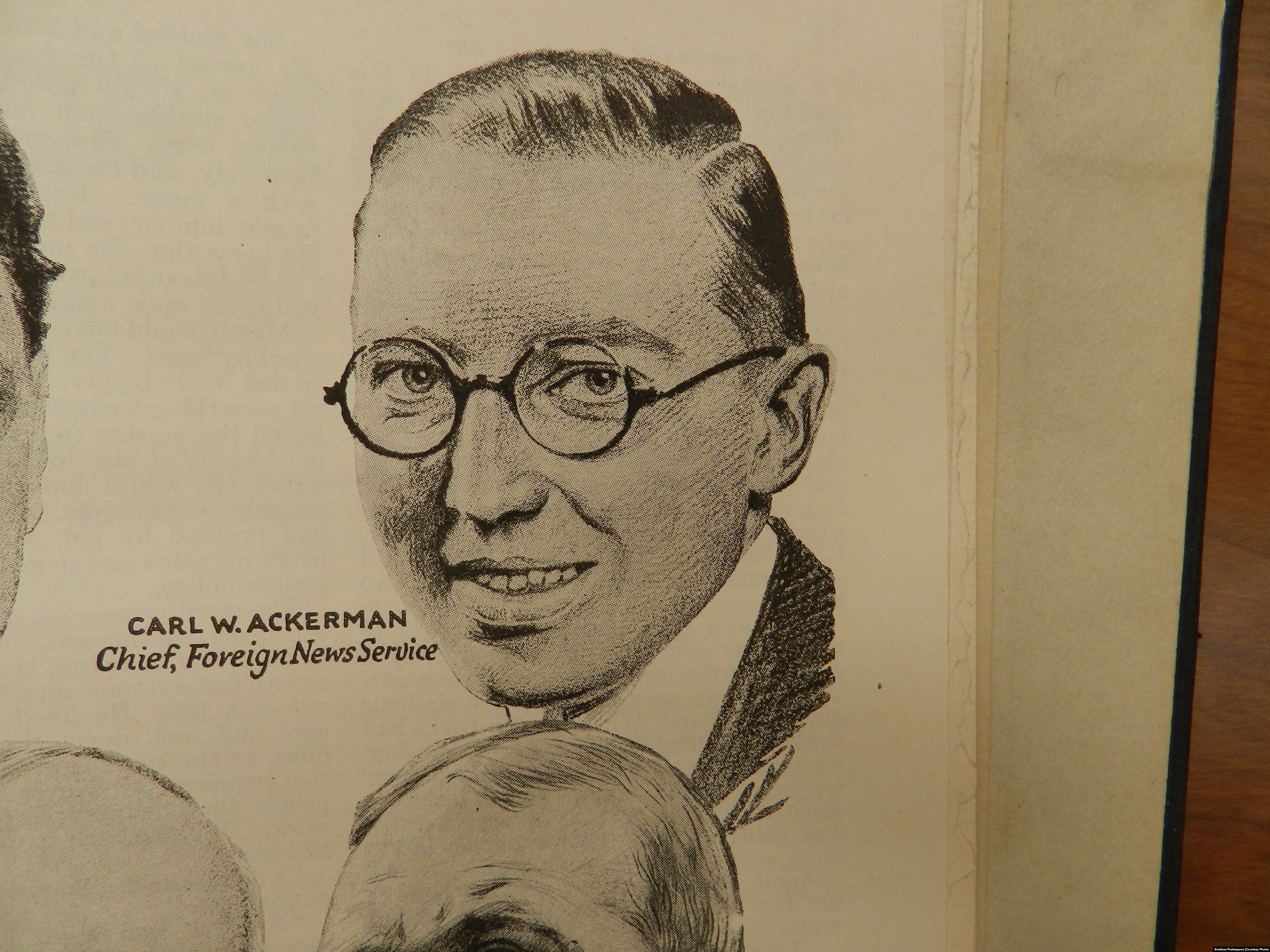
To the centenary of the revolution and the Civil War in Russia, the team of Russian and American scientists reprints the memoirs of the Americans, who then visited our country. They go out at the American publishing house Slavica Publishers. These texts help today to understand how the image of the other side is being constructed, says the historian, professor of the European University in St. Petersburg, Ivan Kurill. He wrote comments on the texts of one of the most interesting and ambiguous authors, Karl Akkerman, a correspondent in Siberia in 1918-19, and his book “In the Traces of the Bolsheviks: twelve thousand miles with allies in Siberia”.
There is little information about Karl Ackerman in Runet. In addition to the article on Wikipedia, there are only a few references, and everything is in a negative way: they write that he was a spy and tried to discredit Russia. It is known that it was he who brought to the USA the so -called. The “Protocols of the Zion sages”, publishing them under the name “Red Bible”: instead of Jews, the Bolsheviks appeared there. Ackerman also presented the world with a testimony of a certain Partin Domin, the "Majordom of the royal family", who allegedly accompanied Nicholas the Second executed by the Bolsheviks until the last minutes.
Both the “Red Bible” and Partin Domnin scientists have long exposed as fakes. So why are Ackerman's publications important to us today?
From San Francisco to Yekaterinburg
Karl William Akkerman was born in 1890 in the city of Richmond, Indiana. He graduated from the local college at first, and then in 1913, Columbia University in New York. He worked as a journalist at The Saturday Evening Post, New York Tribune and other publications.
Before Russia, Karl Ackerman managed to visit Switzerland, Mexico, where the revolution, and Germany was in full swing since 1910. After a German business trip, he published a book in a popular visionary vein: “Germany is the next republic?”, Where he reflected on the fate of the German Empire after the end of the First World War.
The United States entered the war in the spring of 1917, and in the fall of 1918, Akkerman, having concluded a contract with the New York Times, went from San Francisco to Japan, and from there to Vladivostok. Shortly before him, the American expeditionary corps, under the command of Major General William Graves, arrived there. The international situation over the past year has been completely confused: the Russian Empire collapsed as a result of the revolution, the Bolsheviks seized power in Petrograd after the Provisional Government and immediately signed a separate Brest world with the Fourth Union. The Entente countries, not understanding how to behave with a former ally, just in case began to military intervention. The troops of Great Britain, France, Italy, Japan and the United States occupied significant territories on the borders of Russia.
The border meanwhile who is a spy and who is a journalist is not very clear
The Americans concentrated the main forces in Siberia and in the Far East, first of all, to prevent excessive strengthening of Japan there. The second task is to help the safe evacuation of the Czechoslovak corps. This military unit was created on the territory of the Russian Empire from captured Czechs and Slovaks-soldiers of the Austro-Hungarian army and before the revolution was subordinated to the Russian command. After the October Revolution, the Czechoslovak corps became part of the French army: they did not get along with the Bolsheviks and now tried to return to Europe through the Atlantic.
The whites saw allied power in the interventionists, but the Americans, says the American historian Ivan Kurill, did not enter into battles with the Bolsheviks in the Far East. They and the white Cossack chieftains were wary:
“Graves and his American officers had a complete idea that they are killers and bandits, they make anyless executions,” says Ivan Kurill . - Moreover, Graves is already in America, when he met ataman Semenov, who was running there, tried to pursue him in court for war crimes committed in the Far East.
-But in fact, the American troops were still anti-Bolshevik power?
- They were sent there as anti -Bolshevik power, but from what they did in the Far East, they are very difficult to call them so. The same British constantly expressed dissatisfaction with the fact that the Americans are not involved in any operations against the Bolsheviks.
In 1918, US President Woodro Wilson did not yet understand how to respond to events in Russia. The State Department insisted on a decisive struggle against Bolshevism, while the Ministry of Defense did not see the point of participating in a foreign war. The trip of Karl Ackerman to Siberia was one of the many attempts to figure it out, says Ivan Kurill:
- This is an attempt to understand what the revolution in Russia is, what forces in it are, how durable they are and how much it is possible to deal with them.
Through Siberia, not knowing Russian
A business trip to the country where the civil war is blazing is unsafe by definition, and 28-year-old Karl Akkerman did not risk once again. The territory by which he moved was controlled by foreign interventionists, the Czechoslovak corps, and before the uprising of Admiral Alexander Kolchak, the committee of members of the Constituent Assembly. He made most of the way through Siberia in the carriage of the American Mission of the Red Cross and never approached the places of hostilities.
The journalist came to Russia, not knowing the Russian language, which, however, was not embarrassed by either himself or the editor, Ivan Kurill says. According to the researcher, in the book “In the Traces of the Bolsheviks” there are no references that the guide translator accompanied him on the trip. He probably found assistants on the spot, and received a significant part of the information from English -speaking sources. In every large Siberian city in those years there was an American consul, plus Akkerman had a warm relationship with some American officers, says a professor at the European University.
- Is the version true that Karl Akkerman not only wrote articles, but also spied?
- I would say that the border, meanwhile, who is a spy and who the journalist is, is not very clear. Of course, he collected information and shared them with the Americans, including with statesmen. By the way, he corresponded with Colonel Edward Haus, the closest adviser and unofficial foreign minister Woodrow Wilson. He was not a professional scout.
Ackerman wrote a lot about the fate of the Czechoslovak corps - the journalist described it as an advanced detachment of democracy, one on one opposing the Bolshevik threat. He managed to interview the Socialist Revolutionary, the head of the Ufa Directory Nikolai Avksentiev. Socialist -Revolutionary outlined the New York Times to the “white” version of the Russian Revolution literally a few days before the coup Admiral Kolchak. The military dictator, unlike Avksentiev, did not cause sympathy among the journalist.
Akkerman described the Bolsheviks with the words of Belo-Chekhoslovak propaganda, says Ivan Kurill: like German puppets. And he proved this, for example, by the names of the Bolshevik commanders, among whom there really were German. “That is, from his point of view, a red commander named Blucher is, of course, a person who was sent from Germany to fight,” says Kurilla.
Ignorance of the Russian language and Russian reality seriously failed the American. He was the first foreign correspondent who reached Yekaterinburg after the murder of the royal family and tried to find information about the tragedy. So Parfen Domnin appeared - “Majord” by Nicholas the Second, who allegedly remained next to the emperor until the execution. Such a person actually never existed, and among the people that surrounded the last Russian king in prison, there was no one who fits the description.
Ackerman simply could not get out of the fake that he was scored in Yekaterinburg, Ivan Kurill believes: “I can’t say that he invented this story. It seems to me more likely that someone sold it to him.”
This completely fantastic story, however, was the first and long time the only evidence of the fate of the Romanovs, the historian notes. The book “In the Traces of the Bolsheviks” was published in the summer of 1919, when the public demanded information.
He was one of the first to formulate that we would later know how the bipolarity of the Cold War
“I do not want to say that he has solid mistakes in the book, there are interesting stories about the trip, meetings with people, life during this period,” comments Ivan Kurill. - He describes, for example, at the same station in Siberia, huge meat reserves that cannot be taken out, and drive two kilometers forward - and there is hunger. Or such notes: in Vladivostok, American dollars are very much appreciated, in Irkutsk they can also be changed, and in Yekaterinburg, no one needs dollars, and therefore, when Akerman was ruined by Russian money, he had to sell part of his clothes. There are such observations there, they are curious and add something to our idea of the Civil War, about Siberia in 1918. But I am more interested in how people, even traveling around the country, are closed inside their coordinate system. Ackerman had a finished scheme in his head, what is good, what is bad. He came with her - he left with her.
Singer "Red Fear"
The first option for the title that the editors cut was: “League of Nations or Bolshevism” says Ivan Kurill. This is the main idea of the book: Karl Ackerman considered Bolshevism as a new world threat - a global phenomenon that, for a start, took the roots in Russia, but can absorb the whole world, if not resisting.
Reflections on the future is a popular topic during the First World War, explains Ivan Kurill. So fourteen points of Woodrow Wilson and his idea of the League of Nations appeared. “And Akkerman, apparently, also tried to contribute to the discourse about the future of the world order. He added to the ideas of Woodlo Wilson the idea that there is an alternative, there is a threat, and we must fight with this threat or at least to realize it. This threat is the world Bolshevism, which is trying to confront the democratic League of Nations,” says the historian. What later we will know as the bipolarity of the Cold War. ”
As a journalist who was at a turning point at the scene, Karl Akkerman played an important role in building the image of Bolshevik Russia - the image of a negative, dark, “antipode of American democracy”.
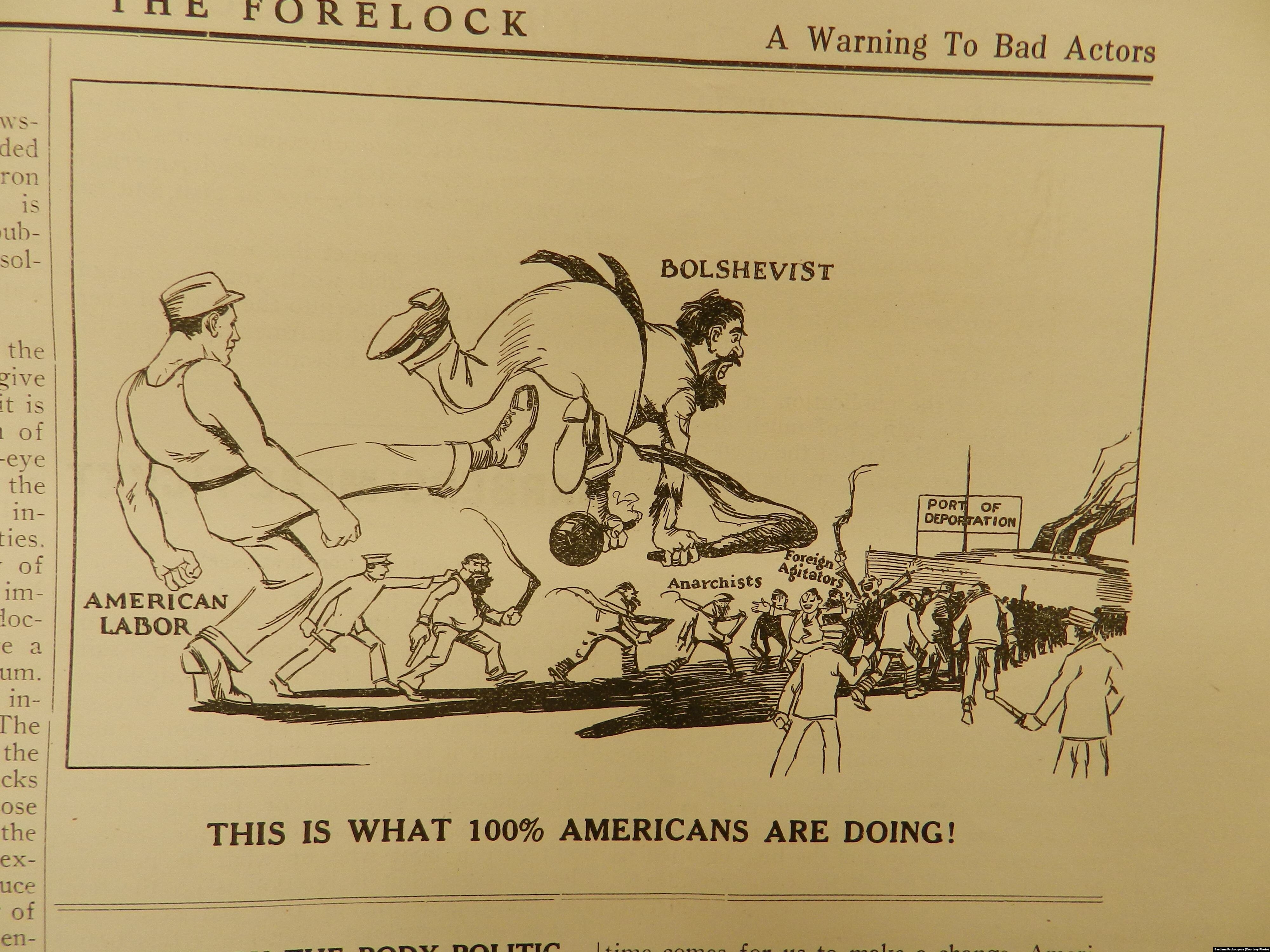
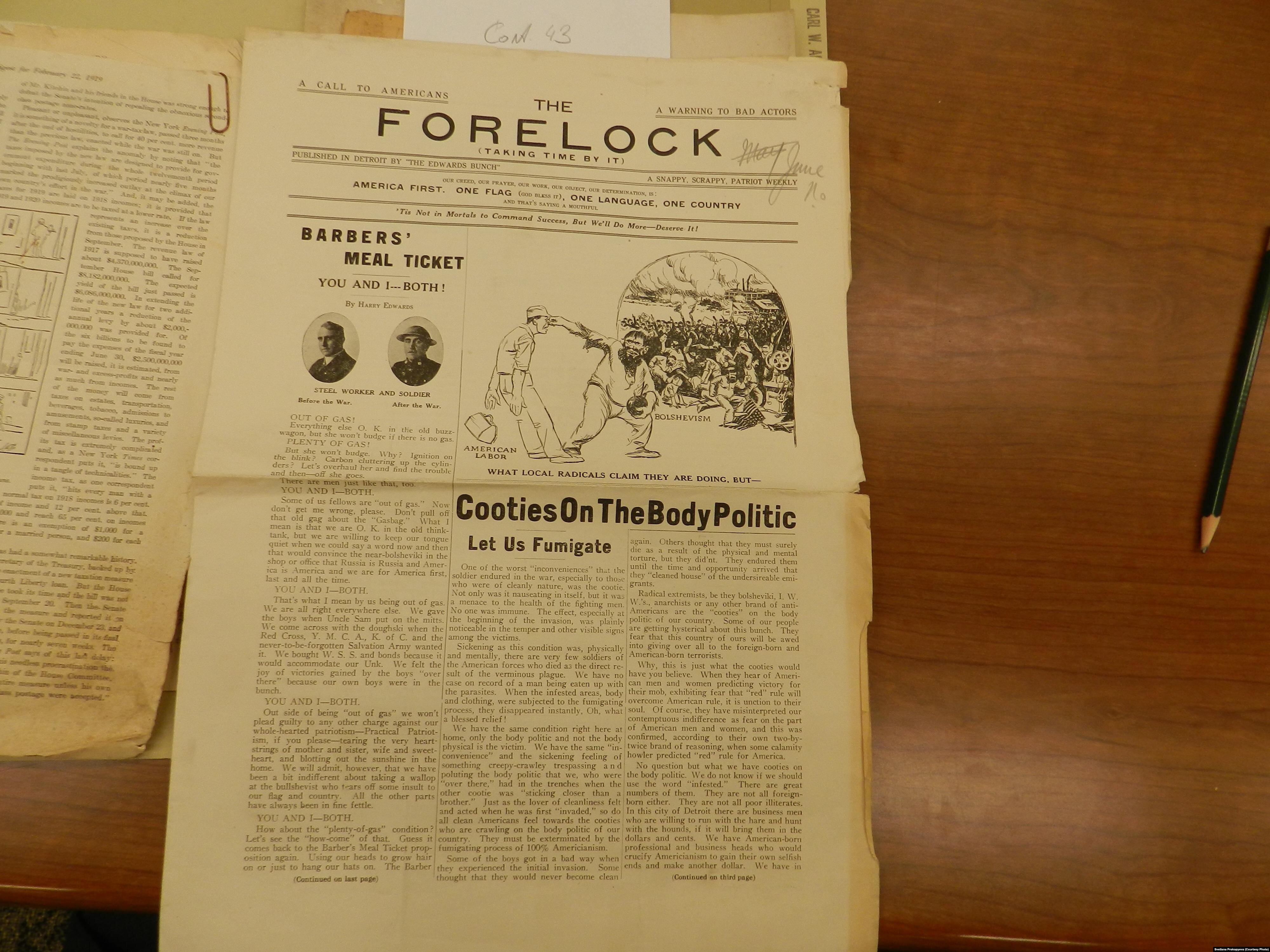
Returning to the United States, he became one of the ideologists of “Red Scary”, which covered America in the 1920s. Ackerman saw, for example, in labor conflicts, the influence of Bolshevism - a wave of strikes swept through the United States.
- Tell me, did he even see at least one living Bolshevik?
- There is nothing about this in the book. Because he did not reach the front, he did not talk about prisoners. He repeats the word “Bolsheviks” many times, but I do not remember a single story about a meeting with the Bolshevik - a real person. There are many stories from the third lips, what Bolsheviks are terrible and how they dealt with someone, but there is no direct conversation with a person who would call himself a Bolshevik. He had his own idea of what Bolshevism is, he attributed to the Bolsheviks the horrors that he came up with. In this sense, he was rather an ideologist than a journalist.
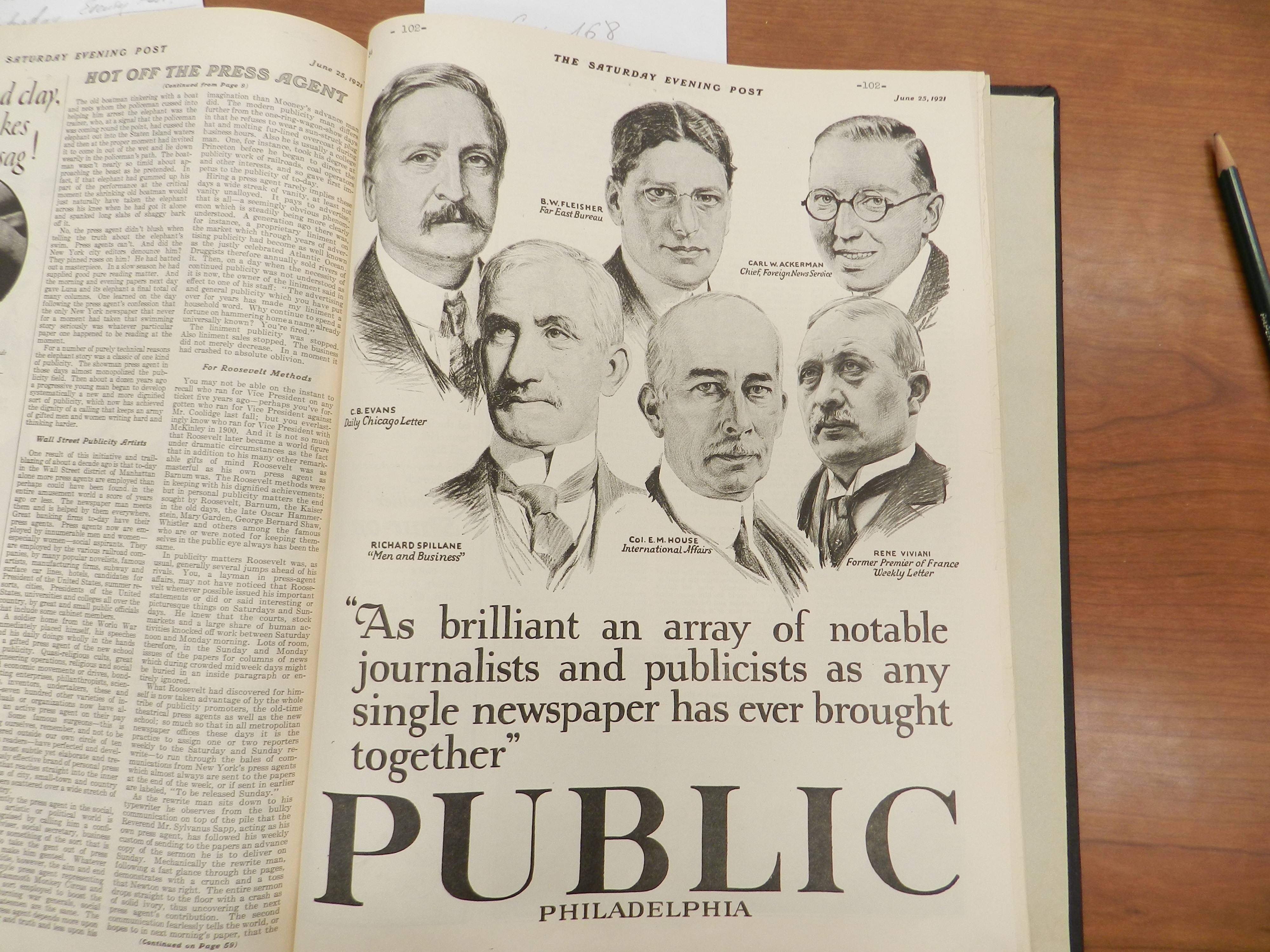
After a business trip to Russia, Karl Ackerman for a while lingered in journalism. Already in 1922, he went to the sphere of PR, worked for General Motors, Eastman Kodak. In 1932 he became the dean of the Faculty of Journalism of the University of Colombian and remained in this position until retirement. He, apparently, missed the period of McCartism - with the outbreak of Cold War, Ivan Kurill did not find new publications of Akkerman or links to him from American politicians. He rested in 1956 and died in 1970.
Interestingly, one of the fathers of the Cold War ideology Karl Ackerman remained unknown in this capacity of Soviet propaganda.
- How was Ackerman perceived in Russia, what reaction was to his work?
-In Russia, maybe someone knew about him, but in general, I did not find any reaction. Nobody translated the works of that time into Russian - at first it was not up to it, then they were outdated. When the Soviet delegation met with Ackerman already in the 50s, no one remembered this, and he, apparently, himself did not spread that he was in Russia.
- That is, he was not an enemy for the Soviet regime?
Karl Ackerman is one of those who helped the wheel of the story to cream in that direction
- No, he was not perceived as an enemy. I think that just no one specifically studied that “red fear” in the Soviet Union. In American newspapers there were brighter examples - about the socialization of women, other Bolshevik passions. Akkerman did not, of course, had such obvious fantasies, so he probably did not hit the field of view of Soviet propagandists.
- What is the value of Ackerman's heritage today?
- In the fact that by studying this, we can understand how the image of the other side is formed. We see that when forming this image, a pre -formed ideology, which is superimposed on reality, even if reality resists, can play a serious role. Consideration traditions may affect. For example, Ackerman tried to refer to George Kennan, who was considered the main specialist in Russia, because in the 1880s he traveled to Siberia and published the book “Siberia and Link”. This book has formed an idea of Russia as a big prison, where the best people are contained in exile. There was a certain American view of Siberia, Russia, and Akkerman in this sense continued the tradition. That is, the study of how Ackerman described Russia helps to understand how the image of the other side is formed, and in this sense it is important.
- In general, did he harm the relations of Russia and the USA?
- Maybe without him it would be the same, but he made a completely distinguishable contribution to how these relations were formed. And he contributed to the fact that Bolshevism began to look at something that denies democracy. Now we no longer know how everything could turn, but Karl Akkerman is one of those who helped the wheel of the story to cream in this direction.