
Translated material
UN Councils unanimously adopted a resolution on a 30-day truce in Syria
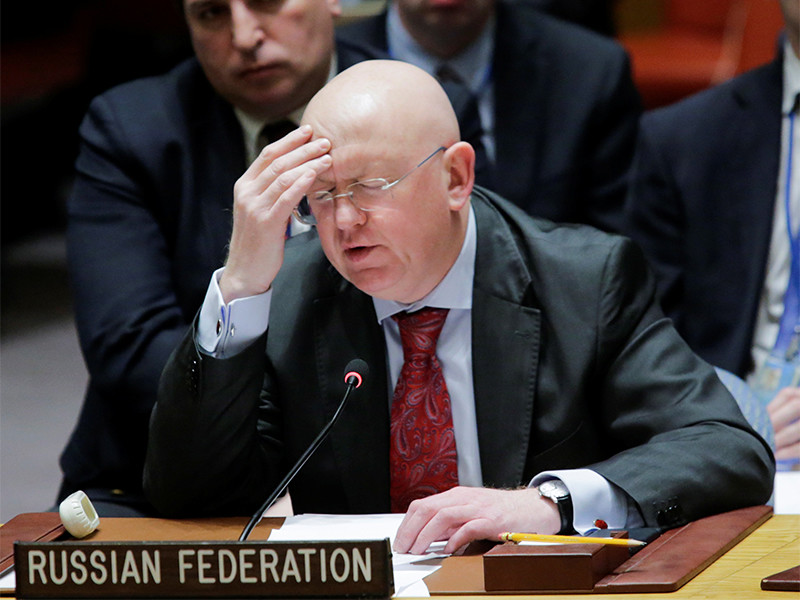
The UN Security Council on Saturday night unanimously adopted a resolution on a 30-day ceasefire throughout Syria and the subsequent conduct of humanitarian operations. According to Reuters, the document was supported by all 15 states included in the Security Council. Meanwhile, at the Syrian Center for Monitoring Human Rights, it is argued that immediately after voting, one of the most problematic regions of the country - Eastern Guta - was subjected to large -scale shelling.
According to the updated version of the resolution, which Interfax got acquainted with all sides of the conflict, it is necessary to urgently terminate the fighting, urgently proceed to interaction in order to complete and comprehensive fulfillment of this demand to establish a long -term humanitarian pause of at least 30 days on the territory of Syria and ensure safe, unprofitable and sustainable delivery of hummocks and sustainable delivery services, as well as medical evacuation of seriously ill and wounded. "
The document notes that the ceasefire does not apply to military operations against the “Islamic state”, “al-Qaeda”, “Jebhat al-Nusra” and related groups and persons that are prohibited in Russia.
The permanent representative of the Russian Federation at the UN Vasily Nebena, after the adoption of the document of the Security Council, said that Russia would not allow an arbitrary interpretation of the resolution. “I would like to express deep alarm in connection with the public statements of individual officials of the United States, which are threatening aggression against sovereign Syria. We immediately warn, we will not allow an arbitrary interpretation of the resolution that has just been adopted,” RIA Novosti quoted him.
US Permanent Representative Nikki Haley, in turn, accused Russia of delaying the adoption of the document. "People in Syria should not die in anticipation of the instructions that the Russian delegation will receive from Moscow or discuss the results with the Syrian side. Why does the advice allow this?" Haley was indignant.
The Syrian Monitoring Center for the observance of human rights a few minutes after the osoluza vote announced that the eastern Guta had fired at the aircraft of government forces and allies of the President of the President Bashar al -Assad. Human rights activists emphasized that a fierce military operation in this region has been performed for a week.
The draft resolution on the ceasefire was submitted for consideration by the Kuwait and Sweden Security Council. The initial version of the document said that after its adoption, the ceasefire in Syria should enter into force after 72 hours. In addition, 48 hours after the establishment of the ceasefire the UN ceasefire, the delivery of humanitarian goods should begin. Also, after 48 hours, an emergency medical evacuation should start and a blockade from four districts - East Guta, Yarmuk, Foi and Kefrayi should be removed.
Most countries immediately announced their intention to support this initiative, but Russia's position on this issue remained a mystery. The Permanent Representative of the Russian Federation Vasily Nevornya claimed that it was necessary to accept a document that would be implemented. According to him, to establish a ceasefire regime, it is necessary to go through a long and complex process.
The Russian Foreign Minister Sergei Lavrov said on Friday that Russia was ready to coordinate the resolution on a humanitarian pause in Syria, but there are no guarantees in it that the militants will observe a truce. According to Lavrov, in the UN Security Council, "they are now trying to adopt a resolution announcing the declaratively immediate advance of the humanitarian pause for at least 30 days."
Press Secretary of the President of the Russian Federation Dmitry Peskov to the question of whether Russia intends to impose a veto on the resolution proposed by Sweden and Kuwait, refused to answer.
On the eve of Reuters, it learned that German Chancellor Angela Merkel and French President Emmanuel Macron wrote a letter to Vladimir Putin in which they asked the Russian president to support the resolution on the ceasefire in Syria. According to the agency, the leaders of Germany and France wanted to make sure that Russia would not block the adoption of the document.
Voting on the resolution was supposed to take place on February 23, but the diplomats failed to resolve all controversial issues. The Permanent Prime Minister of the Kuwait at the UN Mansur Ayad al-Utei noted that the main contradictions are associated with the paragraph of the resolution project, which indicates the terms of entry into force of the truce and its duration.