
Translated material
Without love
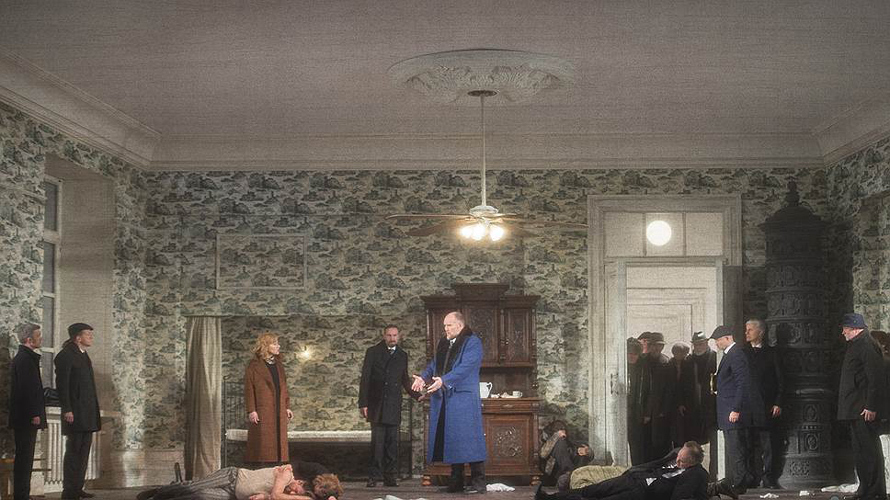
In the new "Tristan", set by Dmitry Chernyakov on the updated stage of the Berlin Staatsoper, there is no love. Well, that is, she could happen if the heroes decided on this strong, all -consuming and destructive feeling. True, then Tristan would have to destroy the barriers with which he carefully fenced off his soul from the outside world; To open a hardened shell, inside which a sticky lump of old fears, phobias and inexhaustible children's injuries hides. He would have to trust - about horror! “To another person, dissolve in him, forgetting his own“ I ”. And what could be worse for a business, rational person?
Isolde would have to forget about the offended pride - how, because Tristan enlightened her for another! It comes anger - and does not want to admit that she is ready to love. Due to the fear of true love, both prefer surrogates. The proximity occurs between them only for a minute-and then on the screen where some other, tender and loving isolde brings a glass of water to the lips of Tristan.
Was it a love drink? Hardly; After all, Brangen twisted a lid of a bubble with an elixir, never pouring a drop into a glass. Here Chernyakov honestly confirms Thomas Mann: "It could be simple water."
After Parsifal , set by Chernyakov two years ago on the scene of the Schiller Theater (long before the solemn move to the main building , opened after the long years of reconstruction), his appeal to Tristan and Isolde was inevitable. And since in the statsoper he had been issued for a long time ago a carte blanche for any unconventional decisions, he managed to hit and embarrass the audience with his reading of musical drama, performed by melancholy and love languor.
 © Monika Rittershaus / Staatsoper Berlin
From the time of the production of his first “Tristan” in the Mariinsky Theater, 12 years have passed; Today, Chernyakov, who had matured and significantly changed his picture of the world, looked at the great love story with different eyes. His gaze turned out to be cold and studying - this is the view of the Vivisector, which dissecting the spiritual throwing and reflection of modern man.
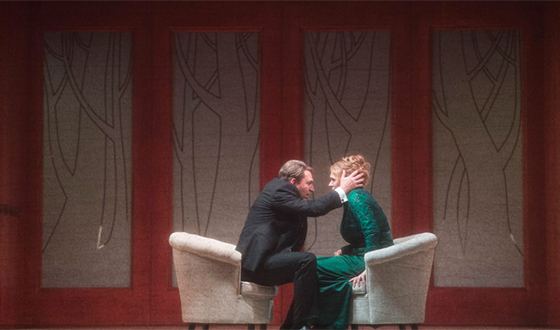
Isolda in the new version of Chernyakov is a tired, devastated and already middle -aged woman. She is escorted by neglecting, perhaps even contemptuous glances. She is a stranger in this beautiful male world who decided everything for her. In the position of the rejected being, it is difficult for her to affirm human dignity. A warm male company, gathered in a stylish wardroom on a luxurious yacht, perceives its sudden appearance as an annoying obstacle to friendly and business communication. However, they have already finished the meeting: empty glasses and bottles of beer remained on the table. The last of the meeters tears his jacket from the back of the chair, measured the gaze that came with an alienated gaze - what has it pinned? - And he leaves without saying a word. Now you can give free rein to feelings - and rage covers Isolde with his head.
In a subtle study, psychologically faithful, accurately found details of Chernyaks have repeatedly showed himself as a great master; But in this performance, it reaches some already completely inconceivable heights.
 © Monika Rittershaus / Staatsoper Berlin
It is amazing that the orchestra Daniel Barenboym (for which the current production of Tristan is the seventh in a row) does not even try to comply with the directorial interpretation; On the contrary, it enters with it an open discussion. Unbearable pauses in the introduction lasted mournfully and hopelessly. Passages, conveying love delight, were drillingly, passages. Orchestral paints in the central stage of the duet poured miraculously and softly. Ecstatic, on the verge of vocal capabilities, the singing of Ani Kampe-Isolde, the harsh, piercing-horsepower tenor of Andreas Shager-Tristan, slightly faded, but still sonorous mezzo-soprano of Ekaterina Gubanova and the heavy, boorish bass of Stefen Milling, King Mark, were woven into the romantic-fluent sound of the orchestra.
The Barenboim performs the Wagnerian score with such a high, noble, feverish ardor that the unfolding sound drama captures, excites, touches, causes tears - and forces these two, seemingly not correlating the reading between themselves. Two different stories are telling us. But these stories complement each other. And therefore, the content of the performance becomes especially deep, capacious, ambiguous. I would like to solve the riddles of the Berlin “Tristan” - although this does not always succeed.
A sudden infarction of a middle -aged man who had just experienced severe stress, the collapse of hopes, loss and sudden acquisition of his beloved - if not natural, then completely understandable.
The second act is especially mysterious. During the Great Service, King Mark, the newly-made wife of the owner of the house, is one-single in the crowd of bonton guests. She is completely lost, her green dress literally screams: well, pay attention to me! But no, she is indifferent to everyone, she is alien and, it seems, too provincial to interest someone. Even Tristan, with whom they recently rolled out with laughter, tasting simple water - and this opened the locks of sincerity, is wrapping past with a glass of champagne, kindly speaking with one or another lady. Just not with her. He clearly enjoys the situation - why?
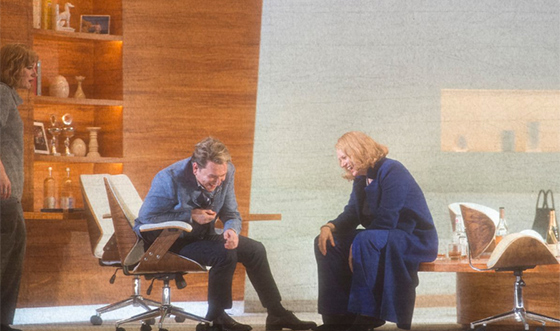
Tristan is a completely identified type of focused on the career growth of the clamped pragmatist. He does not want to make troubles on his head, twisting a serious romance with his wife boss. Yes, you need to be friends with Isolde, do not repel it. You can even decide on a non -binding affair. And therefore, when the guests, having dismantled the frightening size of the gun, go hunting, he returns to her, exhausting with impatience and uncertainty. She impulsively plays towards - but Tristan, smiling sweetly, makes a suspending gesture: wait, I am now! And in an instant it is with a bottle of champagne and two glasses in the hands. It is troublesome that the lady in a chair, attachs a bottle on the floor, is located on the contrary: eyes in the eyes, knees to the knees, hands make strange passes around the blonde of Isolda's head.
 © Monika Rittershaus / Staatsoper Berlin
No, a true lover behaves not so: Tristan’s body language clearly contradicts the words of love, and this is alarming. Tristan, it seems, fools Isolde's head, poisoning her stories about something like contactless tantric sex. He seems to teach her something, instructs her in a new way of love, explains, inspires, even reads some important text (and this is when the most captivating melody appears in their duet!). He nods his head approvingly, encouraging the correct answers, smiles when Izolda - first timidly, and then more bolder and more confidently - begins to worry his words and thoughts. Tristan and Isolde resemble teachers and an obedient, diligent student. But in fact, Tristan acts as an unscrupulous manipulator, a shawarlat guru, successfully fooling the head of a naive neophyte. He uses a characteristic gesture of suggestion: shaking the palms folded together and directed by the tip directly in the chest of the victim. At the same time, it avoids touch - and this is an important detail. He is satisfied with himself - for the time being.
But then the doors leading to the next room are extended. Behind them is King Mark, sitting motionless at a massive table, with his back to what is happening. It seems that his raspberry jacket will now spread at the seams from anger and sorrow. The wary, indignant, reproaching glances of the guests incinerate heroes. During the woeful speech of the king, addressed to his beloved nephew who betrayed him, Tristan suddenly transforms. He experiences the deepest feeling of guilt - and all the husk of lies and falsehood flies flies. At this moment of moral suffering, he reveals the truth about Isolde, which cured him from heavy wounds, and admits to his own feeling: he loves her.
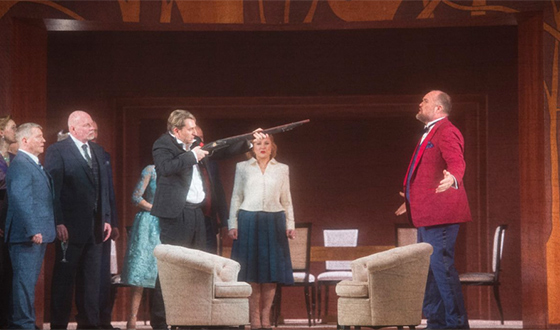 © Monika Rittershaus / Staatsoper Berlin
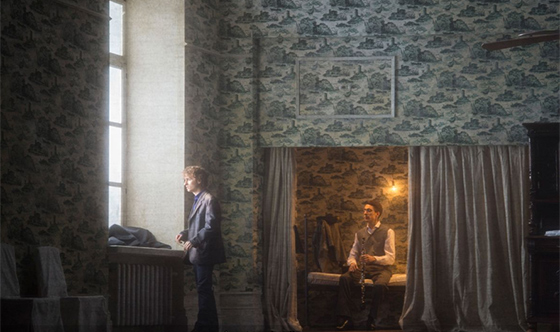
In the third act - an almost accurate repetition of that, Mariinsky performance - he lies on a white sofa, crushed by a cruel attack of depression. And it dies not from the loss of blood, tearing off the bandages, but from the gap of the heart, which came across with joy at the sight of the Isolda arrived. They never had time to touch each other.
Reasoning sensibly, we can say that a sudden heart attack in a middle -aged man who had just experienced severe stress, the collapse of hopes, loss and sudden acquisition of his beloved - a thing, if not natural, then understanding. Chernyakov on the canvas "Tristan" told a sad story that for modern, obsessed with expediency and closed for mental storms, real love is deadly. And not in vain, Tristan did not dare to admit and accept it for so long. He just didn't want to die.
All three acts stage boxes, in which the director (aka scenographer) placed the action, was covered with a transparent veil: the hall and scene, thus, are separated by a weightless fourth wall. Sometimes it seems that we are watching a movie. Berlin "Tristan" turned out to be bright, even excessively colorful. Only in the third act is the muffled, gray tones dominate: the old parental apartment, walls with faded wallpaper, a meager curtain that half the Spartan bed in a niche - all this was in the play of the Mariinsky Theater. The shadows of the deceased parents - the mother and the father of the most intelligent appearance - are quietly wandering around the room, then the tired father falls asleep, reclining on the bed, mother, crouching beside him on a chair, pulls the curtains.
In the same way, Izolda, having completed his mortal song, will sit at the bed, on which Tristan put the body, and on the last tacts of the opera will pull the curtains, fencing off the living world.