
Translated material
Courts will receive acceleration without perestroika
Instead of judicial reform, the authorities will optimize: they will unload judges, the processes formalize. The defending rights will become even more difficult, lawyers warn
Photo: club.foto.ru
Last summer, at the St. Petersburg Economic Forum, Vladimir Putin announced that the Supreme Court with the participation of experts is preparing a package of measures to “improve the judicial system”, including steps to give greater independence to the servants of Themis. This was perceived by the press as a statement about the start of the new judicial reform after the election. By that time, the Center for Strategic Development of Alexei Kudrin (CSR), which was believed to prepare the election program for Putin, had already worked on the reform. However, the two bills made public at the beginning of the year (one has already been submitted to the State Duma in mid -February) testify: there will be no new reform. About what the innovations and development of experts Kudrin’s experts proposed by the Armed Forces will lead to the well -known experts, including retired judge Tatyana Morshchakova and a sociologist, an assistant professor of the Economic School (NRU) Ella Paney.
The dictatorship of the law
With a large -scale judicial reform, Vladimir Putin began his first presidential company in 2000. “Whatever we do today: judicial reform or state construction - we must remember <...> that the dictatorship of the law is the only kind of dictatorship that we must obey,” Putin made this speech on January 31, 2000 at the expanded collegium of the Ministry of Justice.
After his speech, the phrase “dictatorship of the law” quickly became the unspoken motto of the entire subsequent judicial reform. For several years, all the basic codes were almost completely rewritten - criminal, civil, arbitration, several procedural ones. One of the main innovations: the arrest of the accused was the prerogative of the court. And this brought the results - the number of prisoners in the pre -trial detention center decreased three times - from 368 thousand people in 2000 to 117 thousand in 2017. These figures were brought by the chairman of the Armed Forces Vyacheslav Lebedev at the final meeting of the Council of the Chairman of the Courts on February 20, 2018.
The breakthrough event was the introduction of jury vehicles throughout the country, which in the early years carried out acquittal verdicts for each fourth case.
The second large judicial reform in the country began in 2012. It was not announced in advance, but began after Putin entered the post of president for a third term. New changes were aimed at tightening the law - punitive sanctions have grown in the Criminal Code and new articles were introduced - for example, responsibility for participating in unauthorized rallies. In 2014, a large-scale reform was carried out on the merger of the Supreme Court and the Supreme Arbitration Court-the chairman of you, a friend of the ex-president Dmitry Medvedev Anton Ivanov and his team, lost posts.
Brake for the development of the country
On the eve of the new election campaign - in June 2017 - again Putin announced a new reform. She had to touch the judges directly and give them more independence. “A package of proposals for improving the judicial system has already been agreed. He was discussed and worked out with experts, with the leadership of the Supreme Court. We are talking about strengthening the independence of judges and improving the training of court frames, ”Putin announced in his speech at the St. Petersburg Economic Forum in June last year. The President noted that it is necessary to reduce the load on the judges and optimize the process.

School of Economics
(NIU HSE) Ella Paneye photo: TV2.todey
The next attempt to modernize the ships is a very practical motive, Ella Paney believes. “Since the middle of the zero years, an expert consensus has existed that the development of the Russian economy is significantly inhibited by the quality of institutions, and first of all, the problem is the aggressive policy of power structures in relation to business and the inability of vessels to protect economic agents from arbitrariness,” says the Associate Professor of the Higher Superior. (The fact that politically motivated lawlessness in the courts became a given of the panies in NT back in 2013).
In her opinion, it is precisely the distrust of the courts and fear of security forces that also have a great influence on the development of the economy. “In my opinion, this is the only reason why the question of the reform of the vessels does not leave the agenda,” Paneya is sure.
Optimization instead of reform
In February, the Supreme Court submitted two bills to the State Duma with large -scale amendments to the procedural legislation (one has already been submitted to the parliament, according to the second, approval procedures are completed).
Simultaneously with the Armed Forces, the CSR Kudrin also published his proposals. As sources in court circles say, the experts of the CSR consulted in the Armed Forces and even tried to coordinate their positions. But in the end, the projects turned out to be completely different.
All the innovations of the Supreme Court, formulated in two bills, are reduced to the last wishes of the president - unloading of courts and formal optimization of the process. Although the official news agencies were announced as a “large -scale reform” initiative to the State Duma on the State Duma on February 7.
The main short story of the aircraft project is a rejection of motivated decisions on civil and arbitration matters. The Armed Forces proposes to allow judges not to write dozens of sheets with the analysis of the case, but to limit themselves to the decision itself (except when the party in the case requires this or it refers to a special category).
All the innovations of the Supreme Court, formulated in two bills, are reduced to the last wishes of the president - unloading of courts and formal optimization of the process
It is proposed to automatically consider cases with the amount of claims up to half a million rubles (in the civil process) and up to a million rubles (in the arbitration), in a special procedure - in a special order.
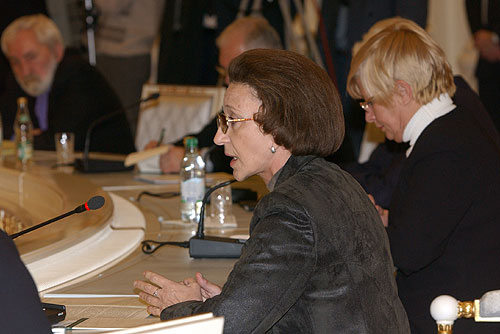
Tatyana Morshchakova photo: kremlin.ru
These novels cause fears among lawyers. “In fact, the entire judicial procedure is destroyed for most cases, the motivation of the judicial act is not written, whether someone will appeal this is not clear, since it is not known on what basis he was refused,” the judge of the Constitutional Court in retirement Tamara Morshchakova comments. “These abbreviated procedures eliminate the process that meets the requirements of fair justice.”
“Of all the proposals aimed at increasing the independence of the judges, the Bill of the STA gently chose only those that contribute to mechanical“ optimization ”of legal proceedings. In other words, the work of judges is supposed to be accelerated, facilitated and simplified, at the same time delivering them from a fair part of responsibility, ”says Paneyah.
The expert fears that if such proposals are accepted, this will turn the courts into conveyors, and judges will lose their qualifications and independence.
In other words, the work of judges is supposed to accelerate, facilitate and simplify, at the same time delivering them from a fair part of responsibility, says Panahi
The second draft of the Supreme Court describes the possibility of passing all conciliation procedures before the trial, including the involvement of a judicial conciliator to a dispute. These lawyers will, as independent arbitrators, study the documents of the parties before the start of the process and negotiate with the parties, persuading them to come to a compromise. The same reconciliations will be retired judges.
Experts do not exclude that to go to such a measure-to return retired judges to their ranks-the Armed Forces decided due to the acute lack of judges. “Many courts are unimportant, hence the load on judges,” said lawyer Timur Kutov.
Novels from Kudrin
Unlike the Supreme Court, experts of the CSR tried to concentrate on improving the independence of judges and the quality of legal proceedings. To do this, in their opinion, it is necessary to change the procedure for the appointment of the judges themselves.
Now all the judges of the district and regional courts first pass the qualification commission, and then are appointed by the president with the recommendation of the personnel commission under the head of state.
Kudrin experts propose to exclude the president and his commission from this chain. In their opinion, the first appointment, indeed, should be held by the president, but then the chairman of the Supreme Court may also be reassigned from the court.
And it is proposed to form the personnel commission under the president in a different way-to replace all representatives of law enforcement agencies with representatives of the legal community, the authors of the report said.
This is a rather dubious initiative, according to NT interlocutors in the legal community. “The chairmen of the courts will be able to drive judges on the courts like balls on the billiard field. This is completely not consistent with the independence of judges, ”Tamara Morchakova believes.
To deal with the excessive influence of the chairmen, Kudrin experts propose to introduce democracy in the courts - and choose the head of the court for a period of 4 years. And also pick up the right to distribute cases from the heads of courts and write out bonuses. The CSR proposes to give all these economic issues to a specially appointed person - the administrator of the court.
The authors of the CSR project propose to create a unified and independent of other departments of the Federal Center for Training of Judges. And to appoint judges just according to the results and results of training.
“The reform of the procedure for appointing judges will inevitably end with the fact that the special services will receive more, and not less influence on this process. The Unified Center for the Training of Judges will give the special services a full space, time, place and tools for thoughtful “work” with each candidate before the appointment, while the power structures now owns only the right veto when appointing through the commission, ”criticizes these initiatives of the panels.
“This is a very dubious idea. The creation of such a center can contribute to even more isolation of the judicial system and become a barrier to good lawyers who will not be able to get into the judicial corps, ”says lawyer Sergey Mikhailov.
The lawyer Timur Kutov agrees with him. “And now the most part of the judges are immigrants from the assistants of the judges. They send people to the colony, but even on the threshold of investigative insulators never stood, ”Kutov explains. - For them, this decision is an arrest or not an arrest - just a piece of paper. Recently, in my practice, one such judge sent to a pre -trial detention center the mother of half -year -old triplets, and not on a violent article, but in economic case. ”
And this is not the limit
Sun projects can still be significantly changed during parliamentary hearings, NT sources in the judicial community say. As this, for example, happened with the initiative of the Armed Forces on decriminalization of minor crimes a year and a half ago. And in the future, the interlocutors of NT do not believe at all.
“In today's political atmosphere, changes are possible only for the worst. The degree of degradation of the judicial system is already very high, but its limit will not yet be achieved "
However, even with the current strict regime, the authorities can afford the cardinal reforms of the judicial system, but this reform is unlikely to entail positive changes, says Paneye.
“Public resistance is suppressed, the influence of the independent press is minimized, the political arena is cleaned. This means that the authorities can significantly change the mode of operation of the courts, but in today's political atmosphere, changes are possible only for the worst, ”says the HSE expert. “The degree of degradation of the judicial system is already very high, but its limit will not yet be achieved.”