
Translated material
The alleged organizer of supplies from Argentina of the Ambassador Cocaine had connections in law enforcement agencies, but accuses the special services of provocations
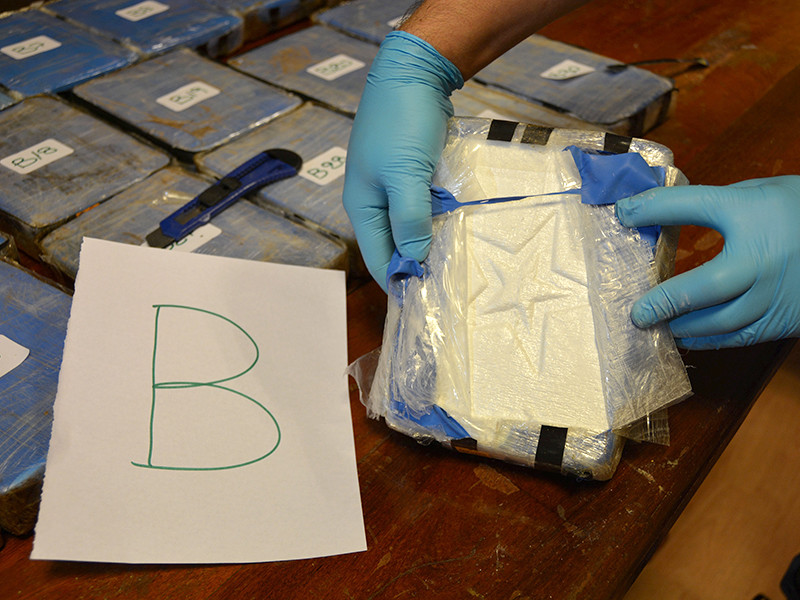
One of the key defendants in the resonant case of the supply of a large batch of cocaine through the Russian Embassy in Buenos Aires Andrei Kovalchuk, who was arrested in absentia and put on the international wanted list, could freely enter the territory of the diplomatic mission, although he was not an employee. This was told by the interlocutor familiar with the investigation.
According to him, Kovalchuk called himself a man close to power structures. Even before arriving in Argentina, he met another person involved in the case - Ali Abanov, who performed technical tasks in the structure of the Ministry of Foreign Affairs. “In fact, he was a manager, he performed the same function in Buenos Aires,” the source of journalists explained.
As reported, it is Kovalchuk who Russian and Argentine law enforcement agencies consider 389 kilograms of cocaine. According to the Argentine publication, Clarin , Kovalchuk is a 50 -year -old Russian businessman living in Germany.
- Peskov spoke about the Kremlin’s reaction to the “cocaine business”
Meanwhile, Rosbalt writes that, according to the Kovalchuk version, in July 2016 he acquired a batch of coffee, cigars and cognac in Buenos Aires. Purchases, according to him, are confirmed by checks, as well as eyewitness certificates. It was this load that was placed in the auxiliary premises of the school at the embassy where Abyanov worked.
In November 2016, Abyanov was dismissed from his post, and when transferring cases to the New Zhozhu warned that Kovalchuk's things remained in the room. A month later, law enforcement agencies opened their suitcases and found cocaine there. However, Kovalchuk insists that he has nothing to do with drugs. He is sure that someone replaced a coffee batch with cocaine in suitcases.
In December 2017, many other things of the Dipmission entered the premises of the school at the embassy. Kovalchuk hired a private plane to transport the cargo to Russia. However, white powder was in the suitcases. Kovalchuk previously planned to fly to the Russian Federation in the near future and testify, but because of the hype, he took time for thought.
In another Rosbalt publication today, citing the testimony of accused in the Cocaine case, writes that Kovalchuk could be an employee of the Russian Ministry of Foreign Affairs. It was in this status, according to the sources of the publication, that he had been in the Russian embassies in Germany and Argentina for a long time.
The lawyer of Andrei Kovalchuk Vladimir Zherebenkov told TASS that his client is indeed abroad, but denies his guilt in organizing the supply channel for large parties of cocaine from Argentina to Russia and European countries. And he intends to publicly prove his innocence after some time.
“Kovalchuk contacted me by phone from abroad, he announced his innocence, called the accusations a provocation of the special services, said that he wanted to return to Russia and testify, but after all this hype he paused,” said Zherebenkov.
The lawyer explained that, according to the client, he knew that Kovalchuk was an “technical personnel employee”, and living in Argentina, bought coffee and rum, which he kept in separate boxes in the economic premises of one of the Russian embassy in Buenos Aires. "Everyone knew that Kovalchuk bought coffee and rum and kept in his boxes, he could not send a load to Russia for a long time, he finally did it. Everyone knew it, there was no secret in this. But other boxes flew to Moscow, and they were not related to Kovalchuk, we believe that this is a provocation of hostile specialists. advocate.
Earlier on February 27, the Ambassador of Russia to Argentina Viktor Koronelli, whom the Argentine media call the initiator of the investigation that had begun a year ago, answering the question of journalists when it was on the territory of the Russian diplomatic mission that 12 suitcases with cocaine were discovered, said that this happened at the end of 2016.
Of all the defendants in the “cocaine business” , who later called in the Argentine and Russian media, the ambassador is known to have Abyanov, who was the previous head of the embassy and “brought these suitcases with drugs to the territory of the school-residential complex of the embassy, where he hid them in anticipation of the upcoming opportunity for sending.”
Coronelli said that as a result of the investigation it was found that Kokain was imported by cocaine to the embassy on his car, it was Abyanov, who had access to the garage complex.
The second familiar ambassador Name is Ivan Bliznyuk, "Argentinean citizen, an employee of the Buenos Aires city police, whose circle included issues of maintaining contact with various - not only with ours - diplomasses for cooperation in the training of personnel."
As the head of the Russian diplomatic mission in Argentina noted, during the investigation, which was devoted to a very narrow circle of people "in order to avoid information leaks", he personally made contacts with the Minister of Security of Argentina.