
Translated material
Cocaine without immunity
The scandal of drug smuggling through the Russian Embassy in Argentina after the publications of wiretaps went to a new round
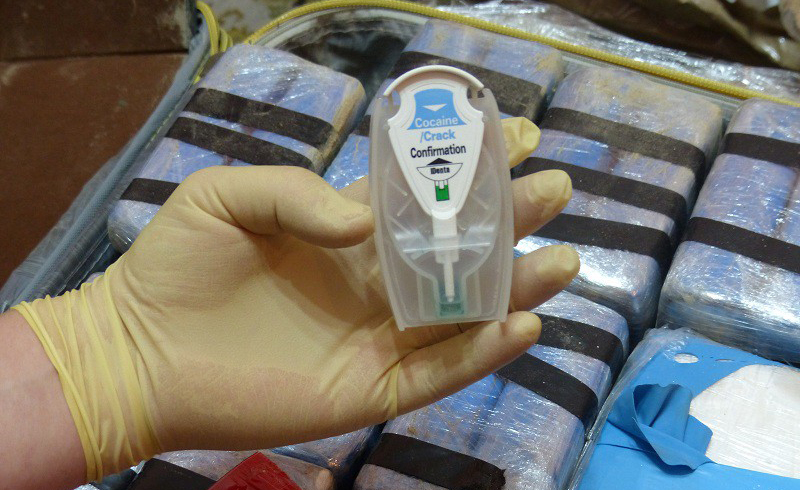
Photo: © Center for Public Relations of the FSB of Russia
Blogger against diplomats
Russian officials are extremely unhappy with the way the media cover the story about an attempt to smuggle almost 400 kg of cocaine from the Russian Embassy in Argentina to Moscow. “Those information stuffing that took place on weekends on various aspects of this case, are aimed, in my opinion, to distract from the main thing and give up a shadow to work in this rather difficult and unusual business,” said the deputy head of the Ministry of Foreign Affairs Sergey Ryabkov at a meeting of the Committee on International Affairs of the Federation Council on Monday.
Previously, the official representative of the Foreign Ministry Maria Zakharova commented on this topic. “They are surprised at how this topic is covered by“ experts ”, some of them agreed to the point that this case“ throws a shadow ”to our diplomatic mission. Everything is exactly the opposite: the success of this operation was ensured precisely by the effective actions of the Russian ambassador and diplomatic personnel, ”says Zakharova, posted on the website of the foreign policy on February 23.
The discussion of this story went to a new level after the famous blogger Maxim Mironov posted in his LJ post with the provocative heading “About Argentine cocaine, or why is the Foreign Ministry?” The blogger living in Argentina notes that for several years now, the school protection regime at the Russian embassy, where drugs were stored, was sharply strengthened due to the fear of terrorist attacks. “If someone wants to carry such a cargo into the territory of the embassy school and ensure its safety, you need to negotiate with the security chief,” the blogger notes, whose children visit this school.
“The Argentine special services seem to not really believe in the official version of the Ministry of Foreign Affairs, so after its publication they began to pords wiretaps to the press to show the entire society that the highest ranks of the embassy were involved in this and, apparently, the Russian state, and history lasted many years”
The author of the blog also indicates the fact that the Russian employee met the main criminal case responsible for the security of the embassy, who tried to discuss the possibility of using diplomatic channels to send valuable cargo.
In his publication, Mironov quotes fragments of wiretaps of the defendants in the case, which the local special services conducted. “The Argentine special services, like me, do not seem to believe in the official version of the Ministry of Foreign Affairs, so after its publication they began to pords the recordings of wiretaps in the press to show the whole society that the highest ranks of the embassies were involved in this and, apparently, the Russian state, and the story lasted many years,” Mironov writes.
At the post of blogger Mironov, the Russian Embassy in Argentina reacted very nervously. “Over the past few years, he has occupied a well -known political position, claiming the role of the leader of the local opposition cell. Earlier he tried to gather from the walls of the embassy, however, without much success, a rally of anti -Russian orientation, ”the official statement of the diplomatic mission said. At the same time, the Russian embassy believes that the blogger “reels” the publication of the local press, relying on the most “fried” information and loud “yellow” headlines.
"The ambassador broke the roof"
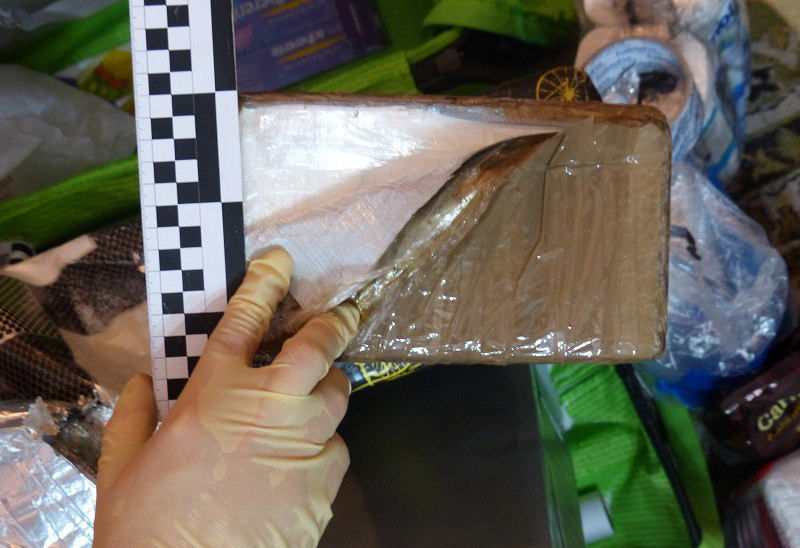
According to the statements of the official authorities of Argentina, the operation to disclose the narcoset began at the end of 2016 - after the ambassador of Russia to the local law enforcement agencies in this country. It turned out that 389 kg of high -quality cocaine, fed in 12 suitcases by approximate value of $ 50 million, were wrapped in the school building at the embassy.
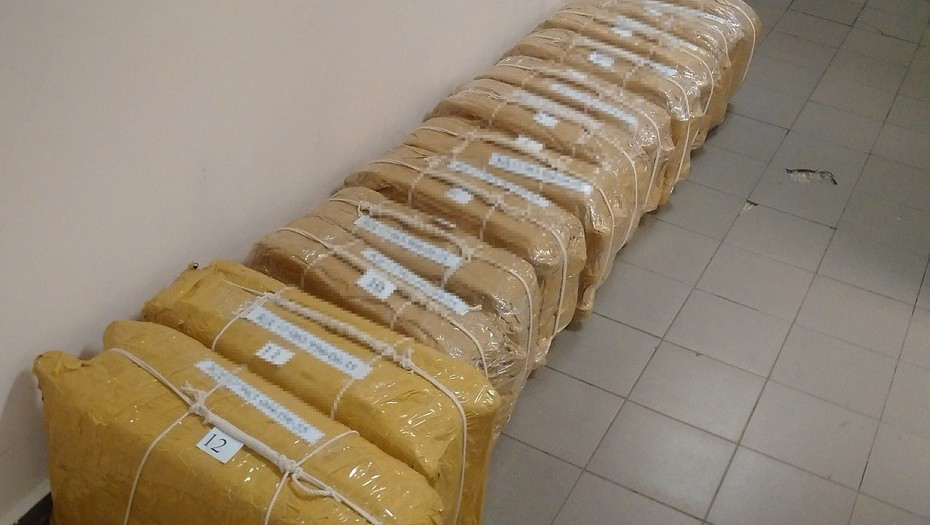
Photo: Clarin.com
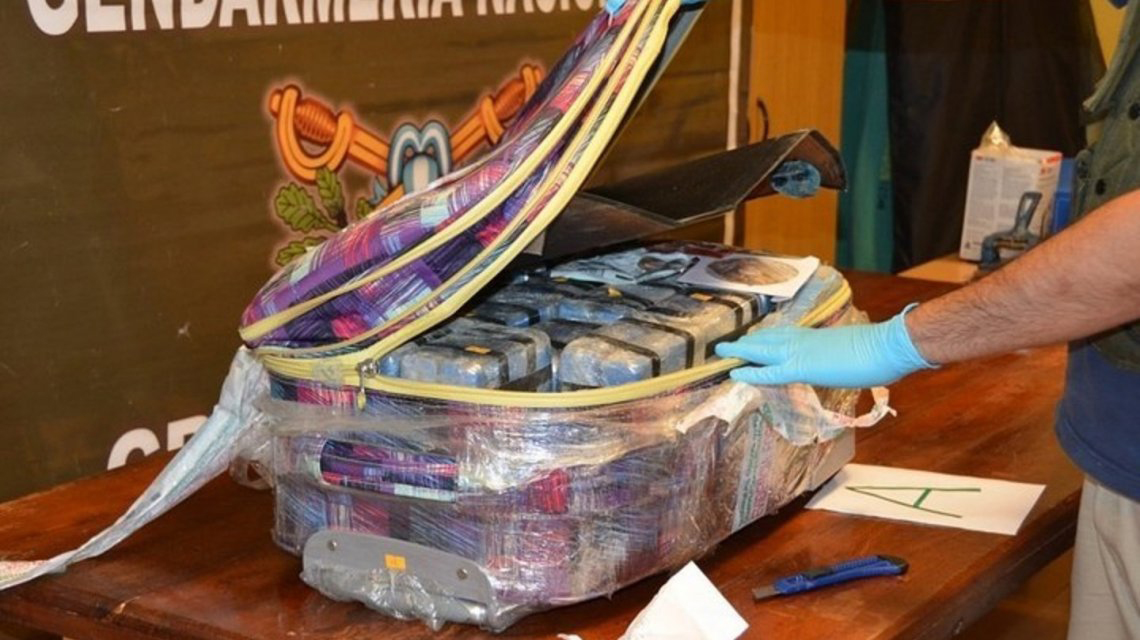
Photo: minutouuno.com
Local special services took control of the negotiations of the suspects. The operation, which lasted almost a year, was conducted in an atmosphere of increased secrecy in order to prevent leaks in the press. As a result, in December 2017, three Russian citizens were arrested in Moscow, they were charged with attempted drug smuggling. Two suspects were detained in Argentina.
In the local press, excerpts of their negotiations of the alleged drug trafficks appeared, from which it follows that they tried to use diplomatic channels and their connections at the Russian embassy to send suitcases. "How is our Vorobyov Oleg?" - asks the alleged organizer of the smuggling of Cocaine Andrei Kovalchuk (he lived in Germany) of the local policeman of Russian origin Ivan Gemini. Vorobyov, judging by the media publications, is responsible for the safety of the Russian embassy. "Fine. He returned from vacation, ”says Bliznyuk, who maintained tight contacts with Russian diplomatic departure on duty. "I speak with him every 20 days, like, hello-hi." Further, in the course of the conversation, Glovyuk complains that he is not allowed to "get closer" to anyone and, apparently, at the "ambassador tore off the roof."
It is noteworthy that drug contracts discussed the career prospects of Russia's ambassador in Argentina. According to the data of wiretaps for October 2017, the smugglers say that a new ambassador should come to Argentina soon, with which Kovalchuk supposedly maintains good relations
During another conversation, intercepted in October 2017, Gemini and his accomplice Alexander Chikalo discuss the problems that Kovalchuk faced. “Now he was chopped off by access to the dippochet because he quarreled with the ambassador and he does not know what to do ... Can you imagine the volume of drug trafficking that came from here before?” - Chikalo asks. At the same time, from the dialogue of smugglers it follows that earlier Kovalchuk could use the transport provided by the embassy.
Local special services recorded negotiations between Kovalchuk and Vorobyov in Buenos Aires. “I have 12 cognac boxes and two large boxes with cigars. I need a pickup or minibus, ”Kovalchuk explains his problems to Vorobyov. “I don’t have them, I don't want to contact this. Sorry, I may have problems. I need permission to go to the airport, and only the ambassador can give it, ”the Russian official replies.
"Successful" cooperation
It is noteworthy that drug contracts discussed the career prospects of Russia's ambassador in Argentina. According to wiretaps for October 2017, smugglers say that a new ambassador should come to Argentina soon, with which Kovalchuk supposedly maintains good relations.
The ambassador himself, Victor Koronelli, who heads the diplomatic mission since September 2011, said in an interview with Kommersant FM, which was familiar with only one of the defendants in the case - Ali Abyanov - who held the position of the head of the embassy. According to the investigation, it was he who carried the suitcases with cocaine to the school territory. In July 2016, the manager went to Moscow.
Drug traffickers tried three times for a year to transfer the cargo to Moscow (by this time cocaine was replaced by flour, and beacons were laid in the suitcases).
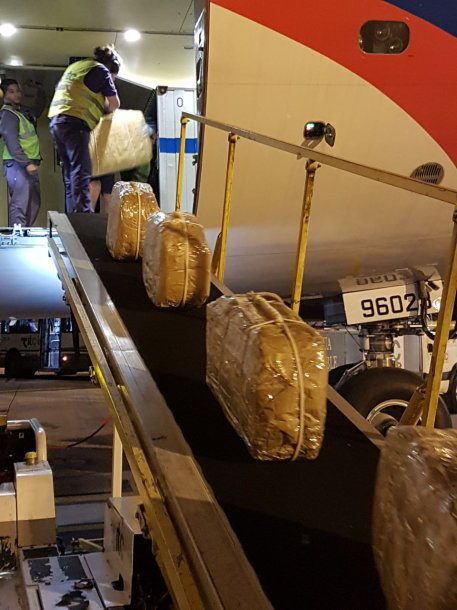
The first time they tried to take out a load on a private plane. But this under a plausible pretext was imposed by the Argentine special services, who were afraid to lose his trace. Then, for the transfer of cocaine, the organizers of the smuggled scheme thought to use a business trip of the Argentinean policemen to Russia, to Moscow. As a result, the cargo arrived in Moscow in November last year along with other personal things of the former manager. But their recipients were detained by special services.
Both in Moscow and Buenos Aires, it is especially noted that the successful conduct of this operation was made possible thanks to the close coordination of special services. But perhaps this story may have a continuation. Judging by the interceptered and published in the press, drug trafficking, such a diagram of drug transfer could be involved in the neighboring Uruguay.
Scandals, when drugs tried to transport, using diplomatic channels, happened before. In 2003, for example, Feldyegeri from Tajikistan with a load of special readings were detained at Domodedovo Airport, where eight kilograms of heroin were discovered. But usually, more simple methods are used to transfer large batches of drugs - for example, cans rolled up by a factory way, coffee bags or large batches of vegetables and fruits that are transported by sea.