
Translated material
Coffee carrier, curator from special services
Who is Mr. K from the case of 362 kilograms of cocaine at the Russian Embassy in Argentina?
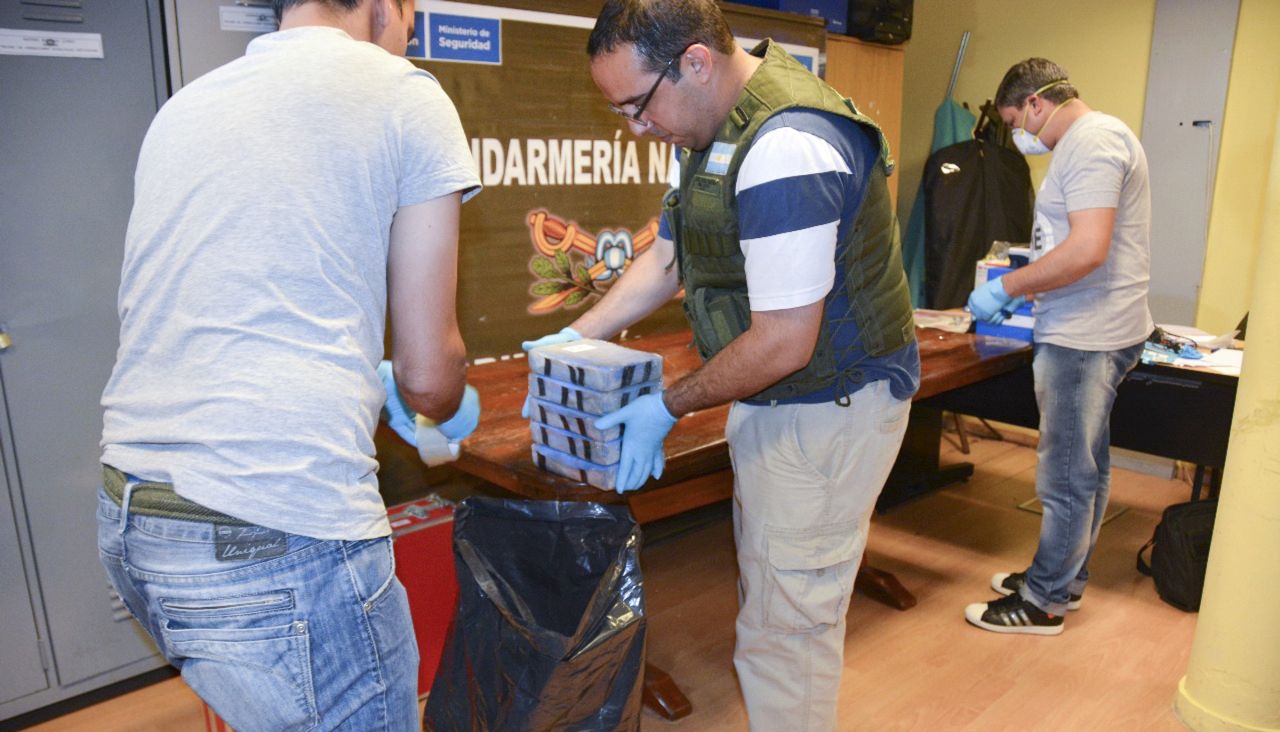
In Germany, Russian Andrei Kovalchuk was arrested. Special services consider it the organizer of cocaine smuggling through the Russian embassy in Argentina. Kovalchuk himself called the "cocaine case" a provocation and stated that he was transported not 362 kilograms of the drug, but 270 kilograms of coffee.
Argentinean media suspected of smuggling of drugs "Mr. K"
The first to participate in Kovalchuk in the “Cocaine case” was told by the Argentine media, which initially called him “Mr. K”. The La Nacion publication, citing sources in law enforcement agencies, wrote that he was born in Russia in 1968, lives in Berlin (according to other sources , in Hamburg) and works as a commercial representative of the “prestigious” company for the sale of cigars. According to the publication, since 2013, "Mr. K" went to Argentina 11 times; Each time he came with cigars and alcohol and gave them local residents in exchange for various services. The publication Clarin called the name "Mr. K" - Andrey Kovalchuk.
The FSB believes that Kovalchuk was the main thing in the chain of drug transportation to Moscow. His accomplices are called two natives of Russia living in Argentina - policeman Ivan Bliznyuk, who had close ties with the Russian embassy, and Alexander Chikalo; His Argentine media was called a mechanic. Both led the Foundation "Russian Orthodox Patroners in Latin America." Three Russians-the former head of the Russian embassy in Buenos Aires Ali Abyanov and two employees of Moscow firms Vladimir Kalmykov and Ishtimir Khujamov are also accused of complicity. All these people have already been arrested.
Kovalchuk tried several times to take a suitcase with cocaine from Argentina
According to the law enforcement agencies of Argentina, it was Kovalchuk who bought a batch of cocaine designed to be sent to Moscow. The drug, whose purity reached 88% (for comparison: the purity of cocaine distributed in Europe is usually not higher than 40%) was allegedly produced in Colombia. He was packed in 12 suitcases, Abyanov, at the request of Kovalchuk, first stored in the garage of the Russian embassy, and then in the backbone of the embassy school. Suitcases stood on the territory of the diplomatic mission since 2015 or, according to other sources , 2016; In December 2017, the smugglers sent them to Moscow, not knowing that a year ago, special services replaced cocaine with flour.
Suitcases with drugs stood at the embassy for so long, because the smugglers managed to transport them to Moscow not on the first attempt. According to the Argentinean publication, Infobae, in April 2017, this tried to do this - with the help of cadets whom he was supposed to be taken to Russia; The trip was canceled. The next attempt was made by Kovalchuk, who flew to Buenos Aires on a private cessna aircraft in October 2017. Before departure, he asked for an embassy car for transporting suitcases. According to the protocols of wiretaps published by the Argentine media, for this he contacted a certain “master o”; According to unconfirmed reports, this is the first secretary of the Russian diplomatic mission in Argentina Oleg Vorobyov (he is mentioned in one of Kovalchuk’s conversations with Bliznyuk).
Here is an excerpt of the dialogue between Kovalchuk and “Mr. O”.
Kovalchuk: I have 12 cognac boxes and two large cigar boxes. And only one car. I need a pickup or minibus.
"Mr. O": I do not have them, and I do not want to intervene in it. Problems may arise. I need permission to go to the airport, only the ambassador can give it. I can't…
On another record, also made in October 2017, Chikalo and Gemini are discussing that Kovalchuk arrived in Argentina on a private plane, and the ambassador refused to give him a car with diplomatic numbers because they quarreled. “Previously, he gave him a car, diplomatic courier documents. And now he does not know what to do, ”says Chikalo on the record. The head of the Russian diplomatic mission in Argentina, Viktor Koronelli, later said that he was unfamiliar with Kovalchuk.
Kovalchuk's suitcases went to Russia before - through Uruguay
Ali Abyanov, according to his lawyer Alexander Kostanyans, met Kovalchuk in 2011, working at the Russian Embassy in Germany. He introduced himself to him a “curator” from the special services (a witness in the “Cocaine case”said that Kovalchuk was an employee of the Ministry of Security of the Ministry of Foreign Affairs; the ministry replied that he had never worked in the central apparatus of the Foreign Ministry or in Russian embassies); Abyanov considered him an authoritative person, “almost a general,” Kostanyanz said.
According to Abyanov’s testimony , in 2012, when he was already working in Argentina, Kovalchuk asked him to take him to Buenos Aires Airport. Among his baggage, according to Abyanov, there was one “very heavy suitcase, weighing 25-30 kilograms”. Kovalchuk said that there are alcohol, coffee and gifts inside, and asked to send a suitcase later. Abyanov brought him back to the embassy and a few months later he sent a cargo Russian aircraft from the airport of the capital of Uruguay Montevideo.
After that, Abyanov sent Kovalchuk's suitcases several times several times - and received for each a thousand dollars. At the same time, according to Abyanov, he never looked at what was in the baggage of his acquaintance. “He, by virtue of his naivety, fell into this story,” RBC told RBC Abyanov.
Kovalchuk called the "cocaine business" by a provocation of special services. And he said that he was transporting coffee
Andrei Kovalchuk denies his involvement in the “cocaine business”. According to him, coffee, cigars and alcohol were originally in the suitcases. “In total, I bought 270 kilograms of coffee [totaling 80–90 thousand dollars], which, of course, then intended to sell,” Kovalchuk said Kommersant. He added that he packed his things in eight suitcases, and not at 12, as he was attributed.
According to the lawyer Kovalchuk Vladimir Zherebenkov, his client never hid that the suitcases stored in the embassy belong to him, several times unsuccessfully tried to pick them up (including on a private aircraft) and ultimately did this with the help of an airplane chartered in Uzbekistan. Kovalchuk suspects that someone replaced his things with cocaine in order to discredit the Russian diplomatic mission in Argentina, Zerebenkov said. “It cannot be ruled out that we are dealing with a well -organized provocation. Drugs were found during the period when Argentina’s gendarmerie began to tightly cooperate with [the US Drug Control Department], ”the lawyer said.
Later, Kovalchuk said that he would voluntarily return to Russia as soon as evidence of his innocence is collected. On the same day he was detained in a suburbs of Berlin. The court arrested the Russian before resolving the issue of his extradition. The Russian embassy in Germany believes that this process can take several weeks.
Olga Korelina