
Translated material
A winged rocket with a nuclear power plant is possible?
The nuclear physics specialist George Tikhomirov answers
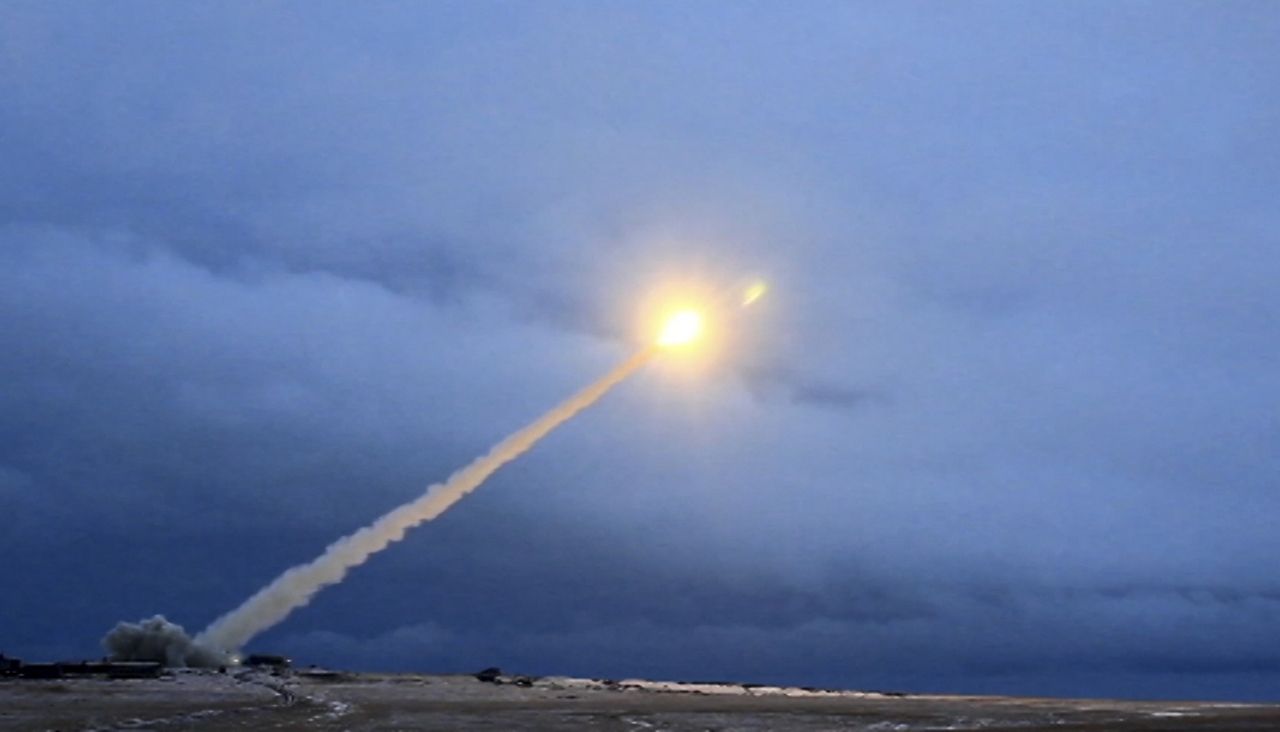
On March 1, President Vladimir Putinsaid that in Russia they created a small -sized super -powerful nuclear energy unit, which is located in the winged rocket case. The flight range of such a rocket, according to Putin, is practically unlimited. Medusa asked the Deputy Director of the Institute of Nuclear Physics and Technology, NIAU MIFU Georgy Tikhomirov, to explain what a nuclear energy installation is and whether it can be placed in the missile building.
- Nuclear power plant - what is it?
- This is an installation that produces energy due to a nuclear reaction, as a rule of division. An example is nuclear reactors combined with some kind of power plant like a turbine that gives an electric network. That is, simply put, the nuclear power plant is an example of a nuclear power plant.
A nuclear engine and a nuclear power plant are different concepts. The engine solves other problems. But the nuclear energy installation can serve as the basis for the vehicle. Take an atomic icebreaker - there is a nuclear reactor. There is also a system that converts thermal energy to the energy of the screws. But I would not call the reactor engine.
- What is the advantage of nuclear power plants?
- The advantage of nuclear technologies is in the concentration of energy. One kilogram of nuclear fuel contains a million times more energy than one kilogram of coal or some liquid fuel. Accordingly, the main advantage of all such attitudes is the ability to make a much larger fuel supply on board, without reducing the power and life. You can compare with the usual car: we have to stop by the column all the time and refuel. If the car worked on nuclear fuel, it would be necessary to refuel more than once every few days, but once a year. I usually give schoolchildren the following example: for the work of an ordinary heat station, conditionally, a pair of coal compositions per day is required, and the nuclear power plant is enough for several wagons per year.
- Where are such installations used?
- From transport, nuclear power plants are placed on icebreakers and submarines. Now on an industrial scale they are not put anywhere else. In Soviet times, there was a period when they tried to install nuclear engines on aircraft and use them in space. This is the road where humanity can go.
If we talk about space missiles, for example, there are rites (radioisotope thermoelectric generators), but they are needed not for movement, but in order to have some kinds on board, these are sources of autonomous power. Projects of precisely nuclear power plants that are able to give reactive traction were and are. But, as far as I know, now nothing like this flies in space.
- Is it possible to put a nuclear energy installation on a cruise missile?
- I do not want to comment on the words of the president, because it is out of my competence, but I do not know such attitudes. Theoretically, this is possible. How much Russian developers have practically advanced in this direction [I am unknown]. There are topics that not all experts are discussing. Well, since the president said, it means that there are some progress in this direction. The very idea of putting such attitudes on moving objects, primarily a plane, has existed since the 1950s. As for the winged rocket [c nuclear energy installation] - this is a fresh solution, I have not heard of such things. But for me this is not very surprising - because the theoretical opportunity [create such a compact installation] exists. Progress is coming.
Recorded by Alexander Borzenko