
Translated material
Putin Restaurateur stopped being a favorite contractor of the Ministry of Defense
Businessman Evgeny Prigozhin received multibillion -dollar military contracts for years, but now their volume has been dried up, and businessman companies are fighting with the ministry in courts.
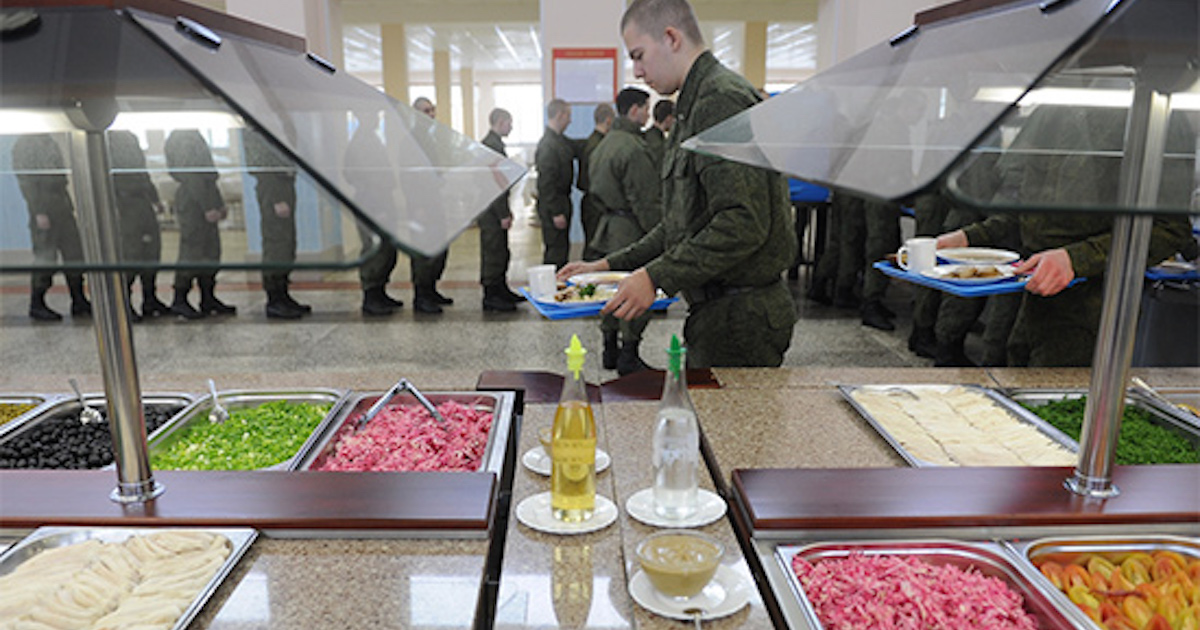
Photo: Ministry of Defense of the Russian Federation
The structures of businessman Yevgeny Prigozhin last year lost most of the orders of the Ministry of Defense for clining and servicing military towns, The Bell found out, analyzing the procurement of the department. Six of the nine large contractors who were associated with the businessman are liquidated or in the liquidation stage.
- Details. Last year, Prigozhin contractors for cleaning, construction and maintenance of military towns amounted to less than 1 billion rubles (and most of these companies did not receive from the Ministry of Defense).
- For comparison: in 2015, the volume of the same contracts by the Ministry of Defense exceeded 27 billion rubles, in 2016 - 13 billion rubles.
- Previously, the companies associated with Prigozhin also received contracts for current repairs in the army (for 2015-2016, a total of 6.5 billion rubles). In 2017, they did not get a single contract in this area, three of the six contractors who received them earlier are eliminated.
- The company "Evera" supplied fuel to the Ministry of Defense (31.5 billion rubles in 2015-2016). The FBK of Alexei Navalny pointed out that this company received the Ministry of Emergencies one day with other companies allegedly related to Prigozhin. Now she is also at the stage of liquidation.
- Prigozhin remained the largest contractor of the Ministry of Defense and other state structures and departments since about 2010. According to RBC, in 2015, the total amount of state contracts received by his companies amounted to almost 70 billion rubles.
- About how the St. Petersburg restaurateur, who is called a personal cook or restaurateur Vladimir Putin, managed to read the king of the state order here in detail here .
Now the Ministry of Defense does not pay Prigozhin to even concluded contracts. In total, ASP, Megaline, Ruskoplex and Prometheus filed a lawsuit against the ministry in the amount of about 2.7 billion rubles, and follows from the arbitration file.
- One of the largest - a lawsuit for 543 million rubles - was filed by ASP. The Ministry of Defense refused to pay her, referring to the lack of confirming work of the documentation. The court satisfied the lawsuit.
- Megaline demanded to recover 508 million rubles from the Ministry of Defense for executed contracts. After filing a lawsuit, the ministry partially repaid the debt, the rest of the company recovered through the court.
- In 2015, there were no such disputes between Prigozhin contractors and the Ministry of Defense: the ministry regularly paid under contracts.
What happened?
It can be assumed that Prigozhin simply registers new companies that receive lords. But the owner of one of the third -party contractors of the Ministry of Defense claims that Prigozhin’s companies no longer provide military cleaning services. The owner of another company operating in this market confirms this. According to him, the barracks themselves are now washing the barracks - this was so until 2010.
- The volume of contracts of the Ministry of Defense for clining (sanitary processing) really fell strongly. In 2015, about 30 billion rubles were going to spend about 30 billion rubles for cleaning in the army, in 2016 - 3 billion rubles, and in 2017 this amount was doubled.
What is the reason for a sharp reduction in the volume of orders is unknown. Representatives of the Ministry of Defense and Prigozhin did not answer the request of The Bell.
“Fontanka” wrote about growing claims to the company of Prigozhin from the Ministry of Defense half a year ago: problems were allegedly related to violation of licensing requirements and non -compliance with labor law. After inspections of military canteen, the army control authorities found cockroaches, products with traces of mold and decay and assigned fines.
The Fontanka suggested that the relations between Prigozhin and the Ministry of Defense could deteriorate due to the weak conspiracy of the Wagner PMC of Wagner , who is also associated with Prigozhin in Syria (and before that, in the east of Ukraine). Another version is due to a dispute about the quantity and dignity of the awards that the Frequency Fighters received.
The RBC magazine estimated the content of the Wagner Group from 5.1 to 10.3 billion rubles. per year - taking into account salaries, supply, residence and meals. Plus, one -time expenditure for equipment is 170 million rubles, compensation to the families of those killed with a minimum assessment of losses - from 27 million rubles. Money soldiers of the Wagner Group were paid in cash, officially they were not issued anywhere, and the purchases of weapons and equipment were classified.
According to Fontanka, the cooling between Prigozhin and the Ministry of Defense also affected the Wagner group. “Since 2017, financing of Wagner campaign, its supply of weapons, equipment and ammunition is carried out at the expense of the Syrian side and is accompanied by constant delays in payments and disputes about their size,” the publication wrote .
Beginning since the end of 2016 has been under American sanctions, and recently the United States has accused him and a dozen employees of the so -called “troll factory” of intervention in the American elections. It is believed that Prigozhin sponsored its creation.
Where does Prigozhin go now?
It is good for Prigozhin to go only in the school food market: in 2017, companies associated with it received contracts for supplying food to schools in the amount of 47 billion rubles (against 28 in 2016). Another 1.3 billion brought the supply of food to hospitals: contracts received AVK and Prodfutservice associated with Concord. This year they have already won contests for 2.2 billion rubles. The sanatoriums of the Ministry of Defense continues to feed Prigozhin (last year's contracts amounted to 1.7 billion rubles).
However, Prigozhin is looking for other sources of income. In August 2017, Wagner PMC in Syria was engaged in the protection and defense oil regions with the main object - the Khayan plant. Its tasks, according to Fontanka, also included the advance and seizure of the territory.
As The Bell recently found out, around January 2018, the Euro Polis company, which is also associated with Prigozhin, signed legally binding agreements on work in Syria. Since the end of 2016, the company has conducted negotiations with the Syrian government to receive a quarter of oil and gas obtained in the territories conquered for Bashar Assad.
Soon after the signing of the final agreements of the Wagner PMC, she unexpectedly attacked the American base in the oil and gas province of Deir-Ez-Zor. According to various sources , as a result of this attack, a dozen to more than two hundred people died. Kommersant, citing a Russian military source, wrote that the cause of the incident was allegedly an attempt by Syrian “large entrepreneurs who currently support Bashar al -Assad” to seize oil and gas fields under the control of the Kurds - the US allies. However, Der Spiegel, whose correspondents spent two weeks in Syria,claims that Russian mercenaries did not take part in the battle. The Ministry of Defense and the Foreign Ministry said that official structures had nothing to do with this clash.
Anastasia Yakreva, Svetlana Reuters