
Translated material
Russian senators talked about US intervention in the affairs of other countries. Sources - Book of Pseudo -History, Wikipedia and American Research
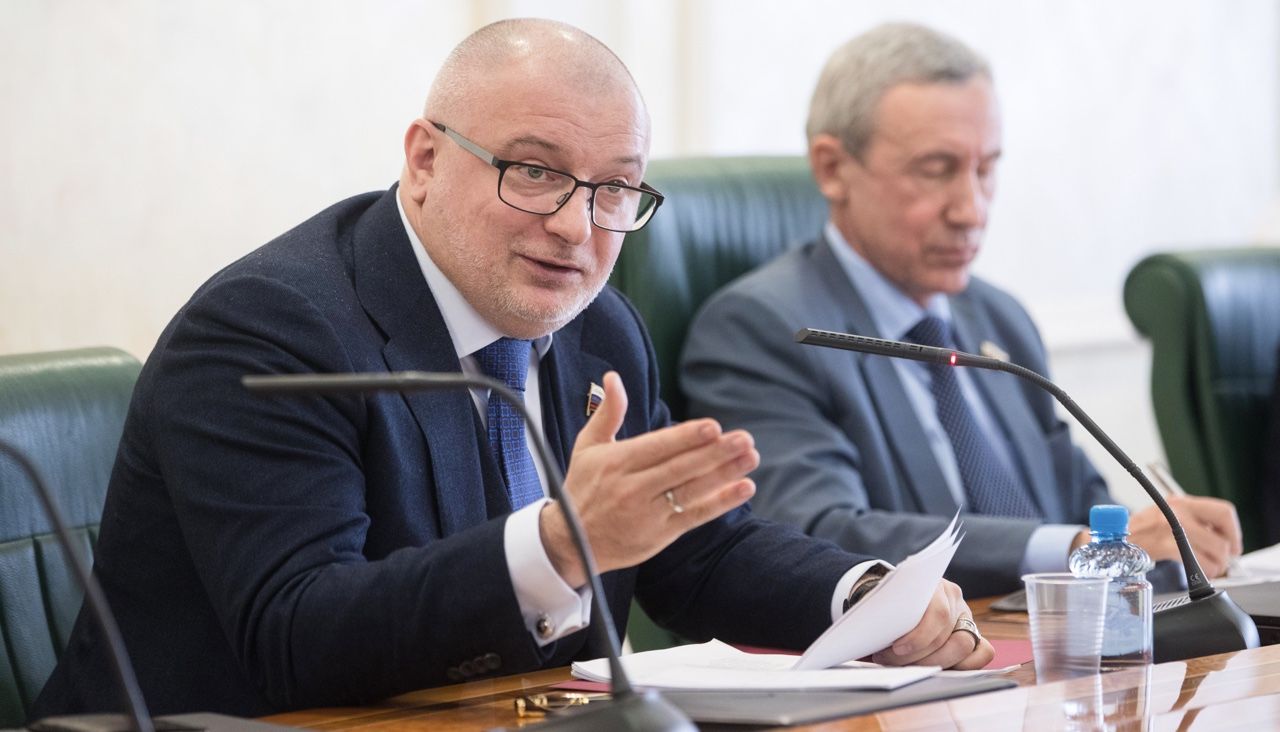
The Commission for the Protection of State Sovereignty and the Prevention of Interference in the Internal Affairs of Russia submitted its first large report in the Federation Council. A significant part of it is a historical excursion: about how the United States intervened in the affairs of other states in different years. In the introduction, members of the commission write that this is "an objective analysis based on reliable data." It seems that the authors of the report took data from the retelling of the American study of 2016; In addition, they copied fragments from the book of pseudo-historian-Stalinist Igor Pykhalov and Wikipedia.
The main source of numbers
The Federation Council Commission reports in its report that the United States for the period from 1946 to 2000 "committed over 100 obvious acts of conscious and rude interference in the affairs of more than 60 states of Europe, Asia, Africa and Latin America."
A year and a half ago, in September 2016, a researcher from the University of Carnegie - Mellon Dov H. Levin about how the two main powers of the 20th century - the USA and the USSR (and later Russia) intervened in the elections of other states came out in the elections of other states. The study covers exactly the same period-from 1946 to 2000. Using his own methodology described in the work, Levin collected a base of cases of intervention - it turned out 117 points: 81 times in the United States and 36 - with the USSR/Russia. Medusa has a complete text of the publication.
This study (along with numbers) is mentioned in the article by The New York Times on February 17, 2018. The members of the Federation Council Commission saw this note. They write that it is no coincidence that it came out a few days before the publication of their report - according to the senators, "in the USA carefully monitor its [commission] work, including the scrupulous analysis of cases of intervention in sovereign affairs of the UN members." They are sure that this is why the NYT article "recognize up to 80% of cases already identified by the Russian commission as US intervention in sovereign affairs of other countries." It turns out that Russian senators revealed 100 cases, and the “overseas media” (as in the report) recognized only 80.
The following version looks more plausible. Senators, who previously called completely different numbers about US intervention in the elections in other countries, decided to use NYT numbers, but did not notice what the publication refers to. Among other things, they write that the author of the note "intentionally attributes to Russia cases of the interference of the USSR in the affairs of other states before the formation of the Russian Federation." If the senators read the study itself, they would know that this was not so: three cases of intervention in the elections of other countries from Russia, not the USSR, got into the Levin base.
It is noteworthy that out of hundreds of declared cases of intervention, the authors leads only “several typical” (about two dozen), without revealing the entire list anywhere. The application to the work of Levin mentions all 117 episodes he studied - in order to get data you need to fill out the form .
Other sources
Even a runaway analysis of the report shows that senators are quite strange to work with sources. In the notes to the text, they copy large fragments from Wikipedia several times. At the same time, at least once they pretend that they took the material from the English -speaking publication: “see Robert J. Griffits. US Security Cooperation with Africa: Political and Policy Challenges. ISBN-10: 041553237X.P.74 etc. " We will give a quote from the report, highlighting those words that are not in the first three paragraphs of the Russian -speaking article “ Congolese Crisis ”.
The Crise Congolase (Crise) 1960–1965. Covered by the Belgian Congo after gaining independence 06/30/1960 (until Joseph Mobutu came to power). As a result of the clashes, more than 100 thousand people died. From the first days, the contradictions between Kasavub (the party of Abako) and Prime Minister Lumimoba (KND party) were aggravated. Prime Minister Lumumba tried to strictly fight local separatists, for these purposes he even turned to the USSR for help, for which he received a reputation as a “pro -Soviet leader. After an exacerbation of the conflict with the president, to which the Minister of Defense Mobutu suddenly stood, Lumumba tried to create an alternative government in Stanliville, but was captured, transported to Elizabetvil and killed on 01/17/1961 (the operation “Red Dragon”). The crisis ended with a military coup, carried out by Joseph Dezir Mobut, who, as it turned out, had “friendly relations with the CIA”.
Describing the intervention of the United States in a coup in Guatemala, the authors clearly borrowed fragments of the text from Igor Pykhalov’s book “CIA and other US intelligence services”. In some places they edited excerpts from the original, but somewhere they did without it. Here is an example:
At Pykhalov:
“Having become a dictator of Guatemala, Castillo Armas began reprisal against dissenters. 10 thousand people were destroyed, 8 thousand were imprisoned and concentration camps. On August 25, 1954, the new ruler of the country issued the law “On the Protection of Democracy”, which prohibits “any opposition activity, even indirectly directed against the government”. At the same time, the ban on the activities of American oil companies in Guatemala was canceled, and in January 1955, the Armas signed an agreement with United Fut, by which he not only returned the nationalized lands, but also provided new privileges. ”
In the report of the commission:
“However, their protege Castillo Armas immediately took up Guatemala’s“ democratization ”, destroying 8 thousand fellow citizens and throwing about 8 thousand dissidents in prison. As a result, the dictator of the Armas on August 25, 1954 issued the law “On the Protection of Democracy”, which prohibits “any opposition activity, at least indirectly directed against the government”. At the same time, the ban on the activities of American oil companies in Guatemala was canceled, and in January 1955, the Armas signed an agreement with the United Fut, returning not only the nationalized lands, but also providing new privileges. ”
It is noteworthy that Pykhalov has no footnotes in this fragment, and they appear in the report. True, in one case the authors mixed up the name of the book, and in the second - they mentioned a source that was not related to the quote.
Igor Pykhalov is primarily known for his books, glorifying Joseph Stalin. He is the author of such books as “The Great Long Leader. Lies and the truth about Stalin ”,“ The USSR without Stalin. The path to disaster ”,“ The most vile myths about Stalin. The slanderers of the leader ”,“ Stalin without lies. Antidote from the "liberal" infection. " His main bestseller - the “Great Long War” - withstood several publications. In the media, Pykhalov appears as a historian, but in reality he can hardly be called a historian. The biography on the website of the EXMO publishing house says that Pykhalov graduated from the University of aerospace construction, after which he worked there as a programmer. In the 2000s he began to write books. In the scientific literature, no one refers to Pykhalov’s work.
According to media reports, in 2014, Pykhalov fought on the side of the "Lugansk People's Republic." In 2016, a video message of Pykhalov appeared, where he apologizes to the Ingush people for his statements about the Stalinist deportation of the peoples.
Alexander Borzenko, Denis Dmitriev