
Translated material
Liter business
So in Soviet times, punitive operations were called the elimination of defectors. History with poisoning in London ex-GRU employee Sergei Skripal resembles a lot
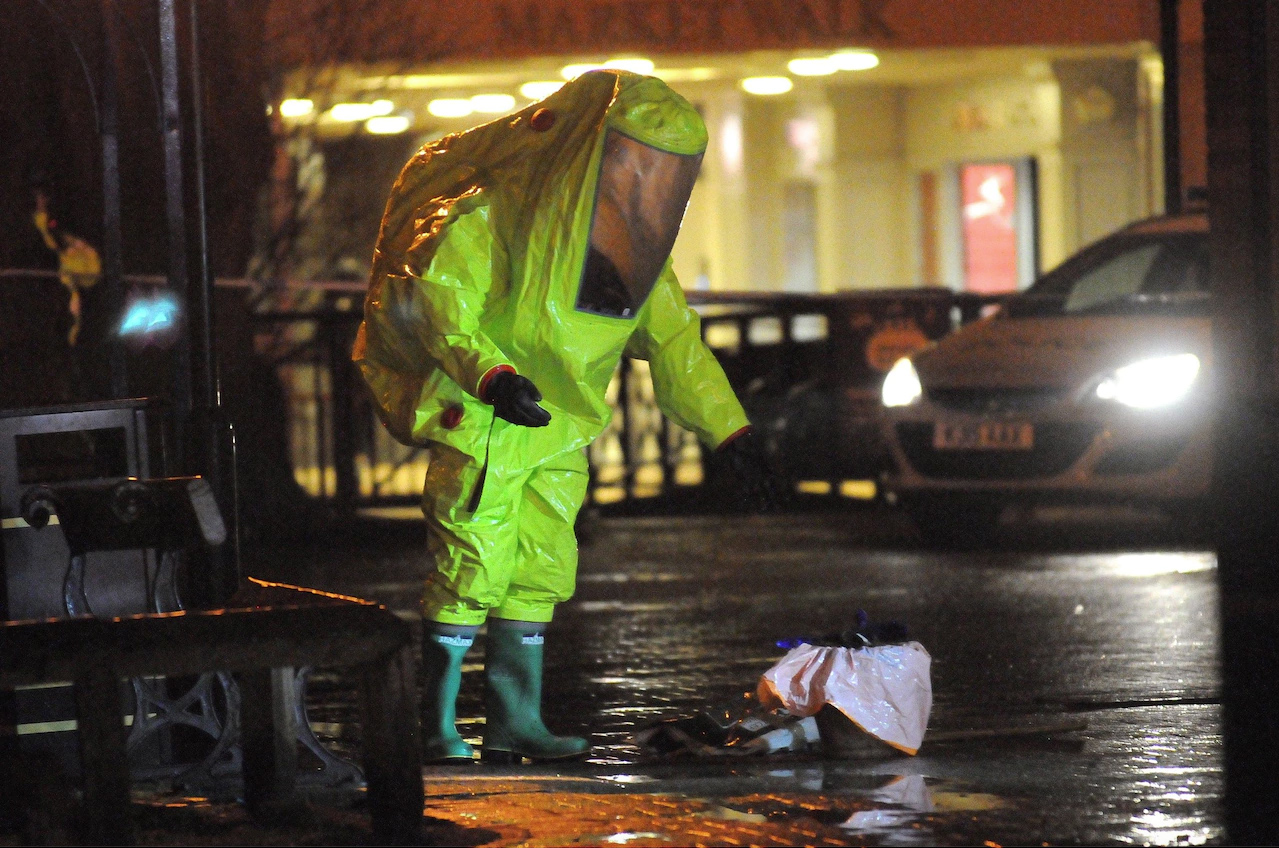
Photo: Telegraph.co.uk
In the world of special services, the subject of special interest was defectors. In the east, fugitives from the west were solemnly accepted. In the west, hugs were opened before refugees from the east. But everyone who fled to the West lived in fear, because they were considered the worst enemies of the Soviet regime. Some of them disappeared or died under strange circumstances. It was fundamentally important for the Soviet special services to punish the apostate so that everyone knew: the corporation does not recognize betrayal.
Seventh point
On February 5, 1930, the Politburo adopted the first detailed resolution on the work of foreign intelligence - the foreign department of the OGPU. In a particularly secret document, entitled “The tasks facing Ino OGPU”, the seventh paragraph was: “Organization of the destruction of traitors, levelers and leaders of the White Guard terrorist organizations.”
In the same, 1930, a loud scandal flared up in Sweden - an adviser to the embassy Sergei Dmitrievsky asked for political asylum. And after the adviser, the Soviet military attache in Stockholm Alexander Sobolev also turned to the Swedes.
To Sweden, the famous Alexander Kollontai was urgently sent to temporary attorney in affairs. And at the same time, they sent the operational employee of the State Security Department with the task to liquidate, if not the damage caused by the Soviet regime, then at least the defector himself.
Kollontai wrote down in the diary: “We have a meeting on the Sobolev case with Comrade. Sh., Sent "with a special mission." Comrade S. vividly declares: "I will be able to extract Sobolev out of an ambush, I will take a living or a corpse to the Union." I strongly forbid to discuss such wild tricks. This means pouring water to the mill of our enemies. ”
Other plenipotentiaries did not interfere in such delicate missions or were not interested in their opinion.
Georgy Agabekov, appointed in 1927 by a resident of Soviet foreign intelligence to Tehran, became the first Soviet intelligence officer to run to the west. He wrote memories in 1930. They came out under the name "Secret Terror: Scout Notes." And in the summer of 1937, Agabekov was eliminated by recent colleagues from a flying group of a foreign department that destroyed the defectors.
Acted according to Soviet law. On November 21, 1927, the CEC of the USSR (the highest body of state power) decided: “Persons who refused to return to the Union of the SSR are outlawed. The announcement of the law entails: a) the confiscation of all the property of the convicted person, b) the execution of the convicted person 24 hours after the certificate of his personality. This law has retroactive force. "
In other words, the fleeing from the Soviet regime was automatically subject to destruction. The flight from the Soviet Union was the most terrible crime. Moreover, those who committed this “crime” before the adoption of the law were subject to punishment!
Such operations were carried out jointly by a foreign department and a special group under the head of the department of state security, led by Yakov Serebryansky, a man of an adventurous warehouse, a former member of the maximum Socialist-Revolutionary Party and the future state security colonel.
The liquidation in the language of intelligence was then called a “letter”. Say, a political intelligence resident in Spain, the state security major, Alexander Orlov, reported to Moscow: “This letter was the most difficult of all previous ones ... But I hope that we and this letter will carry out the way you demand from us.” Orlov himself soon himself became a defector and left for the United States.
“Persons who refused to return to the Union of SSR are outlawed. The announcement of the law entails: a) the confiscation of all the property of the convicted person, b) the execution of the convicted person 24 hours after the certificate of his personality ”
"I regain freedom"
On the night of September 4, 1937, near the Swiss border, on the highway leading from the town of Shambland on Lake Geneva in Lausanne, they discovered the body of the murdered Soviet military intelligence officer Ignatius Poretsky, better known under the name of the reiss. Shortly before that, he met with an employee of the Soviet Permanent Protection in Paris and handed her a bag in which he was the Order of the Red Banner and a letter to Stalin.
The letter said: “I regain freedom. Back to Lenin, his teaching and the cause ... Only victory will free humanity from capitalism and the Soviet Union from Stalinism. Go to the new battles for socialism and the proletarian revolution! ”
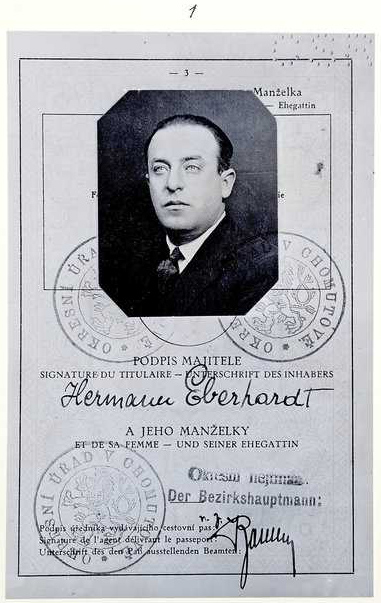
used by Poretsky-Riss
Photo: oko-planet.su
One and a half years in intelligence service in a strange way, they did not save Preter from revolutionary romanticism. And for Stalin, Ignatius Poretsky was a personal insult.
Five bullets were removed from the head of a dead scout at the autopsy, seven more from the body. His fingers squeezed a strand of blond hair - it helped the investigation. The Swiss police discovered an abandoned car with traces of blood in the cockpit and arrested a woman who rented a car. Her name was Renata Steiner, and she could not understand where her friends went to whom she handed over to this car.
The police restored the alleged picture of the murder. Gertrude Schildbach, a member of the German Communist Party, helped the Moscow opera. Soviet intelligence officers regularly asked her to provide “small services”-usually to follow some people. The police came to the conclusion that Gertrude Schildbach persuaded Poretsky to meet. They went to a country restaurant. Having had lunch, we went for a walk, and then a car appeared on an abandoned road, from which several people jumped out. They stuffed Poretsky into the car, where they shot him. The corpse was thrown out onto the road.
Initially, to remove Poretsky was instructed by Major of state security Theodor Malli (the operational pseudonym "Mann"). Malli was a Hungarian, a Catholic priest. In the First World War served in the Austro-Hungarian army and was captured by Russian. After the October Revolution, he volunteered for the Red Army, then he was taken to the Cheka. He successfully worked as an illegal resident in London.
He was offered two options to choose from. To hit Prekoretsky with an iron on the head in his hotel room and stage the robbery. Or poison during a joint meal in a cafe and say goodbye earlier than it goes into another world. Mally was friends with Poretsky and refused the assignment. The next year he was arrested, sentenced to death and shot.
Instead of Malli from Moscow, they called specialists in “wet matters”. Pavel Sudoplatov, who, engaged in the NKVD in such matters, rose to the general rank, called the names of the murderers of Poretsky - two employees of the foreign department in his memoirs, they were noted by the orders of the Red Banner.
One of them, Rolan Abbiat, was born in England, his father was a professor of the conservatory. From the beginning of the thirties he worked for Soviet intelligence. After the murder of Reiss, he moved to the USSR, received citizenship. The second, Boris Manuilovich Afanasyev (the real name of Atanasov), was born in Bulgaria, a member of the Communist Party, after an attempt to kill the Bulgarian Minister fled to the Soviet Union.
In military intelligence, Poretsky served as deputy Walter Krivitsky, the head of a major illegal residency in Western Europe. A month after the murder of his deputy Krivitsky, he was instructed to urgently return to Moscow. Understanding that he was waiting, he asked for political asylum in France. In 1938 he moved to the USA. He wrote the book "I was an agent of Stalin." In February 1941, he passed away under the circumstances not found out
Mally was friends with Poretsky and refused to order to kill a friend. The next year he was arrested, sentenced to death and shot
The verdict is not canceled
Colonel Konstantin Volkov, deputy foreign intelligence resident in Turkey, who worked under the roof of the vice-consul, decided to flee to England after the war. On September 4, 1945, in Istanbul, he invited the British to name the names of Soviet agents in the UK in exchange for political asylum for himself and his wife.
British scouts in Turkey requested London. The message from Istanbul fell into the hands of the Soviet agent inside the MI6 of Kim Filby, who, realizing that the exposure threatens, first of all, to himself, he immediately contacted Soviet officers. The resident in Istanbul Colonel Mikhail Baturin (father Yuri Baturin, assistant Yeltsin) received instructions to urgently evacuate Volkov to the Soviet Union. Volkov was executed ...
After the Chekist’s escape to the west, the defector was in absentia to the highest degree of punishment, and the KGB chairmen of the KGB replaced each other to destroy the traitor. But organizing a murder in another country, and even if a person is guarded, is not at all easy. And in late Soviet times it was decided to hold such actions only in the most extreme case, to avoid high -profile international scandals. And they did not want to risk their intelligence capabilities.
However, the defector still did not believe that they would not look for him, and spent the rest of his life in fear of the sudden appearance of former KGB comrades. In any case, the former head of the illegal intelligence department, Major General Yuri Drozdov, wrote in his book: "The verdict sentenced to him remains in force, and no conjunctural concessions will cancel it." Drozdov had in mind Colonel Oleg Gordievsky (he acted as a resident in England), whose flight in 1985 became the most loud failure of Soviet intelligence.
The same principle existed in other socialist countries. Say, a considerable number of officers from the Ministry of State Security of the GDR ran to the west. Seven stolen in the West and returned to the GDR to execute. The rest received an ominous warning from time to time: "We will find you everywhere."
The plan of each liquidation was written by hand in one copy, it was signed by the Minister of State Security Erich Milke. “The one who opposes us,” said Milke at meetings, “cannot count on condescension. Such elements should feel all the firmness of our power. And by this I understand not only our legal capabilities. ”
Erich Milke, awarded the title of Hero of the Soviet Union, wanted everyone to know: not to leave his Chekists, the enemy should be punished at all costs.
After the Chekist’s escape to the west of the defector, they said in absentia to the highest degree of punishment, and the KGB chairmen replaced each other to destroy the traitor
Tell me, who is your agent
In the fall of 1985, in the Washington residency of Soviet foreign intelligence, an important problem was solved. One person had to be withdrawn to Moscow, but so that he would not suspect anything. He was trusted - he was included in the group, which was entrusted with a special task. And Lieutenant Colonel Valery Martynov, who worked on the scientific and technical line in the Washington residency, and in the cover was an attache on culture issues, flew to his homeland, not imagining what was waiting for him.
Scientific and technical intelligence ("Line T") is a very prestigious direction, but success is not easy. It is believed that Martynov fell into a trap set by the FBI. He was slipped by a double agent, whose recruitment was considered with great success. In exchange, Martynov began to give information to the Americans - about the situation in residency, about recruiting plans. Colleagues believe that he worked not for the sake of money, but for his career. He received the Order of the Red Star and an increase. But then the CIA employee Oldrich Aims offered his services to Soviet intelligence. And he immediately called the name Martynov as an American agent. The fate of Lieutenant Colonel Martynov was decided. When the plane landed in Moscow, it was arrested.
The main value of Oldrich Aims was that he called the names of American intelligence agents in Moscow - they shot everyone.
Subsequently, in the failure of Aims himself, scouts will reproach their former leader Vladimir Kryuchkov. After all, it was he, demonstrating the successes of his service, laid a list of American agents on the table to Eims on the table. And he allowed them to be arrested and shot at once. Is it surprising that after that the Americans began to look for, who gave all the agents? And in the end they found.
Subsequently, in the failure of Aims himself, scouts will reproach the head of the KGB, and before that the head of the PSU (intelligence) Vladimir Kryuchkov. After all, he allowed them to be arrested and shot at once all at once
Secret poisons
Deloists from the Soviet Union said that the State Security Department has a secret laboratory that creates poisons for operational purposes. At the end of 1938, the head of the special laboratory Grigory Mayranovsky turned to the head of state security Lavrenty Beria: drugs must be checked for living people. Otherwise, how to guarantee the effectiveness of the weapon they created?
Beria ordered to hand over to the tortured scientists sentenced to execution. He knew that the special laboratory was created with the personal permission of Stalin.
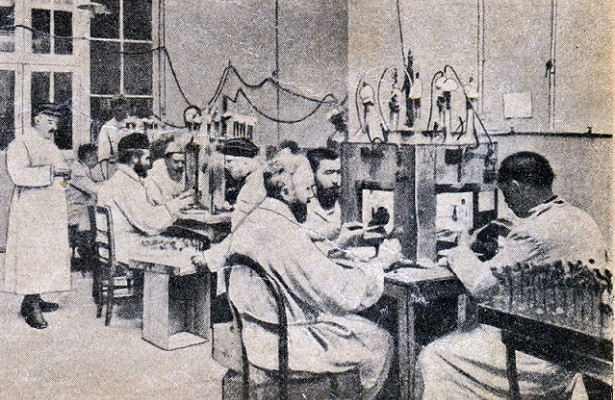
Laboratory of poisons of the NKVD photo: Russian7.ru
Working in the NKVD, Mayranovsky defended his doctoral dissertation and became a professor. His laboratory in the war was part of the 4th Directorate of the NKVD (terror and sabotage in the rear of the enemy), led by General Sudoplatov. After the war, the laboratory was subordinated to the department of operational equipment of the Ministry of State Security.
In addition to the toxicological laboratory, there was also a bacteriological laboratory - under the leadership of the doctor of biological sciences Sergei Muromtsev. He was the director of the Research Institute of Epidemiology and Microbiology named after N.F. Gamaley of the Academy of Medical Sciences, the laureate of the Stalin Prize, academician of the vascular. Colleagues called him "outstanding scientists in the field of medical and veterinary microbiology." And at the same time, Colonel Muromtsev secretly worked in the bacteriological laboratory of state security.
Even when they prepared the murder of Trotsky, the idea arose - to infect the book by bacteria of tuberculosis or pulmonary plague and send the former chairman of the Revolutionary council of the republic. Lev Davidovich will begin to read the book and become infected ... During the interrogation in 1954, Muromtsev admitted that he produced eight “experiments” on living people. People were killed.
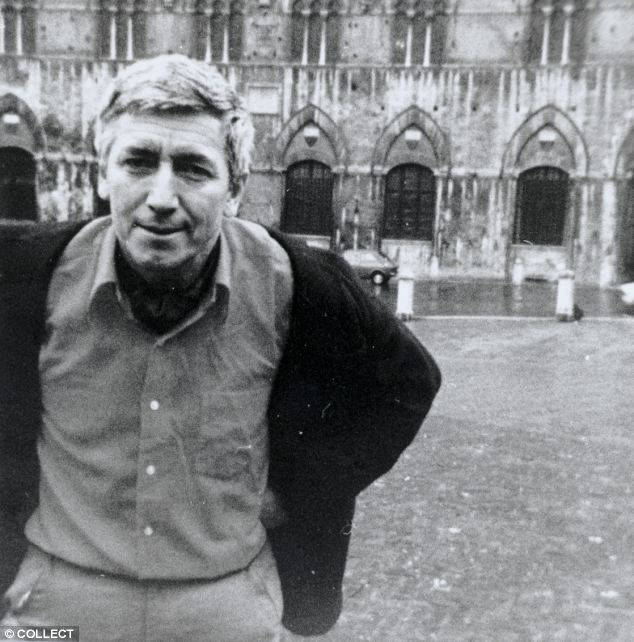
Photo: © Collect
The task was to not only kill, but also hide the real cause of death. Myranovsky and his assistants tested all the methods. They mixed poison into food. Making injections. They pricked a umbrella and a cane, this method would subsequently take into service (an umbrella, in the tip of which was a capsule with poison, Ricin, the Bulgarian dissident Georgy Markov was killed in 1978 in London).
Sometimes in people turned into experimental rabbits shot with poisoned bullets. Or put poison into a pillow so that a person died in a dream. In some cases, people were dying for a long time and painfully. Mayranovsky said that the ten people he poisoned with Aconitin (paralyzing the drug of plant origin) was worst: “I myself am terribly when I remember this,” Mairanovsky complained.
One and a half hundred protocols on the tests of poisons on living people have been preserved ...
The work went on the ground floor of the NKVD building in Varsanofievsky Lane or in the basement. Only the laboratory from the operational composition had only the Laboratory of Lieutenant Sudoplatov and his assistant. Sometimes Sudoplatov himself asked to test this or that poison. Laboratory employees were explained that deadly drugs are necessary for operations for cordon. But the poisons were in demand at home.
In 1953, after the arrest of Beria, the Mayranovsky Medical Service Colonel showed during interrogation (he was arrested in 1951, convicted, went out after 10 years) that, on the instructions of General Sudoplatov, he participated in the murder of people unknown to him in conspiratorial apartments in Moscow. The poison was mixed to food or drink. If you did not act, they made an injection. Mayranovsky proudly wrote: "With my hand, more than a dozen sworn enemies of Soviet power were destroyed by my hand." A few years later, the KGB chairman Vladimir Semi -City and General Prosecutor of the USSR Roman Rudenko stated: “Inhuman experiments were conducted on prisoners, as well as on people who were specially abducted for this purpose on the street. At least 150 people were killed, many of whom were now established, were repressed and died innocently. ”
After the arrest of Beria, the Colonel of the Medical Service, Mayranovsky, showed during the interrogation that, on the instructions of General Sudoplatov, he participated in the murder of people unknown to him in conspiracy apartments in Moscow. The poison was mixed to food or drink. If you did not act, they made an injection