
Translated material
GAZ and Buki
Hybrid wars created such a reputation to our country that the accusations of Skripal’s poisoning followed the results of an official investigation
British Prime Minister Teresa May refrained for a long time from the assignment of responsibility for the poisoning of Sergei Skripal and his daughter Julia-despite pressure in the government and parliament. But on the morning of Monday, the Times newspaper - with reference to government sources - announced the official statement of the prime minister, with whom she was supposed to make after a meeting of the National Security Council on the same day in the evening. Like, the police and security services have already found enough evidence to establish a connection between Moscow and the poison, which they tried to kill the former Russian double agent and his 33-year-old daughter.
The promised statement followed in the promised time. Teresa May said in parliament that the former GRU Colonel Sergei Skripal and his daughter were poisoned by the neuro-paralytic poison developed by Russia. Based on this, her government came to the conclusion that “very likely,” Russia is responsible for the chemical attack in Salisbury.
She also said that the British authorities asked Russia's ambassador in London to explain whether it was a “direct action” by the state, or a consequence of “loss of control” over the reserves of neuro-paralytic combat substances. According to her, the UK is forced to “be ready to take much larger measures” (in relation to Russia).
The head of government said that the substance used to poison the Skripals is identified as part of a group of neuro-paralytic agents, known as the "beginner", uttering this name in Russian.
Foreign Minister Boris Johnson, who, on behalf of Teresa May, talked in this regard with the Russian ambassador, told him that Moscow should, by the end of Tuesday's day, provide an organization for the prohibition of chemical weapons “a complete and exhaustive description” of this very program “Novice”.
Great Britain, according to May, will consider the response of the Russian authorities before making a decision on retaliatory measures. “If there is no confidence in the answer, we will conclude that this action is the illegal use of force by the Russian state against the United Kingdom.”
The British press also calls the possible response measures of London.
Among the options under consideration:
Immediate expulsion of high -ranking Russian diplomats and scouts
Exploring British visas associated with the Kremlin of Russian oligarchs.
It is supposed to conduct a sanctions list like a Magnitsky list through parliament with visa prohibitions and freezing assets for a number of Russian officials.
Among the symbolic measures:
- The non -participation of the official representatives of Great Britain in the 2018 World Cup in Russia.
Prime Minister May also intends to coordinate measures against Moscow with his allies, including President of France Macron and Chancellor of Germany Merkel. The opportunity is considered:
symbolic increase in the British military presence in Eastern Europe,
as well as a demonstration of determination to strengthen NATO at the July Summit of the Alliance.
According to Times, cyber attacks on some Russian objects can also be made - such as, for example, “fake sites”, “troll factories” and even the Kremlin sites.
Obviously, the approach to the Russian media controlled by the Kremlin, which are considered not as the press, but as the mechanism of state propaganda, will be tightened. The shadow chancellor, Labor John McDonnell, said “BBC” that he would no longer appear on the screen of the RT channel. The leader of the House of Commons Andrea Lids considers the question of whether RT should be shown in parliament at all. In parliament, calls sound to analyze the work of the channel for its compliance with the criteria of normal media.
The government also expected unambiguous support from the United States, which, after some pause in the American official reaction to events in Salisbury, it received Rex Tillerson from the mouth of US Secretary of State, who stated that the United States agreed with the position of Great Britain regarding the involvement of Russia in attempt. The statement published on the website of the State Department, in particular, states: “We have complete confidence in the investigation conducted by the UK, and in its assessment that Russia is likely to be responsible for the attack using a neuro-paralytic agent that occurred in Salisbury last week,” Tillerson said.
UPDATE
Donald Trump dismissed Rex Tillerson from the post of head of the State Department
According to him, Russia is "an irresponsible force that bears instability to the world and acting with open neglect of the sovereignty of other countries."
Solidarity with Great Britain was also promised by French President Manuel Macron and a high -ranking official of the European Commission.
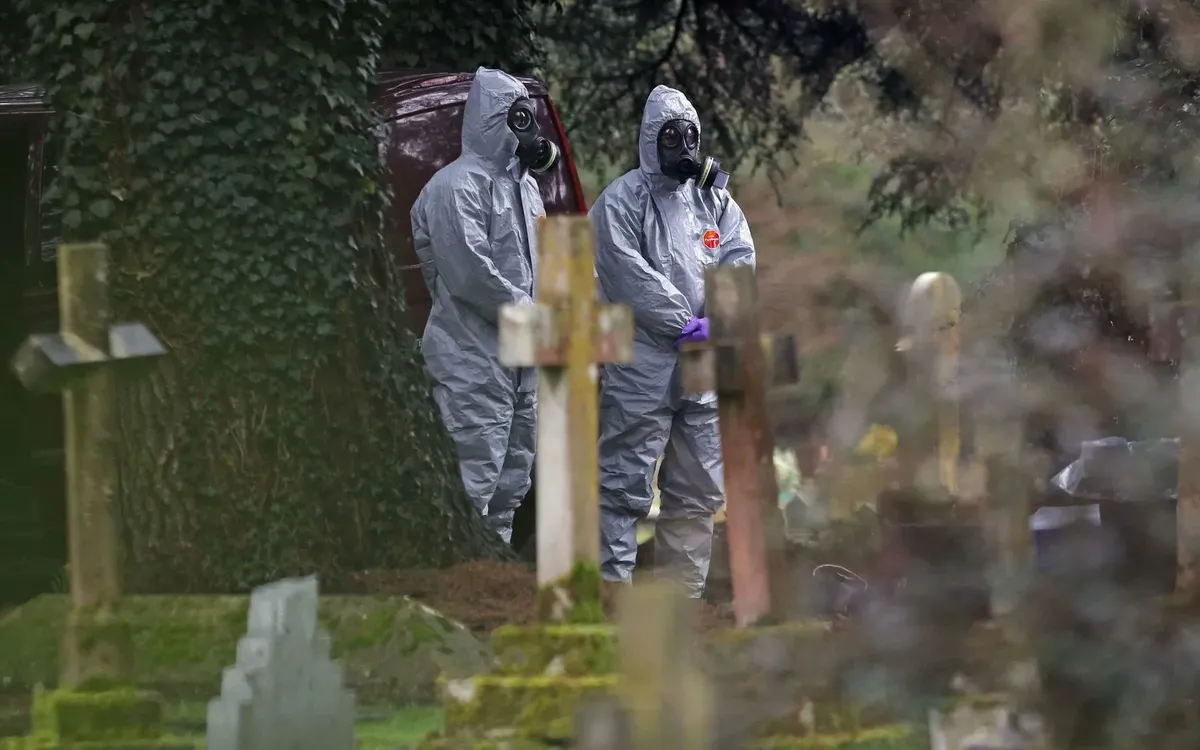
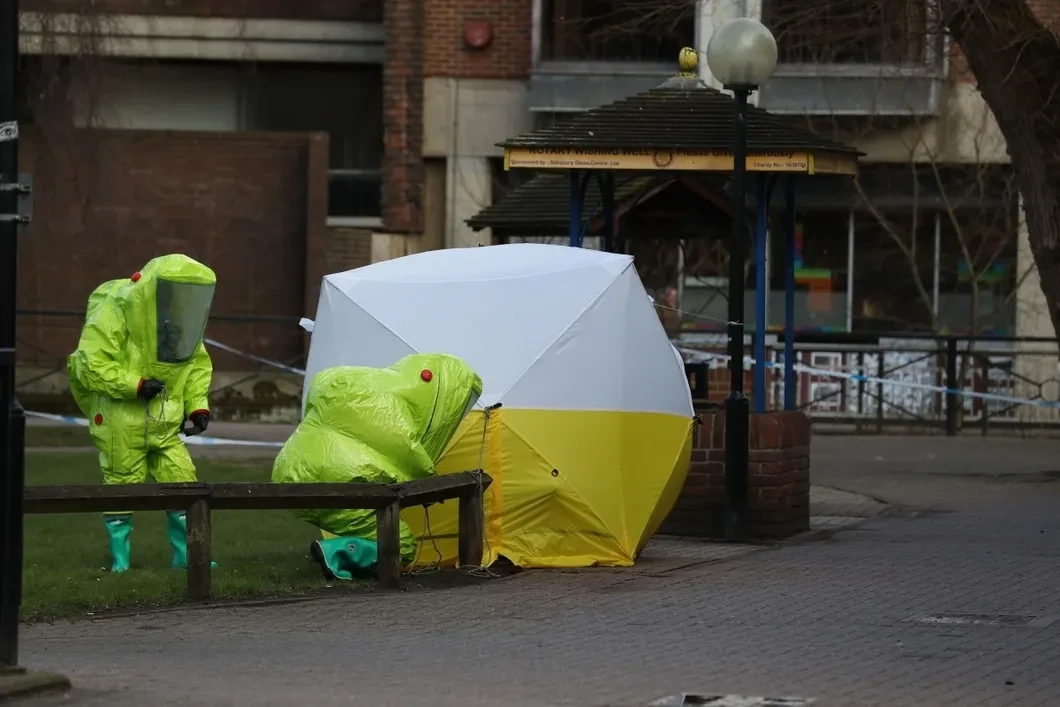
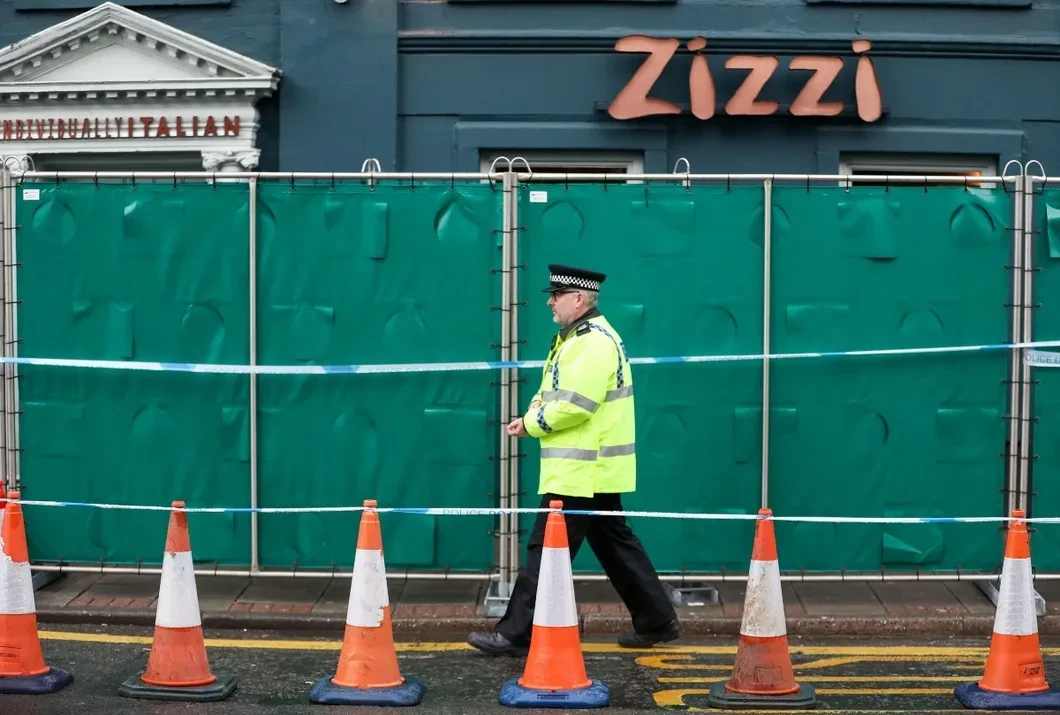
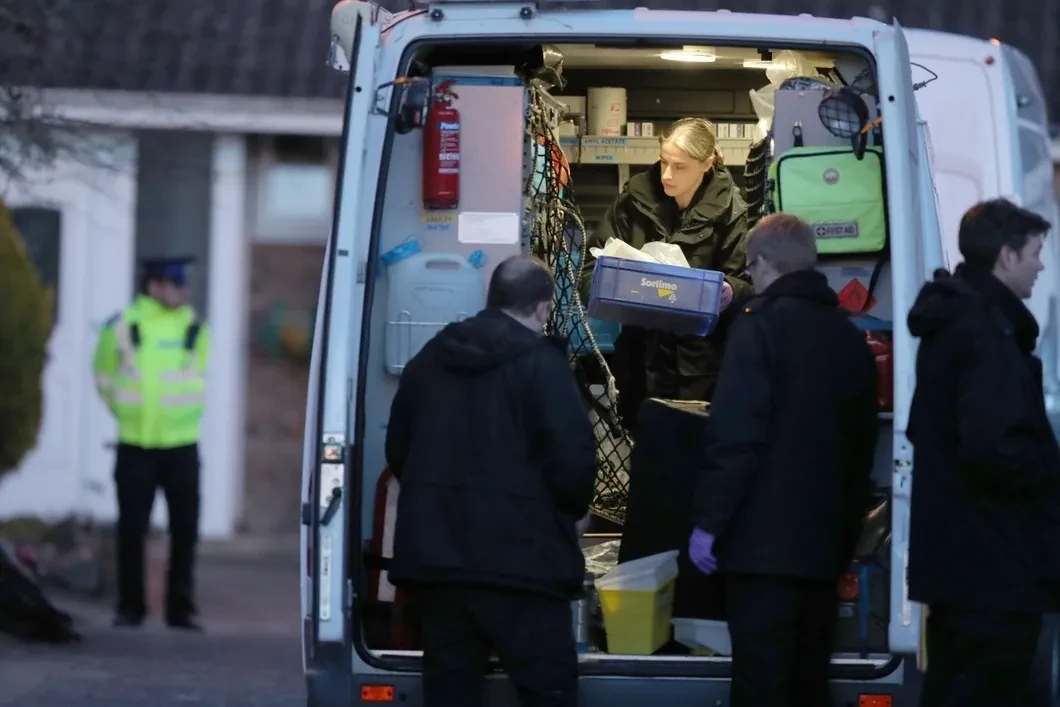
Meanwhile, the sleepy provincial Salisbury turned into a navel of the Earth, became the center of a large -scale investigation, where forensic experts operate with people in protective overalls. They carefully examine two neighboring catering establishments, which are now closed to visitors, a cemetery, where the previously dead wife and son Skripal, as well as other objects are buried. Army cars are visible on the streets.
On Sunday, the British Ministry of Health recommended that everyone who visited Zizie’s Italian restaurant or Pob Mill in Salisbury on March 4 and 5, wash their clothes in which they were there and wipe the mobile phones with a wet children's napkin and throw this napkin into a garbage tank.
Anxiety touched not only detectives and politicians, but also inhabitants.
“Although there is no direct risk for everyone who has visited one of these establishments, it is possible, but it is unlikely that the substance that has fallen as a result of contact on your clothes or personal items may remain on them in extremely small quantities and infect your skin,” the ministry said. “You can be out of politics, but you can’t be outside your own skin.”
After the emotional speech of the Minister of Foreign Affairs, Boris Johnson in the British parliament, other politicians showed caution for some time without pointing a finger at Russia.
The Minister of Internal Affairs of Great Britain, Ember Radd, said on Saturday evening that it was too early to judge the culprit of this chemical attack.
She said that more than 250 employees of eight of the eleven counter -terrorist police units were pulled to the scene. They study more than 240 possible material evidence, interview about 200 witnesses. About 180 soldiers help them, providing logistics support.
According to the BBC, this preventive warning may concern a wide range of people with a number of up to 500 people. Traces of infection were found both in a restaurant and in a pub.
Sergei and Julia Skripali were on Sunday in a “critical but stable state” in intensive care, the general director of the Salisbury Kara Charles-Barks said at a press conference. The police officer Nick Bailey, hospitalized after participating in the investigation of the incident, is conscious, “in a difficult but stable state,” communicates with his family. The Wiltshire police on his behalf thanked the British, who send him the words of solidarity and support.
Events in Salisbury continue to dominate the British media.
Sunday Times accused the government of a too slow and soft reaction to what happened. The newspaper is sure that the involvement of Russians is not in doubt. At the same time, she said that the head of Foreign Office Johnson, Minister of Defense Gavin Williamson and Minister of Finance Philip Hammond insist on a tough line against Moscow and are ready to announce the project of sanctions on Monday.
“Let the police investigate how it should be,” Hammond said in an interview with BBC. “But if the involvement of a foreign state is established, then, obviously, there will be very serious consequences and our government will respond accordingly.”
The press is looking for the reasons for the slowness of the government of the conservatives that some politicians from the ruling party received considerable donations from Russian oligarchs. On Sunday, May called on returning this money. Sunday Times writes about hundreds of thousands of pounds.
On the other hand, Financial Times called on Monday not to make hasty political conclusions without convincing evidence that the Russian and more so the highest leadership of Russia was behind the attempted murder. Other states have neuro-paralytic poisons that could apply it for unknown reasons, the author of the article reflects. In the Russian special services there are elements that are blocked with organized crime. They could apply poison without a team and the Kremlin’s knowledge, pursuing their goals or taking personal scores. Or wanted political leadership.
The investigation continues and takes the results by bit, folds the puzzle of an yet unclear picture.
This is an extremely difficult investigation, told reporters on Sunday the police chief of the county, Wiltshire Kair Prechard. The police have no doubt that this poisoning is not an accident, that Sergey and Julia were the goal of attackers.
But did it happen in a restaurant?
Was they surviving them while moving around the city?
Was the poison in the parcel delivered to him home, or in the bouquet of flowers that they laid on the graves of relatives?
Or did Julia herself brought him from Moscow “with a gift from friends” to her father?
The poisoning of Skripal and his daughter began to remind the British and European public about the murder of the former KGB officer Alexander Litvinenko. He died in London in 2006, drinking green tea with radioactive polonium-210. Then the British investigators found that the murder was probably authorized by Moscow, and called the names of the special services of the meadow and Kovtun as probable killers. Having inherited Russian polonium along the path of their movement in Europe, they refute the accusations, but are afraid to appear before the court in London.
In Brussels, journalists besieged Mikhail Khodorkovsky. He performed at one of the forums in the European Parliament. The press question for him was about one thing: the long hand of the Russian special services takes out the exiles abroad, wherever they hide. And about one subtext: "Are you afraid to become the next?"
Khodorkovsky did not comment on the theme of attempt to kill Skripal - he is not in the subject. And Novaya Gazeta expressed regret that in the West now a priori indicate the Kremlin as a criminal even before the end of the investigation. It is guilty of such bias, he is sure, only the Russian leadership itself.
At first you work for reputation, and then the reputation works for you, Khodorkovsky recalled.
Brussels