
Translated material
The soul of man under the socialist system
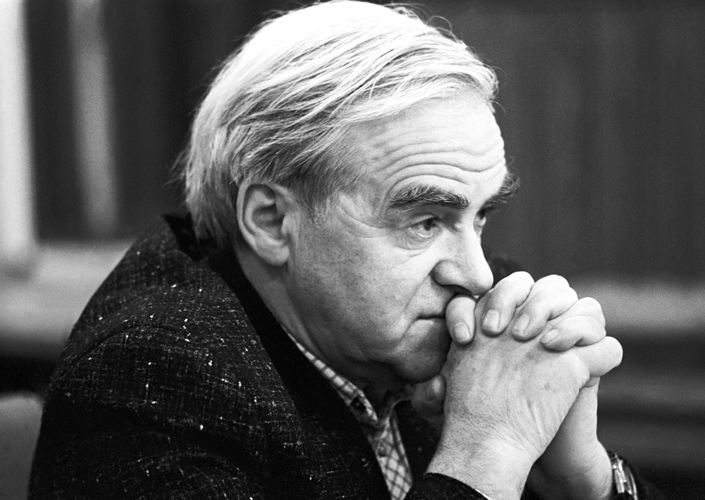
It would be nice to arrange socialism with us. This would save us from a humiliating need to live for the sake of others.
Oscar Wilde
Two strategies
There are two strategies for writing. For all modifications and variations - only two. One is completely and completely turned into the world. In every sense. The writer remembers that he has not only contemporaries and compatriots, but also a family (say). He works, writes a lot, a lot, with a clear calculation that he is written and is needed here and now, so he written is used, for bookstores. As a result of such a strategy, a masterpiece can be obtained: “Queen Margo”, for example. Or maybe it will not work. A one -day pile may remain. Once it was interesting to many, and after years-only to specialists.
There is another strategy addressed to eternity, to heaven and descendants. Spit the writer at his contemporaries and compatriots, near and distant. He is alone. In fact - one. He sculpts a masterpiece. As a result, it can turn out ... a masterpiece - “Ulysses” - or it may not work. A pile of graphomaniacs can remain, no interesting structures. Or something so incomprehensible that even the descendants cannot figure out what angle they may look at it. (See "Unknown masterpiece" Balzac.)
It is completely wrong to represent the matter as if one strategy is better than another, easier, or ... humble, or ... noble and more likely. No, no, both of these strategies are equally heavy, risky, worthy, worthy-sigent, noble-residential. Especially in Russia. Here, to slip into the vile conjuncture or in the madness of graphomania is much easier than in countries, earlier than Russia, which have gotten rid of both censorship and the pressure of state -ide.
Erenburg in an interview with Igor Golomstok and Andrei Sinyavsky very vividly and accurately described the first strategy. In the early sixties, he helped young guys punch a second book about Picasso in Russia in Russia. (The first was released in 1917: “Picasso and the surroundings” by Ivan Aksenov.) Helped and helped, struck. Apparently, in the process of breaking through this book, Ehrenburg felt sympathy and - most importantly - trust in the two young ... colleagues. Or maybe he wanted to show them that he, the “shadow Minister of Culture” of the USSR, is on the same side of the barricade as they, ordinary workers of Soviet literature, even if he has more furniture and better.
In a word, Ilya Grigoryevich Ehrenburg began to harass the censorship-Dura, which he had to break through, punch not only for you, young people, but also ... imagine ... and for his own works. Igor Golomshtok said: “So you write to the table, Ilya Grigoryevich ...” Ilya Grigoryevich was silent for a moment, looked at the interlocutor and replied: “You see, young man, what I am writing here and now. If time passes, it will no longer need it and is not interesting. I understand this very well. "
We note that the writership of the writer's humility of Ilya Ehrenburg. Note that he still made two masterpieces: “Hulio Hurenito”-at the beginning of his writer's fate, “People. Years. Life " - at the end. And we turn after a protracted entry to Daniil Granin, to the collection of his journalism. The first book of Granin, published after his death.
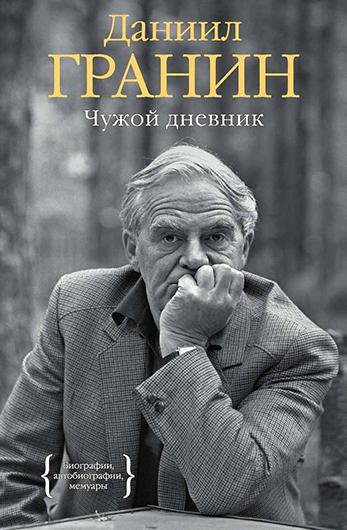 © Hummingbird, 2018
Daniil Granin (like most good Soviet writers) belonged to the first type of writers. To those who consciously, consciously, strategically and tactically worked not for eternity, but for contemporaries and compatriots, for “here” and “now”. And that “eternity will eat a vent”, and that “the common fate will leave”, whether they will find readers in the offspring, as they found friends in a generation, they cannot decide them. And not their contemporaries and compatriots.
It must be admitted that Granin’s merits in this field of a noble conjuncture are undeniable. At least two. The first: in the midst of one of the strangest and fruitful permitted Soviet discussions - “physicists and lyrics, or whether the trampoline grid is needed in space, that is, excuse me, said: a branch of lilac” - he rolled up a completely unexpected argument from an unexpected side. He was the first to introduce an engineer into Russian literature, physics, technician, inventor.
The first, because the old Roman Garina-Mikhailovsky “Engineers” was, in general, not in the mainstream. And who remembers him? But the “physicists” of Granin (by no means alien to the “lyrics” in all its manifestations) were in the mainstream. For the first time in Russian literature, the main character was a man of business, a professional, special.
I may object and point out bright hymns to work in Russian, Soviet and (even!) Anti -Soviet literature: whether it is the Kosba Barina Levina, the construction of the narrow gauge communist Korchagin or the masonry of the wall by the zek Ivan Denisovich Shukhov. I, in turn, will also mind this: the reader is difficult, exhausting physical labor (biblical curse of mankind). In the course of this work, a working or adrenaline pleasure receives some masochistic or adrenaline pleasure, but the main buzz is not in this work, but in the fact that he will end sooner or later.
The Graninsky heroes are not at all: they like to do their own business. And not that the master came out to wave the scythe and no longer cups when it would be possible to enjoy cucumbers with honey; Or a fanatic is about to ... Now he will build a narrow gauge rod-and everyone will be happy; About Ivan Denisovich we will keep silent. Granin cannot be taken away from this merit.
The second merit of Granin is no less important and no less honorable. He (along with Adamovich) was the first (when it became possible in our country) wrote and published an honest book about the blockade. We emphasize: published. Thus, in this particular (fateful) case, Granin and Ales Adamovich expanded the area permitted, Eliko is possible.
The fact that the case was fateful proves on our already modern, quite relevant memory the clash of the young Minister of Culture of the Russian Federation V.P. Medinsky and old writer D.A. Granin. Already everything, it would seem, has passed. The Blockade Book is already a canon and a classic. It is already forgotten that the first secretary of the Leningrad Regional Committee of the CPSU Grigory Vasilievich Romanov said: they say, I will not allow the blockade degerization, only, they say, through my corpse. Already more than how many years to the corpse of Grigory Vasilyevich, and the Minister of Culture of Russia with the appearance of a frightened comedy (part-time farmer) from a high rostrum sculpts: what kind of slander is distributed by Granin about some special supply of Smolny workers during the blockade? Everyone was in a single system of hunger, cold, bombing and shelling. Everyone was equally withstood ... they were produced ... They did not shame ... They didn’t drop ... et cetera . KOSS knows how and loves to push the rivers in between bombing, that is, farzovka ...
So, we have a collection of journalism by Granin. The genre, which is all the more, is more and more designed for "here" and "now." But I will slow down again. I will allow myself another introduction (or retreat). It concerns my personal meeting. It seems to me that it is worth remembering her. Firstly, it is worth leaving for the offspring a certain photo ... or something ... a large leaving person who has ended up in the same era, and who lived all his life in a completely different one. Secondly, in this meeting there was something important for understanding both the Soviet and the post-Soviet journalism of Granin.
The second introduction
It was the midst of the first scandal in the public library: an absurd plan for uniting the Moscow and St. Petersburg libraries, a bold and reasonable interview with the bibliographer Tatyana Shumilova, her dismissal, the beginning of court hearings in her case. And in this midnight, Granin invited me, who took part and opportunities in this campaign. I knew that Granin was trying to somehow help us, but was still surprised.
We sat down in the kitchen. Granin began to ask about affairs in the Public. I, as far as I could, tried to describe the situation. Since by nature I am an Alarmist and a defeator, the situation was deployed gloomy. Granin listened, tapped with a stick on the floor. Sometimes he asked the correct questions. Then he spoke himself. Unfortunately, I will not reproduce his monologue exactly, I remembered the meaning.
The meaning was like that. That's it, I leave the game. Now I’ll graduate from a very important romance for me and leave the game. In former times, people like him listened to people of culture of such a rank. The opinion of people of culture of such a rank as it was significant, significant, but now ... No, the emphasized, anniversaries, bonuses, but the reaction to his letters is not. Or unsubscribes in which it is tangible ... contempt, or what? Well, the old man was worried, well, it happens, he will eat a tablet, calm down. Well, what can I sparkle with epaulets and make sure that these epaulets are tsatski for internal use.
By the end of this sad monologue there was a call. Granin picked up the phone, cut the loud connection (he heard poorly, or maybe I wanted to hear, I don’t know), well, I heard. A lady from the Department of Culture of the Ministry of Defense (Department of Culture! Karl! The Ministry of Defense!) In a voice trembling with excitement, she said: they say, so, we bore you for “my lieutenant”, how would you give a premium? In a festive atmosphere? In intimate? With TV and the media? Only with the media? Or without one and the other?
Granin smiled. It really turned out like in bad novels and ... in life. He just complained that zero without a wand, and an overlap with complaints-the voice of a cultural and defense lady trembling with excitement: how to reward you, Daniil Alexandrovich? Daniil Aleksandrovich protruded, as he knew and loved. At home? Well, perhaps at home ... TV? No, it is not necessary for TV, if at home ... no, perhaps it’s not at home ... Perhaps you don’t need ... if not at home, then TV ... well-oo-oo ... you can, but ... without unnecessary pump. Yes, in the Likhachevsky committee, yes, send the car ... How many places the hall is? .. Fifty? .. Fine, but (here Granin smiled very well) I would not want the hall to be filled completely.
The lady trembled in her voice as if they were loved. Granin shone. Finally, the lady reached Kretsheno in her voice trembling: “I congratulate you, Daniil Alexandrovich, not from the Ministry of Defense, you understand, from myself, from myself ...” I personally crawled an eyebrow up the exclamation and asking sign. Yes ... this is a riot! This is some kind of ... getting up from the knees in the Department of Culture of the Ministry of Defense! So right from myself! So take and congratulate. And to say: to receive a bonus from the Russian Ministry of Defense for an anti -war book, for a book that denounces and exposes the generals, this must be able to be able to. Granin managed.
He moved in a move, hung up the lady, hung up and looked at me sternly. On my physiognomy, all the words that I did not say were written: “What a courage! Goya smokes! So brave in the ear of the writer is not from the ministry, on your own person, do you understand? “Congratulations ... Yes, there are still people who can be relying on ...” - so Granin looked at me very strictly and said: “These are the people of Gubankov. Very good ... "
Since I (forgetting who the Gubankov was) made the face of a broom: they say, of course, of course, how can I forget Krupsky’s comrade? - Granin was surprised: "Do you remember Anton Gubankov?" I remembered the author of the song about the annexed Crimea, who died along with the ensemble of Alexandrov. Granin carefully watched how the expression on my face changed, and said: “You knew him badly. He was a very good person. He was a cultural person ... "
It was a moment of truth. Or the moment of truths. Interconnected. Which of them was the first to display-I don’t remember, in my opinion, both at the same time. It happens. The first truth (or the first eve of the truth) was (it was like that): this writer lived in a country where a writer is not just a writer. If he is a writer, then his word is weighty as the word ... of a kind of bosses. They listen to him. It is another matter that he should not violate certain rules, to cross the line that is not drawn, but within the framework of these rules, behind this line he is if the writer is ... almost a boss. Almost.
I understand that you are disappointed: I also have Newton Bin. Binsenwahrheit , as the Germans say, but flat truth does not cease to be truth. The second truth, however, was the same. I understood: this smart, educated, cultural (and the meaning of culture is not that you are initially cultivated, but that you strive to be and become so; that you are covered by “longing for world culture”) a person lived and lives in a society where “the boss cannot be smart” cannot be cultural, “because it cannot be”. For such a reason, if the boss does not stuck on the hairdryer, does not hide obscenities and even knows notes, then this ... Bismarck, Gladston and Mohandas Karamcand Gandhi in one person! Such a boss is open to dialogue. You can talk to him. He is at least something, but he will understand ...
Boss
Actually, this is about this in the first essay placed in the book. About the smart Soviet boss - Alexei Kosygin - and about the dialogue with him. Rather, about an attempt to dialogue with him. Not completely successful. Because “the old excerpt of about thirty meetings and sessions, speeches and silence” helps the boss slip away from the questions unnecessary to him. Somewhere he opens, and somewhere ... Sorry, young man, what kind of questions you ask.
Three receptive points are very important in this essay. One is amazing to not say mystical. Granin describes all members of the Politburo, about whom no one really knew anything - all the same, everything is like a selection. “However,” Granin remarks, “Kosygin was different. Perhaps he was distinguished by frowning. He did not hide it, and it attracted it. His frowning went as if contrary to the general praise, chatter, the promise of imminent successes. Of the smallest dashes, vague sensations, we, not knowing the screws about anything, accumulated sympathy for this preoccupied hard worker, who is still siring like that to pull the WHO on the road. ”
I like such reading situations. You read something, but you feel-dejavu, somewhere I read something like that, something similar, something so dear, familiar. Certainly! This is Nabokov’s joke in one of the interviews: “For me, the essence of the Soviet government is not expressed in the Square mustache of Stalin, but in the forever gloomy physiognomy of Kosygin.” The coincidence is amazing (in order not to say mystical), because by the time of writing the “forbidden chapter” Granin could not read an interview with Nabokov in any way.
Just two writers noticed one very interesting and true socio-psychological line of dictatorship. The dictator (with the "Uri mustache") is also a screen, also propaganda. He also lives, "under him without sensing the country." Therefore, he most often rejoices or smiles along with his whole country or with its larger part. Feedback from him was destroyed to smithereens. What is he? He gives orders and orders, in his free time devotes his brain to great plans. At least to some extent, the one who fulfills orders and orders, organizes the evacuation from the blocked city, conducts economic reform, in general, "so this one strongly stirns to pull the WHO to the road." Therefore, the executing orders and orders are gloomy, gloomy. Like Kosygin.
The second receptive moment is no less surprising and, perhaps, more mystical. The “Forbidden Chapter” is devoted to Kosygin’s activities in blocked Leningrad. Granin, through his friend, conspiratorially designated by B-V, manages to go to Kosygin to talk ... the boss. Granin does not manage to talk to the boss on questions of interest to him. This is understandable. The boss prepared in advance for certain issues and did not give material. According to the blockade, he did not give material.
But on the other hand, the boss was not ready for one episode and suddenly opened. This happens during the interview: they begin to answer an unexpected question absolutely unexpectedly and very interesting. Kosygin with the surprising, probably, told Granin about the day of October 16, 1941. The day of panic in Moscow, universal flight and actually anger. It turns out that on this day only Alexei Kosygin remained in the Kremlin. Everyone fled. They left ... young. The young man was remembered for the rest of his life.
An empty Kremlin, empty corridors, then there and here phones are called ... in empty rooms. Kosygin rushes to one apparatus, then to another to show: everything is fine. The government is in place. Everything is under control, we’ll figure it out, find out. We work. It is clear that they call in order to check: in place? Or ... that’s all, lads, nobody at all. Open city. Peaceful uprising. “Close the ETAZ ...” And here he is, a moment of reception. I read this essay a long time ago, when it was printed in the magazine "Banner", and I had a persistent conviction, the feeling: there was no Kosygin in the tube, no, and I heard: “Well ... what jumped? Soon they will hang you ... "
In the essay printed in the book, there was nothing like this. No, it was like that, but still not this: “On October 16, 1941, the Council of Council of Council of Council was empty: the doors of the cabinets are wide open, the papers are lying around, they rustle underfoot, and phones are calling everywhere. Kosygin ran from the office to the office, picked up the phone, Alyack. No one spoke. Silent. He understood: they check if there is anyone in the Kremlin, and therefore rushed from phone to phone. It is necessary that someone is, let them know. <...> One of the calling called himself. He was a famous person. He coped busily: “Well, how, will we take Moscow?” Kosygin planted him: "Are you ready?" And cursed. I never cursed, but then he swore ... "
But I remembered that in the essay was this phrase about “jumped”! He rushed to watch the old magazine. Of course, such a phrase was not there and could not be. In 1988, a shaggy year ... Obviously, she was in a subtext or in an inspection. In telephone silence, in the mocking issue of some “famous person”. Количество ненавистников режима, людей, так или иначе от него пострадавших, было зашкаливающим во всех слоях советского общества — от элитарных писателей до простых рабочих.
(Кстати, насчет писателей… Какая-то очень знакомая барственная интонация в вопросе насчет сдачи Москвы, что-то такое родное, слышанное не раз и не два… Опять дежавю. Ну, может, показалось. В Москве много было известных тогда людей с барственными интонациями…)
И еще была жива настоящая память о Гражданской войне. Люди и ближние потомки этих людей еще помнили, как после большевистского, петлюровского, махновского, деникинского (возмущенных поклонников белых рыцарей отсылаю к «Черной главе» из «Очерков русской смуты» Антона Ивановича Деникина) беспредела вместе с оккупантами приходил какой-никакой, но порядок, какая-никакая, но… законность. Это потом, во время нацистской оккупации, люди довольно быстро убеждались в том, что нацистский хрен отнюдь не слаще большевистской редьки. А в чем-то и погорчее, потому что большевики худо-бедно хоть и выб**дки, но все же европейской гуманистической цивилизации, хоть и дрянные, но наследники диалектики Просвещения, а нацисты жирным крестом перечеркивают эту цивилизацию и возрождают откровенное язычество, моторизованное имперское варварство. Так что вполне мог кто-то из звонивших сорваться и выпалить в телефонную трубку, в ухо Косыгину наболевшее. Но в очерке этого не было. А вот поди ж ты — послышалось и запомнилось.
Третий рецептивный момент отнюдь не удивителен. Он настолько очевиден, что его следовало поставить первым. Очерк называется «Запретная глава». Это та глава, которую Гранину и Адамовичу не разрешили поместить в «Блокадную книгу». По нынешним временам читателя охватывает некоторое изумление. Господи, а что тут… запрещать-то? Помимо эпизода с пустым Кремлем. Что тут запретного? Бризантного? Это же не про каннибализм в блокированном городе, не про «черный рынок», не про мощное имущественное расслоение. Это про то, как работал один из сталинских чиновников. Про взаимоотношения в этой среде, помеченные (надо признать) очень аккуратно, деликатно помеченные. Ну, так, между делом, обронил, что Берия очень не любил Жданова. Задерживаться на этом не стал.
А что до работы, то по нынешним-то временам пафос этой главы бухает в неожиданную сторону: «Прибыв в Ленинград, Косыгин все усилия сосредоточил на Дороге жизни — единственной жилке, по которой еле пульсировала кровь, питая умирающий город. Изо дня в день налаживал ритм движения, ликвидировал заторы, беспорядок на обоих берегах Ладоги. Пришлось устранять излишества приказов, пустословие, улаживать столкновения гражданских властей и военных, моряков и пехотинцев, больных и здоровых. Надо было превратить эти водовороты в поток, чтобы пропустить вдвое, впятеро больше: из города — людей, а в город — муки, консервов, крупы… Проложили через озеро трубопровод, чтобы снабжать город и фронт горючим, наладили доставку угля электростанциям города. Мобилизовали коммунистов на восточный берег Ладоги, чтобы навести порядок на складах, потому что с хранением продуктов творилось черт знает что. Он переправлялся по этой дороге туда-назад. Когда лед сошел, ходил на катере. Однажды угодил под прицельный огонь крупнокалиберных пулеметов. <…> Звездные месяцы его жизни располагались среди штабелей легких, иссушенных голодом трупов, аккуратно по расписанию наступающих бомбежек, воя сирен, артиллерийских обстрелов, сна в душном, затхлом бомбоубежище…»
Выясняется, что при всем несомненном людоедстве сталинского режима а его аппарате существовали… профессионалы, люди, умеющие работать. В момент серьезного кризиса, какое там кризиса — катастрофы, они брались за дело и хоть как-то, но разруливали ситуацию. Сейчас Господь нас милует, серьезных кризисов не было при всех усилиях их создать, а что если усилия увенчаются успехом и серьезный кризис таки будет? Кто эвакуацию будет организовывать? И как он будет эту эвакуацию организовывать? Как в городе Крымске во время наводнения? Эпик фейл, что тут скажешь…
Вернемся к «Запретной главе». Ничего по нынешним временам сногсшибательно запретного в ней нет. Гранин и сам понимает, что за исключением эпизода 16 октября он ни на что Косыгина не раскачал. «Косыгин вел свой рассказ, умело огибая запретные места, искусно сворачивая, не давая мне рассмотреть, почувствовать, спросить. По обеим сторонам разговора тянулись запертые, опечатанные двери…» Как это делал Косыгин, Гранин хорошо дал почувствовать в одном перебросе реплик:
«…как совершался выбор в делах эвакуации. Выбор между населением и оборудованием. Между умирающими от голода и станками, аппаратурой, необходимой для военных заводов. <…> На каких весах взвешивали нужду и срочность?
— И людей вывозили, и оборудование. Одновременно, — ответил Косыгин.
— Ясно, что одновременно, но это в общем и целом. А практически ведь всякий раз приходилось решать, чего сколько.
— Так и решали и то, и другое, — сердито настаивал Косыгин. — А как тут еще можно выбирать?
— Но приходилось выбирать!
Я упорствовал, и он упорствовал…»
Хороший писатель Гранин. Читатель видит, как смотрит Косыгин на… писателя. С каким выражением лица. А чего ты, собственно, от меня хочешь, мастер художественного слова, душевед? Чтобы я тебе вот так прямо сказал то, что ты и так знаешь? Да, прежде всего оборудование и людей, которые еще могут это оборудование обслуживать? А дальше ты что — в душу ко мне полезешь: а чего это стоило и прочее? Извини, на такие вопросы не отвечают такие, как я, не отвечают.
Опять же начальник из другой (не гуманистической) парадигмы с великой бодростью бы ответил (гордясь своей державной безупречностью): «Разумеется, прежде всего оборудование, а как же иначе?» Косыгину так отвечать… неприятно, стыдно… Соврать? Это тоже возможно для начальника из не гуманистической парадигмы. Заулыбаться так по-человечески и выдать: «Даниил Александрович, ну что вы спрашиваете? Конечно, людей вывозили, прежде всего людей. Человеческая жизнь, ну вы же понимаете…» И улыбочка становится совсем глумливой, совсем каннибальской. В общем, хороший диалог получился у писателя Гранина. Многогранный.
Но… ничего запретного для нас, нынешних, в нем нет. Кое-какие фразы протыкают пафосность текста: скажем, про то, что на складах с продовольствием творилось черт знает что. В принципе, даже не черти могут догадаться, что творилось на советских складах продовольствия: усушка, утруска. То, что это продолжало твориться и в блокаду, сейчас тоже даже не черти знают. Достаточно прочесть воспоминания вдовы писателя Константина Воробьева Вероники Дзенните, пообщавшейся в послевоенной Литве в Министерстве торговли, где некоторое время работал ее муж, с кое-какими… блокадниками: «Была знакома еще одна женщина из блокадного Ленинграда. Полная, с большим плотоядным ртом и шамкающей манерой говорить. <…> Будучи профессиональным комсомольским работником, во время блокады пошла в завмаги хлебного магазина. И вот она любила ударяться в воспоминания: “Никогда я так не жила, как во время блокады. У меня были крепдешиновые платья, платья на файдешиновой подкладке. Мы задавали такие пиры, какие никогда не забуду. Потом катались на машине по Ленинграду. Великолепно!”».
Not bad. Кабы вот такое было в «Запретной главе», у нынешнего читателя и вопроса бы не возникло с изумлением, а что тут запрещать. Да, вот это абзац. Просто абзац — и все… И тогда для нынешнего читателя наступает еще один момент истины: в какой же информационной яме существовало советское общество, если вот эта глава не казалась, а была рывком из означенной ямы?
Вот тогда, когда нынешний читатель оценит на глаз, навскидку глубину информационной ямы разрешенного ментального пространства, он оценит и благородные усилия Гранина и таких, как Гранин, хоть на сколько-то сантиметров расширить это разрешенное пространство, хоть на сколько-то сантиметров выбраться из этой информационной ямы. По крайней мере, очертить ее границы.
Тогда нынешний читатель поймет месседж сборника «Чужой дневник». Его главный сюжет. Ничего принципиально нового из сборника этих статей, заметок, путевых очерков нынешний читатель, наверное, не узнает. Узнает несколько важных деталей, которые оцарапают душу. Например, стенограмму последнего выступления Зощенко на писательском собрании, когда затравленный писатель выкрикнул в зал: «Не надо мне вашего снисхождения, ни вашего Друзина, ни ваших брани и криков». Самое интересное в этой истории — не сама стенограмма, а записка, приложенная к ней. Гранин спустя много лет получил этот документ от женщины-стенографистки с вот таким приложением: «Извините, что запись приблизительна, я тогда сильно волновалась и слезы мешали».
Ради таких деталей, наверное, и читают книги. Но все же главный сюжет… Смыслообразующий. Axial. Этот сюжет — душа человека при социалистическом строе. Человека, который изначально помещен в ложную систему координат, который, по сути дела, информационно закрыт, заперт; над которым нависает страх наказания неведомо за что — да за что угодно. Был бы человек, а за что его покарать, всегда найдется. Весь этот сборник — про то, как человек из этой ложной системы координат выбирается. Думает, прикидывает, сравнивает, вспоминает. Работает над своей душой. Душой человека при социалистическом строе.
Даниил Гранин. Чужой дневник. — М.: КоЛибри, 2018. 416 с.